Follow Us:
Follow Us:

Few machines in human history have projected as much power, presence, and prestige as the USS Nimitz (CVN-68). Towering above the waves with a flight deck longer than three football fields, this nuclear-powered aircraft carrier has been a floating symbol of American military dominance for nearly five decades.
From crisis zones in the Middle East to training missions in the Pacific, the Nimitz has served as a mobile command center for U.S. interests across the globe, earning its place in both history books and headlines.
Commissioned on May 3, 1975, the USS Nimitz (CVN 68) is the lead ship of the Nimitz-class, ten of the most powerful warships ever constructed. Named in honor of Fleet Admiral Chester W. Nimitz, this vessel marked a new era in naval warfare.
It wasn’t just a warship; it was a floating airbase, complete with nuclear propulsion, advanced radar, and the capacity to carry nearly 90 aircraft. Over the decades, it became the beating heart of the USS Nimitz Carrier Strike Group, the linchpin of U.S. naval operations.
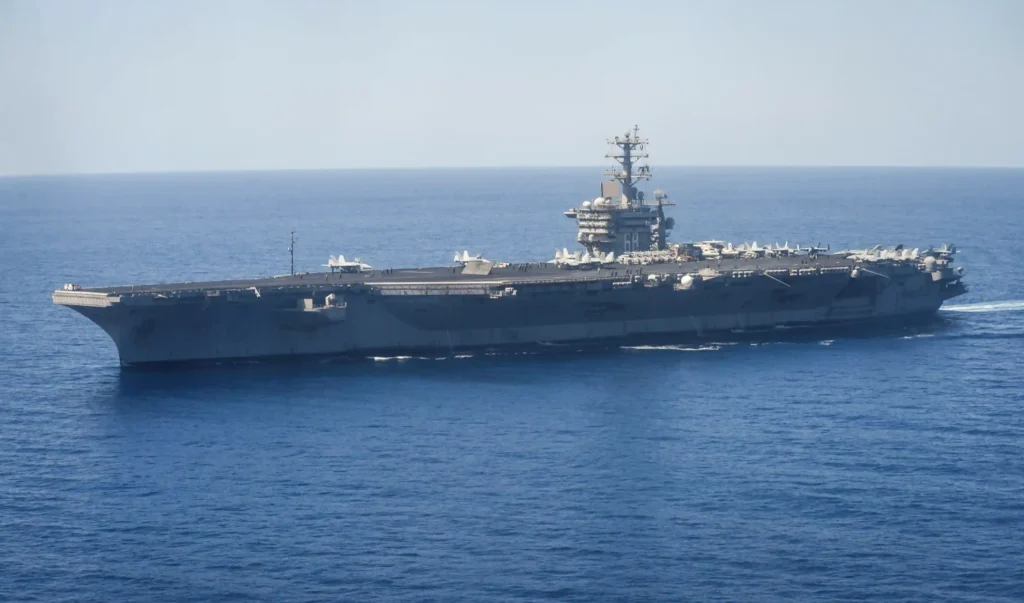
Whether you’re researching the USS Nimitz deployment history, curious about its design, or tracking its final missions before decommissioning, the story of this carrier is impossible to ignore. In this post, we’ll dive into its technical specs, historical missions, and legendary status. One thing becomes clear: the USS Nimitz aircraft carrier isn’t just a ship—it’s a legacy.
The origins of the USS Nimitz CVN-68 trace back to the late 1960s, during a time when the United States was deeply entrenched in the Cold War and seeking to maintain naval superiority against the Soviet Union. The Navy needed a new class of carriers—larger, more powerful, and capable of sustained operations without refueling.
Thus, in June 1968, construction of the lead ship of the Nimitz-class aircraft carriers began at Newport News Shipbuilding in Virginia, one of the few shipyards capable of handling vessels of such immense scale. The keel was laid on June 22, 1968, launching a project that would change the face of modern naval warfare.
Read also: USS Abraham Lincoln (CVN-72): Capabilities, Missions, and Tech
The ship was officially launched on May 13, 1972, and after rigorous sea trials and outfitting, she was commissioned into the U.S. Navy on May 3, 1975. The ceremony, held at Naval Station Norfolk, was a milestone not just for the Navy but for American engineering.
At the time of commissioning, USS Nimitz was the largest warship in the world, and with its twin nuclear reactors, it was capable of remaining at sea for over 20 years without refueling. This unmatched endurance would soon prove invaluable in a world where the U.S. Navy needed to respond quickly and decisively to threats thousands of miles from home.
Admiral Chester W. Nimitz, the ship’s namesake, had commanded the Pacific Fleet during World War II and was one of only four individuals to attain the rank of Fleet Admiral. Naming the vessel after him wasn’t just a nod to history—it was a statement of intent.
Read also: Russia’s Admiral Kuznetsov Aircraft Carrier
This new USS Nimitz aircraft carrier was built to carry on that legacy of command, strength, and strategic influence. As the flagship of a future USS Nimitz Carrier Strike Group, CVN-68 would go on to serve in nearly every major theater of operation the Navy faced for the next 50 years, from the Persian Gulf to the Pacific Rim.
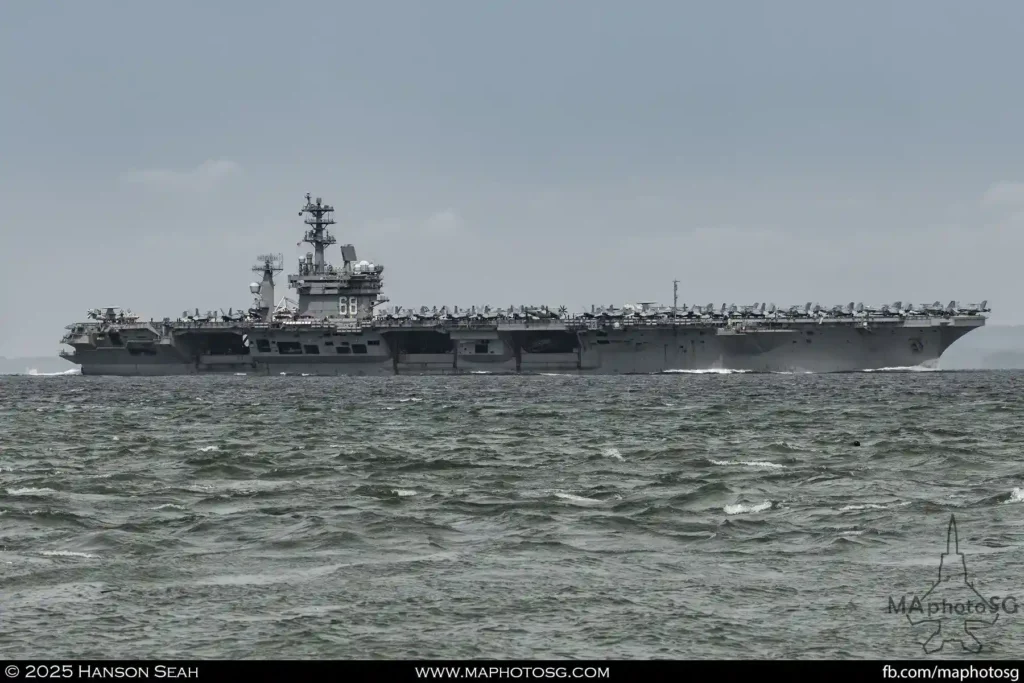
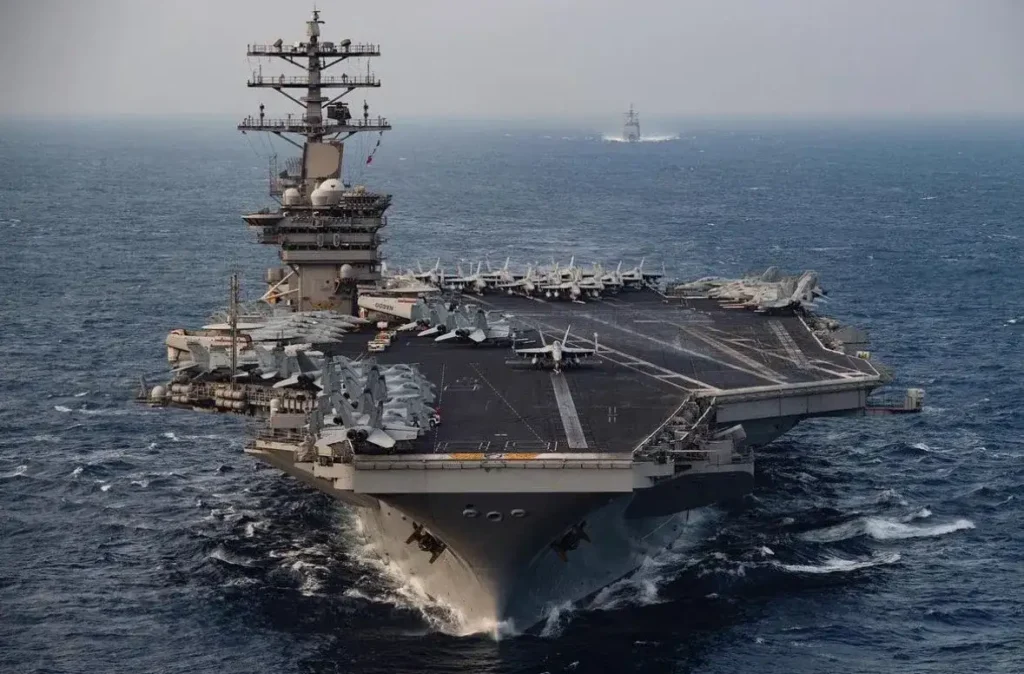
When it comes to raw engineering might, the USS Nimitz aircraft carrier stands as a colossal achievement. Measuring 1,092 feet (333 meters) in length and displacing over 100,000 tons fully loaded, this floating fortress is nearly the size of a small city.
With a beam of 252 feet at the flight deck and a height equivalent to a 23-story building, CVN-68 was designed not just to dominate the seas but to serve as a fully functional, mobile airbase capable of deploying and recovering aircraft at an unmatched pace.
At the heart of the USS Nimitz are two Westinghouse A4W nuclear reactors. These powerful engines drive four massive propeller shafts, delivering more than 260,000 shaft horsepower. The result? A top speed exceeding 30 knots (around 35 mph), which is remarkable for a vessel of this scale.
Thanks to its nuclear propulsion, the carrier can operate continuously for over two decades without refueling, a game-changing capability in military logistics. It also means the Nimitz can remain on station for extended missions without needing to resupply fuel, a key advantage in sustained operations far from home ports.
The flight deck itself spans 4.5 acres and can accommodate up to 90 fixed-wing aircraft and helicopters. This includes F/A-18 Hornets and Super Hornets, EA-18G Growlers, E-2C Hawkeyes, C-2A Greyhounds, and various SH/MH-60 Seahawk helicopters. Four powerful catapults launch aircraft from the deck while arresting wires recover them in tight sequences.
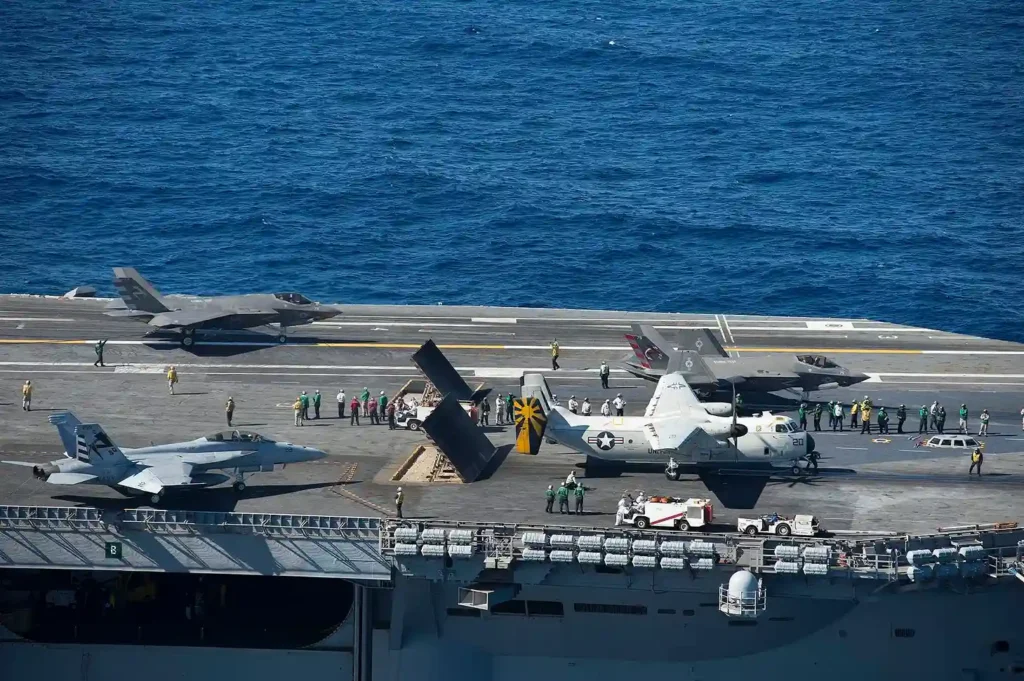
Below deck, the carrier houses aircraft hangars, weapons elevators, munitions storage, radar systems, and extensive command and control centers. This complexity makes the USS Nimitz more than a warship—it’s a fully integrated weapons system, communications hub, and mobile logistics base, all wrapped into one formidable platform.
The USS Nimitz is more than a carrier, it’s a floating city that operates around the clock, maintained by a massive and diverse crew. On a typical deployment, the ship supports approximately 3,500 Navy personnel responsible for the vessel’s operations, logistics, maintenance, and life support systems.
When you factor in the air wing, roughly 2,480 additional sailors and aviators, the total crew often exceeds 6,000. That makes the USS Nimitz aircraft carrier one of the most densely populated military environments on Earth during full operational status.
Read also: Top 5 Largest Aircraft Carriers in the World
Life aboard the carrier is a complex and highly structured experience. The ship runs on a 24-hour cycle divided into shifts, known as “watches,” that ensure non-stop readiness. With galleys serving over 18,000 meals a day, medical facilities that rival small hospitals, and even services like barbershops and chapels, the Nimitz is equipped to keep its crew functioning for months at sea.
It’s a place where daily life intertwines with high-stakes operations, whether sailors are troubleshooting nuclear reactor components, managing supply chains, or launching F/A-18s from the flight deck in under 60 seconds.
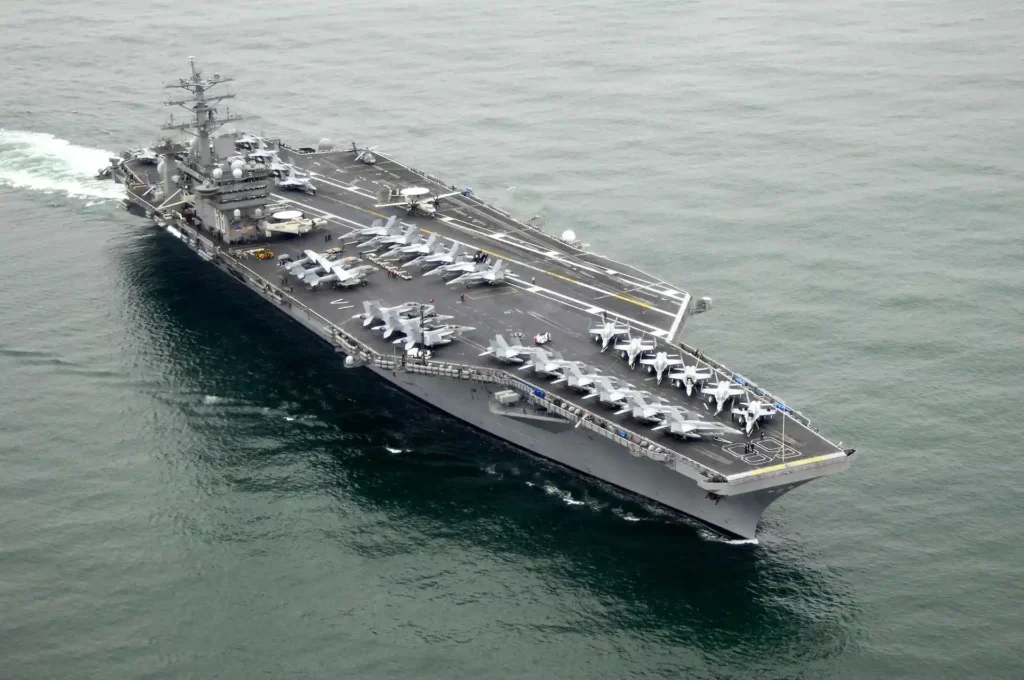
Central to the carrier’s offensive and defensive power is Carrier Air Wing 17, the air wing most often associated with the USS Nimitz Carrier Strike Group. This air wing brings together several squadrons equipped with a variety of aircraft suited for air-to-air combat, electronic warfare, surveillance, and cargo transport.
The combination of fixed-wing aircraft and helicopters allows the carrier to dominate in both strike missions and humanitarian operations. From providing air cover in hostile zones to conducting search and rescue operations, the air wing transforms the Nimitz from a naval vessel into a versatile, strategic asset capable of influencing operations across entire regions.
Since its commissioning in 1975, the USS Nimitz aircraft carrier has served as a steadfast instrument of American power projection, participating in nearly every major U.S. naval operation over the past five decades.
Its first major deployment came in 1976 to the Mediterranean Sea, where it relieved the USS Independence. These early missions established CVN-68 as a reliable cornerstone of the Navy’s forward presence during a time when tensions with the Soviet Union dominated global geopolitics.
One of the most notable early incidents occurred in 1981, when a tragic flight-deck crash during night operations killed 14 crew members and wounded 45. The accident also involved illicit drug use among personnel, prompting President Ronald Reagan to implement the now-famous “Zero Tolerance” policy across the U.S. military.
That same year, USS Nimitz CVN 68 was part of the Gulf of Sidra incident, during which two Libyan Su-22 fighter jets were shot down by U.S. F-14 Tomcats—highlighting the ship’s role not just in defense but in active combat scenarios. These events underscored both the risks of carrier operations and the strategic value of maintaining a powerful naval presence.
Throughout the War on Terror and into the 2020s, USS Nimitz deployment history included multiple tours to the Persian Gulf, Indian Ocean, and Western Pacific.
The ship supported operations like Enduring Freedom and Iraqi Freedom, often launching hundreds of sorties in support of ground forces. As part of the USS Nimitz Carrier Strike Group, it provided security in volatile waters, deterred piracy, and offered humanitarian assistance in disaster-stricken regions.
In March 2025, the Nimitz departed San Diego for what is widely believed to be its final deployment, marking the end of an era. The mission, which took the carrier through the Indo-Pacific and eventually the Strait of Malacca, placed it alongside the USS Carl Vinson amid rising tensions between Iran and Israel.
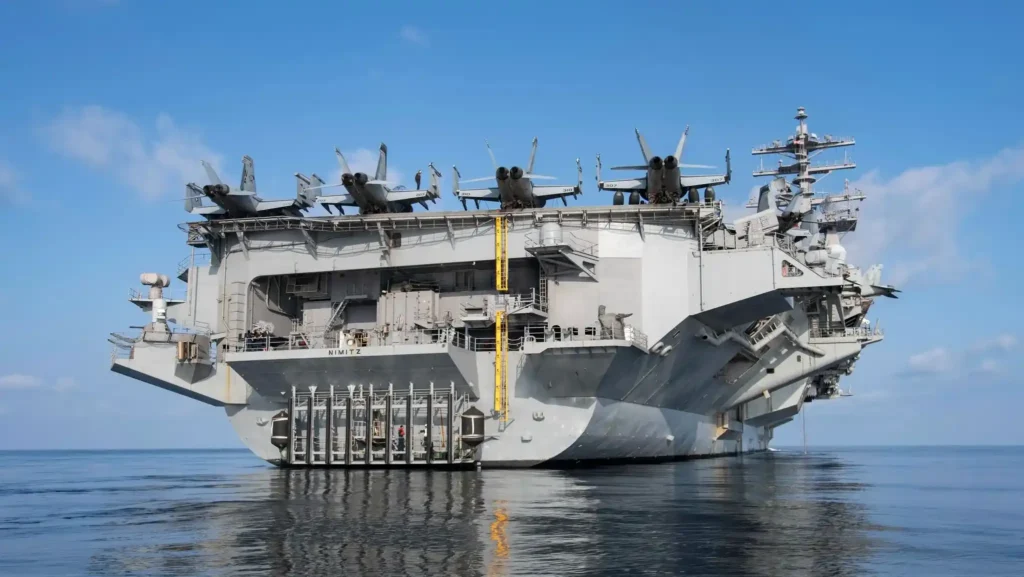
According to defense analysts, the deployment is intended to reinforce U.S. presence in the region and provide strategic support should conflict escalate. The USS Nimitz, now nearing its 50th year of service, continues to play a critical role in safeguarding global maritime stability, proving that even in its twilight years, it remains a force to be reckoned with.
Despite being commissioned nearly five decades ago, the USS Nimitz has continuously evolved to meet modern warfare demands through a series of comprehensive upgrades. Thanks to the Navy’s mid-life Refueling and Complex Overhaul (RCOH) program, the ship underwent a full reactor refueling and modernization in the early 2000s.
This critical process not only extended the ship’s nuclear power capabilities for another 25 years but also included extensive overhauls to its combat systems, navigation controls, flight deck, and support infrastructure. These upgrades ensured the USS Nimitz aircraft carrier remained combat-relevant well into the 21st century.
The RCOH included improvements to its radar and communications systems, allowing seamless integration with newer technologies used by both allied and U.S. forces. For example, advanced satellite communication terminals were installed to provide real-time data-sharing between the USS Nimitz Carrier Strike Group and joint forces in complex operational theaters.
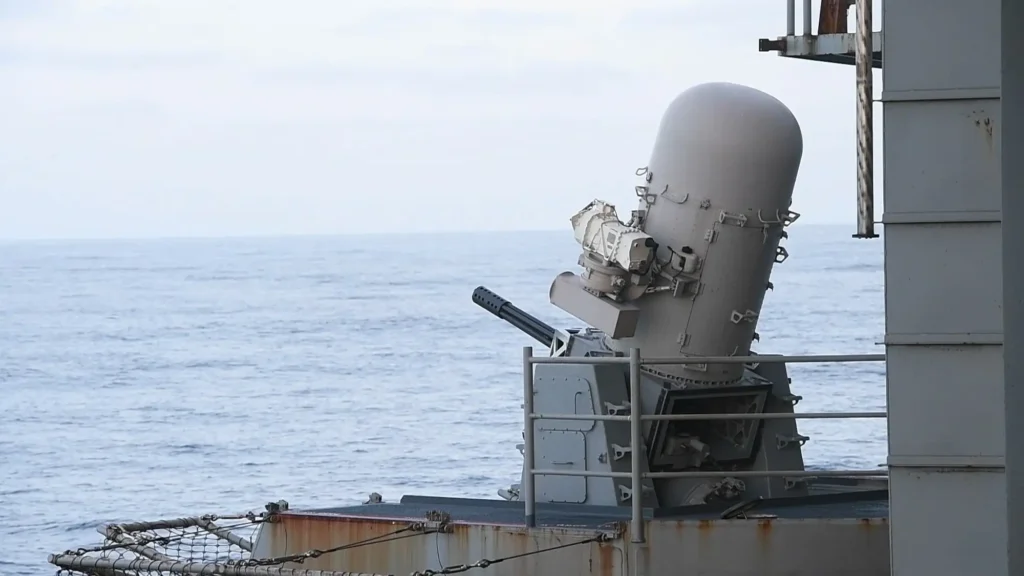
Additionally, the ship received upgrades to its defensive armament, including the Rolling Airframe Missile (RAM) system and Phalanx CIWS for close-in threats, reinforcing its ability to respond to modern asymmetric and aerial attacks.
Perhaps most importantly, these modernizations helped the USS Nimitz CVN-68 adapt to the changing face of naval aviation. As the Navy transitioned from legacy aircraft like the F-14 Tomcat to more advanced platforms such as the F/A-18 Super Hornet and EA-18G Growler, the Nimitz’s flight deck, hangar space, and support systems were reconfigured to accommodate the newer, more versatile airframes.
These changes positioned the ship not just as a historic icon but as a fully capable asset in today’s high-tech naval battlespace—able to launch, recover, and maintain next-gen aircraft on demand in any corner of the world.
As the USS Nimitz CVN-68 approaches the end of its historic service life, its legacy looms large in naval history. With nearly 50 years of continuous service, it is the oldest operational aircraft carrier in the U.S. Navy and one of the longest-serving warships in modern history.
It has logged over one million nautical miles, equivalent to more than 41 trips around the Earth, and supported countless missions that have shaped global events. Its impact is not measured solely in tonnage or aircraft sorties, but in the enduring strategic advantage it has provided to the United States across every ocean and conflict since the mid-1970s.
Plans for decommissioning the USS Nimitz aircraft carrier are underway, with the Navy anticipating retirement within the next few years, likely by 2026. Decommissioning such a massive vessel is no small feat. The process will involve defueling its nuclear reactors, stripping classified systems, and preparing the hull for dismantlement or long-term storage.
While newer carriers like the USS Gerald R. Ford are being brought online to carry the torch forward, few ships will ever match the historical significance and operational mileage of CVN-68. The Navy has acknowledged the challenge of retiring a vessel so embedded in its identity—both logistically and emotionally.
But even as the USS Nimitz Carrier Strike Group sees its last major deployments, the ship’s legacy will continue through its namesakes, museum exhibits, and the generations of sailors who served aboard.
For those who searched for the USS Nimitz deployment history, studied its structure, or watched it sail into distant ports, the vessel stands as a lasting monument to American resolve. It has not just carried aircraft, it has carried a nation’s presence, ideals, and readiness into every corner of the globe. As CVN-68 nears its final sunset, it does so having fulfilled every expectation and more, a legend forged in steel and sea.