Follow Us:
Follow Us:

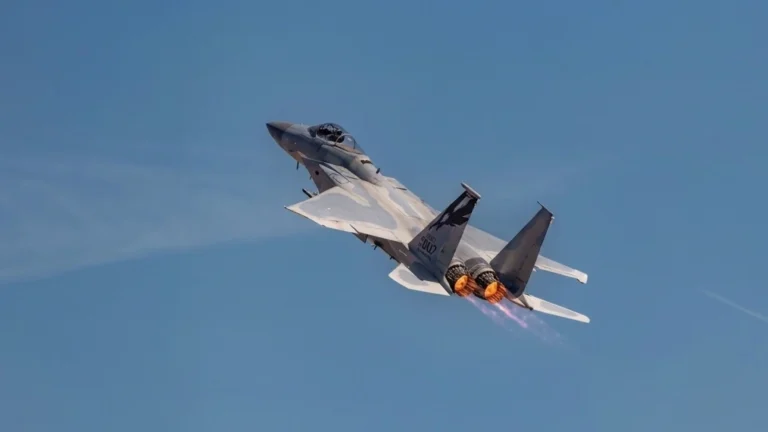
It doesn’t carry bombs. It doesn’t fire missiles in a dogfight. And yet, the EA-18G Growler might be one of the most feared jets in the U.S. Navy’s arsenal.
At first glance, it looks just like the F/A-18 Super Hornet, sleek, fast, and aggressive. But under the skin, the Growler is something else entirely. The Growler doesn’t need to fire a single missile to dominate the battlefield. Instead, it hunts radar systems, jams communications, and blinds enemy defenses before a strike force even arrives.
Back in 2011, during NATO’s air campaign over Libya, Growlers were among the first U.S. aircraft deployed. While the headlines focused on airstrikes and no-fly zones, the EA-18G was quietly paving the way, targeting Libyan air defense systems and shielding allied aircraft from detection.
Often overlooked in discussions about cutting-edge stealth fighters or supersonic interceptors, the Boeing EA-18G Growler is quietly becoming one of the most indispensable platforms in modern warfare.
Some analysts have even suggested that without it, America’s prized stealth jets might not survive their first mission in a heavily defended warzone. So, what exactly makes this electronic warfare aircraft so powerful and so essential?
To understand why the EA-18G Growler exists, you have to go back to the early 2000s, a time when stealth was becoming king, but electronic warfare was quietly gaining urgency behind the scenes.

For decades, the U.S. Navy had relied on the iconic EA-6B Prowler for electronic warfare missions. It was bulky, slow, and aging fast. But it got the job done; jamming enemy radars, supporting strike missions, and protecting aircrews from surface-to-air threats.
But the problem was, by the early 2000s, the Prowler was becoming dangerously outdated. The U.S. Navy was facing a serious gap in its ability to dominate the electromagnetic spectrum. Enemy air defense systems were becoming more complex, radar networks were harder to jam, and the Prowler’s aging design couldn’t keep up with the pace of modern warfare.
In this case, a more capable platform was clearly needed, the one that could operate seamlessly in a high-threat environment and keep up with faster, more advanced strike aircraft.
So, rather than starting from scratch, the Navy and Boeing made a strategic decision to build the next-generation electronic warfare aircraft on the airframe of the F/A-18F Super Hornet. It made a lot of sense.
The Super Hornet was already in wide use, designed for carrier operations, and had the performance and flexibility to support a new mission profile. More importantly, using an existing airframe meant faster development and easier maintenance integration with the rest of the fleet.
Working closely with the Navy, Boeing modified the Super Hornet to serve a completely different purpose. They removed the internal cannon, integrated sophisticated jamming systems, and fitted the aircraft with wing-mounted pods for tactical jamming and signal disruption.
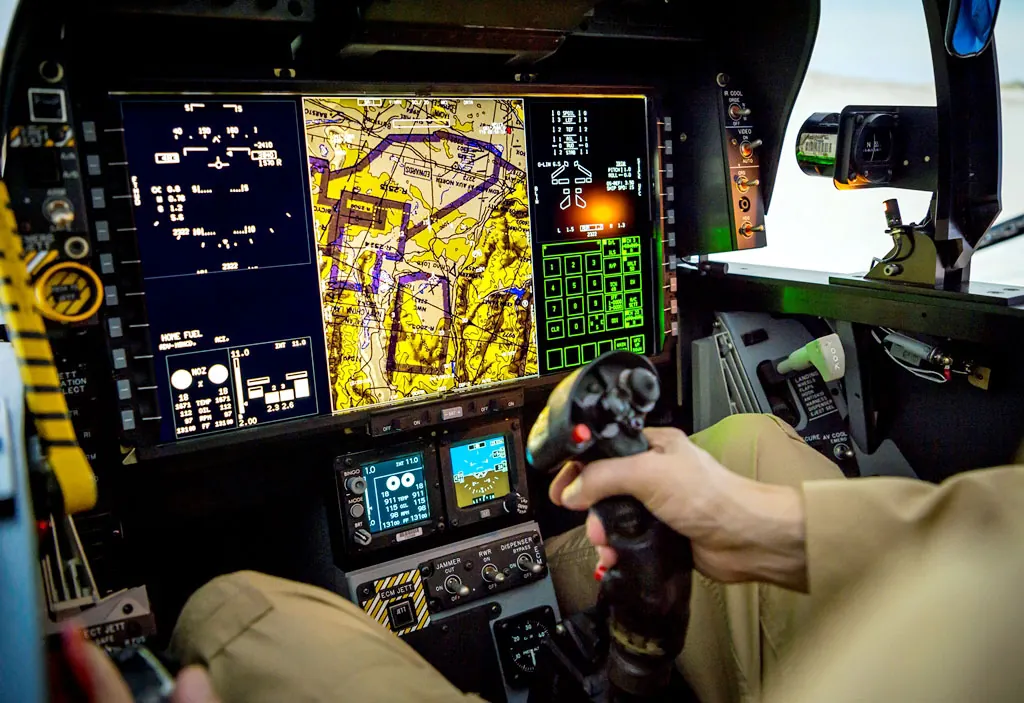
Inside the EA-18G Growler cockpit, advanced displays and controls were added to help the crew manage complex electronic attack operations.
Development moved quickly, and by 2009, the EA-18G Growler officially entered service as the Navy’s primary electronic warfare jet. While it shares much of its DNA with the F-18 Super Hornet, its mission couldn’t be more different.
Instead of engaging enemy aircraft directly, the Growler jet protects friendly forces by neutralizing threats before they can even lock on.
In the years since, the Growler has become a key asset in missions that require Suppression of Enemy Air Defenses (SEAD) and airborne electronic attack. And with upgrades like the NGJ-MB (Next Generation Jammer – Mid-Band) coming online, it’s evolving into an even more capable tool for modern conflict.
What truly sets the EA-18G Growler apart is the invisible power it wields in the electromagnetic spectrum. Unlike traditional fighters that rely on missiles or bombs, this electronic warfare aircraft operates in a different domain entirely. Its main weapons are signals, frequencies, and pulses of energy designed to confuse, disrupt, and suppress the enemy’s ability to see, communicate, or shoot back.
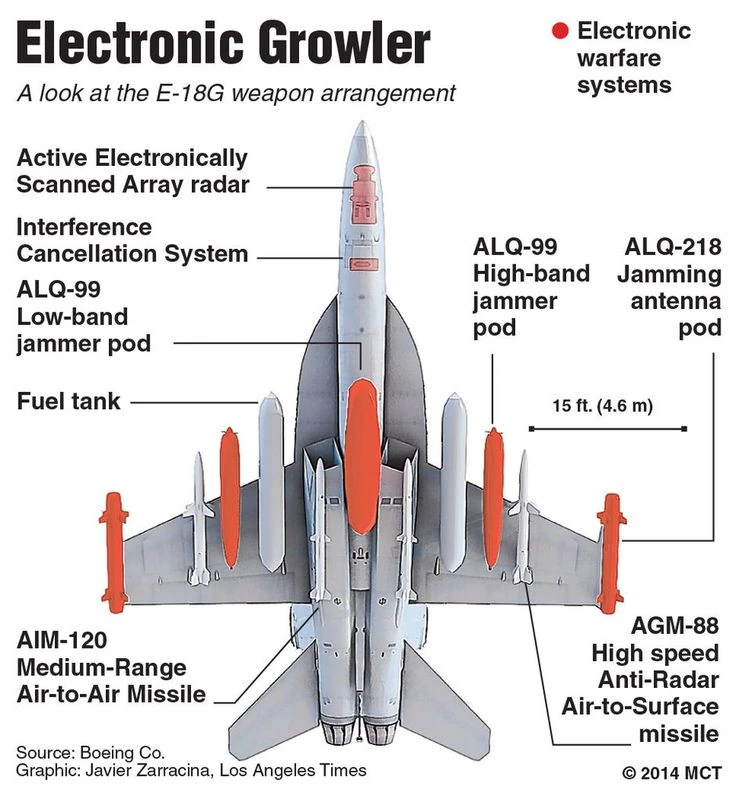
At the heart of this capability are the ALQ-99 jamming pods, which are mounted on the Growler’s wings and centerline. These pods serve as the aircraft’s primary electronic attack system. They can emit powerful radio-frequency signals that “flood” enemy radar, essentially blinding it.
For example, if a surface-to-air missile system tries to lock onto a friendly jet, the Growler can jam that radar, making it harder, if not impossible, for the missile to track its target accurately.
While the ALQ-99 has been in service for decades (originally with the EA-6B Prowler), it has proven adaptable enough to stay relevant in modern combat scenarios, especially when combined with the Growler’s speed and agility.
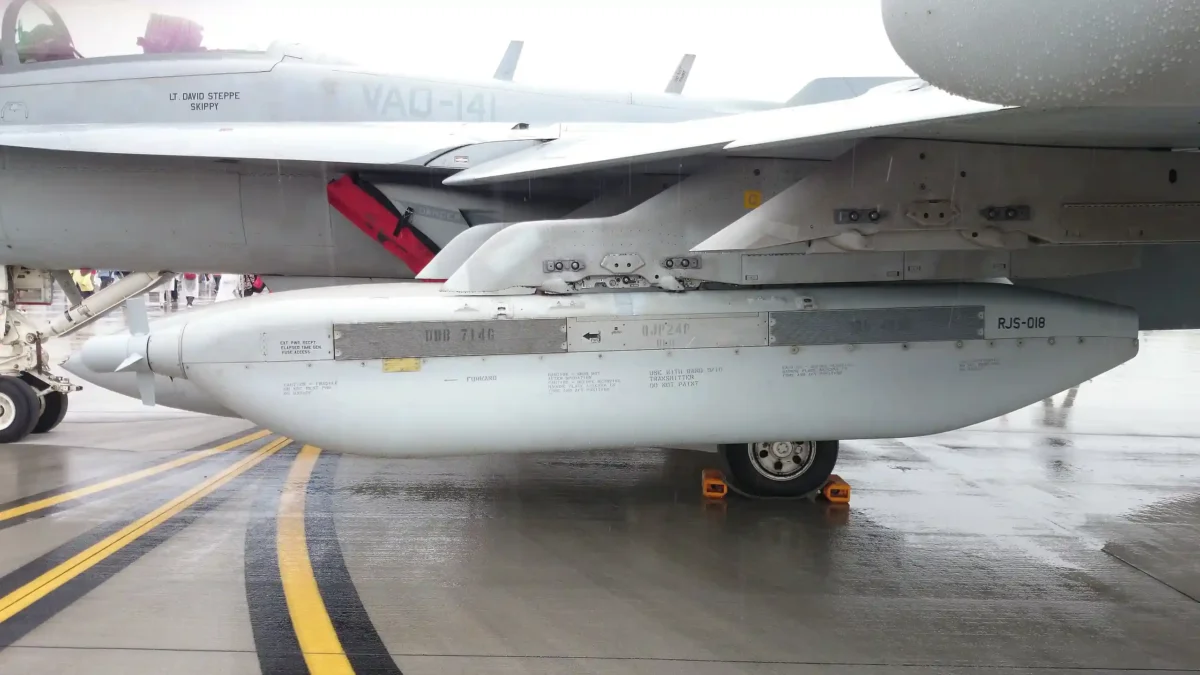
The EA-18G Growler is also equipped with advanced systems that can intercept communications and disrupt enemy command-and-control networks.
In practice, this could mean cutting off battlefield communication between radar operators and missile launchers, or interfering with encrypted radio transmissions. These capabilities are especially valuable in fast-moving combat situations, where the ability to disrupt decision-making, even temporarily, can tilt the outcome of an engagement.
To stay ahead of evolving threats, the Navy is currently upgrading the Growler with the NGJ-MB (Next Generation Jammer – Mid-Band) system. This new system is intended to replace the aging ALQ-99 pods and bring a major leap in capability.
Using digital, software-driven jamming, the NGJ-MB is expected to offer more power, better precision, and the ability to target multiple systems at once. While still being integrated, early tests suggest that this system could make the Growler jet more effective against advanced air defense networks from near-peer rivals like China and Russia, particularly those using adaptive or frequency-hopping radars.
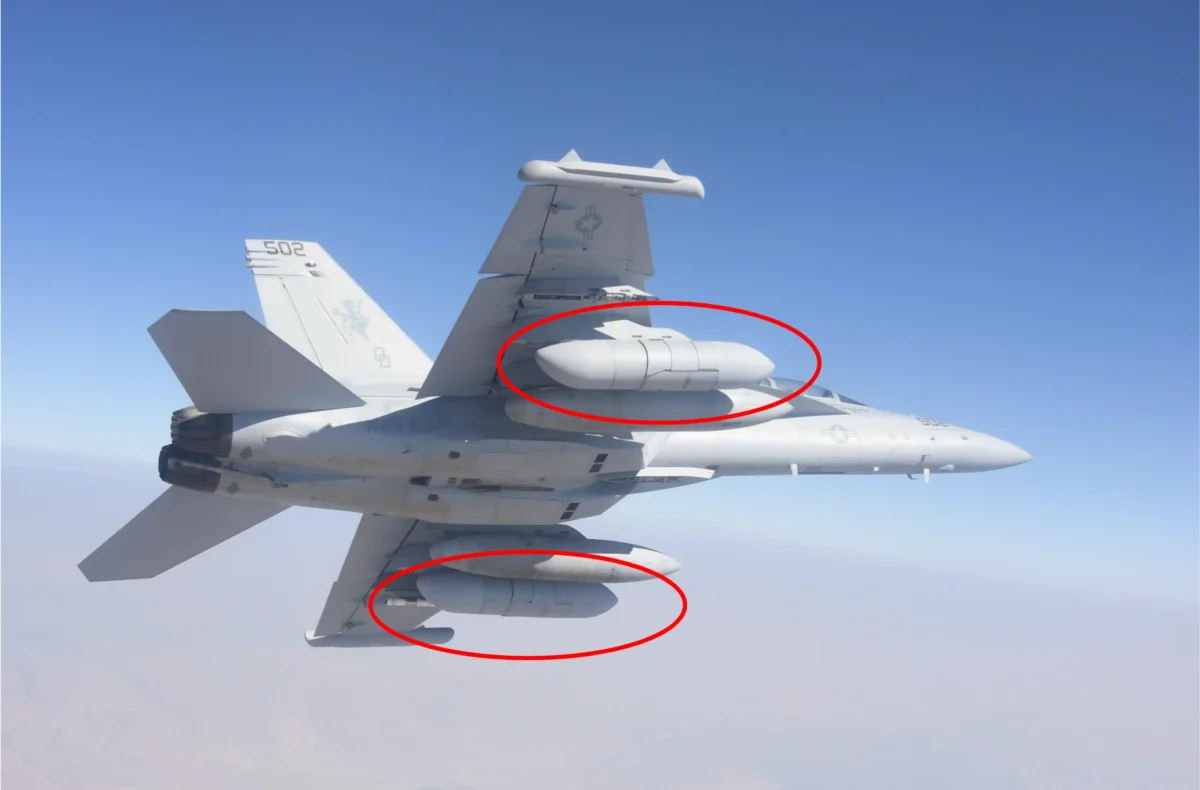
All of this ties directly into the Growler’s role in Suppression of Enemy Air Defenses (SEAD). In a typical mission, the Growler flies ahead or alongside strike aircraft like the F/A-18 or even the stealthy F-35. Its job is to detect radar signals, jam them, and when necessary coordinate with SEAD aircraft to destroy enemy air defense assets.
In many ways, it acts like an escort for the entire strike package, clearing the path for bombers and fighters by degrading the enemy’s ability to detect or target them.
What makes the Growler so valuable in this role is its flexibility. It can adjust its jamming in real time, focus on specific frequencies, and even identify new radar threats as they emerge.
Even though the EA-18G Growler is primarily known as a radar jamming aircraft and electronic attack platform, it’s not entirely defenseless.
In fact, it carries a small but potent set of tools that allow it to protect itself, strike back if needed, and work as part of a coordinated combat network. These capabilities don’t make the Growler a frontline fighter, but they do give it a unique blend of offense and survivability in highly contested airspace.
One of the Growler’s most important weapons is the AGM-88 HARM (High-speed Anti-Radiation Missile). This missile is designed to home in on radar emissions, essentially turning the tables on enemy radar operators. When a ground-based system tries to track or target aircraft, it emits a specific signal.
The Growler can detect that signal, and if necessary, fire a HARM missile that follows it straight back to the source. While the Growler usually focuses on jamming and disrupting these systems, having the ability to physically destroy them adds a powerful backup option.
For instance, in a real-world scenario where a radar system proves too resilient to jamming or reactivates after a strike, the Growler can deliver a precise, immediate response, without waiting for a dedicated strike aircraft.
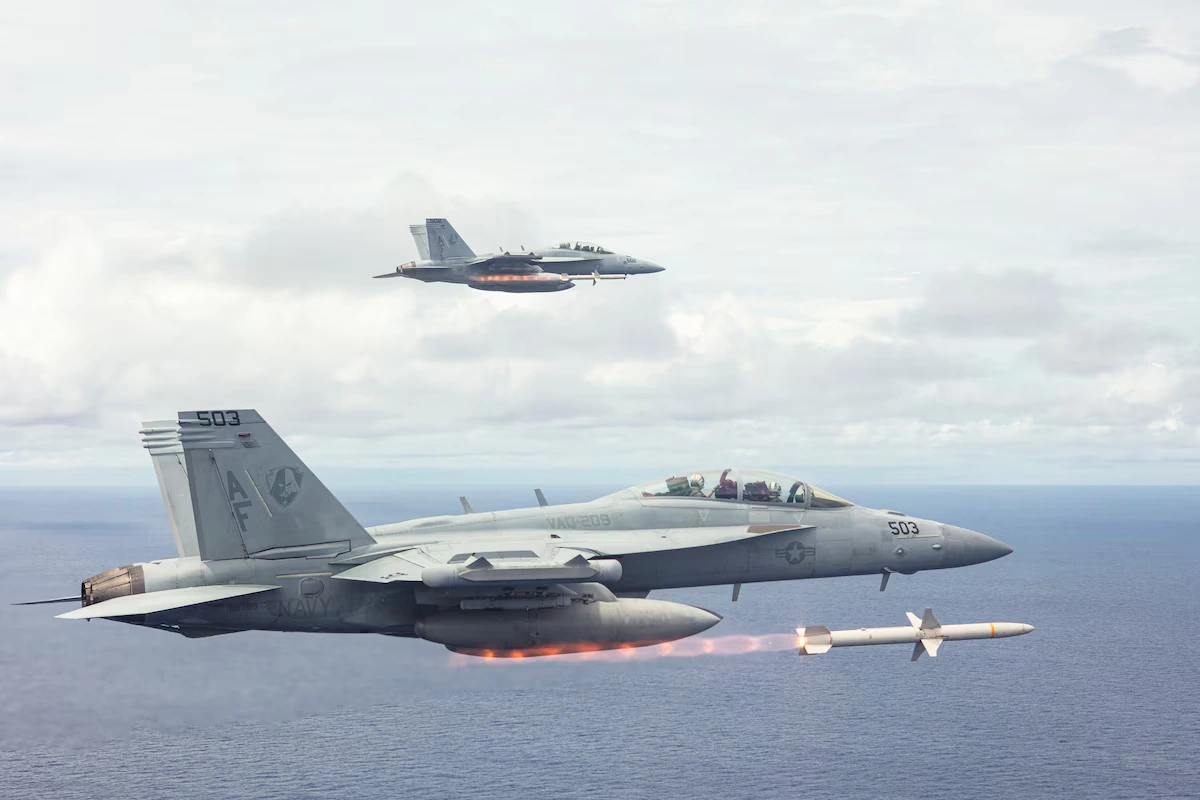
In addition to offensive tools, the Growler also comes with advanced self-protection suites. While the exact systems onboard can vary depending on the mission and upgrades, they typically include radar warning receivers, electronic countermeasures, and missile warning systems.
These are designed to alert the crew if the aircraft is being tracked or targeted, and in some cases, can automatically deploy countermeasures like flares or chaff to confuse incoming missiles.
Some sources suggest the Growler’s survivability is surprisingly high for a non-stealth aircraft, partly because of these systems, and partly because it can detect threats before they fully develop.
Just as important is the way the Growler connects to the rest of the battle network. Through tactical data links, the aircraft shares real-time information with other jets, ground stations, and command centers.
This allows it to play a central role in real-time targeting, passing on threat data from intercepted signals or radar emissions so that other platforms, like F-35s or armed drones can act on it.
If a stealth fighter detects a radar source but can’t engage it directly (to stay hidden), it can pass that information to a Growler, which can then jam or strike it.
This kind of airborne electronic attack coordination is central to how modern U.S. forces operate. In that sense, the Growler isn’t just defending itself. It’s defending the entire strike package.
One platform that’s sometimes brought up in comparison with the Growler is the Sukhoi Su-34 Fullback, a Russian strike fighter that has, in recent years, been adapted to perform limited electronic warfare (EW) roles. While the two jets might seem similar on the surface, both twin-engine, twin-seat aircraft designed for frontline operations, their roles, capabilities, and overall design philosophy are quite different.
The Growler jet was built from the start as a dedicated electronic attack aircraft, based on the F/A-18F Super Hornet airframe but heavily modified with tactical jamming systems, radar suppression tools, and airborne electronic attack hardware.
In contrast, the Su-34 was originally developed as a long-range strike bomber with some secondary EW capabilities bolted on in later variants.
One key difference is how each aircraft approaches Suppression of Enemy Air Defenses (SEAD). The EA-18G Growler is fully integrated into U.S. Navy doctrine for SEAD operations. It doesn’t just jam radar, it can detect, analyze, and coordinate the neutralization of enemy air defense networks in real time. It also carries AGM-88 HARM missiles, allowing it to actively destroy radar systems that are too dangerous or too stubborn to be jammed.
The Su-34, while capable of launching anti-radiation missiles like the Kh-31P, lacks the same level of EW specialization or real-time tactical coordination found in the Growler’s systems.

Another major contrast lies in the supporting technology. The Growler’s ALQ-99 jamming pods, and increasingly, the Next Generation Jammer (NGJ-MB), give it a highly focused and modular approach to tactical jamming.
These systems are optimized for precision, targeting specific frequencies or radar bands as needed. The Su-34’s EW capabilities, often provided by pods like the Khibiny system, are believed to be more generalized and less adaptable. Some reports suggest they’re better suited for self-defense than full-spectrum offensive jamming.
Interoperability is another factor worth noting. The EA-18G Growler operates as part of a larger network, constantly exchanging data via secure links with other aircraft, ships, and command centers. This allows it to act on real-time intelligence and adjust its jamming profile dynamically.
The Su-34, although modern by Russian standards, doesn’t appear to offer the same degree of network integration or battlefield connectivity, at least not at the level seen in U.S. joint operations.
That said, it would be unwise to dismiss the Su-34 entirely. In conflicts like Syria and Ukraine, it has demonstrated a certain ruggedness and versatility, especially in long-range strike missions.
In theory, Russian modifications could eventually yield more advanced radar jamming aircraft capabilities, though most assessments suggest they currently lag behind the Boeing EA-18G Growler in terms of dedicated EW performance.
| Feature / Capability | EA-18G Growler | Sukhoi Su-34 Fullback |
| Origin | United States (Boeing / U.S. Navy) | Russia (Sukhoi) |
| Primary Role | Dedicated electronic warfare aircraft | Multirole strike fighter with limited EW capability |
| Based On | F/A-18F Super Hornet | Su-27 Flanker series |
| Operational Use in the EW Role | ALQ-99 pods, NGJ-MB (Next-Gen Jammer), ECM suites | Khibiny ECM pod (self-defense focus) |
| SEAD Capability | Strong—uses AGM-88 HARM, real-time jamming, SEAD support | Limited, can use Kh-31P missile but lacks full SEAD integration |
| Data Link & Networking | Advanced tactical data links; integrated with U.S. joint forces | Less emphasis on real-time data sharing |
| Crew | 2 (pilot + electronic warfare officer) | 2 (pilot + weapons systems officer) |
| Combat Radius | Approx. 850 miles (1,370 km) | Approx. 680–700 miles (1,100–1,130 km) with full load |
| Weapons for EW Missions | AGM-88 HARM, jamming pods, self-protection systems | Kh-31P (anti-radiation), limited jamming capability |
| Carrier-Capable | Yes | No |
| Operational Use in EW Role | Widely used (Libya, Syria, Red Flag, Pacific exercises) | Limited combat EW deployment |
So while both aircraft may contribute to electronic warfare in their own way, the Growler is purpose-built for the role, offering a more refined, scalable, and battle-proven approach to next-gen electronic warfare.
The Su-34 Fullback, meanwhile, might be better viewed as a multirole platform with some electronic capabilities, more of a hybrid than a specialist.
Looking ahead, the EA-18G Growler is being rearmed for a more complex battlefield. While the jet itself may not be stealthy, future upgrades suggest it’s becoming even more central to how the U.S. conducts network-centric warfare in contested environments.
A key part of this evolution is the Next Generation Jammer, which will replace the older ALQ-99 jamming pods. The first variant, the NGJ-MB (Mid-Band), is already undergoing fleet integration. It promises more power, better targeting accuracy, and the ability to counter modern radar systems with adaptive frequencies.
Following that, the NGJ-LB (Low-Band) pod is in development, designed to handle long-range search radars—some of the toughest to jam and most dangerous to stealth aircraft.
These new systems are likely to work in tandem with enhanced sensors and real-time data-sharing tools.
The Growler is being positioned as a digital node, able to process, fuse, and relay targeting data across strike groups, possibly in coordination with stealth fighters like the F-35 and surveillance platforms like the E-2D hawkeye. In this sense, it may not just blind the enemy, it could help the entire fleet “see” better.
There’s also growing interest in integrating the Growler with unmanned systems. While specifics are still limited, the idea is that in future operations, the Growler could direct or support autonomous drones, either as decoys, jammers, or forward sensors, extending its reach without putting pilots at risk.