Follow Us:
Follow Us:

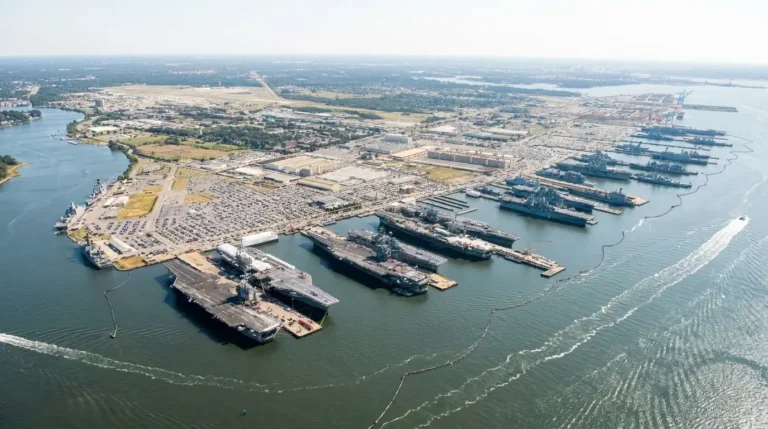
Picture a ship so vast that it stretches longer than three football fields, carries an entire air wing of fighter jets, and operates like a self-contained city in the middle of the ocean. It sounds like something from a science fiction movie, yet these floating fortresses are very real.
The largest aircraft carriers represent the pinnacle of naval engineering, combining immense size with cutting-edge technology to project military power across the globe.
An aircraft carrier is much more than a warship. It functions as a mobile airbase capable of launching, recovering, and maintaining dozens of military aircraft without relying on nearby land bases. This ability allows nations to respond quickly to conflicts, conduct humanitarian relief missions, safeguard vital shipping routes, and support allies during times of crisis.
In today’s rapidly changing geopolitical landscape, a modern carrier is as much a strategic asset as it is a symbol of national strength.
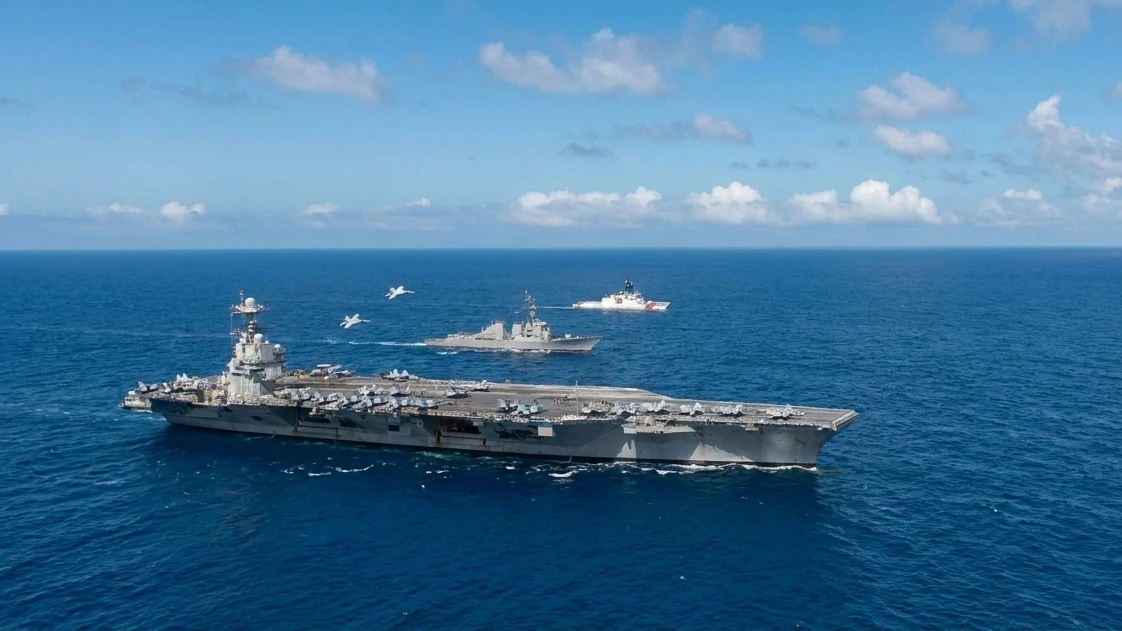
But what determines whether one carrier is larger than another? While overall length often grabs headlines, naval experts typically rank carriers by full-load displacement, the total weight of the ship when fully fueled, armed, supplied, and carrying its complete air wing.
This measurement provides a clearer picture of a carrier’s true scale and operational capability. Other important factors include flight deck size, aircraft capacity, propulsion system, crew requirements, and the sophisticated technologies that enable sustained operations at sea.
In this post, you’ll discover the Top 5 Largest Aircraft Carriers in the World in 2026, complete with detailed specifications, comparison tables, and fascinating insights into what makes each vessel unique.
Ranking the world’s largest aircraft carriers isn’t as straightforward as lining them up with a measuring tape. A ship might be the longest in the fleet yet still fall behind another vessel in terms of weight, aircraft capacity, or overall operational capability. That’s why naval analysts rely on several measurements instead of a single statistic to determine which carriers truly deserve a place among the world’s biggest.
The most important factor in this ranking is full-load displacement. Think of it as the carrier’s “working weight”, the total mass of the ship when it’s fully loaded with fuel, aircraft, ammunition, food supplies, spare parts, and thousands of crew members. A carrier with a higher displacement generally has more room for equipment, larger aviation facilities, and greater endurance during long deployments.
We also considered flight deck size, since a larger deck allows more aircraft to launch, recover, and prepare for missions simultaneously. While two carriers may appear similar from a distance, even a few extra meters of deck space can significantly improve flight operations during high-tempo missions.
Another key criterion is aircraft capacity. Some of the largest aircraft carriers can carry more than 75 aircraft, including fighter jets, airborne early warning aircraft, helicopters, and electronic warfare platforms. A larger air wing often translates into greater combat flexibility and operational reach.
Finally, we evaluated propulsion systems and operational status. Nuclear-powered carriers can remain at sea for years without refueling, giving them unmatched endurance, while conventionally powered ships require more frequent logistical support.
Only carriers that are fully operational or approaching active service in 2026 were included, ensuring this ranking reflects today’s most capable and strategically significant naval giants rather than historical legends.
At the very top of the list of the largest aircraft carriers stands the USS Gerald R. Ford class, the most advanced and powerful carrier design ever built. Named after the 38th President of the United States, this next-generation supercarrier represents decades of naval innovation.
While its overall size is similar to the legendary Nimitz class, nearly every major system has been redesigned to improve efficiency, reduce crew workload, and increase combat readiness.
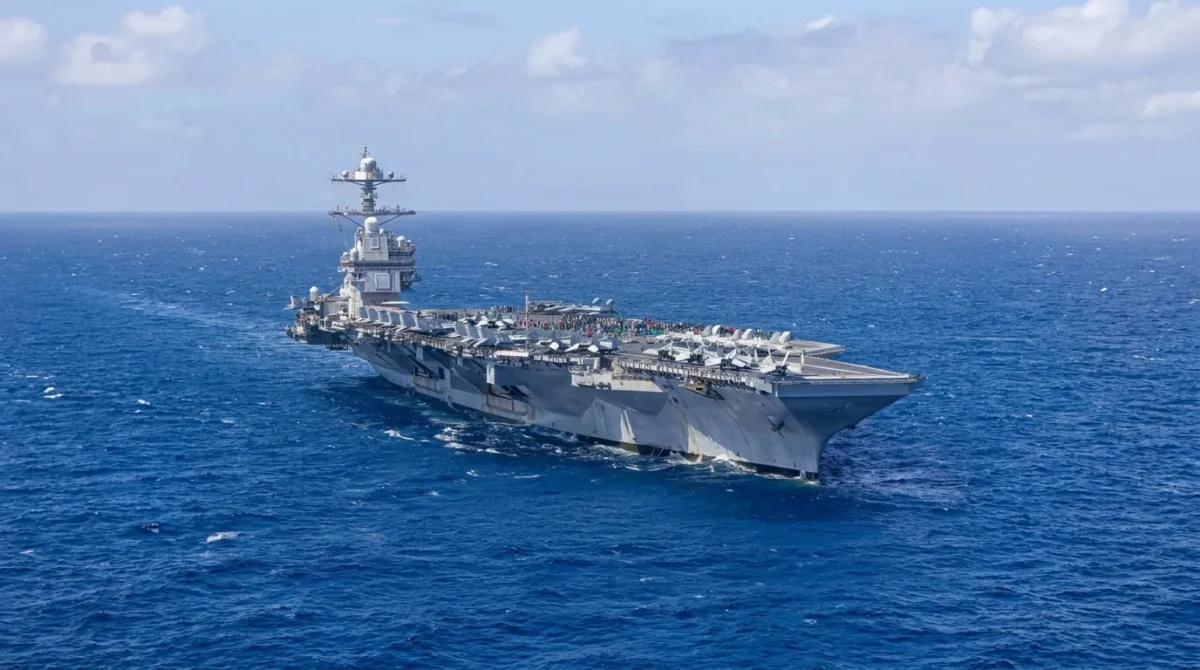
What makes the Ford class truly impressive isn’t just its massive dimensions, it’s how intelligently that space is used. With a full-load displacement of around 100,000 tons and a length of approximately 337 meters (1,106 feet), the ship functions as a floating military base capable of operating across the globe for months at a time.
Two nuclear reactors provide virtually unlimited range, eliminating the need for regular refueling and allowing the carrier to focus on sustained operations.
One of its biggest technological leaps is the Electromagnetic Aircraft Launch System (EMALS).
Unlike traditional steam catapults, EMALS launches aircraft more smoothly, reduces wear on both the aircraft and the ship, and supports a wider variety of aircraft types.
Combined with advanced arresting gear and highly automated weapons elevators, the Ford class can generate significantly more flight sorties per day than its predecessor.
| Specification | Details |
| Country | United States |
| Class | Gerald R. Ford |
| Length | 337 m (1,106 ft) |
| Full-load Displacement | ~100,000 tons |
| Aircraft Capacity | 75+ aircraft |
| Propulsion | 2 × A1B Nuclear Reactors |
| Maximum Speed | 30+ knots |
| Crew | Approximately 4,500 |
Designed to remain the backbone of the U.S. Navy well into the 21st century, the Gerald R. Ford class sets the global benchmark for size, technology, and operational capability. For now, no other aircraft carrier matches its combination of scale and advanced engineering.
Before the Gerald R. Ford class stole the spotlight, the Nimitz class reigned as the gold standard of aircraft carriers for nearly half a century.
Even today, these legendary supercarriers remain among the largest aircraft carriers in the world, proving that exceptional engineering can stand the test of time. Since the first ship, USS Nimitz (CVN-68), entered service in 1975, the class has formed the backbone of the U.S. Navy’s global operations.
With a full-load displacement of approximately 97,000 to 100,000 tons and an overall length of 333 meters (1,092 feet), the Nimitz class is only slightly smaller than the newer Ford class. To the casual observer, the difference is almost impossible to notice.
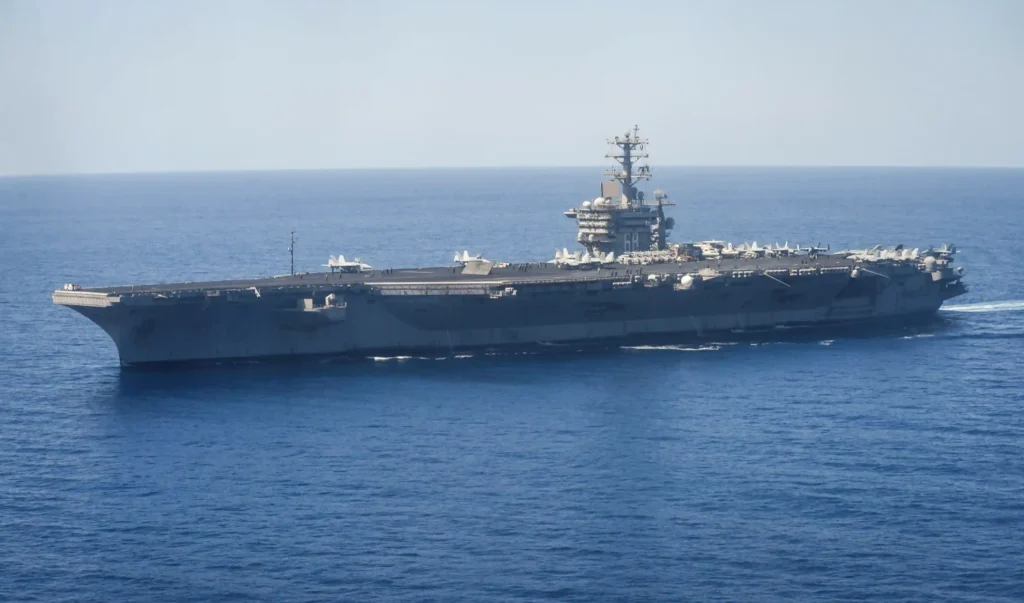
What truly distinguishes these carriers is their remarkable reliability. Over decades of service, they have supported combat missions in the Middle East, humanitarian relief after natural disasters, anti-piracy patrols, and multinational military exercises across every major ocean.
Powered by two A4W nuclear reactors, a Nimitz-class carrier can operate for more than two decades before requiring reactor refueling. That incredible endurance allows the ship to remain deployed for months while carrying an air wing of more than 60 combat aircraft, helicopters, electronic warfare aircraft, and airborne early warning planes.
| Specification | Details |
| Country | United States |
| Class | Nimitz |
| Length | 333 m (1,092 ft) |
| Full-load Displacement | 97,000–100,000 tons |
| Aircraft Capacity | 60–90 aircraft |
| Propulsion | 2 × A4W Nuclear Reactors |
| Maximum Speed | 30+ knots |
| Crew | Approximately 5,000–5,500 |
Although the Ford class represents the future, the Nimitz class continues to demonstrate why experience matters. Many of these carriers are still actively deployed, serving as powerful reminders that proven designs often remain formidable long after newer technology arrives.
Their combination of size, endurance, and combat capability ensures they will remain central to U.S. naval strategy until the final ships are gradually replaced over the coming decades.
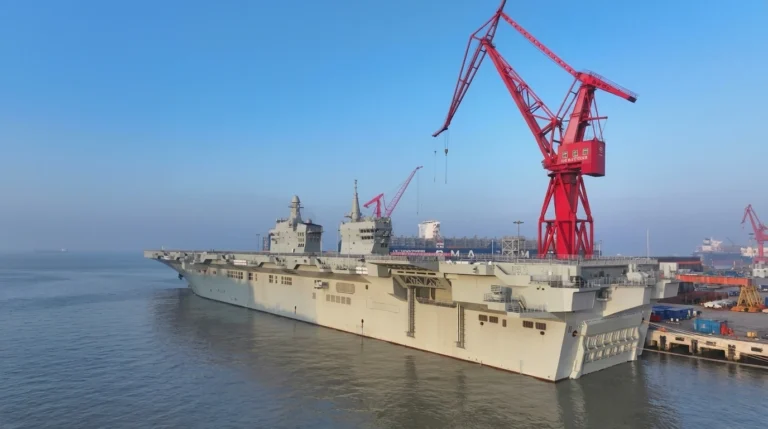
China’s Fujian (Type 003) marks a major turning point in the global race to build the largest aircraft carriers. Unlike China’s earlier carriers, which were heavily influenced by Soviet-era designs, the Fujian is the country’s first fully indigenous supercarrier developed from the keel up.
More importantly, it signals Beijing’s ambition to operate a true blue-water navy capable of projecting power far beyond its coastal waters.
With an estimated full-load displacement of around 80,000 to 85,000 tons and a length of approximately 316 meters (1,037 feet), the Fujian is the largest warship ever built in China.

Although it remains smaller than the U.S. Navy’s Ford and Nimitz classes, the gap has narrowed considerably. It’s a reminder that naval competition is no longer a one-sided affair.
Perhaps the Fujian’s most talked-about feature is its Electromagnetic Aircraft Launch System (EMALS). By replacing the traditional ski-jump ramp found on China’s earlier carriers, the ship can launch heavier aircraft with larger fuel and weapons loads.
This improvement expands the carrier’s operational flexibility and allows it to support more advanced fixed-wing aircraft, airborne early warning planes, and future unmanned systems.
| Specification | Details |
| Country | China |
| Class | Type 003 Fujian |
| Length | 316 m (1,037 ft) |
| Full-load Displacement | 80,000–85,000 tons (estimated) |
| Aircraft Capacity | Approximately 60–70 aircraft |
| Propulsion | Conventional |
| Maximum Speed | Estimated 30+ knots |
| Crew | Estimated 2,000–2,500 |
While the Fujian is still progressing toward full operational capability, its arrival has already reshaped discussions about naval power in the Indo-Pacific. Rather than simply building a larger ship, China has invested in technologies designed to close the capability gap with the world’s leading carrier fleets.
The Fujian may not yet rival America’s supercarriers in combat experience, but it clearly represents China’s most significant leap in naval aviation to date.
The Queen Elizabeth class proves that an aircraft carrier doesn’t need to be nuclear-powered to rank among the largest aircraft carriers on Earth. Built for the Royal Navy, HMS Queen Elizabeth and HMS Prince of Wales are the largest warships ever constructed for the United Kingdom.
They combine impressive size with modern design, giving Britain a flexible platform for everything from high-intensity combat operations to humanitarian assistance and international peacekeeping missions.
With a full-load displacement of around 65,000 tons and an overall length of 284 meters (932 feet), these carriers are noticeably smaller than the American supercarriers. Still, they’re enormous by global standards.

One of their most distinctive features is the ski-jump ramp at the front of the flight deck, which helps launch F-35B Lightning II stealth fighters. Because these aircraft can perform short takeoffs and vertical landings (STOVL), the ships don’t require catapults or arresting wires, simplifying flight operations while maintaining a strong combat capability.
Instead of nuclear reactors, the Queen Elizabeth class uses an advanced integrated electric propulsion system powered by gas turbines and diesel generators. This approach reduces construction costs and maintenance complexity while providing enough power for long-range deployments around the world.
| Specification | Details |
| Country | United Kingdom |
| Class | Queen Elizabeth |
| Length | 284 m (932 ft) |
| Full-load Displacement | Approximately 65,000 tons |
| Aircraft Capacity | Up to 40 aircraft (surge capacity higher) |
| Propulsion | Integrated Electric Propulsion |
| Maximum Speed | About 25 knots |
| Crew | Around 1,600 (including air wing) |
Beyond their technical specifications, these carriers symbolize Britain’s renewed commitment to global maritime operations.
Whether participating in NATO exercises, supporting disaster relief, or conducting freedom-of-navigation patrols, the Queen Elizabeth class has become a visible reminder that naval influence isn’t measured solely by size. Smart design, modern aircraft, and operational flexibility can make a carrier just as strategically valuable as sheer displacement.
Rounding out the list of the largest aircraft carriers is Shandong (Type 002), China’s first domestically built aircraft carrier to enter active service. While its design traces some of its roots to the Soviet-derived Liaoning, the Shandong is far more than a simple copy.
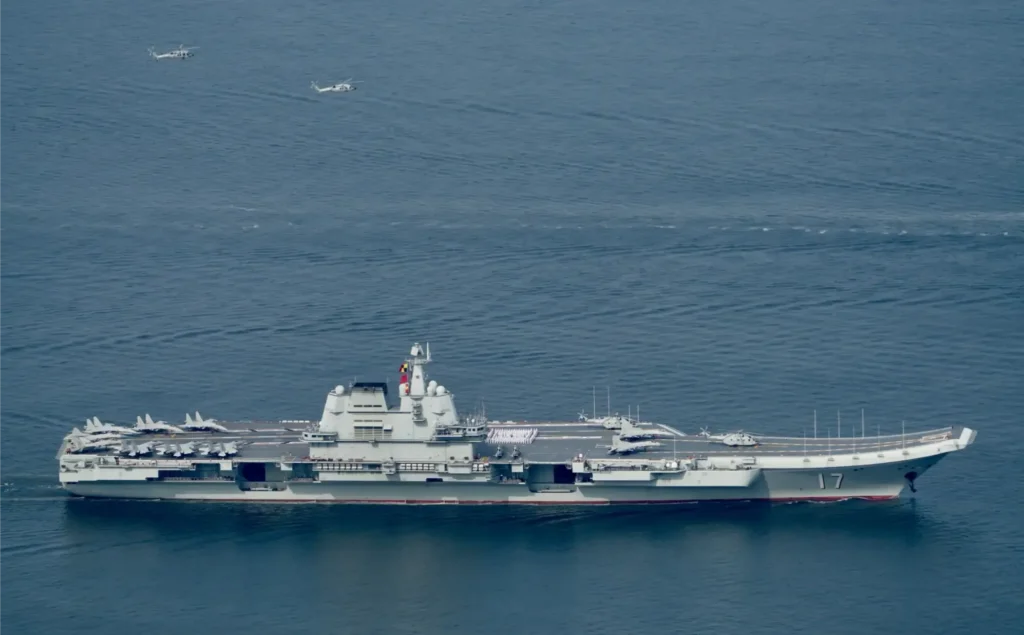
Chinese engineers redesigned key areas of the ship, increasing aircraft capacity, improving internal layout, and enhancing overall combat efficiency. It marked an important milestone in China’s journey from operating imported technology to building increasingly sophisticated naval platforms at home.
With a full-load displacement of approximately 70,000 tons and a length of around 315 meters (1,033 feet), the Shandong is one of the biggest warships ever constructed in Asia.
Although it uses a conventional propulsion system instead of nuclear reactors, it possesses the endurance and range needed for extended deployments across the Western Pacific and beyond.
Like its predecessor, the carrier features a ski-jump flight deck, allowing it to launch J-15 Flying Shark fighter aircraft without catapult systems. While this limits the maximum takeoff weight compared with catapult-equipped carriers, the Shandong benefits from a larger hangar, expanded maintenance facilities, and an optimized flight deck that supports faster aircraft handling and more efficient sortie generation.
| Specification | Details |
| Country | China |
| Class | Type 002 Shandong |
| Length | 315 m (1,033 ft) |
| Full-load Displacement | Approximately 70,000 tons |
| Aircraft Capacity | Around 44–50 aircraft |
| Propulsion | Conventional Steam Turbines |
| Maximum Speed | About 31 knots |
| Crew | Approximately 2,000 |
The Shandong represents more than just another aircraft carrier, it reflects China’s growing confidence in designing and building major naval vessels independently.
While the newer Fujian showcases the future of Chinese naval aviation, the Shandong serves as the operational bridge between older Soviet-inspired designs and the country’s next generation of advanced supercarriers.
Together, they demonstrate how rapidly China’s carrier program has evolved in less than two decades.
Reading about each carrier individually is helpful, but seeing them side by side makes the differences much clearer. While the largest aircraft carriers all serve the same fundamental purpose, projecting air power from the sea, their designs reflect very different military strategies, budgets, and operational priorities.
The United States continues to dominate in both size and capability with its nuclear-powered supercarriers. Their massive displacement allows them to carry larger air wings, more fuel, and enough supplies to remain deployed for extended periods without frequent logistical support.
China, meanwhile, has rapidly narrowed the gap by developing larger and more capable carriers with each new generation. The United Kingdom has taken a different approach, emphasizing flexibility, interoperability with NATO allies, and advanced stealth aircraft rather than sheer size.
The table below highlights how these five naval giants compare across several key specifications.
| Rank | Aircraft Carrier | Country | Full-load Displacement | Length | Aircraft Capacity | Propulsion | Status |
| 1 | USS Gerald R. Ford Class | United States | ~100,000 tons | 337 m | 75+ | Nuclear | Active |
| 2 | Nimitz Class | United States | 97,000–100,000 tons | 333 m | 60–90 | Nuclear | Active |
| 3 | Fujian (Type 003) | China | 80,000–85,000 tons | 316 m | 60–70 | Conventional | Sea Trials / Entering Service |
| 4 | Shandong (Type 002) | China | ~70,000 tons | 315 m | 44–50 | Conventional | Active |
| 5 | Queen Elizabeth Class | United Kingdom | ~65,000 tons | 284 m | Up to 40 | Integrated Electric | Active |
One trend stands out immediately: bigger doesn’t always mean better. A carrier’s effectiveness depends on how well its aircraft, sensors, propulsion system, crew, and support vessels work together.
Even so, displacement remains an excellent indicator of overall capability, which is why these five ships consistently rank among the largest and most powerful aircraft carriers operating today.