Follow Us:
Follow Us:

Meet the USS Gerald R. Ford (CVN-78), the most powerful and advanced aircraft carrier ever built. This isn’t just another massive ship; it’s a game-changer in modern naval warfare, packed with next-gen tech and unmatched capabilities.
Named after the 38th U.S. President, Gerald R. Ford, this carrier reflects more than just a name. Ford served in the Navy during World War II, and now his legacy sails through the world’s oceans on a vessel that redefines what a warship can be.
Commissioned in 2017, CVN-78 is the first of the new Ford-class carriers, set to replace the older Nimitz-class fleet. At over 1,100 feet long and weighing around 100,000 tons, it’s the largest warship on the planet. But its size isn’t what makes it special, it’s what’s inside.
The Ford-class brings revolutionary upgrades. From EMALS (Electromagnetic Aircraft Launch System) to advanced radar and energy systems, it’s built for faster aircraft launch rates, better efficiency, and reduced crew workload. Think of it as a smarter, leaner, deadlier version of what came before.
That said, the road hasn’t been easy. CVN-78 has faced plenty of criticism, from ballooning costs (over $13 billion) to delayed deployments and technical issues. But the Navy is playing the long game. Officials believe that over time, this new class will save billions in maintenance and manpower while offering superior performance.
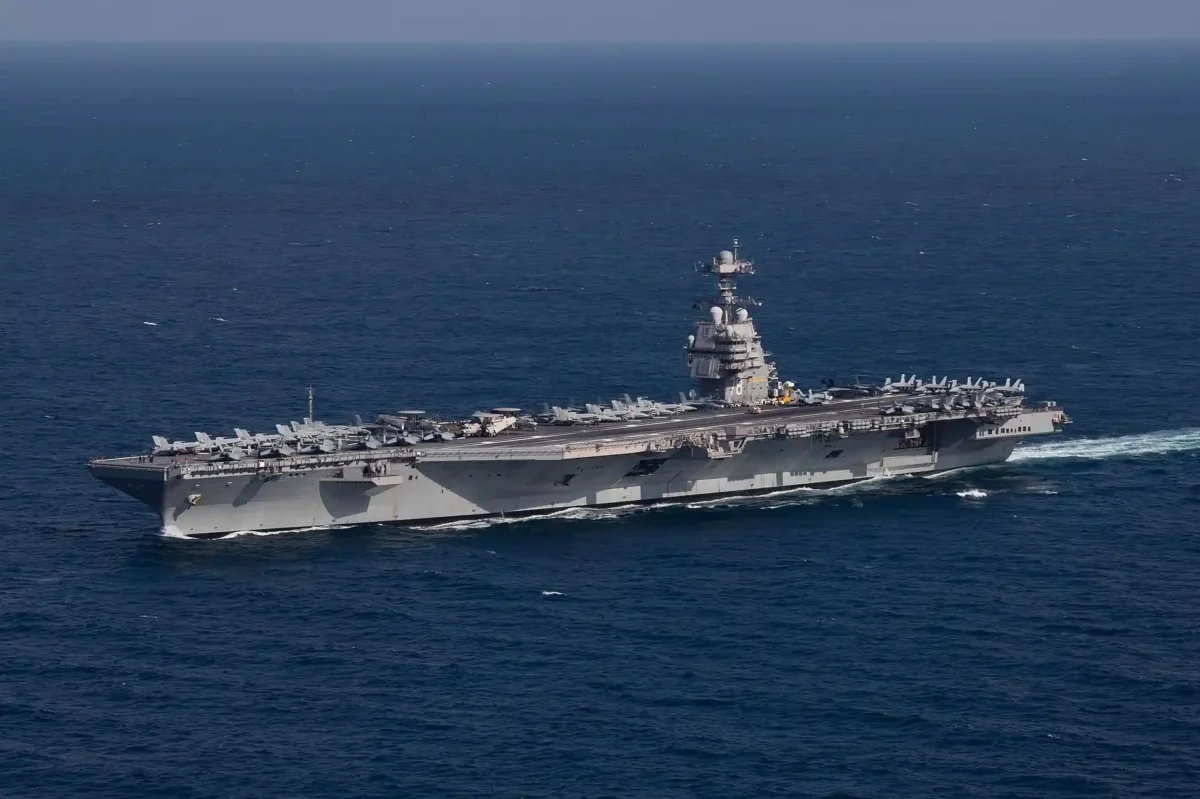
Today, the USS Gerald R. Ford serves as the flagship of Carrier Strike Group Twelve, projecting American power wherever it sails, from the Mediterranean to the Indo-Pacific. It’s not just a ship, it’s a symbol of readiness, resilience, and reach.
So, whether you’re into military tech, global strategy, or just curious about what makes this carrier so special, there’s one thing clear: the USS Gerald R. Ford isn’t just sailing into the future—it’s leading it.
Building the USS Gerald R. Ford wasn’t just a project, it was a major engineering and logistical challenge that spanned over a decade. From concept to commissioning, every stage broke new ground in naval construction.
The planning for a new class of aircraft carrier began in the late 1990s, as the Navy looked to modernize its fleet. Construction officially kicked off in 2005, with Huntington Ingalls Industries’ Newport News Shipbuilding in Virginia taking the lead. This is the only shipyard in the U.S. capable of building nuclear-powered aircraft carriers, and it’s where all Ford-class ships are being constructed.
Read also: USS John F. Kennedy (CVN-79): Inside the Navy’s Next-Gen Carrier
The ship’s keel was laid down in November 2009, marking the start of physical construction. It was christened by Susan Ford Bales, President Ford’s daughter, on November 9, 2013, in a ceremony that celebrated both naval tradition and futuristic ambition.
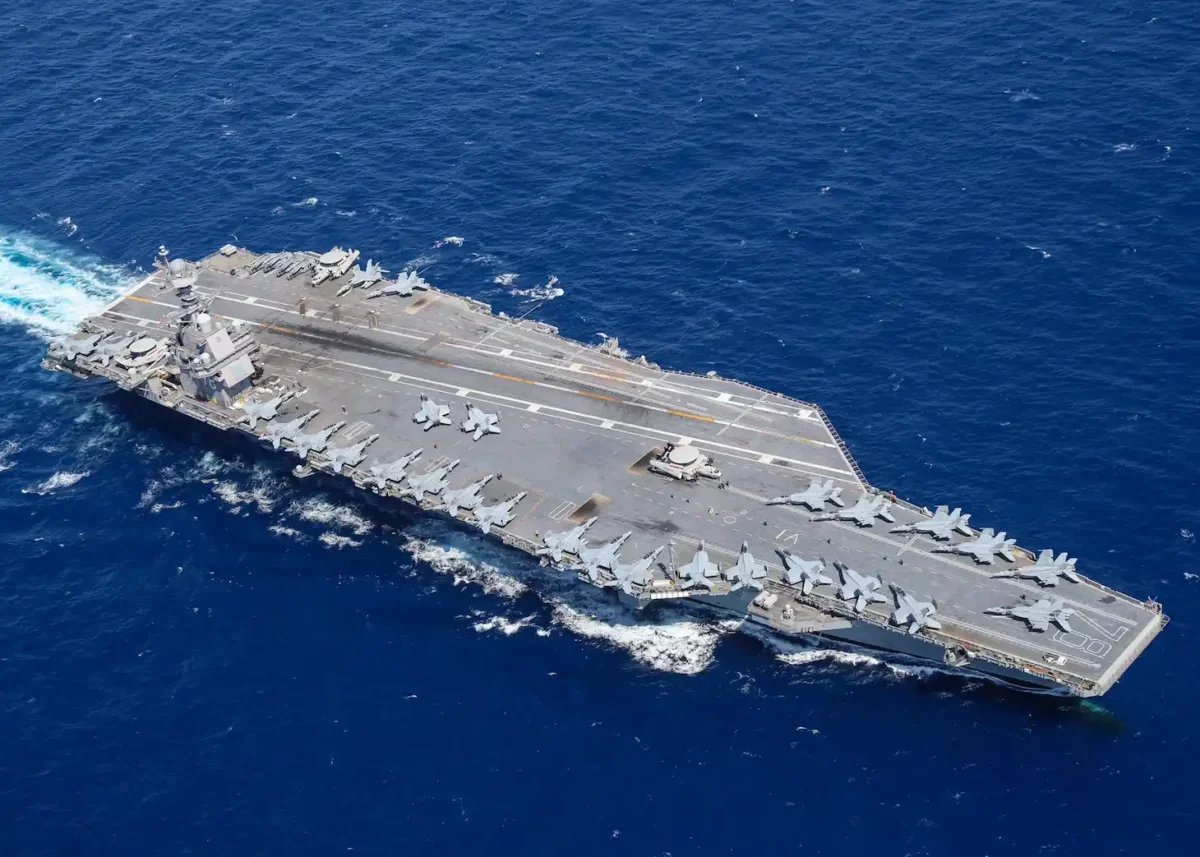
One of the standout features of the Ford-class design is its emphasis on modular construction. Instead of building the ship piece by piece in place, large sections were pre-fabricated, outfitted, and then assembled like a massive 3D puzzle. This approach was meant to speed up the process and improve precision, but it also introduced new challenges, especially with untested technology.
The USS Gerald R. Ford was officially commissioned into the Navy on July 22, 2017. But “commissioned” didn’t mean combat-ready. The ship entered a long phase of testing, troubleshooting, and upgrades. Problems with critical systems like the EMALS, Advanced Arresting Gear (AAG), and radar meant that the Ford wouldn’t see its first full deployment until 2023, six years after commissioning.
Despite these delays, the Navy remained confident. The Ford-class was built with the next 50 years in mind. Every setback has contributed to refining a platform that will carry future fighters, unmanned drones, and cutting-edge weapons systems.
In short, the USS Gerald R. Ford isn’t just the product of years—it’s the foundation for decades of naval dominance.
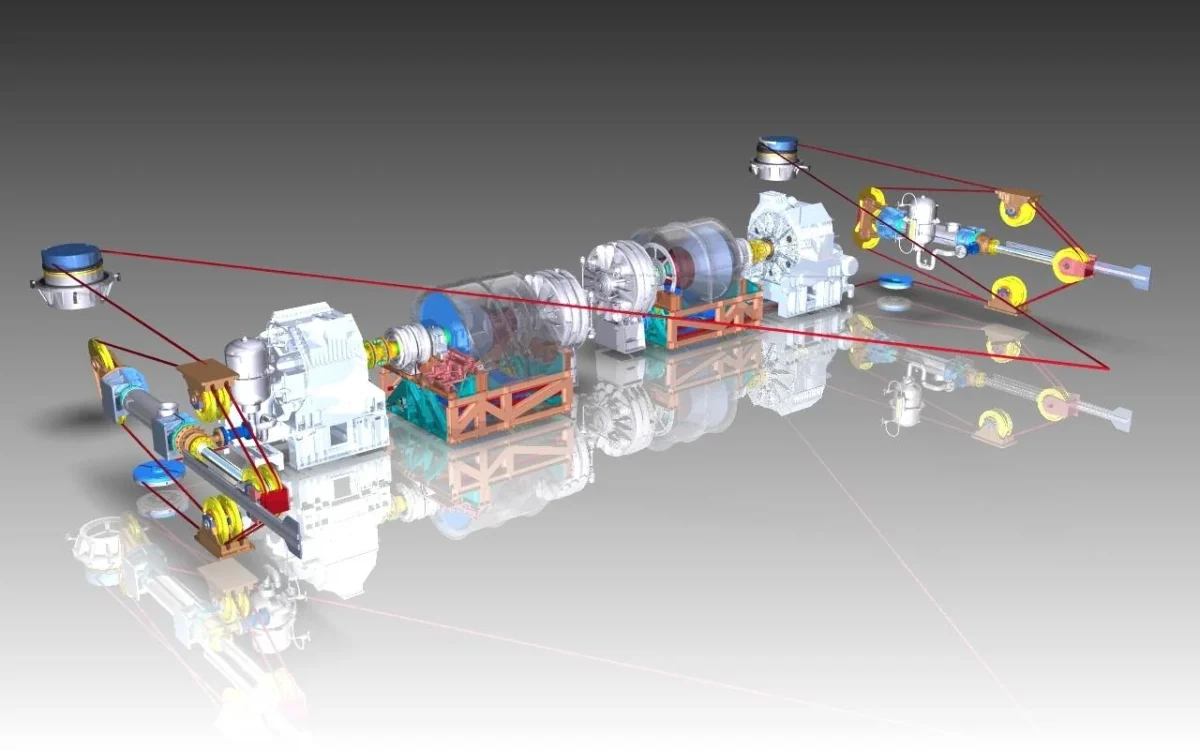
What really sets the USS Gerald R. Ford apart from earlier carriers isn’t just its size, it’s the tech under the deck. Two of the ship’s most talked-about systems are the Electromagnetic Aircraft Launch System (EMALS) and the Advanced Arresting Gear (AAG). Together, they replace the traditional steam-powered catapults and hydraulic arresting systems used on Nimitz-class carriers.
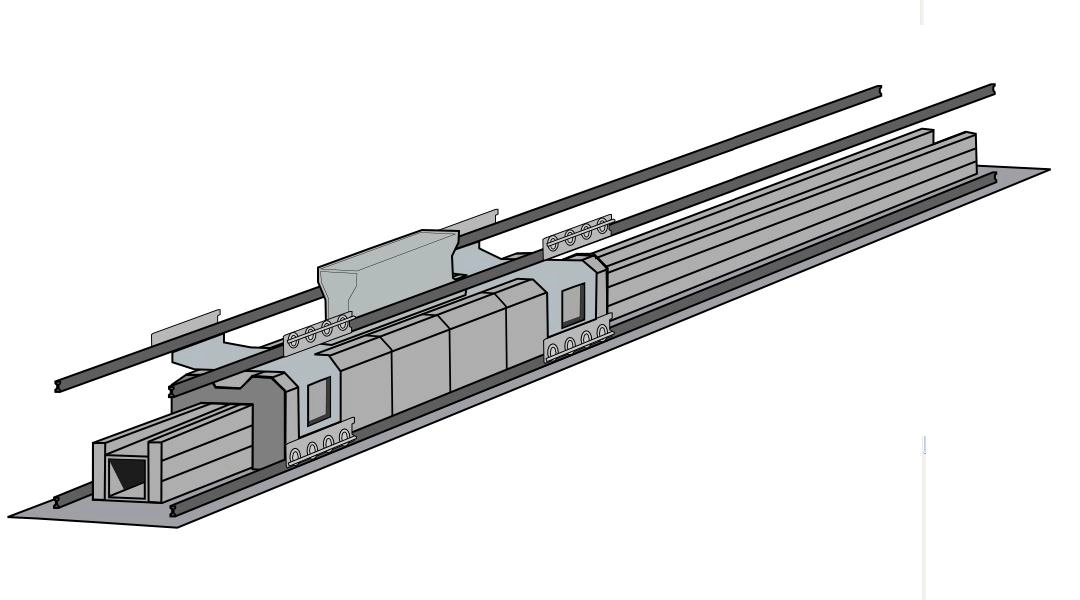
Let’s start with EMALS. Instead of using steam pressure to launch aircraft off the flight deck, EMALS uses magnetic fields to catapult planes into the sky.
The system works like a giant linear motor, kind of like the tech behind high-speed maglev trains. It’s smoother, faster, and puts less stress on the aircraft, especially lightweight drones and next-gen fighters. It also allows for more launches per day, improving the ship’s sortie generation rate by nearly 25% compared to older carriers.
Now, AAG steps in on the landing side. This system replaces traditional arresting wires with electronically controlled braking that adjusts tension in real time. That means safer landings, especially for lighter aircraft like UAVs. It’s also designed to last longer, need fewer sailors to operate, and reduce wear and tear on both the system and the aircraft.
Sounds impressive, right? It is, but it hasn’t been without issues.
During its first years, EMALS and AAG faced numerous technical setbacks. Early testing showed reliability problems, especially under operational stress. According to a 2020 report by the Department of Operational Test and Evaluation (DOT&E), these systems had higher-than-expected failure rates, forcing the Navy to troubleshoot and refine them extensively.
Still, progress has been steady. As of 2024, both systems have completed thousands of successful launch and recovery cycles, with performance improving deployment after deployment. The Navy sees these technologies as key not just for Ford-class carriers, but for the future of all U.S. naval aviation.
In a world of faster jets, stealthier drones, and expanding threats, EMALS and AAG aren’t just high-tech upgrades, they’re essential. And the USS Gerald R. Ford is leading the charge.
After years of testing and refinement, the USS Gerald R. Ford finally entered operational service in a big way. Its first full deployment began in May 2023, a moment the Navy had long anticipated and critics were watching closely. This was the carrier’s chance to prove that all the delays, costs, and headaches were worth it—and it didn’t disappoint.
Read also: USS Abraham Lincoln (CVN-72): Capabilities, Missions, and Tech
The Ford’s first deployment was packed with strategic significance. Operating as the flagship of Carrier Strike Group Twelve, it sailed across the Atlantic into European Command (EUCOM) waters.
The deployment included stops and joint exercises with NATO allies in the Mediterranean, North Atlantic, and Baltic Sea, underscoring America’s commitment to collective defense. It wasn’t just a show of force, it was a demonstration of interoperability, as U.S. aircraft launched alongside those of partner nations during coordinated drills.
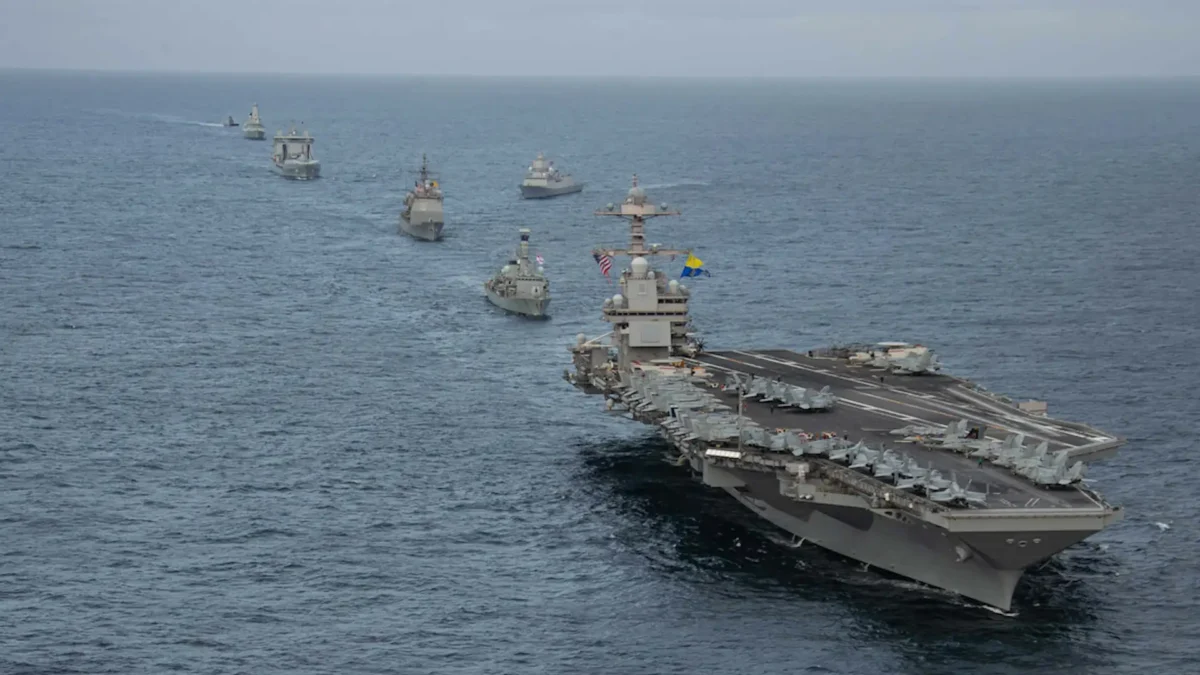
The timing of the Ford’s presence was no accident. Tensions were high in regions like the Eastern Mediterranean, where political and military pressures surrounding Russia, Ukraine, and the Middle East were heating up. The Navy made it clear: the Ford wasn’t just sailing, it was sending a message.
Later in mid-2025, the ship returned to the region during another major deployment. This time, its presence near Israel and the Red Sea was part of a broader U.S. response to escalating conflicts and regional instability.
Read also: Top 5 Largest Aircraft Carriers in the World
In July 2025, the Ford made headlines again when it transited the Strait of Gibraltar, re-entering the Mediterranean alongside escort ships and a full air wing of strike fighters and surveillance aircraft.
Throughout these deployments, the ship conducted hundreds of sorties, supported maritime patrols, and participated in live-fire exercises. Every mission provided valuable data to refine procedures, test systems like EMALS, and validate the ship’s role in the Navy’s global strategy.
What’s become clear is this: the USS Gerald R. Ford isn’t just operational, it’s essential. In an increasingly unpredictable world, it gives the U.S. a mobile, lethal, and highly visible tool of deterrence and diplomacy. It’s not just doing its job, it’s redefining it.
The USS Gerald R. Ford is more than just a massive warship, it’s a critical centerpiece in America’s naval strategy and global presence. Operating as the flagship of Carrier Strike Group Twelve, the Ford extends U.S. power projection with unmatched flexibility and resilience.
Unlike previous carriers, the Ford’s advanced systems allow it to sustain higher sortie rates, launching and recovering aircraft more efficiently to maintain air dominance. This capability is vital for rapid response in crises, whether that’s a conflict hotspot or a humanitarian mission.
The ship carries a mix of fighter jets, electronic warfare planes, early warning aircraft, and unmanned drones, enabling it to perform a broad range of tasks from air superiority and strike missions to reconnaissance and intelligence gathering.
Strategically, the Ford-class carrier serves as a floating bastion of American influence. Its deployments to regions like the Mediterranean, Indo-Pacific, and sometimes the Persian Gulf are a clear statement to allies and adversaries alike that the U.S. maintains a powerful and ready presence.
The ship’s ability to move quickly and operate independently or as part of a larger task force makes it an indispensable tool for diplomacy backed by credible military force.
In the broader context of U.S. defense policy, the USS Gerald R. Ford embodies the Navy’s shift toward modernizing its fleet to address emerging threats, including near-peer competitors like China and Russia. With technologies designed to counter hypersonic missiles, cyberattacks, and unmanned systems, the Ford is a key platform for integrating new weapons and sensors that will define naval combat in the 21st century.
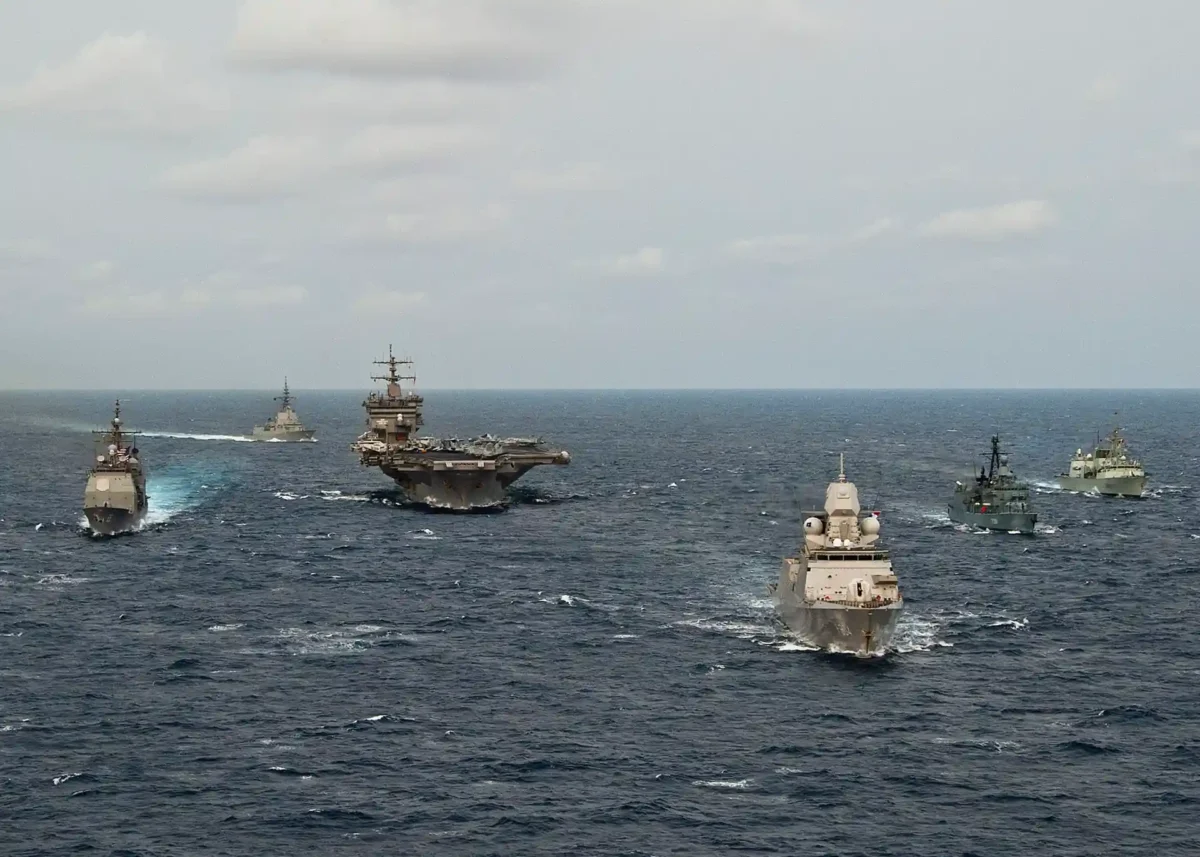
Moreover, the carrier plays a vital role in joint and coalition operations. Exercises with NATO allies and partner navies enhance interoperability and strengthen military ties, ensuring a united front in maintaining maritime security and freedom of navigation.
In essence, the USS Gerald R. Ford is not just a symbol of naval innovation; it is a linchpin of American strategy, ready to respond, deter, and dominate wherever and whenever called upon.
The USS Gerald R. Ford is just the beginning of a new era in naval aviation. Its success and lessons learned are shaping the future of the Ford-class carriers, which will gradually replace the older Nimitz-class ships over the coming decades.
Following the lead ship, the next vessels in the class include the USS John F. Kennedy (CVN-79), USS Enterprise (CVN-80), and the upcoming USS Doris Miller (CVN-81). Each successive carrier is benefiting from improvements based on the Ford’s operational history, refinements in technology, construction techniques, and systems integration aim to deliver more reliable and cost-effective warships.
Read also: USS Enterprise CVN-65: Facts & Tech That Made It Legendary
One of the exciting prospects for the future fleet is the integration of new weapons and defense systems.
The Navy is investing in directed-energy weapons like the HELIOS laser system, designed to defend against fast-moving threats such as drones, cruise missiles, and potentially hypersonic weapons. These cutting-edge defenses align perfectly with the Ford’s advanced power generation capabilities, which can support energy-intensive systems that older carriers cannot.
Another major focus is automation and reducing crew workload. The Ford-class is designed to operate with fewer sailors, around 600 fewer than Nimitz-class carriers, thanks to smarter systems and enhanced robotics. This not only reduces personnel costs but also improves efficiency and safety.
The carriers will also see expanded use of unmanned aerial vehicles (UAVs) and next-generation aircraft, which will transform the carrier air wing’s capabilities. This includes more stealthy, longer-endurance drones capable of surveillance, electronic warfare, and strike missions.
Looking beyond the technology, the Ford-class carriers are intended to maintain U.S. naval dominance well into the mid-21st century. As maritime challenges evolve, whether from rival powers, cyber threats, or shifting geopolitical alliances, the Ford-class fleet offers a flexible, powerful platform that can adapt and lead.
In short, the USS Gerald R. Ford has laid the foundation for a new generation of carriers, and the future ships will build on that legacy to keep the U.S. Navy at the cutting edge of global power projection.