Follow Us:
Follow Us:

If you picture an aircraft carrier as a floating airport, the USS John F. Kennedy politely shatters that image, and then rebuilds it with nuclear power, software, and a lot of quiet ambition.
This isn’t just another gray giant drifting across the ocean. It’s a deliberate reset button for how the U.S. Navy plans to project power in an era where threats don’t always announce themselves with radar blips and missile trails.
Officially known as USS John F. Kennedy (CVN-79), this ship is the second Gerald R. Ford-class aircraft carrier, and it exists because the old way of doing things, bigger crews, steam catapults, endless maintenance, was starting to show its age. Think of CVN-79 less as a sequel and more as a refined second draft. Same idea, sharper execution.
At over 100,000 tons of displacement and powered by two A1B nuclear reactors, the USS John F. Kennedy is designed to operate for decades with fewer sailors, faster aircraft launches, and significantly lower lifetime costs.
The Navy estimates Ford-class carriers will save billions of dollars over a 50-year service life, largely by reducing crew size and maintenance demands. That’s not a flashy headline, but it matters.

What makes this carrier especially interesting isn’t just its scale. It’s timing. Built during a period of rising global naval competition, the USS John F. Kennedy aircraft carrier reflects a shift in priorities: adaptability over brute force, systems over steel, data over muscle memory.
In this post, we’ll unpack how this ship came to be, what it can actually do, and why CVN-79 might quietly shape naval strategy long after the launch photos fade from memory.
Before steel was cut or reactors installed, the USS John F. Kennedy already carried a kind of invisible cargo, history, expectation, and a name that doesn’t sit quietly. Naming a U.S. Navy aircraft carrier after a president is never accidental. Naming one after John F. Kennedy is a statement.
This isn’t the first time the Navy has done it. The original USS John F. Kennedy (CV-67) entered service in 1968, right in the thick of the Cold War. It was the last conventionally powered carrier the U.S. would ever build, a transitional ship bridging old-school naval aviation and the nuclear age. When CV-67 was decommissioned in 2007, it closed a chapter that had lasted nearly four decades.
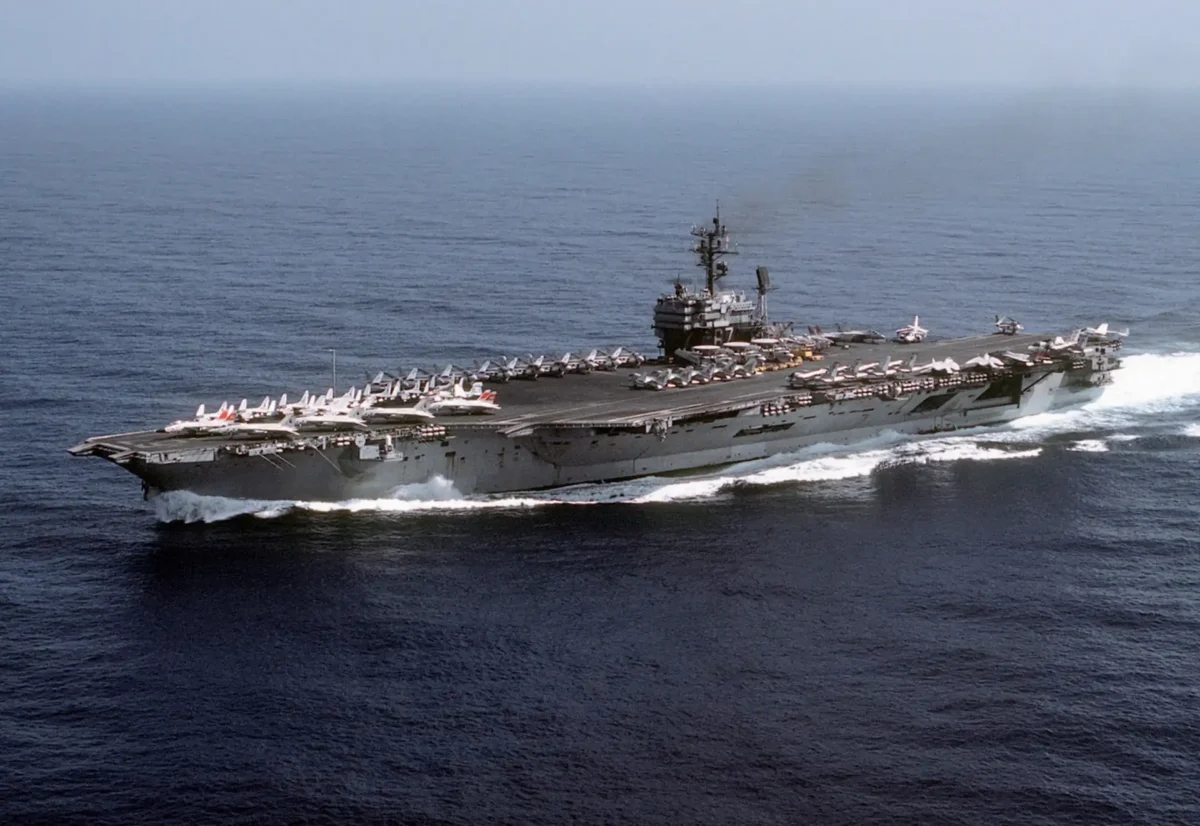
Fast forward, and the name returns, this time attached to CVN-79, a nuclear-powered Ford-class carrier built for a very different world. The contrast is striking. The first Kennedy was about endurance and presence.
The new USS John F. Kennedy is about efficiency, adaptability, and digital dominance. Same name. Entirely different philosophy.
There’s symbolism here that often gets glossed over. President Kennedy famously pushed American innovation forward, from space exploration to military modernization.
Read also: USS George H.W. Bush (CVN-77): Capabilities You Must Know
In that sense, CVN-79 fits the name better than most ships ever could. Its electromagnetic aircraft launch system (EMALS), advanced radar suites, and automated systems feel like a continuation of that forward-leaning mindset.
Interestingly, the Navy didn’t rush to reuse the name. It waited more than a decade, choosing the moment carefully. That delay wasn’t nostalgia, it was timing.
The USS John F. Kennedy aircraft carrier isn’t meant to honor the past. It’s meant to challenge the future, quietly daring it to keep up.
If history gives the USS John F. Kennedy its soul, the specifications give it muscle, and nerves, and reflexes, and a brain that never sleeps. This ship isn’t impressive because it’s big (though it absolutely is). It’s impressive because almost every number attached to it represents a rethink of how an aircraft carrier should work.
At first glance, CVN-79 looks familiar: long flight deck, island tower, endless gray. But under the surface, the differences pile up fast.
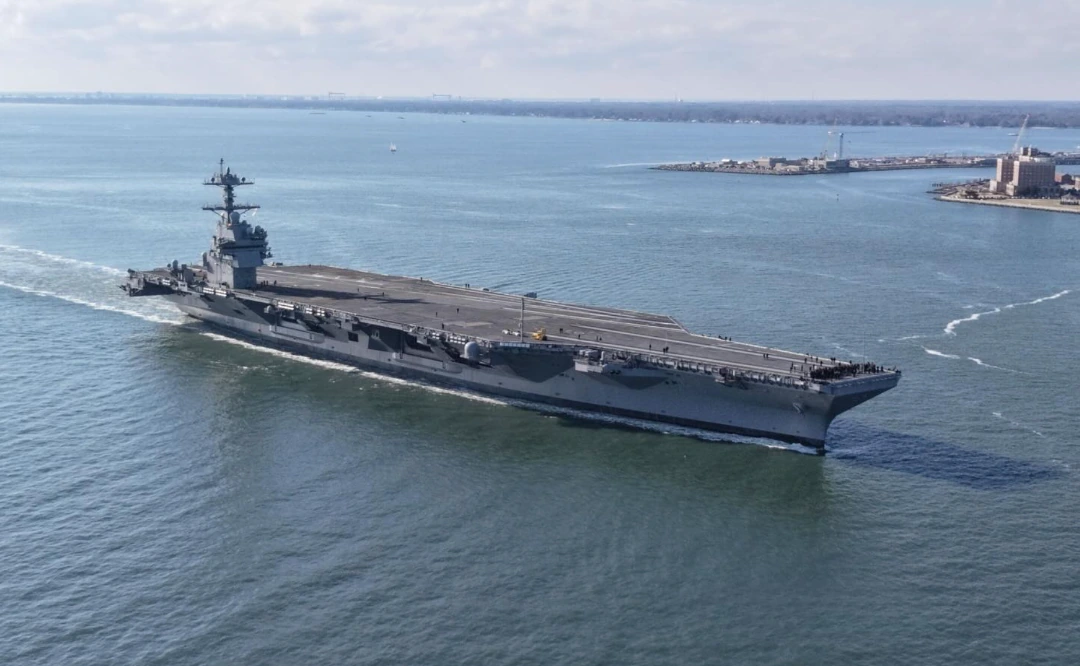
The Ford-class design prioritizes electrical power and automation, which explains why the USS John F. Kennedy aircraft carrier can generate nearly three times more electrical power than older Nimitz-class carriers. That surplus isn’t extra, it’s reserved for future systems we haven’t even fielded yet.
Crew size is another quiet revolution. Fewer sailors are needed to run the ship, not because it does less, but because machines handle tasks that once required human hands.
Over a 50-year lifespan, that translates into enormous savings, and fewer exhausted people fixing the same problems at sea, again and again.
Here’s a snapshot of the core specs that define the USS John F. Kennedy:
| Specification | Detail |
| Ship Class | Gerald R. Ford-class |
| Displacement | ~100,000+ tons (full load) |
| Length | Approx. 1,106 feet |
| Propulsion | 2 × A1B nuclear reactors |
| Max Speed | 30+ knots |
| Crew Size | ~2,600 ship + ~2,000 air wing |
| Aircraft Capacity | 75+ aircraft |
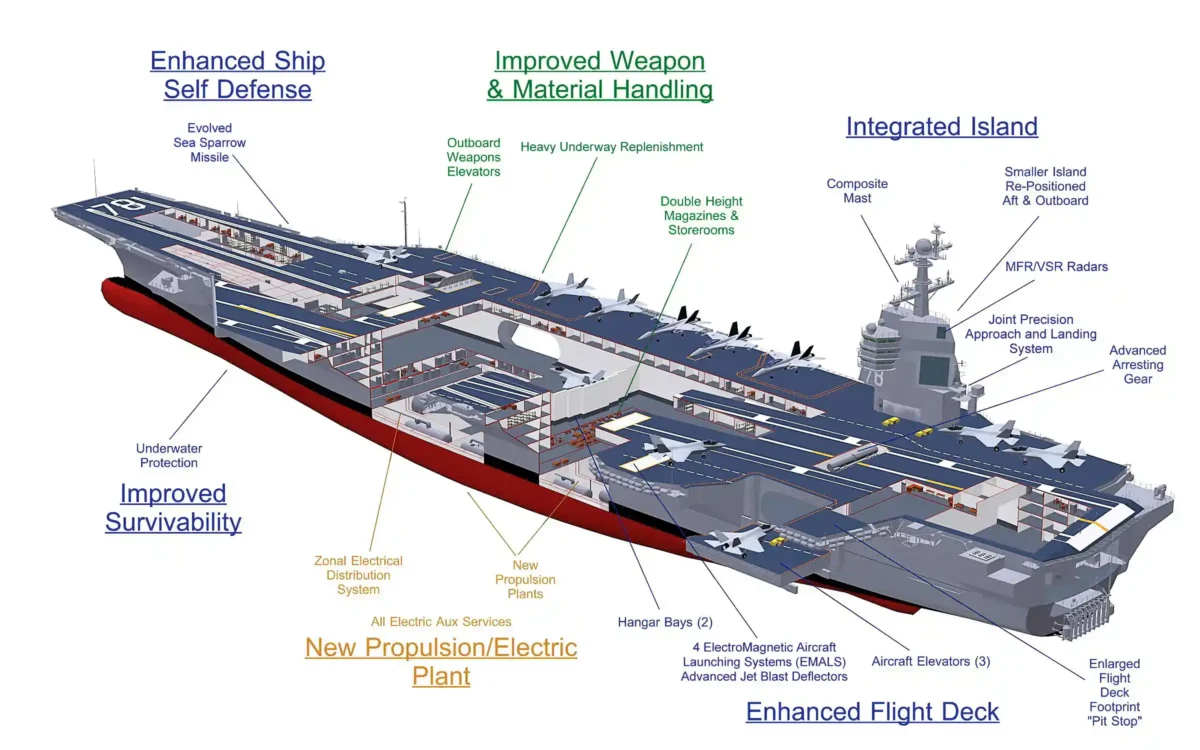
One detail people miss: the redesigned island is smaller and pushed aft. That single change improves flight deck flow, increasing sortie rates. In plain terms? More aircraft launched, faster, with less chaos.
Numbers like these don’t just describe a ship. They explain why the USS John F. Kennedy CVN-79 isn’t built for yesterday’s wars, and probably not just today’s either.
Warships don’t just get built. They accumulate, slowly, noisily, sometimes painfully. The USS John F. Kennedy (CVN-79) is a perfect example of that long, grinding transformation from concept art to floating reality.
Construction officially began in 2011, when Huntington Ingalls Industries’ Newport News Shipbuilding started fabricating early components. The keel was laid in 2015, a moment that sounds ceremonial but is really more industrial than poetic: massive modules lowered into place, sparks flying, timelines already under pressure.
This wasn’t the Navy’s first Ford-class carrier, that distinction belongs to USS Gerald R. Ford, and that mattered. CVN-79 benefited from hard-earned lessons, design tweaks, and fewer “learning curve” mistakes.
The ship was launched in October 2019 and christened in December 2019, with Caroline Kennedy, JFK’s daughter, serving as sponsor. That moment tied history neatly to hardware. But the real work? It came after. Outfitting, system integration, and testing dragged on, slowed by pandemic disruptions and the sheer complexity of the ship’s advanced systems.
Unlike older carriers, the USS John F. Kennedy aircraft carrier relies heavily on software-driven systems, EMALS, Advanced Arresting Gear (AAG), and integrated power management. Each one needed testing, retesting, and sometimes redesign. Delays followed. Critics noticed. The Navy adjusted expectations.
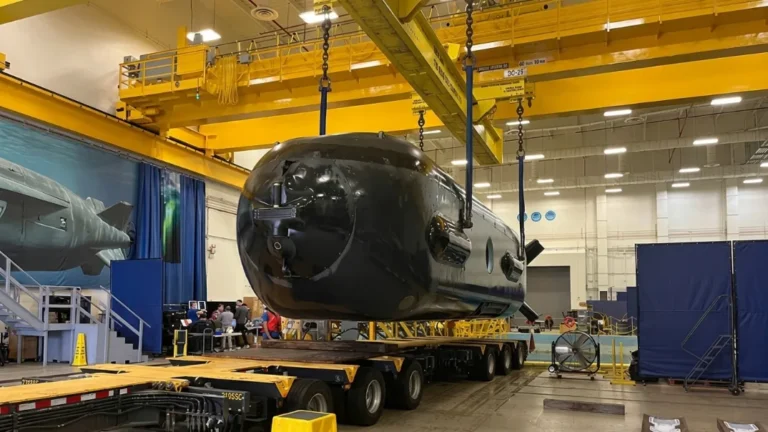
As of the mid-2020s, CVN-79 entered sea trials, marking the shift from shipyard project to operational warship. Delivery is currently projected for 2027, later than originally planned, but not unusual for a first-of-its-kind platform.
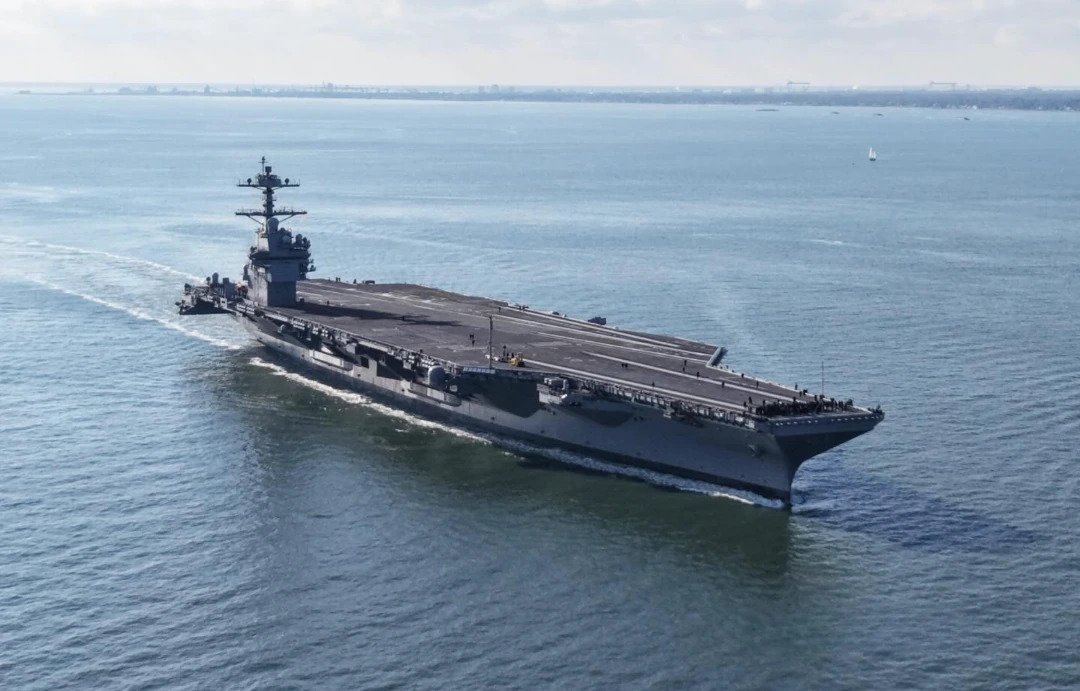
The takeaway? This wasn’t a rushed build. It was a careful one. The USS John F. Kennedy wasn’t designed to be early. It was designed to be right, and to last half a century once it finally joins the fleet.
Here’s where the USS John F. Kennedy stops being “just another big ship” and starts feeling like a floating systems lab, one that happens to launch fighter jets.
The real story of CVN-79 lives in its guts: power generation, aircraft handling, and a level of automation that would’ve felt like science fiction to crews from even twenty years ago.
Start with propulsion.
The ship runs on two A1B nuclear reactors, each far more powerful than the reactors used on Nimitz-class carriers. Together, they generate enough electricity not only to move a 100,000-ton ship at 30+ knots, but to support energy-hungry systems well into the future. Lasers. Advanced sensors. Whatever comes next. The power margin is intentional, built-in breathing room.
Then there’s aviation. The USS John F. Kennedy aircraft carrier uses EMALS, electromagnetic aircraft launch systems, instead of steam catapults. Translation? Smoother launches, less stress on airframes, and the ability to launch a wider range of aircraft, from heavy fighters to lighter drones. Pair that with Advanced Arresting Gear (AAG), and recovery becomes more precise, more predictable, and less punishing on equipment.
The flight deck itself is designed for flow. Fewer bottlenecks. Smarter elevator placement. A smaller island pushed aft. All of it adds up to higher sortie rates, roughly 25–30% more sorties per day compared to older carriers under similar conditions.
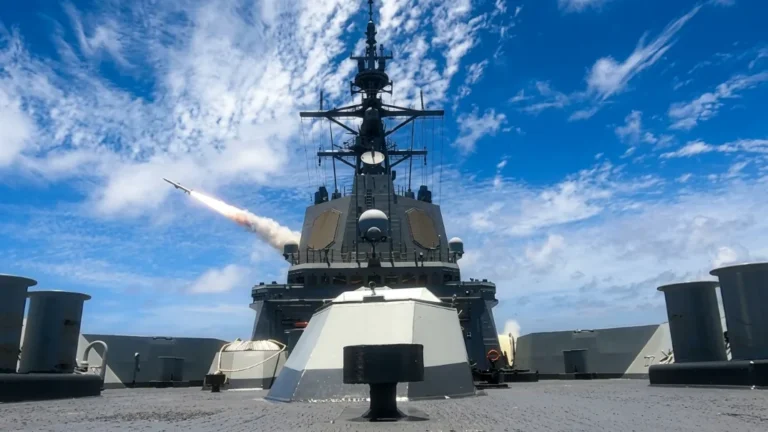
Defensively, CVN-79 doesn’t posture, it protects. Systems like ESSM, RAM, and Phalanx CIWS form layered shields against missiles and aircraft. Not flashy. Just effective.
In many ways, the USS John F. Kennedy isn’t about dominance. It’s about tempo, doing more, faster, with fewer people breaking a sweat.
Comparisons are inevitable. The USS John F. Kennedy doesn’t exist in a vacuum, it sails in the long shadow of the carriers that came before it and alongside ships that will follow. But what’s interesting is where it differs, not just how much.
Start with the obvious benchmark: USS Gerald R. Ford (CVN-78). On paper, they’re siblings. Same class, similar size, same core systems. In practice, CVN-79 is the more mature version. Design tweaks based on Ford’s early operational headaches, especially around weapons elevators and software integration, were baked into the Kennedy during construction. That means fewer post-delivery fixes and a smoother path to full deployment. Think less “beta test,” more “Version 2.0.”
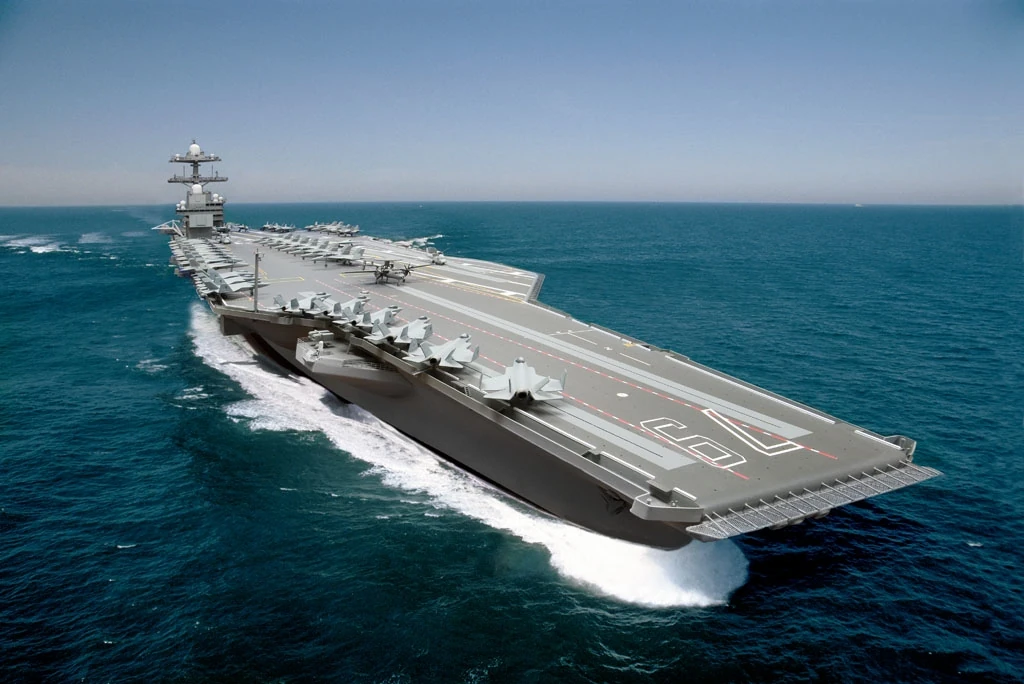
Now compare the USS John F. Kennedy aircraft carrier to the older Nimitz-class ships still forming the backbone of the fleet. Nimitz carriers are proven, tough, and deeply respected, but they’re labor-intensive. Steam catapults, larger crews, and aging electrical systems limit how quickly they can adapt.
CVN-79, by contrast, is built around electrical power and automation. It can support future systems, directed-energy weapons, advanced sensors, that Nimitz ships simply weren’t designed to handle.
Then there’s what’s coming next. USS Enterprise (CVN-80) and USS Doris Miller (CVN-81) will push the Ford-class concept even further, but they’ll do so standing on the Kennedy’s shoulders. CVN-79 is the bridge, less experimental than Ford, less refined than Enterprise.
In that sense, the USS John F. Kennedy occupies a rare sweet spot: advanced enough to redefine expectations, stable enough to deliver on them.