Follow Us:

Follow Us:

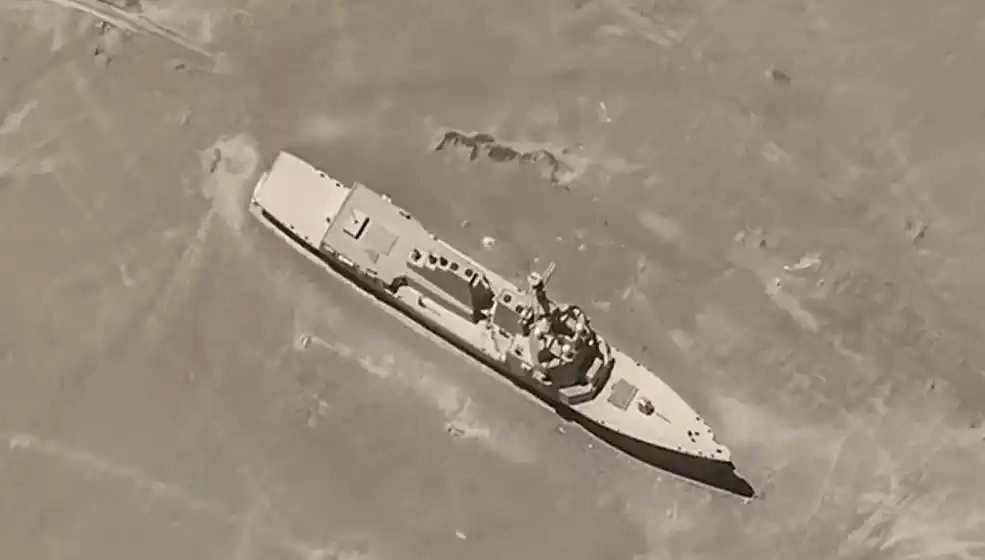
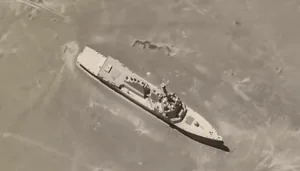
Defense Feeds, Beijing – China has reportedly constructed a full-scale Arleigh Burke destroyer replica at one of its military test facilities, a development that underscores Beijing’s continued investment in refining anti-ship strike capabilities.
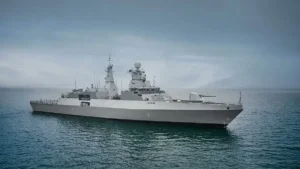
The target appears designed to replicate the general dimensions and layout of the U.S. Navy’s Arleigh Burke-class destroyers, providing a realistic platform for evaluating missile performance, target acquisition systems and strike accuracy under controlled conditions.
Although militaries have long used mock targets for weapons testing, the construction of a life-sized representation of one of the U.S. Navy’s most capable surface combatants reflects the increasing importance China places on preparing for modern maritime warfare. The move also highlights how realistic training environments have become a priority as precision-guided weapons continue to evolve.
The reported Arleigh Burke destroyer replica is believed to be intended for anti-ship missile trials rather than routine training exercises. Full-scale targets allow engineers and military planners to evaluate how missile seekers detect, identify and engage ships with shapes and radar signatures that closely resemble operational warships.
That level of realism is becoming increasingly valuable as modern anti-ship missiles rely on sophisticated guidance technologies capable of distinguishing specific vessel types, selecting impact points and operating in electronically contested environments.
Unlike simplified target structures, a full-scale replica enables developers to assess sensor performance against dimensions and structural features more representative of real combat conditions. It also allows testing teams to collect detailed data on seeker behavior, terminal guidance and targeting algorithms before systems enter operational service.
While the reported target resembles the Arleigh Burke class, it should not be interpreted as evidence of an imminent operational scenario. Militaries routinely construct representative targets to improve weapons development and validate system performance against likely threat profiles.
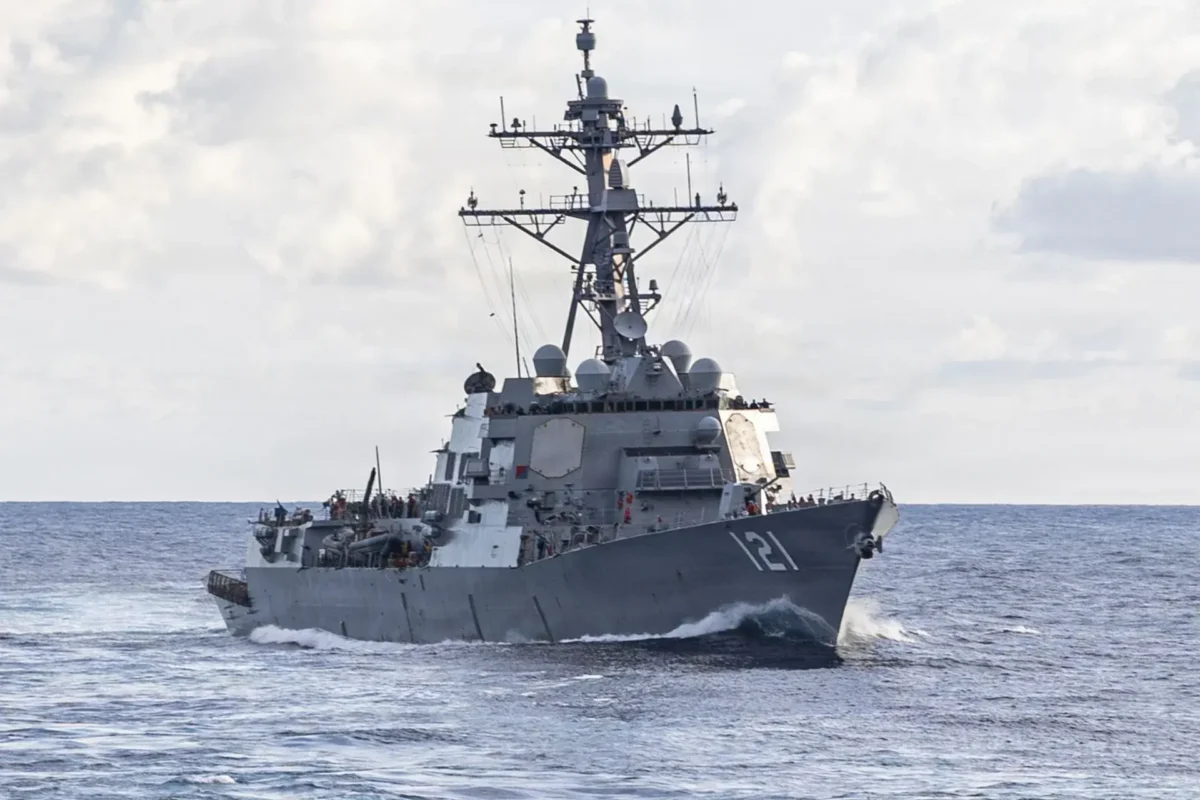
The emergence of the Arleigh Burke destroyer replica aligns with China’s long-term emphasis on expanding anti-access and area-denial capabilities, particularly across the Western Pacific.
Over the past two decades, the People’s Liberation Army has invested heavily in a broad range of anti-ship weapons, including land-based ballistic missiles, cruise missiles and air-launched systems designed to hold high-value naval assets at risk over extended distances.
Developing advanced missiles, however, is only part of the equation. Effective employment also depends on reliable target detection, accurate tracking and robust guidance systems capable of functioning despite electronic warfare and defensive countermeasures.
Testing against realistic targets allows engineers to refine those technologies while identifying potential weaknesses before weapons are deployed operationally.
From a military perspective, such facilities contribute to continuous capability development rather than serving as indicators of immediate conflict. Similar target ranges have historically been used by several countries to improve weapon performance and evaluate emerging technologies.
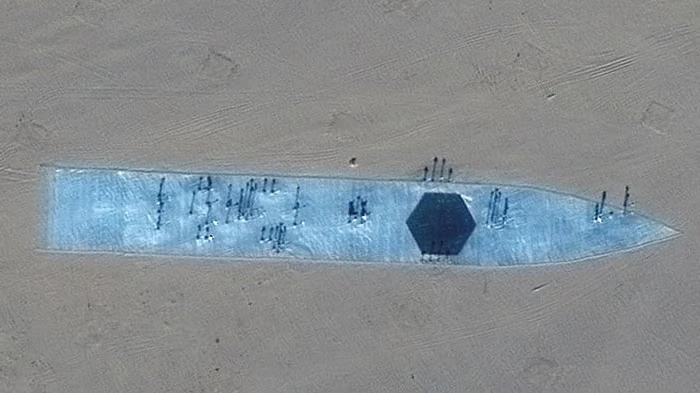
The appearance of the Arleigh Burke destroyer replica reflects the increasingly sophisticated nature of naval competition in the Indo-Pacific. Modern maritime deterrence is no longer shaped solely by the number of ships each navy operates but also by the effectiveness of the sensors, missiles and command networks supporting those fleets.
For the United States, the Arleigh Burke class remains the backbone of its surface force, conducting missions ranging from ballistic missile defense to carrier strike group escort and long-range precision strike. That prominence makes the class a logical reference point for weapons development by potential competitors.
At the same time, advances in missile technology continue to influence how navies approach fleet operations. Greater emphasis is being placed on distributed formations, electronic warfare, deception measures and layered missile defenses to counter increasingly capable precision-guided weapons.
The reported construction of the Arleigh Burke destroyer replica therefore represents more than another test target. It illustrates how military modernization increasingly depends on realistic evaluation environments that allow developers to refine weapons under conditions that more closely resemble operational scenarios.
As maritime competition continues to intensify across the Indo-Pacific, investments in testing infrastructure are likely to become just as important as investments in new missiles or warships themselves. The ability to validate systems against realistic targets provides valuable operational insight, helping shape future naval capabilities while supporting broader military modernization efforts.