Follow Us:
Follow Us:

Few fighter jets have ever become cultural legends.
The F-14 Tomcat wasn’t just a warplane; it was a symbol of American air power, a Hollywood star, and the face of U.S. Navy aviation during the Cold War.
First taking flight in 1970 and entering service in 1974, this supersonic aircraft became instantly recognizable for its swept wings, twin tails, and aggressive stance. Immortalized in Top Gun, it wasn’t just loved by pilots, it was worshipped by aviation enthusiasts and feared by enemies.
Designed by Grumman Aerospace, the F-14 Tomcat fighter jet was built to defend naval fleets against long-range bomber threats. With a top speed of Mach 2.34, a wingspan that shifted mid-flight, and a powerful radar system that could track two dozen targets, the Tomcat was a technological powerhouse. Its two-person crew, pilot and radar intercept officer, worked as a deadly team in a cockpit filled with analog gauges and, later, digital upgrades in the F-14D Super Tomcat variant.
Although expensive to maintain and ultimately retired in 2006, the F-14’s reputation for performance, range, and lethality lives on. Its influence shaped future aircraft designs, and it remains one of the most admired planes in U.S. military history.
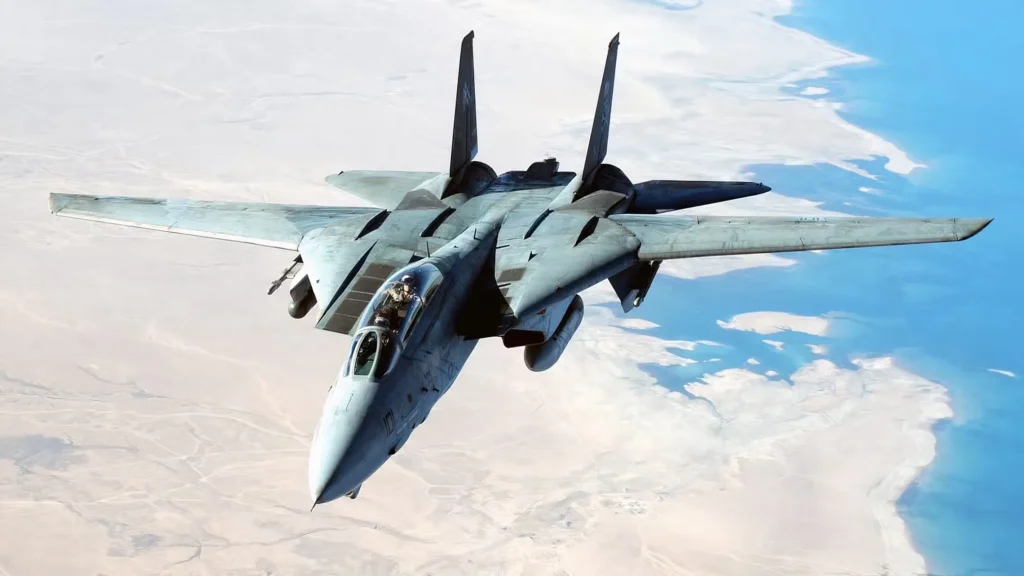
In this post, we’ll explore every aspect of this legendary jet—from specs and combat history to why the F-14 was retired and how it carved out its place in aviation lore.
The story of the F-14 Tomcat began not with success, but with failure. In the 1960s, the U.S. Navy was left disappointed by the F-111B, a naval variant of the Air Force’s F-111 Aadvark that proved too heavy and sluggish for carrier operations.
In response, Grumman Aerospace was tasked with building a new fleet air defense fighter that could deliver long-range missile capability, high-speed interception, and carrier compatibility without compromise. Thus, the Grumman F-14 Tomcat was born, engineered from the ground up to fill a critical gap in naval air superiority.
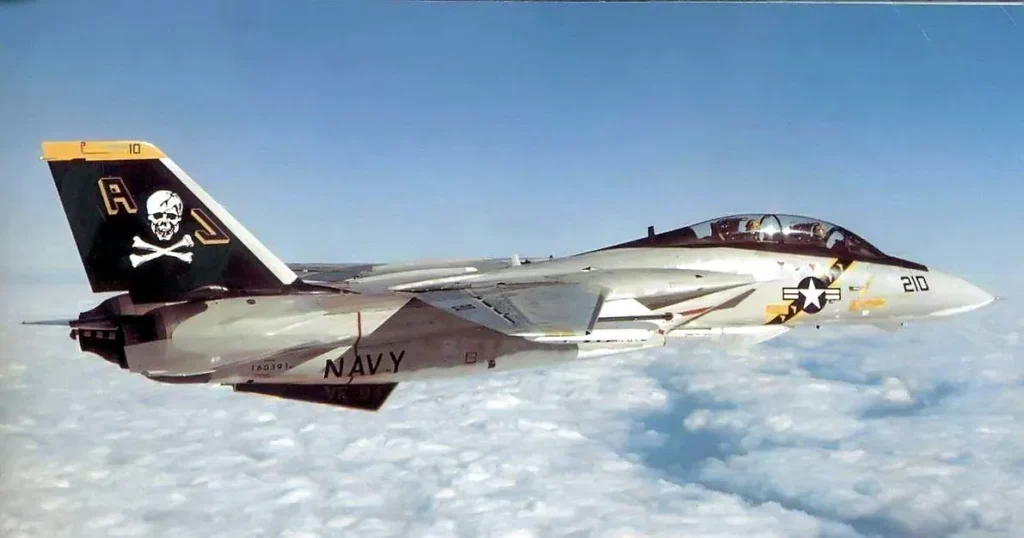
First flown on December 21, 1970, the Tomcat was a revolutionary design in more ways than one. At its heart was a pair of powerful Pratt & Whitney TF30 engines (later upgraded to General Electric F110s in the F-14B and F-14D), and its most defining feature, variable-sweep wings, allowed it to adapt aerodynamically to any flight condition. With the wings fully extended, the jet could fly slowly and land safely on aircraft carriers.
Read also: Dassault Mirage F1: The French Fighter That Refused to Fade Away
When swept back, it could hit F-14 top speeds exceeding 1,500 mph, giving it the edge in intercept and dogfight scenarios. This adaptability made it one of the most versatile fighters in the Navy’s inventory.
The aircraft’s design wasn’t just about speed and agility. It was a technological leap forward. The F-14 Tomcat cockpit was equipped with the AN/AWG-9 radar, a powerful system capable of detecting, tracking, and engaging multiple targets at once, unmatched at the time.
This radar system allowed the Tomcat to fire the AIM-54 Phoenix missile, a 1,000-pound long-range air-to-air missile that could destroy enemy aircraft from over 100 miles away.
This combination of advanced avionics, weapons systems, and aerodynamic engineering gave the F-14 dominance over both sea and sky, and ensured its place as one of the most respected aircraft of its generation.
From the moment it hit the skies, the F-14 Tomcat stood apart, not just because of how it looked, but because of what it could do. This was a fighter jet designed with raw power and precision in mind, boasting specifications that made it one of the most capable aircraft of its era.
The Tomcat measured 62.8 feet in length, with a height of 16 feet, and, thanks to its variable-geometry wings, had a wingspan ranging from 38 to 64 feet depending on the sweep. Its two-seat tandem cockpit—housing both a pilot and a radar intercept officer, offered excellent visibility and streamlined coordination during complex missions.
At the core of its performance was the jet’s incredible speed. The F-14 Tomcat’s top speed reached Mach 2.34, which is over 1,500 miles per hour at altitude, a velocity that made it a formidable interceptor.
At sea level, the Tomcat could still blaze past 915 mph, putting it among the fastest Navy aircraft ever built. Its operational ceiling of over 50,000 feet allowed it to soar above most threats, while its combat radius of 500 miles ensured it could engage targets well beyond the visual horizon.
The true brilliance of the F-14 Tomcat was in its avionics and weapons systems. The original AN/AWG-9 radar was groundbreaking, it could simultaneously track up to 24 enemy targets and guide six AIM-54 Phoenix missiles to different threats at once. No other fighter of the era came close to that kind of situational awareness.
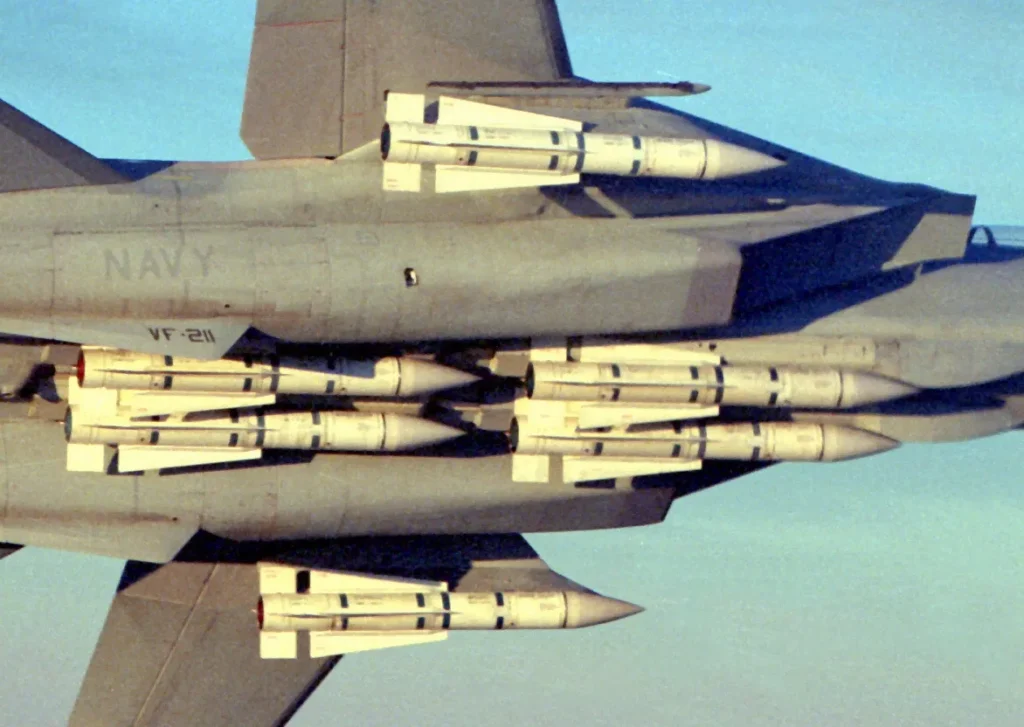
This long-range engagement capability made the F-14 ideal for defending carrier strike groups against Soviet bombers during the Cold War.
Later versions, especially the F-14D Super Tomcat, received major upgrades like the APG-71 radar, digital flight controls, and compatibility with precision-guided munitions, turning the once-dedicated air superiority jet into a true multi-role fighter capable of bombing missions in Iraq and Afghanistan.
Read also: Sukhoi Su-33 Flanker-D: Russia’s Carrier-Based Naval Fighter
Even the F-14 Tomcat cockpit evolved. The early analog dials were eventually replaced with digital multifunction displays, providing pilots with more accessible data in high-stress combat environments.
These advancements allowed the F-14 to remain tactically relevant even decades after its introduction, and pushed the boundaries of what a naval fighter jet could do. It wasn’t just a fast, powerful aircraft; it was a platform that grew with its missions and met the changing demands of modern warfare.
The F-14 Tomcat wasn’t a static design—it evolved significantly over its 30+ years of service. Each variant brought important changes, reflecting the shifting priorities of U.S. naval aviation and advancements in aerospace technology. From the original F-14A to the upgraded F-14D Super Tomcat, the lineage of the Tomcat is a story of constant refinement and enhancement.
The F-14A, introduced in 1974, was the first production model. Powered by two Pratt & Whitney TF30 engines, the A-model performed well at high speeds but was notoriously underpowered during takeoffs and certain maneuvers.
These engines also had a reputation for compressor stalls during high angle-of-attack situations, which made the aircraft unforgiving for inexperienced pilots. Nevertheless, it was equipped with the AN/AWG-9 radar and could fire the AIM-54 Phoenix, making it a long-range threat from day one.
In the 1980s, the Navy began fielding the F-14B, which replaced the troublesome TF30s with General Electric F110-GE-400 engines, dramatically improving thrust, reliability, and maneuverability. This upgrade gave the Tomcat more combat flexibility, especially during carrier launches and in dogfights. The F-14B also included minor avionics upgrades, but its biggest contribution was restoring trust in the aircraft’s engine performance.
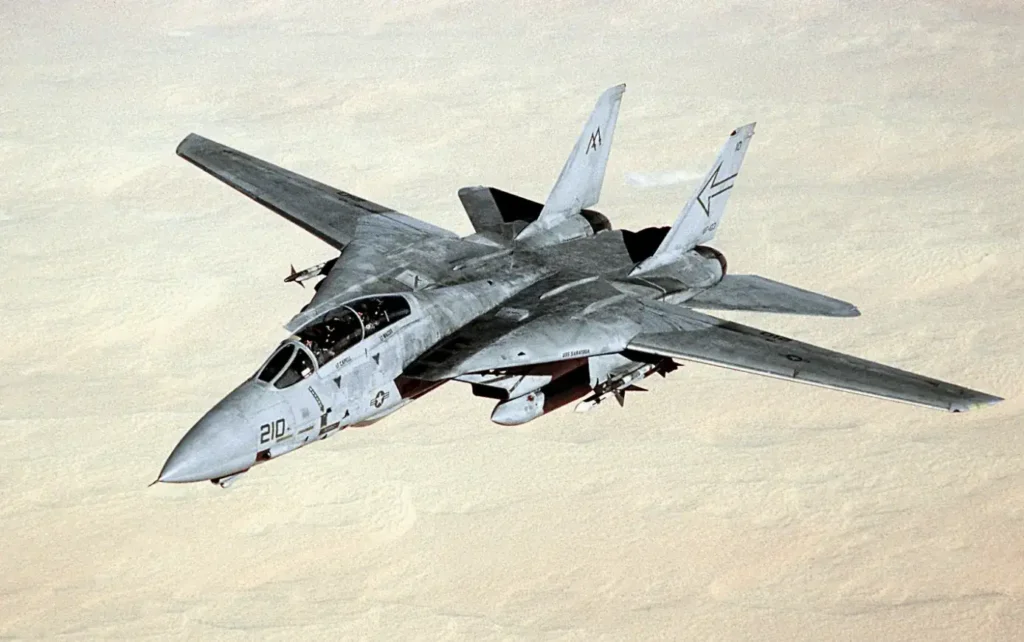
The most advanced variant, the F-14D Super Tomcat, was introduced in the early 1990s. This version featured a complete avionics overhaul, including the powerful AN/APG-71 radar, glass cockpit displays, and digital flight controls. It was compatible with modern weapons like JDAMs and LANTIRN pods, which allowed the Tomcat to perform precision ground attacks, something earlier versions weren’t designed for. With its upgraded systems and robust engines, the D-model was the Tomcat at its absolute best, capable of fulfilling roles ranging from air superiority to strike missions.
Despite being the pinnacle of the platform, the F-14D was produced in limited numbers due to budget constraints and shifting strategic priorities.
Still, the variant served with distinction until the aircraft’s final retirement in 2006. The evolution of the Tomcat, from a fleet interceptor to a multi-role precision strike fighter—proved that this aircraft wasn’t just fast or deadly. It was adaptable.
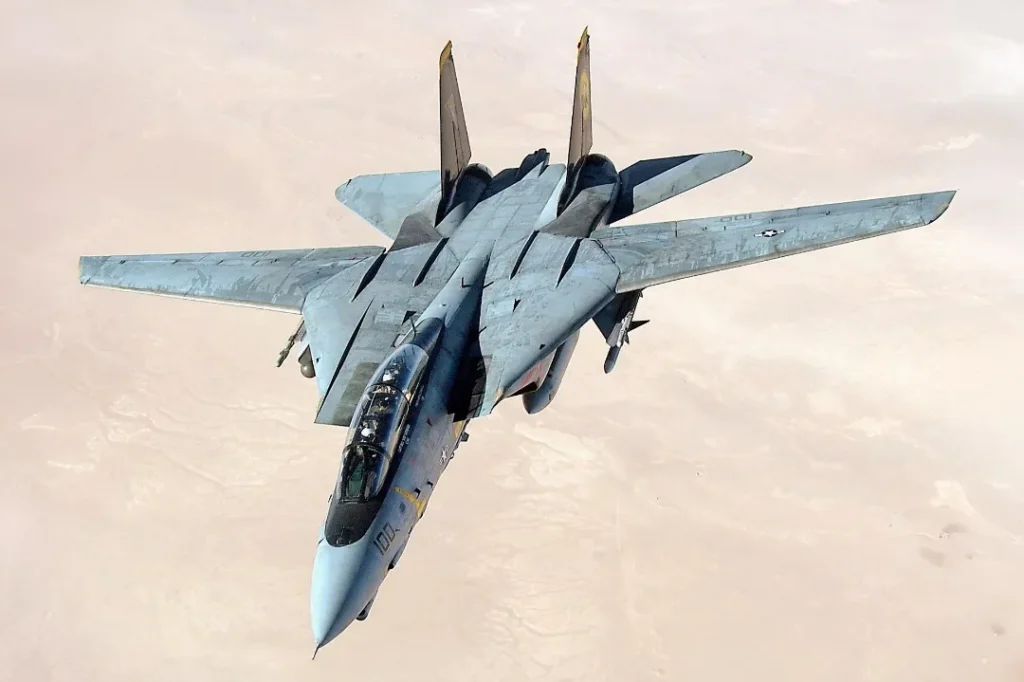
The F-14 Tomcat entered service during a period of intense geopolitical tension, and it quickly proved to be more than just a showpiece. Deployed aboard U.S. Navy aircraft carriers, the Tomcat played a crucial role in American air strategy during the Cold War and well beyond. Its first operational deployment came in 1974 with the USS Enterprise, and it would soon become a mainstay in carrier air wings across the globe.
One of Tomcat’s earliest and most defining combat roles came during the 1981 Gulf of Sidra incident. Two F-14A Tomcats from VF-41 aboard USS Nimitz engaged and shot down two Libyan Su-22 Fitters in a short but intense dogfight. This event marked the first air-to-air kill for the F-14 and confirmed its lethality in real-world combat.
In 1989, another confrontation in the same region saw F-14s down two Libyan MiG-23s, again with superior tactics and missile systems, reinforcing the jet’s air superiority credentials.
During the Gulf War in 1991, the F-14 was used primarily for combat air patrols (CAP), protecting coalition aircraft from potential Iraqi threats. Although its long-range AIM-54 Phoenix was designed for Soviet bombers that never showed up, the Tomcat still served as a crucial deterrent.
By the late 1990s and into the early 2000s, particularly in Operations Southern Watch, Enduring Freedom, and Iraqi Freedom, the F-14D Super Tomcat demonstrated its expanded capabilities. Equipped with precision-guided munitions and LANTIRN targeting pods, it executed strike missions with impressive accuracy—something the original airframe was never envisioned to do.
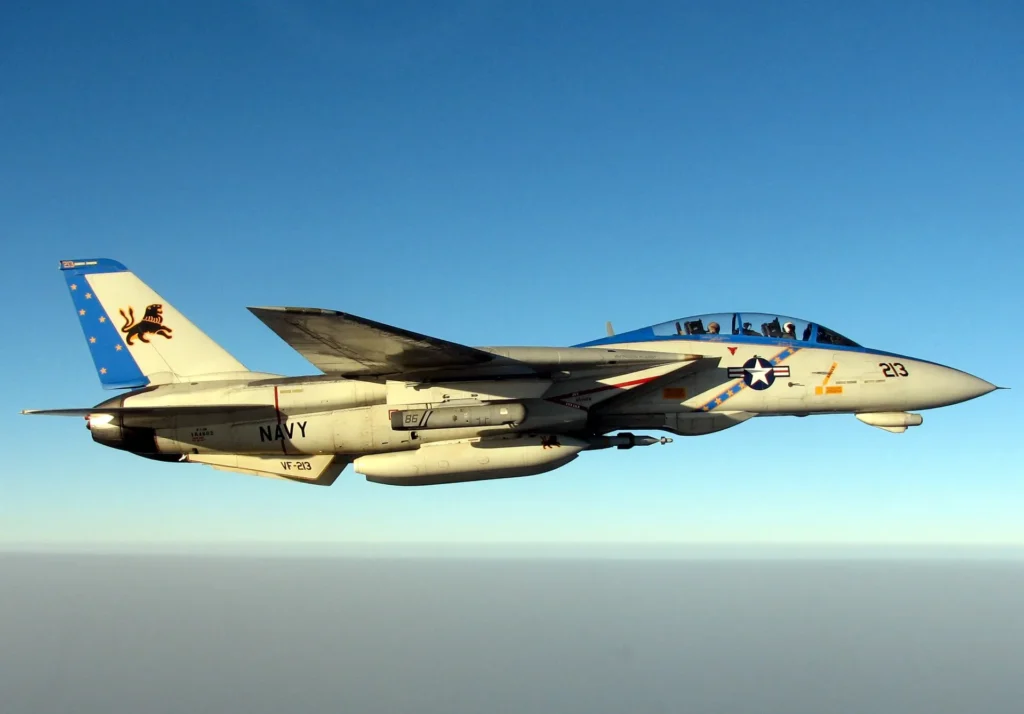
The aircraft’s combat success extended to reconnaissance as well. With the addition of the TARPS (Tactical Airborne Reconnaissance Pod System), the F-14 Tomcat fighter jet became an invaluable intelligence asset, capturing high-resolution imagery over hostile terrain. This adaptability allowed it to continue serving effectively even as newer platforms like the F/A-18 Hornet were introduced.
Throughout its operational life, the F-14 flew thousands of missions and racked up an impressive record of reliability and tactical flexibility. It didn’t just serve—it excelled, proving its worth in both peacetime deterrence and active combat zones.
Despite its legendary status and impressive capabilities, the F-14 Tomcat was officially retired from U.S. Navy service in 2006. The decision wasn’t driven by a single flaw or failure but rather a combination of operational costs, maintenance complexity, and the emergence of more versatile, cost-effective platforms. For all its strengths, the Tomcat had become a logistical burden as military strategy evolved into a more agile, precision-focused doctrine.
One of the main reasons behind the F-14’s retirement was its high maintenance-to-flight hour ratio. The Tomcat required nearly 50 maintenance hours for every hour of flight, a figure significantly higher than modern aircraft like the F/A-18 Super Hornet, which was introduced as its replacement.
Much of this came from its aging analog systems, hydraulic components, and complex swing-wing mechanisms. As the aircraft aged, sourcing replacement parts also became a growing challenge, with some systems no longer in production.
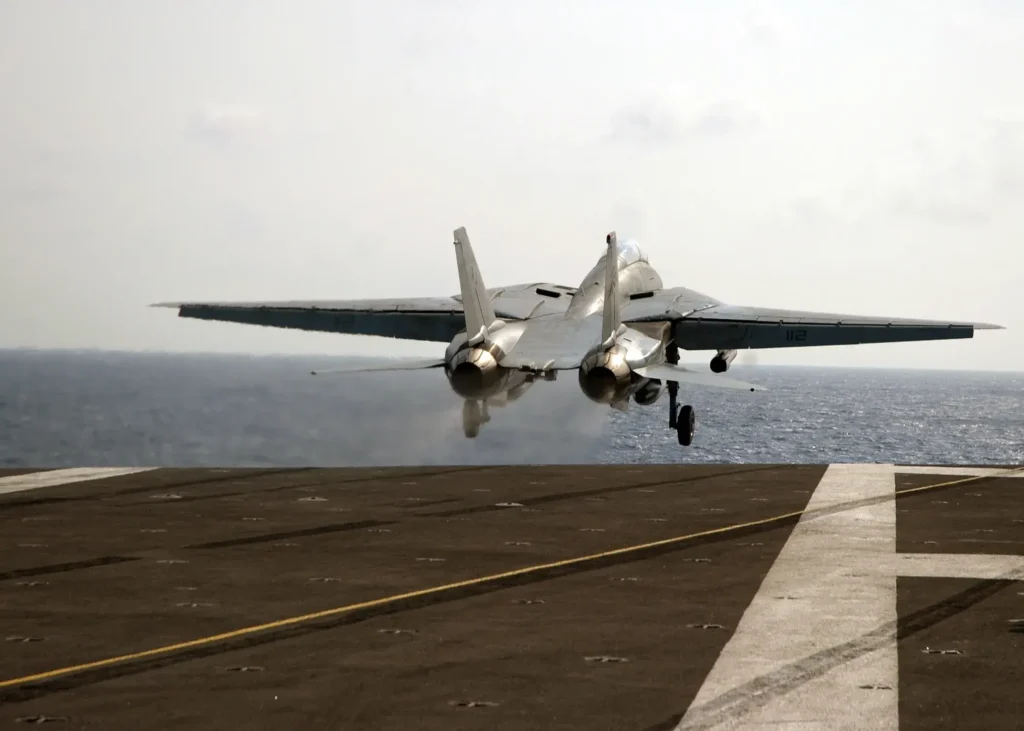
Cost was another major factor. The F-14 Tomcat price per unit was already steep, but long-term sustainment was even more expensive. By the 2000s, keeping the Tomcat airworthy involved cannibalizing parts from retired jets, pushing its operating cost to unsustainable levels.
At the same time, the newer F/A-18 offered multi-role flexibility with reduced maintenance, lower fuel consumption, and a simplified logistics chain. Despite lacking the Tomcat’s top-end speed and long-range engagement capabilities, the Hornet’s modern avionics and easier integration with Navy systems made it the practical choice.
The final nail in the coffin came with changing military priorities. In a post-Cold War world, the need for long-range interceptors like the F-14 Tomcat declined, replaced by the demand for multi-role fighters capable of conducting strike missions, close air support, and electronic warfare.
While the F-14D Super Tomcat proved the airframe could adapt, the Navy ultimately chose to consolidate resources and move forward with a new generation of aircraft. The Tomcat’s retirement marked the end of an era—but not the end of its legacy.
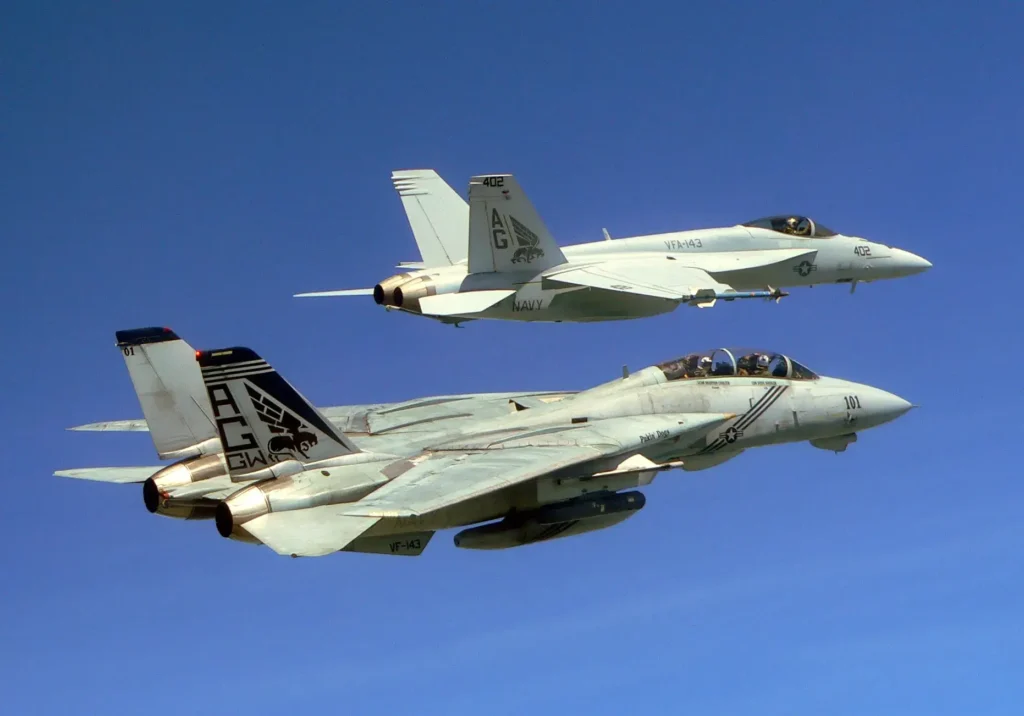
Read also: The Legacy of F-14 Tomcat – A Story of Triumph and Tragedy
Though retired, the F-14 Tomcat remains one of the most iconic and influential fighter jets in aviation history. Its distinctive swing-wing design, twin-engine configuration, and twin-tail silhouette have become symbolic of U.S. naval airpower during the Cold War and beyond. More than a relic, it represents an era when air dominance was defined by speed, reach, and technological edge.
The Tomcat introduced several innovations that shaped the next generation of fighter aircraft. Its advanced radar and long-range missile capabilities set a new benchmark for beyond-visual-range combat, while its evolving cockpit systems prepared pilots for the digital era.
Even today, the lessons learned from maintaining and operating the Tomcat inform the design and sustainment strategies of newer, more efficient platforms like the F/A-18 Super Hornet and the F-35 Lightning II.
Beyond the hangars and runways, the F-14 Tomcat left a deep cultural imprint. From Top Gun to modern documentaries, its legend has reached far beyond military circles. It’s more than a fighter jet, it’s a symbol of innovation, adaptability, and American air superiority. Decades after its final flight, the Tomcat’s roar still echoes in the hearts of those who witnessed it dominate the skies.