Follow Us:
Follow Us:

Even though it’s been out of service for years, the F-111 Aardvark still manages to pop back into the spotlight, and not by accident.
Recently, the U.S. Air Force in Europe marked major anniversaries tied to the aircraft’s Cold War deployment, while aviation analysts keep pointing to the General Dynamics F-111 Aardvark as a jet that was arguably ahead of its time. That alone says something: retired aircraft don’t usually stay relevant unless they got something very right.
The renewed attention makes sense. The F-111 rewrote the rules for deep-penetration missions. Flying extremely low, incredibly fast, and carrying a heavy payload, it forced air defenses to react instead of relax.
Modern discussions about long-range strike, survivability, and even future aircraft design still circle back to the same question: are we finally catching up to what the F-111 was already trying to do decades ago?
At its core, the F-111 Aardvark was a long-range, supersonic strike aircraft built to do one thing extremely well: get deep into enemy territory and hit hard targets before anyone could stop it.
When General Dynamics introduced it during the Cold War, it felt revolutionary because it combined features no single aircraft had pulled together before: swing wings, terrain-following radar, and true all-weather, day-night attack capability.
While other jets focused on air-to-air combat, the F-111 was built to sneak in low, fly fast, and survive in some of the most dangerous airspace imaginable.
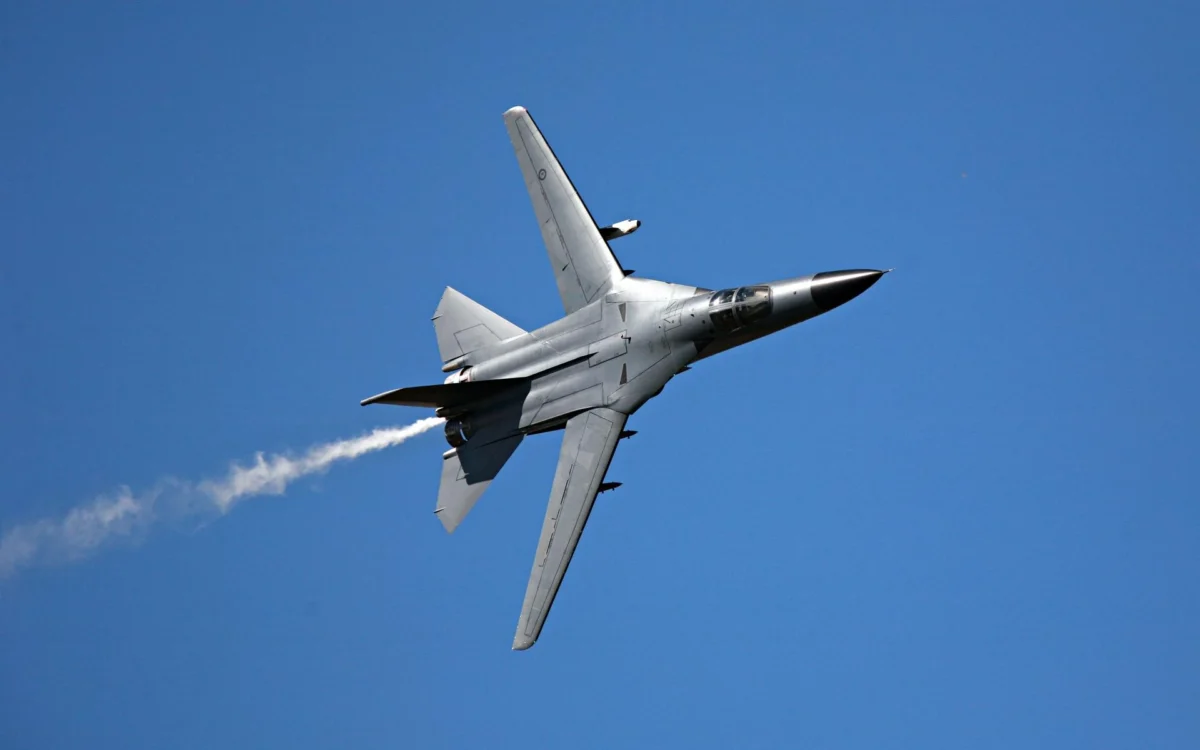
The development history of the F-111 Aardvark was anything but smooth. It started as a bold attempt to create one aircraft that could serve both the U.S. Air Force and the Navy, which sounds efficient but turned out to be incredibly complicated.
Technical challenges, rising costs, and shifting requirements made the program controversial, and the Navy eventually walked away.
Still, the Air Force stuck with it, refining the design until the F-111 matured into a reliable deep-strike platform that proved itself in real combat, especially later in its service life.
Part of it came from its looks: bulky, low to the ground, and unapologetically utilitarian. But the nickname was also oddly affectionate. Like a pig, the F-111 could fly low, fast, and carry a heavy load without complaining.
Pilots used the name with pride because once the early problems were ironed out, the F-111 Aardvark became a tough, dependable aircraft that did its job without glamour, and that was exactly the point.
When you look at the F-111 Aardvark dimensions and airframe, the first thing that stands out is just how big it was for a “fighter.” It was long, heavy, and built around that signature swing-wing design, which let it stretch its wings for takeoff and long-range cruising, then sweep them back for high-speed dashes.
The airframe was built to survive low-level flight at high speed, skimming terrain where turbulence and stress were constant companions.
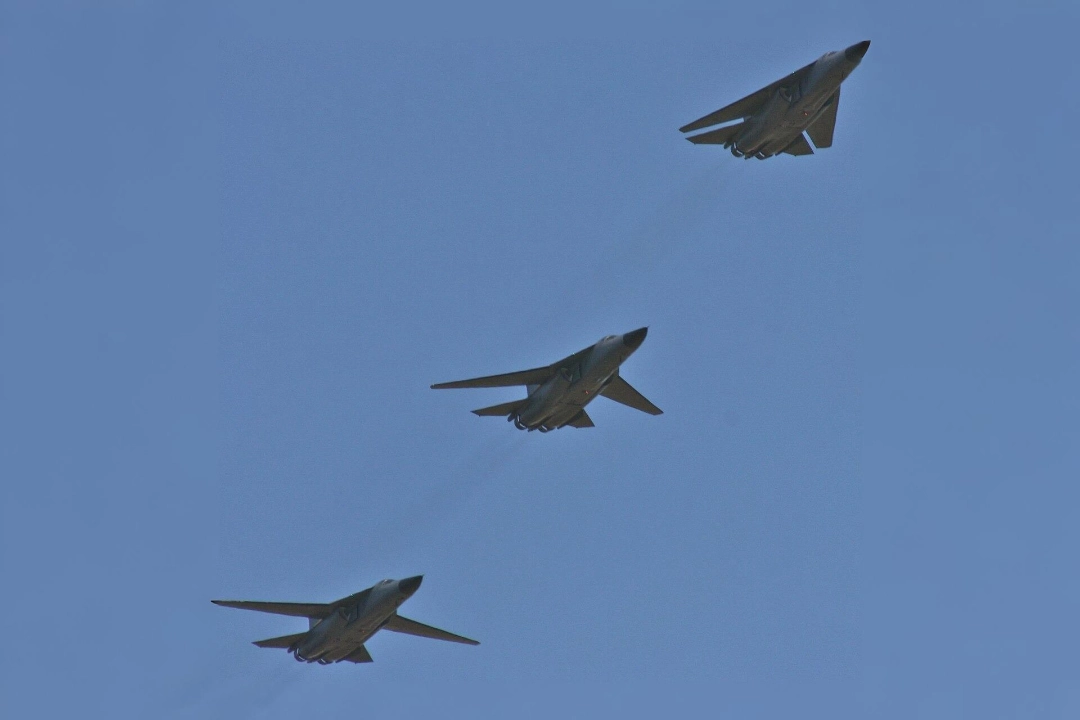
The engine and performance specs really explain the aircraft’s personality. Powered by two Pratt & Whitney TF30 engines, the General Dynamics F-111 Aardvark had the thrust to haul a serious payload while still pushing into supersonic speeds.
These engines weren’t perfect early on, but once refined, they gave the aircraft the muscle it needed to do deep-strike missions without escorts.

As for top speed and range, this is where the F-111 earned its reputation.
At altitude, the F-111 Aardvark’s top speed could exceed Mach 2.5, but what really mattered was its ability to fly very fast at very low altitude for long distances. With a range measured in thousands of kilometers and the ability to refuel in the air, the F-111 could reach targets other aircraft simply couldn’t, hit them hard, and still make it home.
| Length | 22.4 m (73.6 ft) |
| Wingspan | 19.2 m (63 ft) wings extended / 9.8 m (32.3 ft) swept |
| Height | 5.2 m (17 ft) |
| Empty Weight | ~21,100 kg (46,500 lb) |
| Max Takeoff Weight | ~45,000 kg (100,000 lb) |
| Engines | 2 × Pratt & Whitney TF30 afterburning turbofans |
| Thrust | ~111 kN (25,000 lbf) each with afterburner |
| Top Speed | Mach 2.5+ (≈2,650 km/h / 1,650 mph at altitude) |
| Combat Radius | ~2,100 km (1,300 miles) |
| Ferry Range | ~6,400 km (4,000 miles) |
When it came to carrying weapons, the F-111 Aardvark payload was honestly one of the jet’s biggest strengths. The aircraft was built to haul a heavy bomb load over long distances, even while flying low and fast.
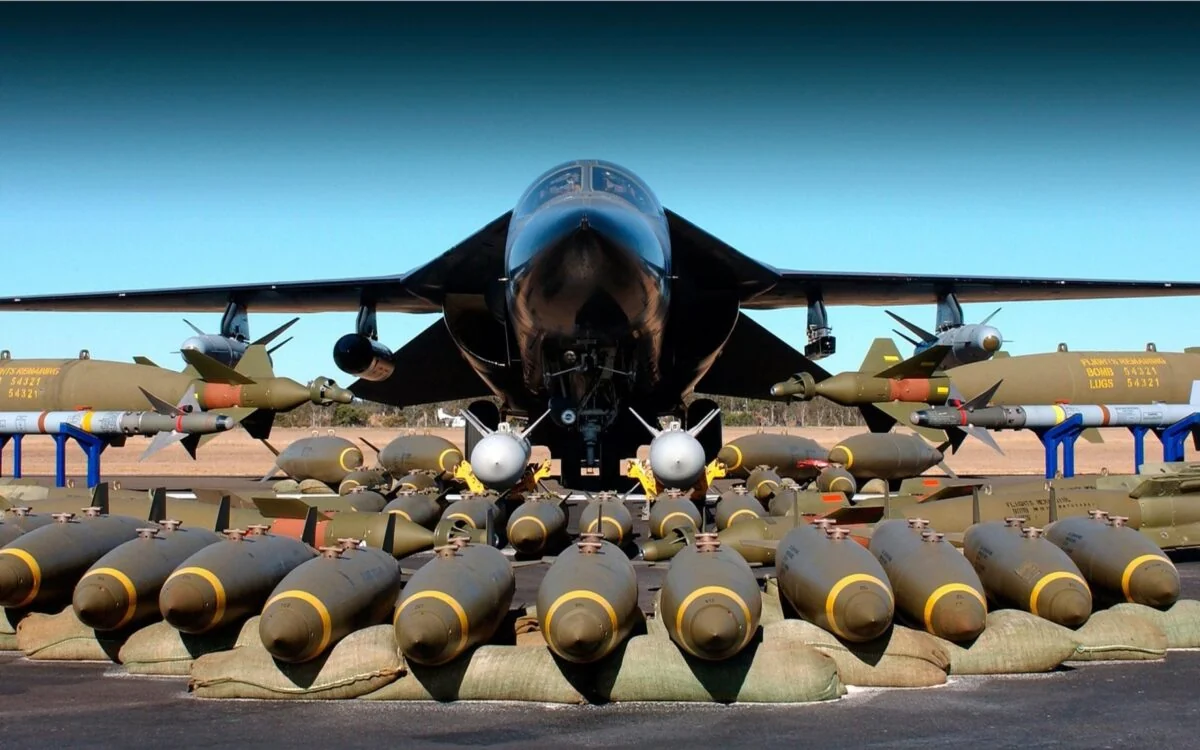
Internally, it had a weapons bay that helped reduce drag, and externally, it could carry multiple pylons loaded with conventional bombs, cluster munitions, or precision-guided weapons as those became available later on.
What really set the General Dynamics F-111 Aardvark apart was how well it handled deep-strike missions. Thanks to its terrain-following radar, the jet could fly at very low altitude in poor weather or at night, drop its bombs accurately, and get out before defenses could react.
Read also: Northrop F-5 Tiger vs Modern Jets: How It Holds Up Today
During its service life, the aircraft was adapted to deliver laser-guided bombs, which dramatically improved its accuracy and made it more survivable in modern air defense environments.
As for missiles, the F-111 Aardvark missile options were more about precision and survivability than air-to-air combat. It wasn’t designed to dogfight, so its missile use focused on strike roles, most notably the AGM-69 SRAM nuclear missile and later precision strike weapons, depending on the variant.
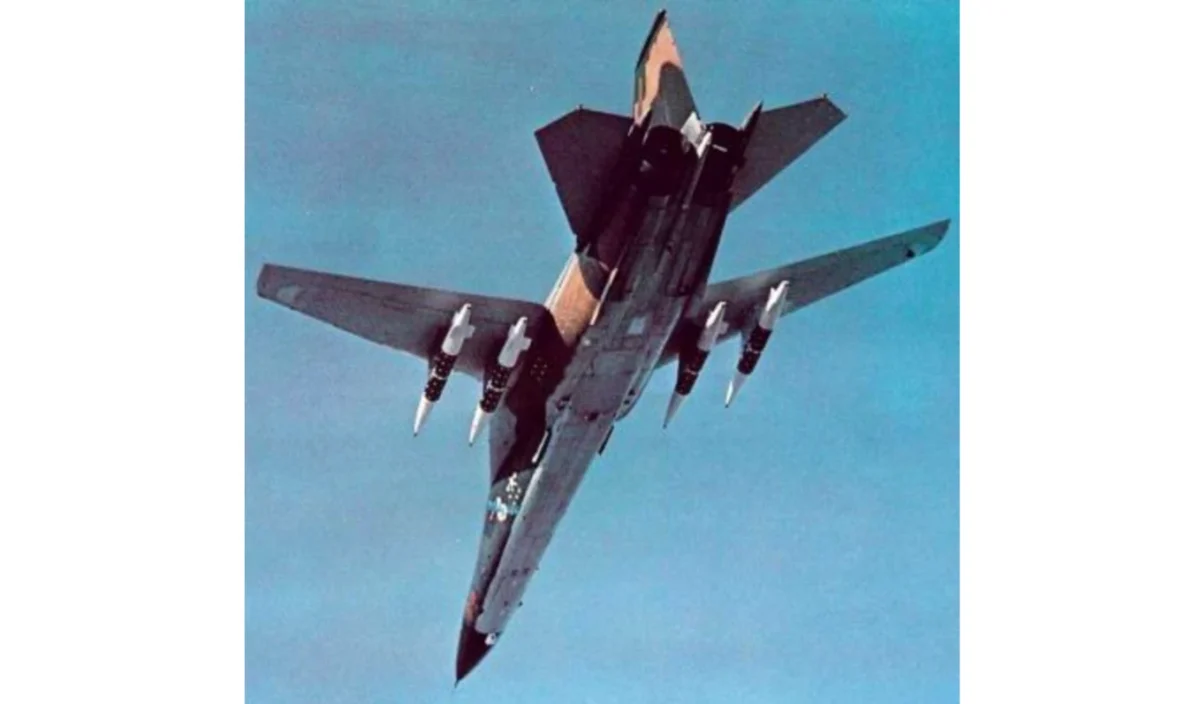
Some versions were also equipped for electronic warfare or specialized missions, showing how flexible the platform really was.
So what was it actually like inside the F-111 Aardvark cockpit?
Unlike most fighters of its era, the F-111 Aardvark cockpit used a side-by-side seating layout, more like a bomber than a traditional fighter jet.
Instead of sitting in tandem, the pilot and the Weapons Systems Officer (WSO) sat next to each other, which made communication faster and reduced workload during intense, low-level missions. It also helped on long flights.
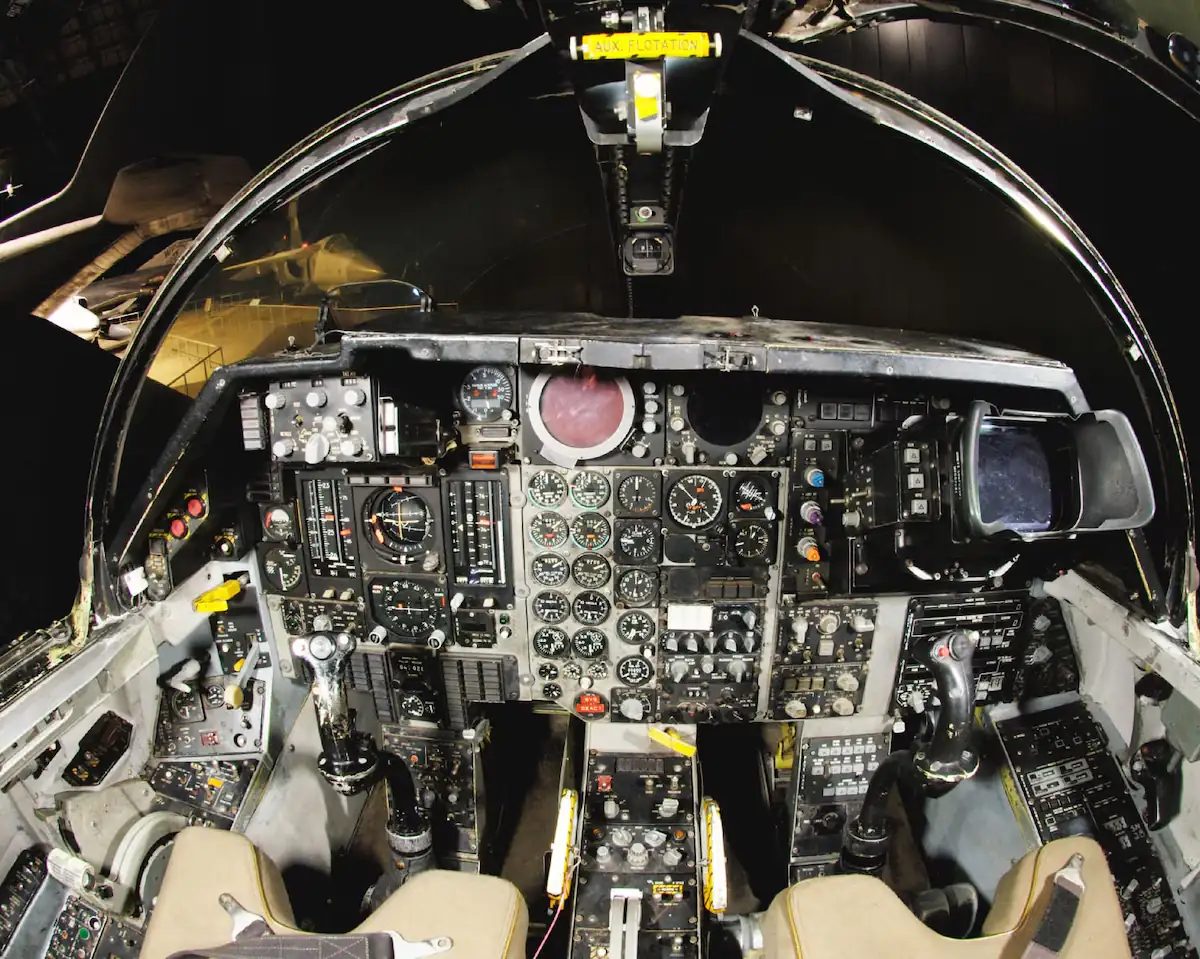
The real star of the cockpit was the terrain-following radar and avionics. This system allowed the F-111 to fly extremely low, automatically adjusting altitude to match the terrain below, even at night or in bad weather.
In practice, that meant the aircraft could scream along just above the ground while staying under enemy radar, something that felt almost unreal for its time. The avionics did a lot of the heavy lifting, but crews still had to trust the system completely, which took serious training and nerves.
As for crew roles, the division of labor was very clear. The pilot focused on flying the aircraft, especially during high-speed, low-altitude runs, while the Weapons Systems Officer managed navigation, sensors, radar, and weapons. Teamwork was crucial.
The F-111 wasn’t forgiving, and missions were demanding, but when the crew worked in sync, the cockpit became less chaotic and more like a well-run command center racing through hostile airspace.
So did the F-111 Aardvark actually see real combat? Very much so.
During the Vietnam War, early F-111 deployments were rough, with technical issues and losses that raised serious doubts about the program. But once those problems were fixed, the jet showed what it was built for: long-range, low-level strike missions in bad weather and at night, hitting targets other aircraft struggled to reach.
The F-111’s most famous moment came during Operation El Dorado Canyon in 1986, the U.S. airstrike against Libya. Flying all the way from the UK, F-111 Aardvarks carried out deep-penetration attacks on heavily defended targets around Tripoli.
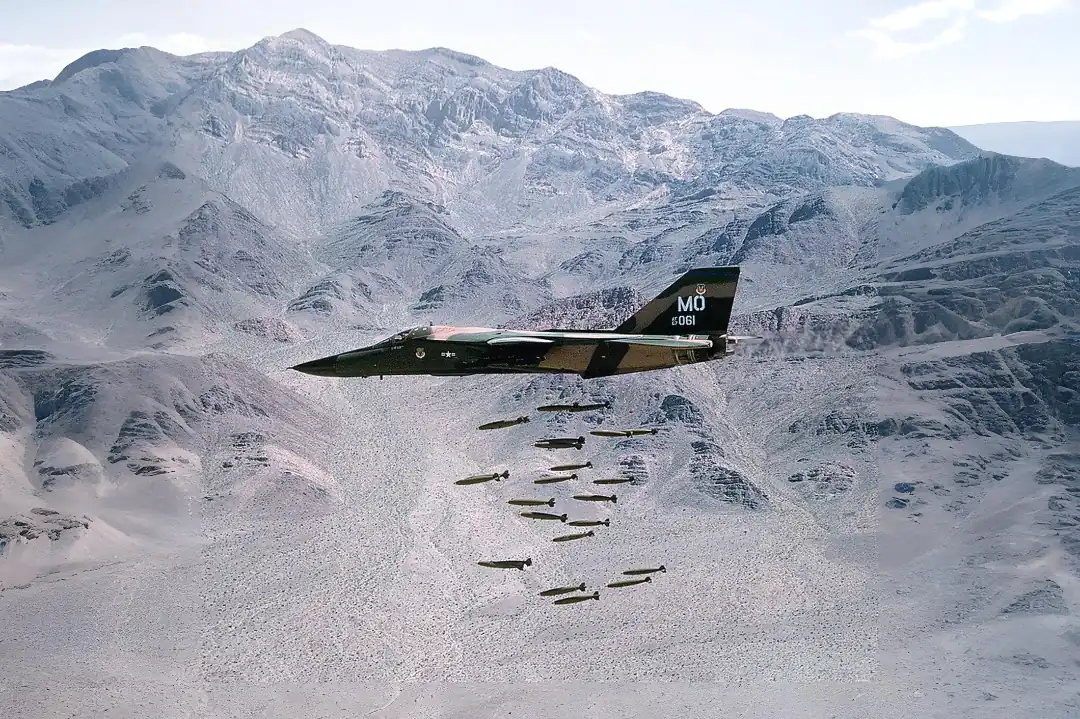
The mission pushed the aircraft to its limits in range, navigation, and precision, and while losses did occur, the operation highlighted exactly why the F-111 existed in the first place.
By the time of the Gulf War, the F-111 had matured into a highly capable strike platform. It was used extensively for precision attacks, including missions against hardened bunkers and armored targets. With improved avionics and weapons, the aircraft delivered reliable results while operating in dangerous airspace, cementing the F-111 Aardvark’s reputation as a tough, mission-focused workhorse rather than a glamorous fighter.
So why did the U.S. retire the F-111 Aardvark if it still worked? Short answer: it wasn’t one single flaw, it was a slow pile-up of practical problems. One of the biggest issues was rising maintenance costs.
The F-111 was a complex aircraft, packed with swing-wing mechanics, older avionics, and systems that were expensive and time-consuming to keep running. As the fleet aged, keeping each jet airworthy started to cost more than it made sense to spend.
That ties directly into aging airframes. By the 1990s, many F-111s had been flying for decades, often at very low altitude and high speed. This is exactly the kind of flight profile that wears aircraft out faster. Fatigue, corrosion, and parts shortages became real concerns, and there were only so many life-extension upgrades the Air Force could justify.
Another major factor was advances in multi-role fighter technology. Newer aircraft could do many of the same strike missions while also handling air-to-air combat, reconnaissance, and electronic warfare in a single platform.
Jets like the F-15E Eagle offered modern sensors, better reliability, and more flexibility without the logistical burden of maintaining a specialized aircraft like the F-111.
There were a few quieter reasons too. The end of the Cold War reduced the need for deep-penetration nuclear strike platforms, and older systems didn’t integrate as easily with modern networks and precision weapons.
So even though the General Dynamics F-111 Aardvark was still respected, retiring it wasn’t about failure, it was about the military moving on to aircraft that could do more, with less effort, in a very different strategic world.
“So what actually replaced the F-111 Aardvark?” The honest answer is: There wasn’t a single, perfect replacement, but the F-15E Strike Eagle took over most of its role.
The F-15E Strike Eagle became the primary successor because it could handle long-range strike missions while also doing air-to-air combat, something the F-111 was never designed for.
Over time, the jobs the F-111 used to do were split up and improved upon: deep strike went to the F-15E, stealthy penetration later shifted toward aircraft like the F-117 (and eventually the F-35), and precision attack became more about smart weapons and sensors than flying extremely low at high speed.
| Category | F-111 Aardvark | F-15E Strike Eagle |
| Primary Role | Deep strike/interdiction | Multi-role strike fighter |
| Crew | 2 (side-by-side) | 2 (tandem seating) |
| Top Speed | Mach 2.5+ | Mach 2.5 |
| Payload | ~14,000 kg (31,000 lb) | ~11,000 kg (23,000 lb) |
| Flight Profile | Very low-level penetration | Medium/low altitude, flexible |
| Air-to-Air Capability | Minimal | Strong (AIM-120, AIM-9) |
| Avionics Era | Cold War–era, specialized | Modern, upgradeable |
| Service Longevity | Retired | Still in active service |
In simple terms, the F-15E Strike Eagle didn’t try to copy the F-111’s low-level, terrain-hugging philosophy exactly.
Instead, it leaned into better sensors, precision-guided weapons, and air superiority as protection. That meant it could strike deep targets and defend itself, which made it far more adaptable in post–Cold War conflicts.
When you compare F-111 vs F-15E Strike Eagle, it really comes down to mindset. The F-111 Aardvark was a specialist, built to charge straight into danger at low altitude and rely on speed and terrain to survive.
The F-15E is a generalist with teeth: it can strike hard, fly far, defend itself, and plug easily into modern networks. That flexibility is why the Strike Eagle didn’t just replace the F-111; it outlasted it, and it’s still flying missions today.