Follow Us:
Follow Us:

If you’re into military aviation, even just a little, you’ve probably heard the name F-5 Tiger sparkle up in chat rooms, heritage flight posters, or airshow lineups.
What started in the late 1950s as Northrop’s lightweight, affordable fighter design eventually blossomed into one of the most widely exported jet fighters of the Cold War era.
Decades later, this F-5 Tiger jet still pops up in surprising places: from aerobatic teams wowing crowds in Kenya to heritage flights alongside cutting-edge stealth jets.
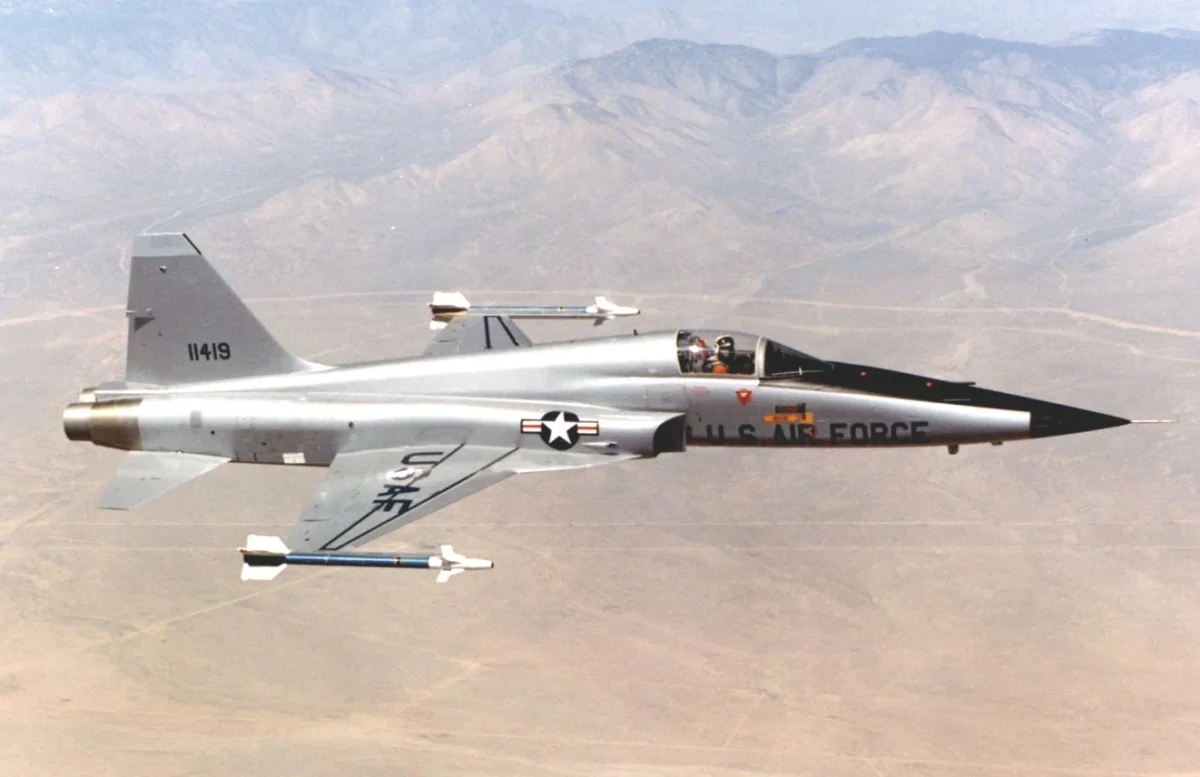
The F-5’s story is sort of like a classic car you never quite sell, even when technology and geopolitics move on. Its strength was always in being simple, cheap to operate, and easy to maintain, which is exactly why so many smaller and medium-sized air forces around the world adopted it. But simplicity has its limits, and as 21st-century threats get more complex.
Read also: F-20 Tigershark: Advanced Cold War Jet That Never Served
Today, it’s no longer about whether the F-5 can compete with modern jets (it mostly can’t), but why it lasted so long, why some air forces still fly it, and how it stacks up against icons like the MiG-21.
The Northrop F-5 Tiger was built around a pretty simple idea that not every air force needs, or can afford, a big, complex fighter.
Developed by Northrop in the late 1950s, the F-5 was designed as a lightweight, supersonic fighter that was easy to fly, cheap to maintain, and flexible enough for both air-to-air and ground-attack roles.
Instead of chasing cutting-edge tech, Northrop focused on reliability and efficiency, which helped the F-5 carve out a unique place in aviation history as one of the most successful export fighters of the Cold War.
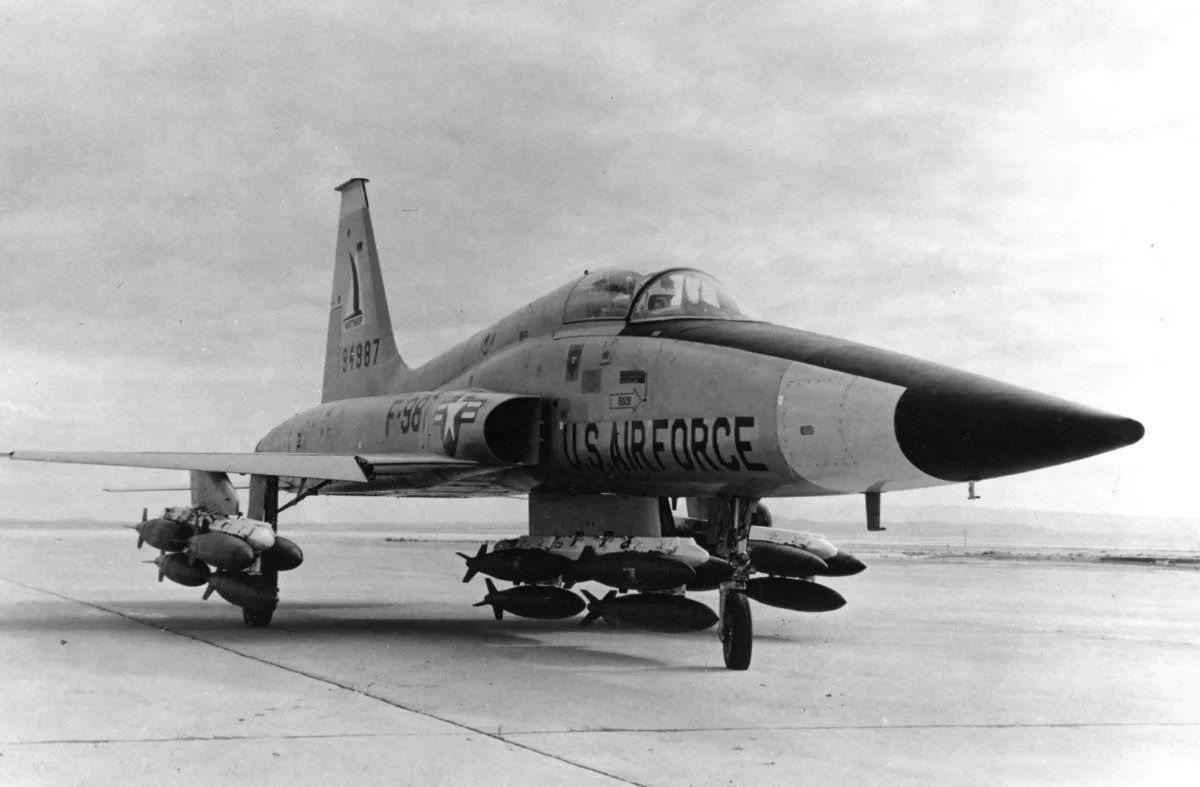
The story of the Northrop F-5 Tiger really starts in the late 1950s, when Northrop began experimenting with a privately funded fighter concept that didn’t rely on massive U.S. Air Force contracts.
At the time, most new fighters were getting bigger, more complex, and a lot more expensive, which left many U.S. allies struggling to keep up.
Read also: What Made the F-111 Aardvark a Game-Changer in Cold War Aviation
Northrop saw an opening and leaned into a different philosophy: build a small, supersonic jet that could be produced cheaply, maintained with minimal infrastructure, and flown by air forces without deep technical support.
That idea gained traction in the early 1960s, right as Cold War rivalries were pushing the U.S. to strengthen allied air power across Europe, Asia, and the developing world.
The F-5 fit perfectly into that strategy. Through U.S. military assistance programs, the jet was offered to partner nations as a capable but non-escalatory fighter, advanced enough to defend airspace, but not so sophisticated that it upset regional balances.
While the U.S. Air Force itself never fully embraced the F-5 as a frontline fighter, it did use it extensively for training and aggressor roles. That approach worked really well.
Over time, dozens of countries across Asia, Europe, Africa, and Latin America adopted the F-5, using it for everything from air defense to pilot training. Its long service life is probably the clearest sign that the concept worked.
The original F-5 Tiger (F-5A/B) was small, fast, and straightforward, but it had limited range, sensors, and growth potential.
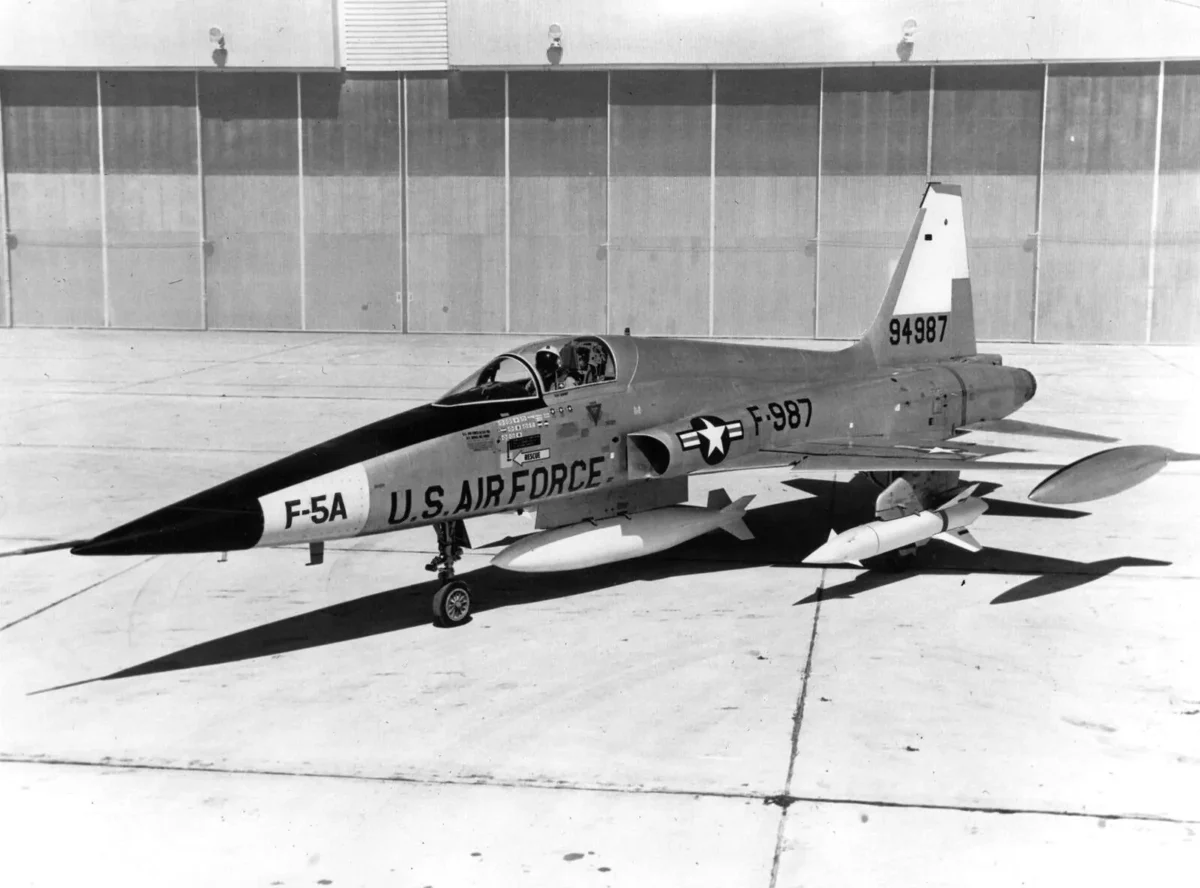
The later F-5 Tiger II (F-5E/F) addressed many of those shortcomings with more powerful engines, improved radar, better avionics, and slightly larger wings for added stability and payload.
In practical terms, the Tiger II was more combat-capable and easier to modernize, which is why it became the most widely used version.
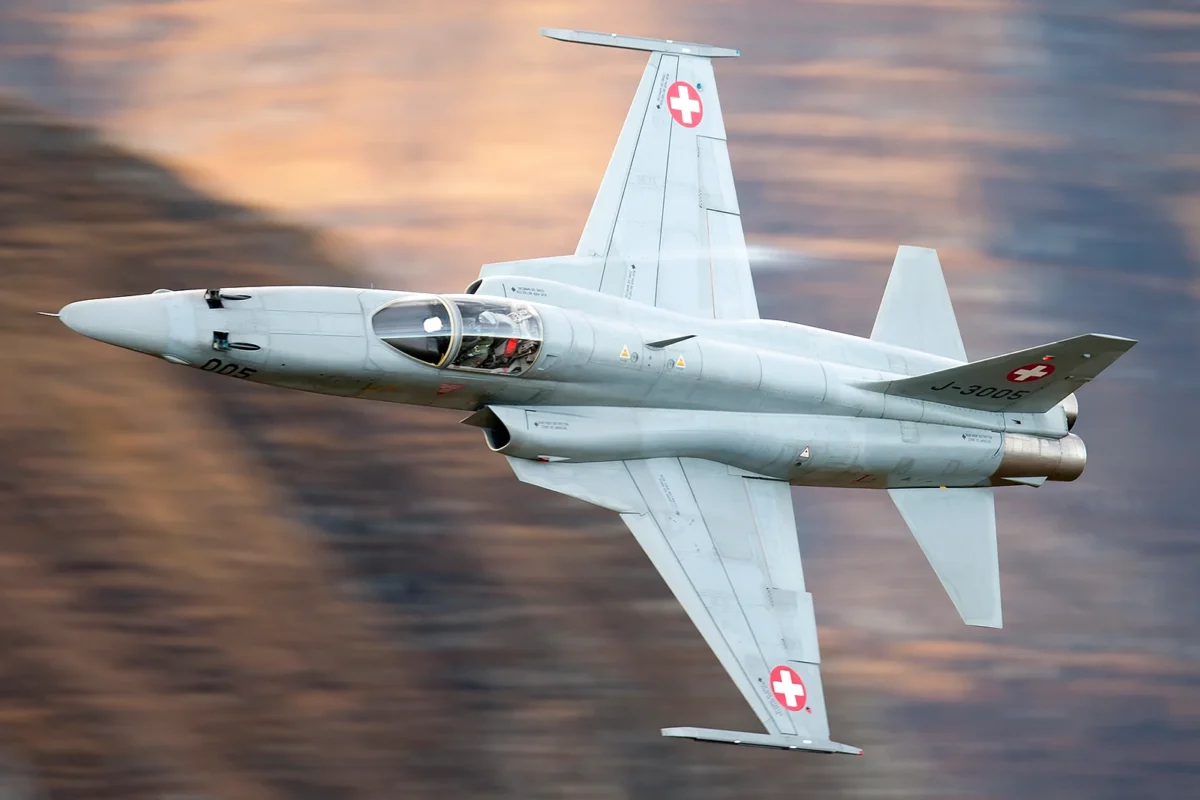
Think of the original F-5 as a bare-bones fighter, while the Tiger II was the more refined and mature evolution of the same idea.
| Manufacturer | Northrop |
| Crew | 1 (F-5E), 2 (F-5F trainer) |
| Length | ~14.4 m (47.2 ft) |
| Wingspan | ~8.1 m (26.8 ft) |
| Height | ~4.1 m (13.4 ft) |
| Empty Weight | ~4,350 kg (9,590 lb) |
| Max Takeoff Weight | ~11,200 kg (24,700 lb) |
| Engines | 2 × General Electric J85 turbojets |
| Thrust | ~22.2 kN / 5,000 lbf each (with afterburner) |
| Maximum Speed | Mach 1.6 (~1,700 km/h / ~1,055 mph) |
| Combat Radius | ~560 km (350 miles) |
| Ferry Range | ~2,500 km (1,550 miles) with drop tanks |
| Service Ceiling | ~15,800 m (51,800 ft) |
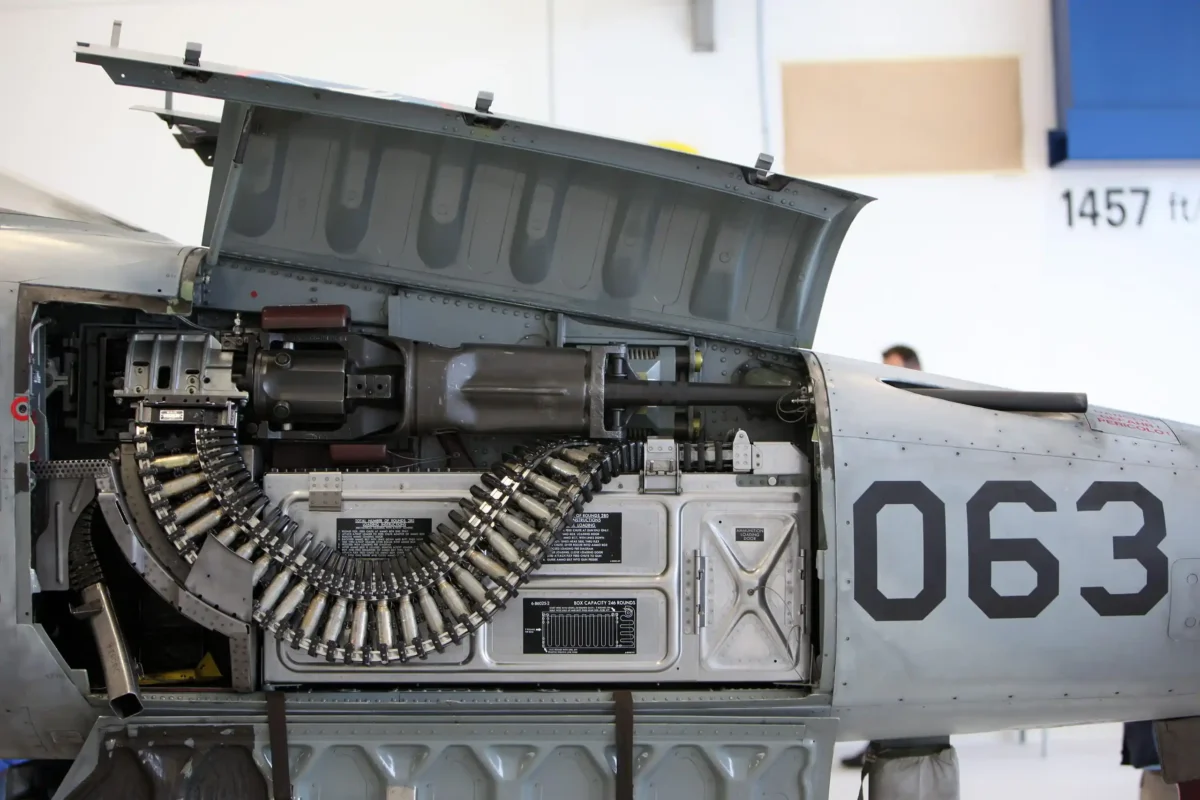
| Armament | 2× 20 mm cannons + external hardpoints |
| Hardpoints | Up to 7 |
| First Flight | 1959 (Tiger), 1972 (Tiger II) |
The F-5 Tiger’s top speed sits around Mach 1.6, which is roughly 1,700 km/h (1,055 mph) at altitude. That might not sound jaw-dropping today, but for a lightweight fighter, it was genuinely impressive.
Acceleration was solid thanks to its low weight, even if the engines weren’t especially powerful by modern standards.
Where the F-5 really earned respect was in maneuverability. It had a tight turning radius, excellent roll rate, and forgiving flight characteristics. In a visual dogfight, the F-5 could be surprisingly dangerous, especially against heavier jets.
That’s partly why the U.S. used it extensively as an aggressor aircraft. Its limitations were mostly in sensors and beyond-visual-range combat, not raw handling.
The F-5 Tiger cockpit was very much a product of its era: clean, uncluttered, and mostly analog.
Early versions used traditional round dials with minimal automation, which made the jet relatively easy to learn and fly. Visibility was good, controls were straightforward, and pilot workload stayed manageable.

The F-5 Tiger II improved things noticeably. It introduced better radar, upgraded navigation systems, and more refined avionics, while still keeping the cockpit simple compared to larger fighters.
Later modernization programs added glass displays, hands-on-throttle-and-stick (HOTAS) elements, and modern radios, depending on the operator.
So while it never became a “high-tech” cockpit, it aged better than many people expect.
One of the F-5’s biggest selling points over the decades has been how surprisingly affordable it could be, both to buy and to keep flying. While exact figures vary by time period and operator, we do have some useful ballpark figures that help make sense of its reputation.
Back in its heyday, the F-5E Tiger II had a unit price in the ballpark of about US $2.1 million per aircraft when new in the 1970s–80s era. That’s just the basic airframe cost, not including support equipment or weapons.
Some later estimates (adjusted for export deals and upgrades) suggest operators in places like Taiwan or elsewhere might have effectively valued a Tiger II at closer to US$20 million–$25 million per unit when considering modernized airframes or later purchases.
A practical way to think about “operational cost” is cost per flight hour, which bundles fuel, maintenance, inspections, and basic logistics.
For the F-5E/F, a frequently cited rough estimate in defense analyses is around US $4,000 per flight hour. That’s markedly lower than most modern fighters, falling well below figures you’d see for jets like the F-16 or F-35.
To put that in perspective: Advanced fighters like the Saab Gripen are often estimated at around $20,000+ per flight hour, and 5th-gen jets like the F-35 can exceed $30,000 per hour in some estimates. Even jets that are cheap by modern standards tend to run well above the F-5’s hourly operating cost.
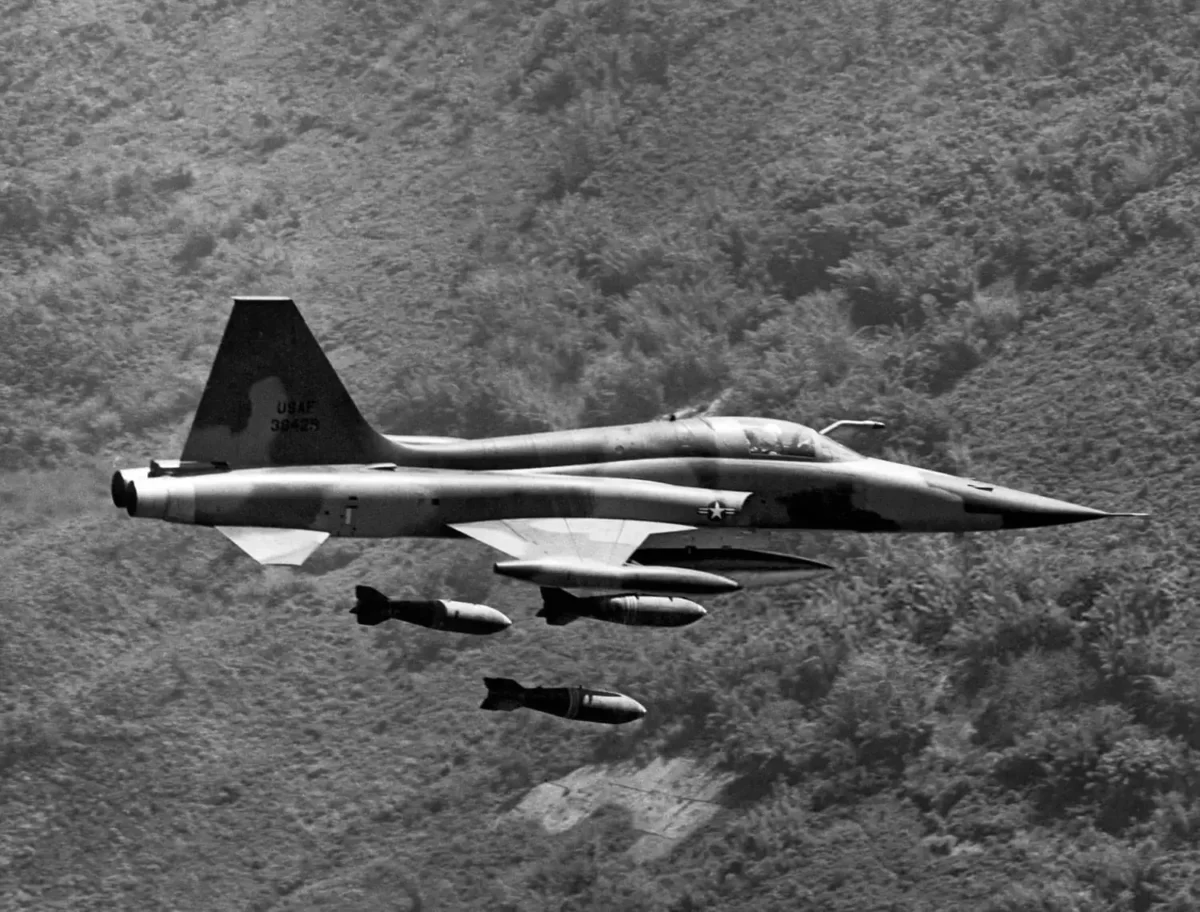
The F-5 Tiger may not have the long, headline-grabbing combat record of some Cold War fighters, but it definitely wasn’t just an air-show jet.
Across decades, it filled a very practical role in real military operations, such as air defense, ground attack, and, just as importantly, pilot training.
Because it was easy to maintain and forgiving to fly, many air forces used the F-5 as a frontline fighter during regional conflicts, border tensions, and internal security operations, especially where budgets and infrastructure were limited.
In several cases, it also served as a stepping-stone aircraft, helping air forces transition from early jets to more advanced fighters.
Short answer: yes, but not as a combat fighter.
The United States still flies the F-5 primarily in aggressor and training roles, where it’s used to simulate enemy aircraft during air-combat training.
The jet’s size, performance, and handling make it a surprisingly good stand-in for older Russian designs, which is why both the U.S. Navy and U.S. Air Force have kept small numbers in service for decades. That said, even in this role, the F-5 is slowly being phased out and supplemented by newer aircraft as air-combat training requirements evolve.
So who else is still flying the F-5 today? Nations in parts of Asia, Africa, and Latin America have continued operating upgraded F-5 fleets, often with modern avionics and extended service lives.
While many operators have retired or are in the process of replacing the jet, a handful still rely on it for air policing, training, or secondary combat roles. In most cases, the F-5’s continued service is about practicality.
The F-5 Tiger was never meant to dominate the skies on its own, and that’s an important context when comparing it to other fighters.
It was designed to be light, affordable, and easy to operate, which puts it in the same general category as jets like the MiG-21, Mirage III, and later lightweight fighters.
Read also: Russian MiG-21 Fishbed: What Makes It a Cold War Icon
Where things get interesting is how differently those aircraft approached the same problem: speed and brute force versus balance and efficiency.
| Category | MiG-21 | F-5 Tiger II |
| Top Speed | Mach 2.0+ (~2,175 km/h / ~1,350 mph) | Mach 1.6 (~1,700 km/h / ~1,055 mph) |
| Acceleration | Very strong | Good, but more gradual |
| Maneuverability | High speed, weaker in sustained turns | Excellent turning, stable handling |
| Radar & Sensors | Basic, short-range | Slightly better radar in later variants |
| Weapons | Heavier missiles, limited flexibility | Balanced air-to-air and ground attack |
| Combat Style | Interceptor-focused | Multirole, close-in combat |
| Operational Cost | Low–moderate | Low |
| Pilot Workload | High | Relatively low |
So… is the MiG-21 better than the F-5?
Honestly, it depends on what you value. The MiG-21 is faster, climbs harder, and works well as a point-defense interceptor. If raw speed and quick interception matter most, the MiG-21 probably has the edge. That said, it can be unforgiving to fly and less comfortable in prolonged dogfights.
The F-5, on the other hand, tends to win on maneuverability, pilot friendliness, and operational flexibility.
In close-range combat, especially with skilled pilots, the F-5 has often been viewed as the more controllable and predictable aircraft. Add in lower operating stress and cost, and it’s easy to see why many air forces preferred it for long-term use.
So “better” really comes down to doctrine, interceptor versus lightweight multirole fighter.
Against modern fighters, the F-5 is clearly outclassed, but that doesn’t mean it’s irrelevant. Jets like the F-16, Gripen, or JF-17 bring modern radars, data links, beyond-visual-range missiles, and electronic warfare systems that the F-5 simply can’t match, even with upgrades.
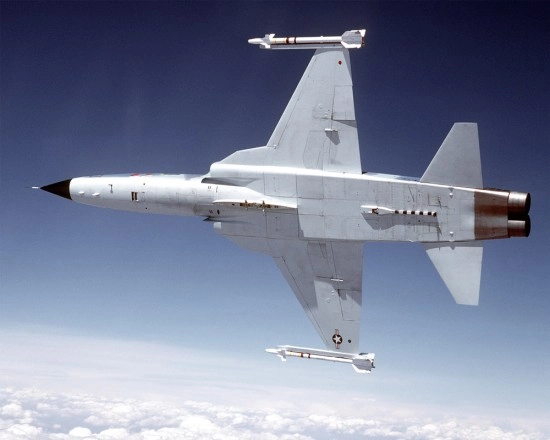
In a real modern air-combat scenario, the F-5 would likely be detected and engaged long before it ever got close.
Where the F-5 still holds value is in training, aggressor roles, and budget-limited air forces. Its performance envelope is close enough to older-generation fighters that it’s useful for simulating adversaries, and its low operating cost makes it attractive where flying hours matter more than high-tech capability.
So while the F-5 can’t compete head-to-head with modern jets, it still punches above its weight in niche roles, which, in a way, explains why we’re still talking about it today.
So… why is the F-5 Tiger still around at all? Mostly because it never stopped being useful, just in different ways than originally intended. Even as frontline combat roles faded, the F-5 found a second life in training, preservation, and aviation culture.
How is the F-5 still used today? In training, mainly.
The jet’s size, speed, and handling make it a solid stand-in for older adversary fighters, especially Cold War–era designs. That’s why militaries, most notably the U.S., have used the F-5 in aggressor squadrons, where pilots deliberately fly like opposing forces during combat exercises.
The idea is to give frontline pilots a realistic fight against a nimble, fast aircraft without the cost of flying top-tier fighters. It’s not perfect, but it’s effective, and it’s one of the reasons the F-5 has outlived many of its peers.
What happens when an F-5 finally retires for good?
In many cases, it ends up preserved rather than scrapped. You’ll find F-5s in air and space museums, static displays, and heritage collections around the world.
A very small number have even made it into civilian hands, usually operated by well-funded private groups or former military contractors, often for airshows or flight demonstrations.
These aircraft are tightly regulated, but they help keep the F-5’s legacy alive; not as a weapon, but as a flying reminder of an era when fighters were simpler, lighter, and built to last.