Follow Us:
Follow Us:

There’s a strange little graveyard in military aviation history. Not for bad airplanes, those disappear quietly, but for aircraft that were almost too good. The ones pilots admired, engineers obsessed over, and politicians somehow managed to bury anyway.
The F-20 Tigershark sits right in the middle of that cemetery.
At first glance, it looked like just another Cold War fighter jet. Slim fuselage. Shark-nose profile. One engine screaming behind the cockpit. But under that skin was something unusually clever: a lightweight fighter that could scramble in under a minute, fire advanced missiles, operate with minimal ground crews, and outrun many aircraft that cost dramatically more.
And yet… it never entered service.
That’s the part aviation fans still argue about over coffee, Reddit threads, and dusty airshow hangars. How does an aircraft praised by test pilots, packed with modern avionics, and capable of Mach 2 simply vanish from the market?
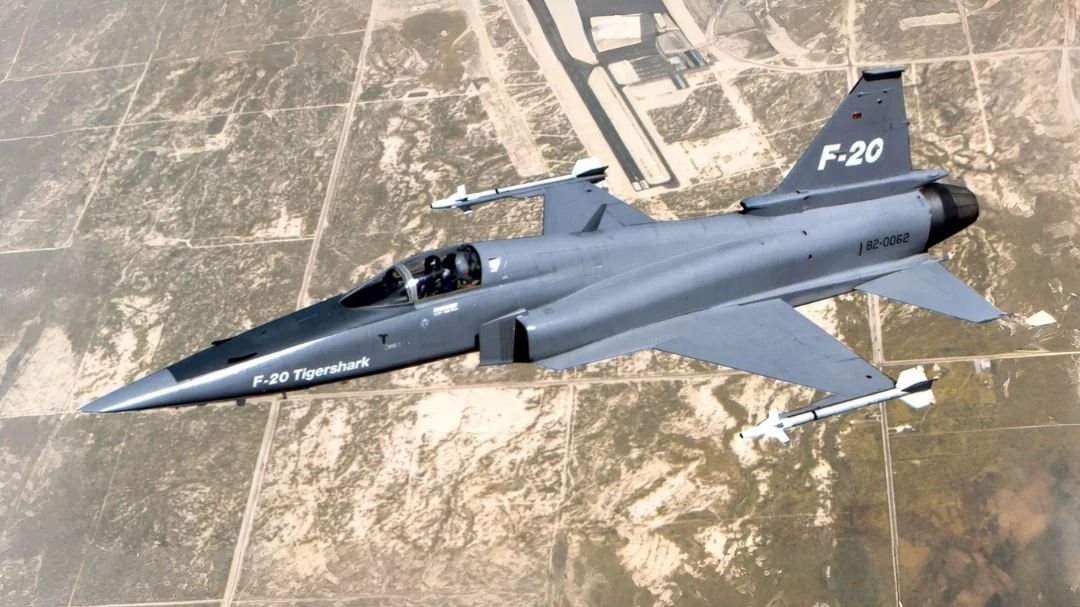
The answer has less to do with engineering and far more to do with timing, geopolitics, and one very inconvenient rival: the General Dynamics F-16 Fighting Falcon.
Originally developed by Northrop Corporation as an export-friendly evolution of the legendary Northrop F-5 Tiger II, the F-20 Tigershark was meant to give U.S. allies a modern fighter without handing over America’s most sensitive frontline technology. In many ways, it was ahead of its moment, simple where others were complicated, fast where others were bureaucratic.
And honestly? That may have been its biggest problem.
This story isn’t just about a cancelled fighter program. It’s about the weird intersection of technology, politics, Cold War paranoia, defense economics, and the uncomfortable truth that being “better” doesn’t always matter.
Sometimes the best aircraft loses anyway.
The story of the F-20 Tigershark actually begins with a different aircraft entirely, the nimble little Northrop F-5 Tiger II.
During the 1960s and 70s, the F-5 earned a reputation as the scrappy underdog of Western fighter aviation. It was cheap, reliable, easy to maintain, and surprisingly agile. Countries loved it because it didn’t demand the sort of giant logistics machine that aircraft like the McDonnell Douglas F-4 Phantom II practically inhaled for breakfast.
But by the late Cold War, “good enough” wasn’t enough anymore.
Radar systems were improving fast. Soviet fighters were getting deadlier. Export customers wanted something modern, but Washington wasn’t eager to hand out top-tier aircraft technology like candy at Halloween. So Northrop Corporation saw an opening.
Their idea was deceptively simple: take the dependable F-5 platform and transform it into a next-generation lightweight fighter.
That project was originally called the F-5G.
And this is where things got interesting.
Instead of building a bloated multirole aircraft with endless subsystems, Northrop focused on making the pilot’s life easier. Faster startup times. Reduced maintenance. Better radar. More thrust. Cleaner avionics. Think of it less as a “new airplane” and more like someone stuffing a sports car engine into a reliable old street racer and somehow making it more fuel-efficient too.
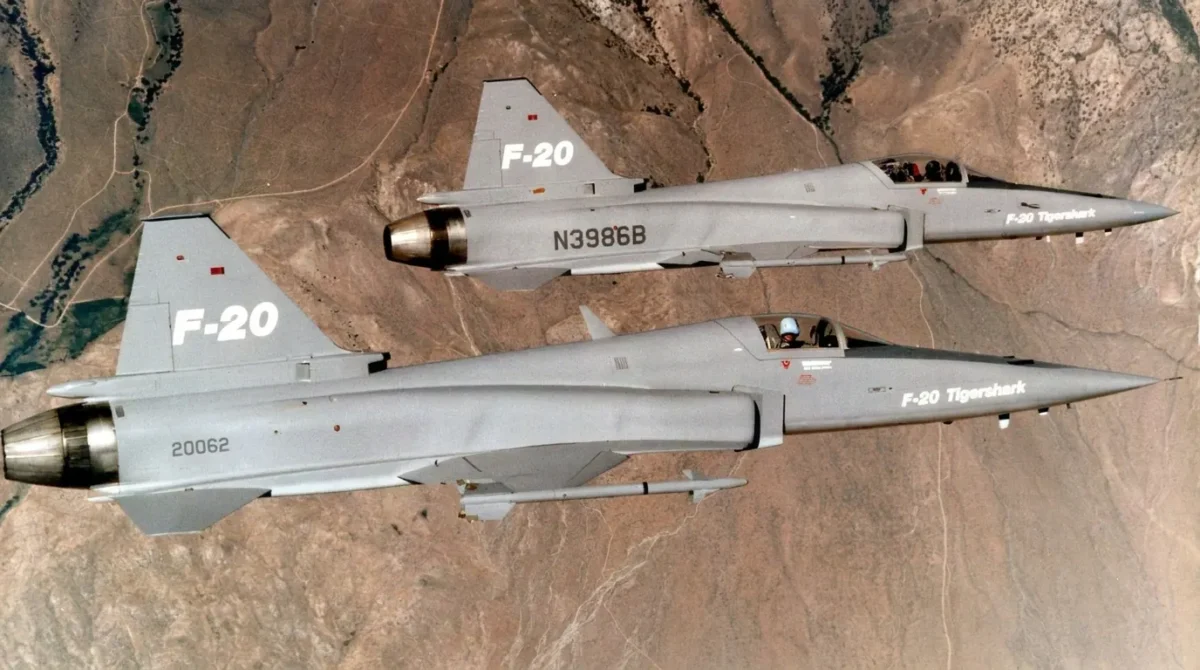
When the redesign became substantial enough, the aircraft received a new name: F-20 Tigershark.
The name mattered. It sounded aggressive, modern, exportable. Very 1980s. You can almost hear synth music in the background.
Underneath the branding, though, the F-20 represented a deeper shift in fighter philosophy. It wasn’t trying to dominate the skies through sheer complexity. It aimed to deliver 80–90% of elite fighter performance at a fraction of the operational headache.
In today’s language, you’d probably call it “high capability with low overhead.”
Military planners loved saying that phrase back then. Contractors too. Usually while pointing at charts nobody fully understood.
On paper, the F-20 Tigershark looked dangerous. In the air, according to many test pilots, it felt even better.
The biggest transformation from the older F-5 design came from one brutally important upgrade: the engine. Northrop replaced the twin-engine setup of the F-5 with a single General Electric F404 turbofan, the same engine family later used in the McDonnell Douglas F/A-18 Hornet.
That changed everything.
The F-20 could accelerate harder, climb faster, and hit speeds above Mach 2 while still keeping maintenance relatively simple. For smaller air forces, that mattered enormously. Fancy aircraft are great until they spend half their lives parked in hangars waiting for spare parts.
A quick look at the core numbers tells the story:
| Specification | F-20 Tigershark |
| Max Speed | Mach 2.1 |
| Engine | 1 × GE F404-GE-100 |
| Thrust | Approx. 17,000 lbf |
| Combat Radius | ~680 miles |
| Service Ceiling | 55,000+ ft |
| Hardpoints | 7 |
| Radar | AN/APG-67 multi-mode radar |
And then there was the radar.
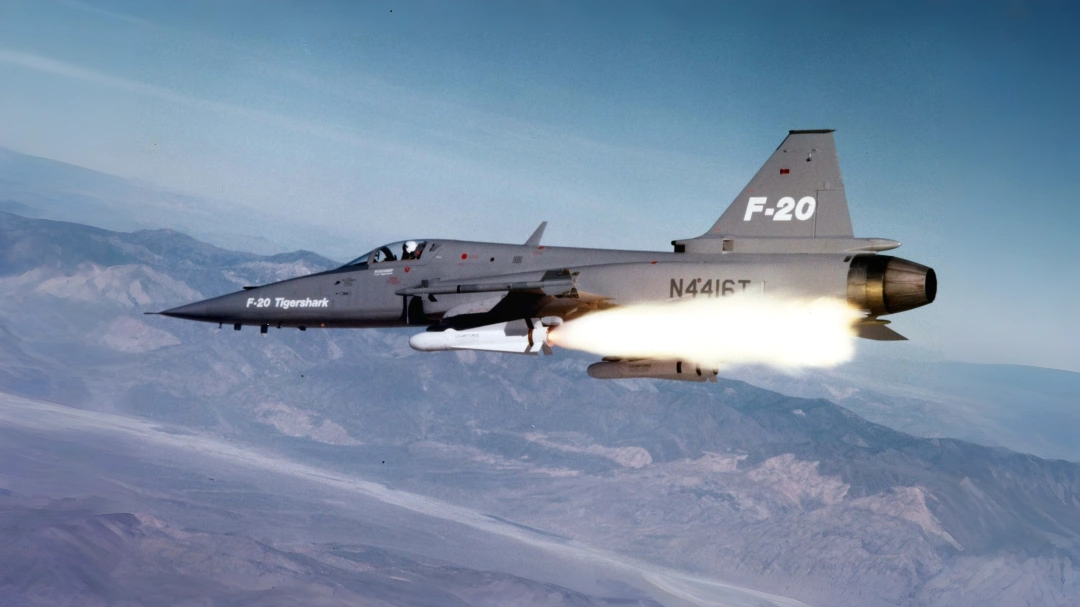
The AN/APG-67 gave the F-20 beyond-visual-range targeting capability, terrain mapping, and look-down/shoot-down functions, features that weren’t exactly common in lightweight export fighters during the early 1980s. Northrop also integrated HOTAS controls (“hands on throttle and stick”), reducing the pilot’s workload in combat. Tiny detail. Huge difference.
In practical terms? The jet felt responsive. Quick. Almost impatient.
The F-20 could reportedly go from engine start to airborne in around 60 seconds. That’s absurdly fast for a fighter aircraft of its era. Some military planners viewed it as ideal for defending vulnerable airbases during surprise attacks.
And oddly enough, that scramble capability rarely gets talked about today. Aviation history tends to romanticize dogfights and missiles. But logistics, the boring stuff, often decides whether an aircraft succeeds.
The Tigershark understood that better than most fighters of its generation.
Most Cold War fighter jets looked intimidating. The F-20 Tigershark did something trickier, it looked efficient.
That may sound like a strange compliment for a combat aircraft, but efficiency was the whole point. While other nations chased increasingly massive and expensive fighters, Northrop Corporation built the F-20 around a different philosophy: make the aircraft deadly without making it exhausting to own.
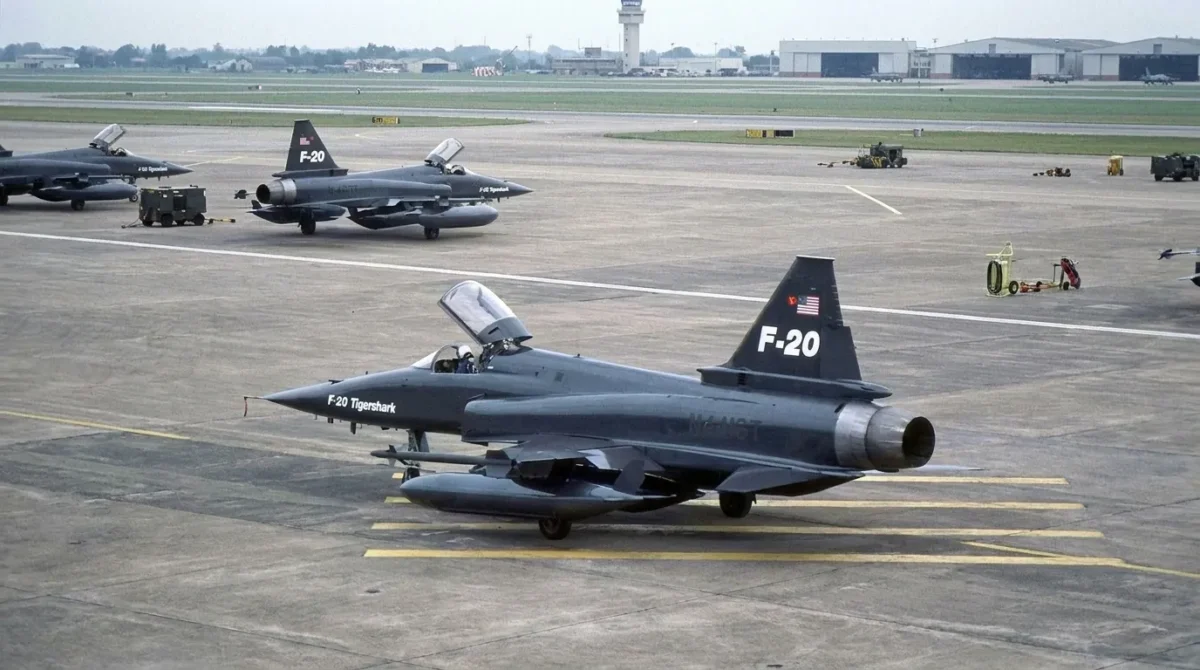
That mindset shaped nearly every inch of the airplane.
The Tigershark used a lightweight airframe derived from the Northrop F-5 Tiger II, but Northrop refined the aerodynamics with leading-edge extensions, reshaped intakes, and improved wing geometry. In tight maneuvers, the aircraft reportedly felt sharp and predictable, something pilots care about far more than flashy brochure numbers.
One former test pilot compared the aircraft to “a knife fight in a phone booth.” Which feels very 1980s fighter-pilot poetry.
Then there was the cockpit.
This is where the F-20 quietly leaped ahead of many competitors. Instead of drowning pilots in switches and procedures, Northrop simplified the layout with large multifunction displays, a wide-angle heads-up display, and HOTAS controls. Pilots could manage radar, weapons, and navigation without constantly taking their hands off the controls.
That sounds normal now. In 1983? It was forward-thinking stuff.
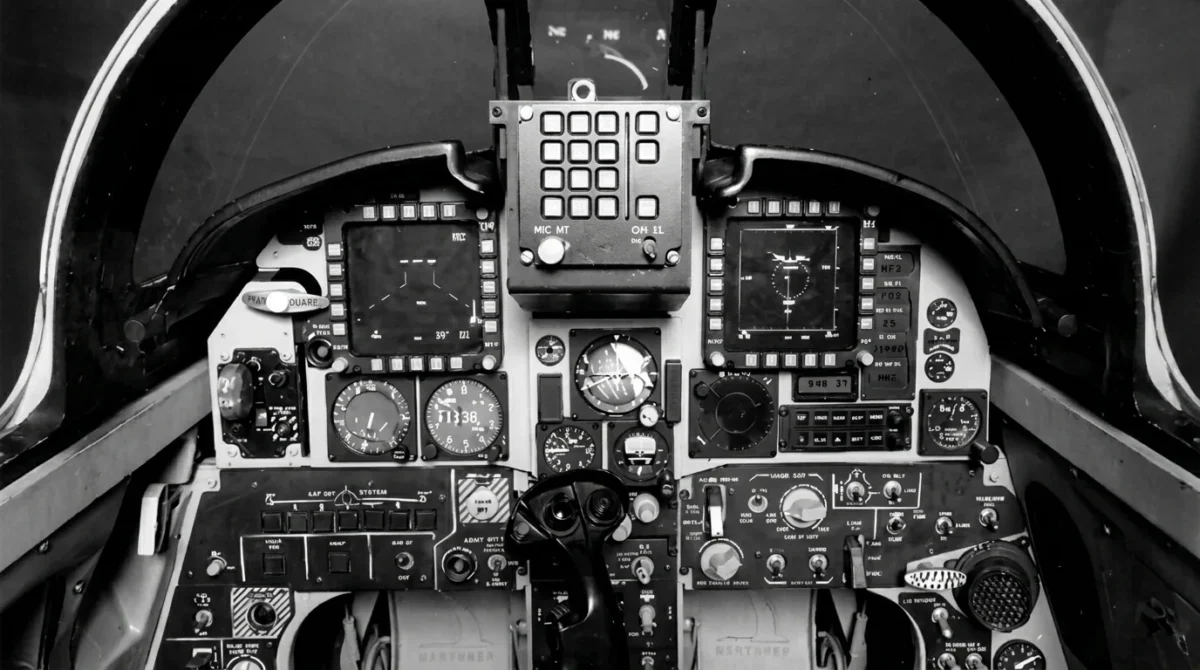
The aircraft also had an unusually fast startup sequence. Some reports claimed the F-20 could scramble in under a minute from alert status. Compare that to aircraft requiring long alignment procedures and larger support crews, and suddenly the Tigershark starts looking less like a budget fighter and more like a practical battlefield tool.
And practicality mattered.
Many allied nations didn’t have sprawling NATO-style infrastructure. They needed aircraft capable of operating from rougher bases with smaller maintenance teams. The F-20 fit that reality surprisingly well.
Honestly, the Tigershark almost feels modern in hindsight. Not because it had stealth or futuristic sensors, it didn’t, but because it embraced a concept many air forces now obsess over: achieving strong combat capability without crushing operational costs.
That idea keeps resurfacing in military aviation. Different decade. Same argument.
This is the comparison that refuses to die.
Even decades later, aviation enthusiasts still debate the F-20 Tigershark vs F-16 question with the intensity of sports fans arguing over a missed championship call. And honestly, the argument exists because the matchup was surprisingly close, at least in certain areas.
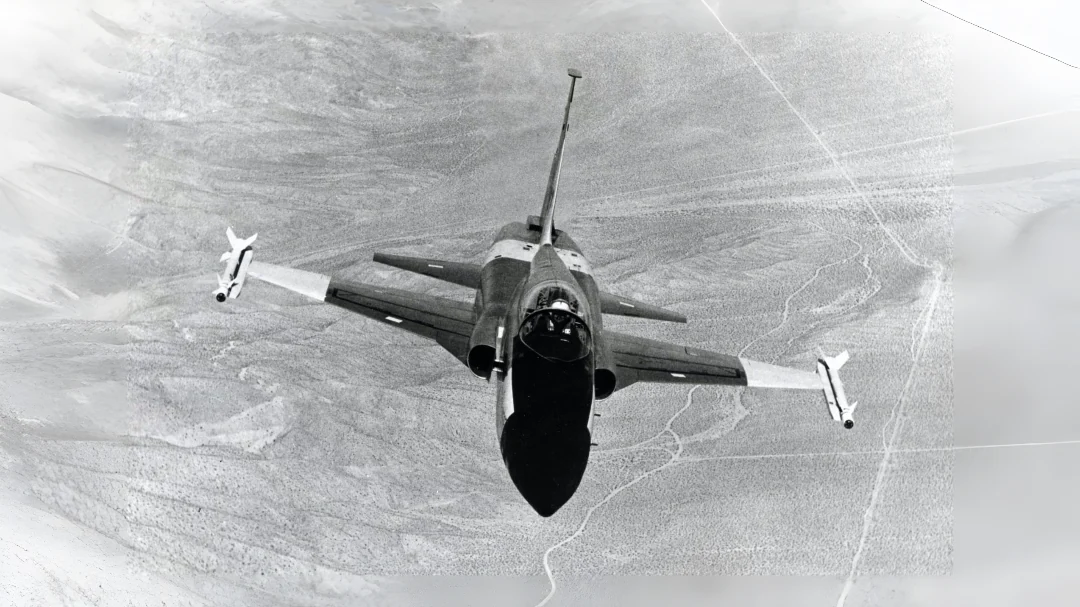
The General Dynamics F-16 Fighting Falcon had the glamour. It was the U.S. Air Force’s chosen star: advanced fly-by-wire controls, excellent maneuverability, and enormous upgrade potential. It looked futuristic because, in many ways, it was.
But the F-20 Tigershark fought back with simplicity.
Northrop’s fighter was easier to maintain, faster to scramble, and significantly cheaper to operate. Some export customers saw that as more valuable than bleeding-edge complexity. A nation defending its borders doesn’t always need the aerospace equivalent of a Formula 1 car. Sometimes you want something closer to a rally machine, fast, rugged, forgiving.
Here’s where the comparison gets interesting:
| Feature | F-20 Tigershark | F-16 Fighting Falcon |
| Max Speed | Mach 2.1 | Mach 2.0 |
| Engine Count | 1 | 1 |
| Radar | AN/APG-67 | AN/APG-66 |
| Maintenance Burden | Lower | Higher |
| Operational Status | Cancelled | Active worldwide |
| Startup Time | Extremely fast | Longer alignment process |
One of the F-20’s most underrated strengths was readiness. The aircraft could launch rapidly with minimal ground support. During the Cold War, that mattered because military planners feared surprise Soviet strikes disabling aircraft before they even got airborne.
The F-16, though, had momentum. Political momentum. Industrial momentum. Pentagon momentum.
And momentum in defense procurement is like gravity, once it starts pulling, escaping becomes difficult.
When the Reagan administration loosened export restrictions on frontline fighters, allied nations suddenly gained access to the F-16 itself. That effectively crushed the Tigershark’s biggest selling point overnight.
It’s a bit like spending years developing an affordable luxury sedan only for the manufacturer to suddenly discount the flagship sports car.
Technically, the F-20 remained impressive. Commercially, the ground shifted beneath it. Fast.
The collapse of the F-20 Tigershark program wasn’t caused by one catastrophic flaw. No single failed test. No hopeless engineering disaster. If anything, that’s what makes the story so frustrating.
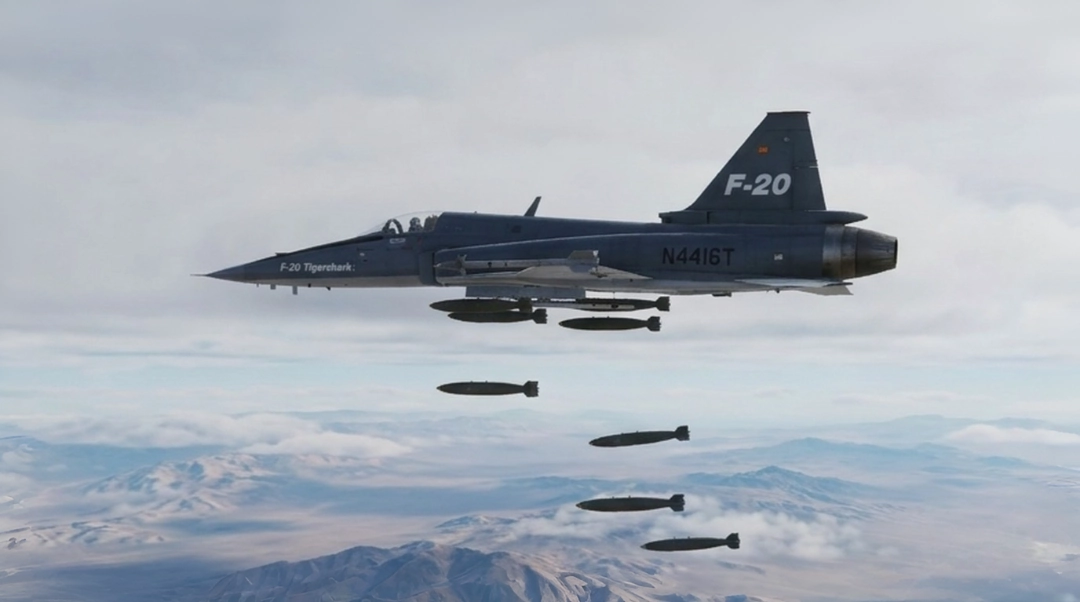
The aircraft was good. Really good.
Which means its cancellation came down to something murkier: politics colliding with timing.
When Northrop Corporation began developing the F-20, U.S. export policy limited which advanced fighters could be sold overseas. The idea behind the Tigershark was clever, offer allies a modern fighter without giving them America’s frontline aircraft like the General Dynamics F-16 Fighting Falcon.
Then Washington changed the rules.
Under the Reagan administration, export restrictions loosened dramatically. Countries that once might’ve purchased the F-20 could now buy actual F-16s instead. That instantly transformed the Tigershark from a strategic solution into an awkward middle option.
And middle options rarely survive defense politics.
Northrop suddenly found itself competing against an aircraft backed by the full institutional weight of the U.S. Air Force. That’s nearly impossible terrain. Militaries often prefer buying what the Americans themselves are flying because it guarantees future upgrades, training pipelines, and long-term logistical support.
The Tigershark had another problem too: perception.
During demonstration tours in the 1980s, two prototype crashes occurred. Tragically, both involved highly experienced pilots. Investigations suggested the accidents were linked to pilot disorientation and extreme maneuvering rather than fundamental aircraft defects, but public perception doesn’t care much about nuance. Headlines stick.
Defense buyers noticed.
Momentum slowed. Potential contracts hesitated. Confidence wobbled.
And there’s a strange irony buried in all this. The F-20 may have been too optimized for a world that no longer existed. It was designed as the perfect export fighter during one narrow political moment, and then geopolitics shifted underneath it before sales could materialize.
By 1986, the program was dead.
Only three prototypes were ever built.
That number feels almost absurd now considering how much influence the aircraft still has in aviation discussions. Few cancelled fighters are remembered this vividly decades later. But the Tigershark lingers because it represents one of military aviation’s favorite unanswered questions:
What if timing had been different by just a few years?