Follow Us:
Follow Us:

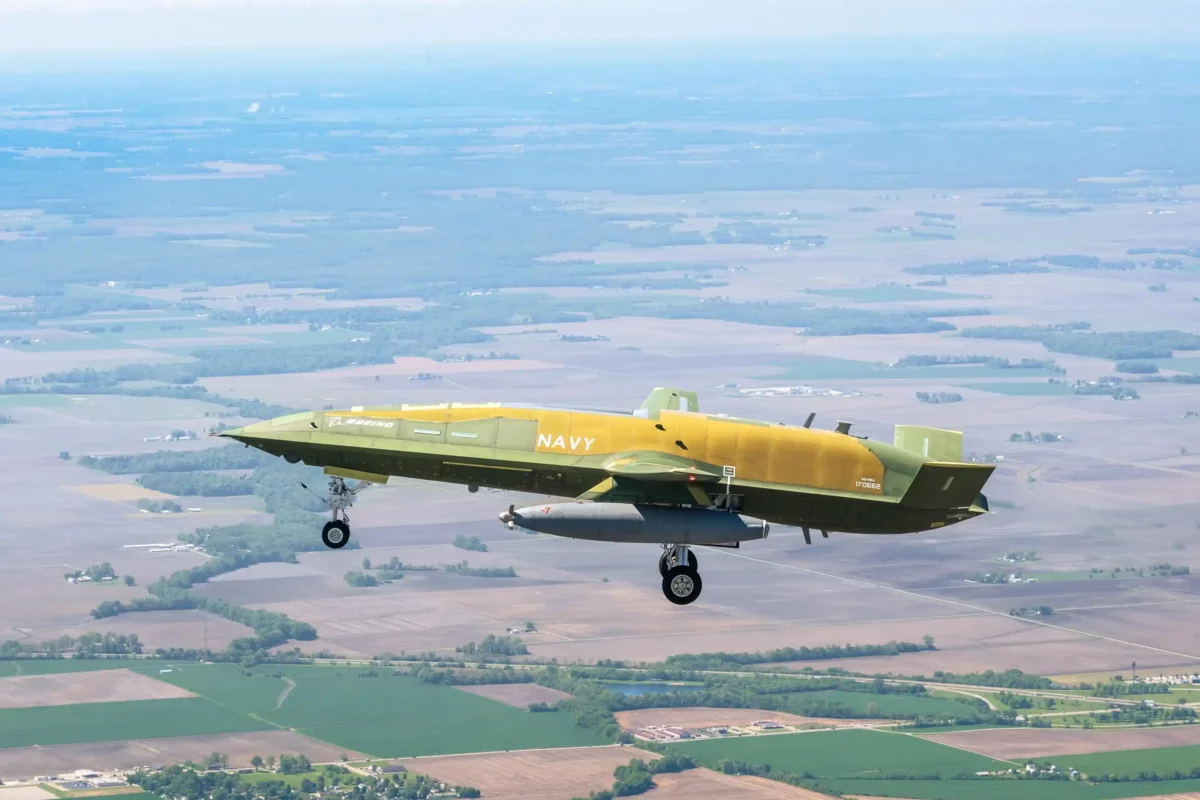
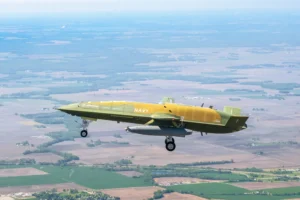
Defense Feeds, St. Louis – The U.S. Navy has taken another step toward introducing carrier-based autonomous aviation after the MQ-25A Stingray test flight successfully completed its second developmental sortie.
The milestone keeps Boeing’s unmanned tanker program on track as the service works to field its first operational carrier-based refueling drone, a platform expected to extend the reach of carrier air wings while allowing crewed fighters to focus on combat missions instead of supporting aerial refueling tasks.
Although the aircraft carries no offensive weapons, its importance to future naval operations should not be underestimated. Increasing the operational range of carrier aircraft has become a growing priority as potential adversaries field longer-range missiles capable of threatening aircraft carriers operating closer to contested coastlines.
The latest MQ-25A Stingray test flight forms part of an extensive flight-test campaign designed to verify the aircraft’s performance before it begins operating from U.S. Navy aircraft carriers.
Unlike traditional carrier aircraft, the MQ-25A was conceived from the outset as an unmanned system capable of performing repetitive but essential support missions with minimal human workload. Its primary role is straightforward: deliver fuel to other aircraft in flight, allowing fighters and surveillance aircraft to remain on station longer or reach targets at greater distances.
That may sound like a modest task, but aerial refueling has become one of the limiting factors in carrier aviation. Today, F/A-18 Super Hornets are frequently assigned as “buddy tankers,” carrying external fuel tanks to refuel other aircraft instead of performing strike or air superiority missions.
By taking over that responsibility, the MQ-25A effectively returns valuable fighter aircraft to frontline operational roles.
The successful test also provides engineers with additional data needed to validate flight control systems, aircraft handling and overall performance before more demanding evaluations continue.
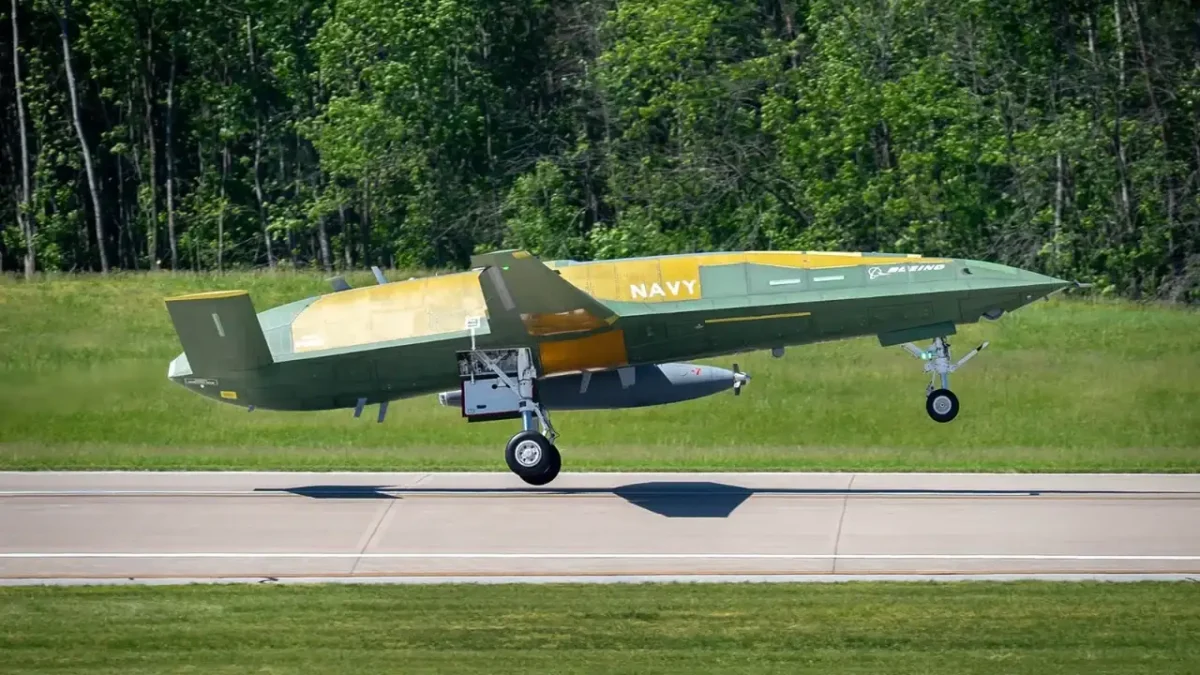
The operational value of the MQ-25A Stingray test flight extends well beyond proving that the aircraft can fly safely.
Once introduced into service, the drone is expected to reshape how carrier air wings allocate aircraft during long-range missions. Rather than sacrificing combat aircraft to perform tanker duties, commanders will be able to dedicate unmanned platforms to aerial refueling while preserving fighters for strike, escort and air defense missions.
That shift becomes increasingly important as naval operations expand across the Indo-Pacific, where distances between friendly bases and potential operating areas can stretch for thousands of kilometers.
The Stingray’s ability to refuel aircraft farther from the carrier also helps increase operational flexibility. Carrier strike groups could remain farther offshore while still supporting missions deep inside contested regions, reducing exposure to long-range anti-ship weapons without limiting the reach of embarked aircraft.
From a logistical standpoint, introducing an unmanned tanker also simplifies one of the most resource-intensive aspects of carrier aviation by assigning repetitive support missions to an aircraft specifically designed for that purpose.
The MQ-25A Stingray test flight reflects a broader transformation taking place across naval aviation. While much public attention focuses on next-generation fighters and advanced weapons, support aircraft are becoming just as important in maintaining combat effectiveness during high-end operations.
The Navy increasingly envisions future carrier air wings as a mix of crewed and uncrewed aircraft, each performing missions best suited to their strengths. Autonomous systems can handle persistent surveillance, electronic support and aerial refueling, while human pilots concentrate on complex combat missions requiring rapid decision-making.
That concept also supports the Navy’s wider modernization strategy, which emphasizes distributed maritime operations and greater operational endurance across the Indo-Pacific.
For Boeing, continued progress in the flight-test program is another step toward delivering what could become the world’s first operational carrier-based unmanned aerial refueling aircraft. For the Navy, however, the significance runs much deeper.
The MQ-25A Stingray test flight is helping lay the foundation for a future carrier air wing where autonomous aircraft routinely operate alongside crewed fighters. Rather than replacing naval aviators, the Stingray is designed to make them more effective—extending their reach, increasing available combat power and giving commanders greater flexibility in an increasingly contested maritime environment.