Follow Us:
Follow Us:

In late 2020, a convoy was ambushed just east of Tehran. The target was Mohsen Fakhrizadeh, the top architect of Iran’s nuclear weapons program. Killed in a daring, high-tech assassination widely attributed to Israel, his death was a clear signal that the stakes around Iran’s nuclear ambitions were far from theoretical. Today, nearly five years later, the crisis he once symbolized has only deepened.
Iran has steadily increased its uranium enrichment to levels that, according to the IAEA, are alarmingly close to weapons-grade. It continues to restrict international inspections, while regional tensions rise to a boiling point—from Israeli strikes on Iranian proxies in Syria, to Houthi missile threats in the Red Sea. While there’s still no definitive proof that Iran currently possesses a nuclear weapon, its progress has raised alarm across the region and beyond. Each event, each escalation, seems to feed into a broader and more urgent question:
“How close is Iran to a nuclear bomb—and what happens if it crosses the line?”
To understand where Iran stands today in its nuclear journey, it’s worth looking back—not just to recent events, but to a time when Iran was still ruled by a monarch and considered a key Western ally.
The story of Iran’s nuclear program arguably begins in the 1950s, when the United States launched the Atoms for Peace initiative. Under this program, Iran—then led by Shah Mohammad Reza Pahlavi—received its first research reactor from the U.S., marking the foundation of what was, at the time, a civilian nuclear effort.
By the 1970s, the Shah had grand ambitions: he envisioned building up to 20 nuclear reactors and even hinted at long-term interest in nuclear weapons. Importantly, this was at a time when Western powers seemed not only tolerant of Iran’s ambitions, but actively supportive.
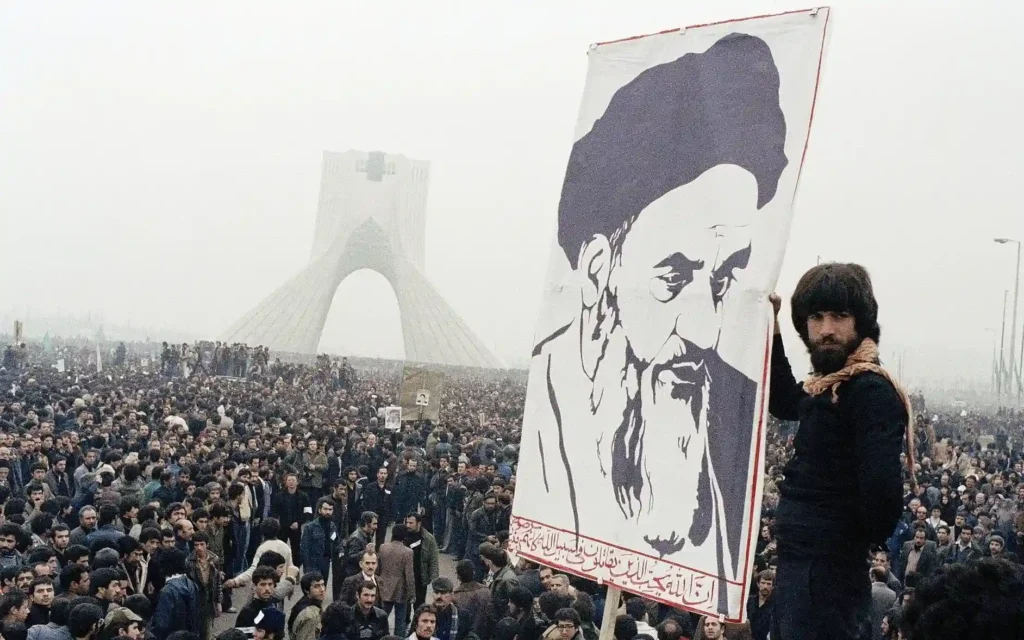
Then came the 1979 Islamic Revolution, and with it, a seismic geopolitical shift. The new regime, led by Ayatollah Khomeini, abruptly halted the nuclear program—viewing it as a symbol of Western imperialism. But this freeze was temporary. Within a decade, as the regime consolidated power and found itself embroiled in a brutal war with Iraq, Iran quietly revived its nuclear efforts.
Over the years, Iran’s nuclear program evolved in complex and sometimes opaque ways. What began as a civilian initiative gradually drew international suspicion—especially after the early 2000s, when satellite imagery and intelligence revealed undeclared facilities in Natanz and Arak. These discoveries triggered global alarm and accusations that Iran might be seeking a nuclear bomb, despite Tehran’s repeated claims that its intentions were purely peaceful.
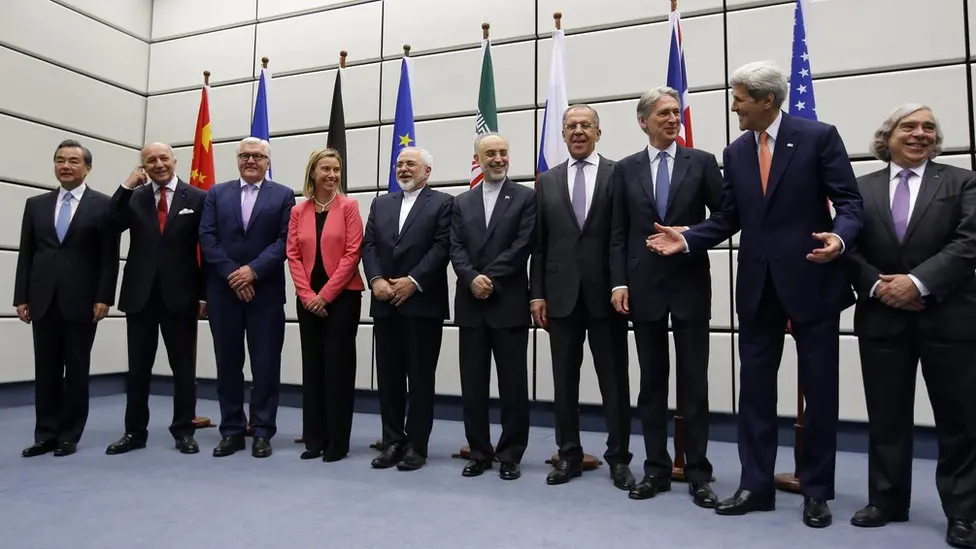
From that point forward, Iran’s nuclear timeline was marked by confrontation, negotiation, and at times, deception. International sanctions tightened. The IAEA demanded greater transparency. And in 2015, the historic Iran nuclear deal—formally the Joint Comprehensive Plan of Action (JCPOA)—offered a diplomatic pause, temporarily limiting Iran uranium enrichment and opening the country to robust inspections.
Yet, as many observers now argue, the deal may have delayed rather than dismantled Iran’s weapons potential. Since the U.S. withdrawal from the JCPOA in 2018, Tehran has incrementally reduced its compliance. Its uranium enrichment progress—now exceeding 60% purity in some cases—has reignited fears that Iran could cross the nuclear threshold in a matter of months, if not sooner.
This is the question that keeps diplomats, defense analysts, and regional leaders up at night: Does Iran have nuclear weapons?
The short answer—based on current public intelligence and IAEA inspections in Iran—is no. There’s no definitive evidence that Iran has built or tested a nuclear bomb. But the longer, more complicated answer is that Iran may be much closer than many would prefer to believe.
The International Atomic Energy Agency (IAEA), the UN’s nuclear watchdog, has consistently monitored Iran’s nuclear activities. For years, it confirmed Iran’s compliance with the Iran nuclear deal (JCPOA), which capped uranium enrichment at 3.67% and limited centrifuge use. However, that changed after 2018, when the U.S. unilaterally withdrew from the deal. In response, Iran began exceeding those limits—and the IAEA’s most recent findings have raised serious concerns.
Iran is now enriching uranium up to 60% purity—just a short technical step from the 90% typically used in weapons-grade material. It has also expanded its stockpile far beyond the JCPOA limits, and deployed advanced centrifuges that allow for faster and more efficient enrichment.
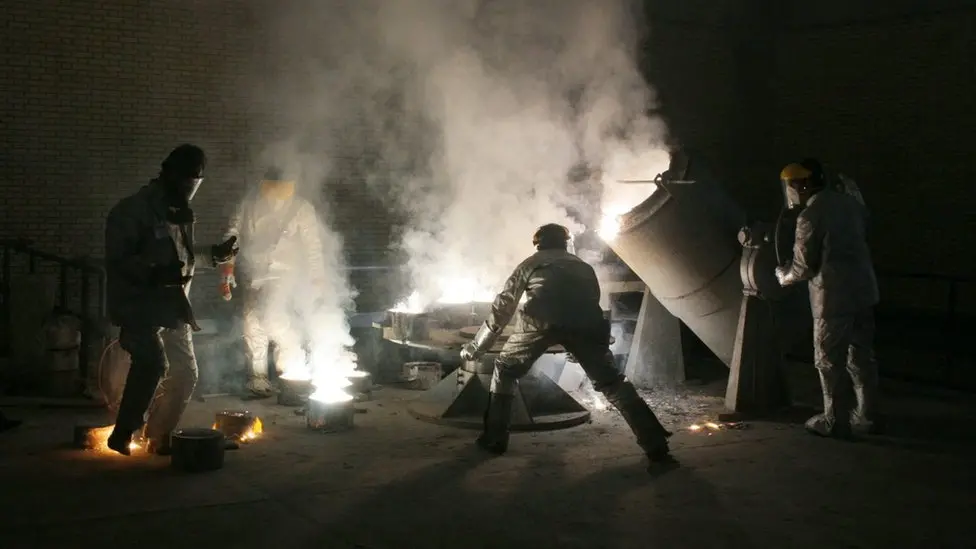
While the IAEA continues inspections, Iran has increasingly curtailed access and transparency, especially since 2022. The agency has reported difficulty in verifying certain nuclear-related activities and has warned that Iran’s uranium enrichment progress is “unprecedented.”
Still, the IAEA stops short of saying Iran is building a bomb. There’s a key distinction between nuclear capability and weaponization. So far, no signs of active warhead design, nuclear testing, or deployment infrastructure have been confirmed.
This is where the concept of a nuclear threshold state becomes critical. The term refers to a country that has the technical know-how and materials to quickly produce a nuclear weapon—but has not yet taken the political decision to cross that line.
Many experts believe Iran is now firmly in this category. It possesses the enriched uranium, the centrifuge infrastructure, and the missile delivery systems that could support a nuclear weapons program. What it may lack is weaponization—the complex, time-consuming step of assembling, testing, and miniaturizing a functioning nuclear bomb.
So, how close is Iran to nuclear weapons? It’s difficult to say with precision, but many estimates suggest Iran could produce enough fissile material for one bomb in a matter of weeks, if not already. Weaponizing that material would likely take several additional months, perhaps longer.
At the heart of Iran’s nuclear program lies one of the most sensitive—and misunderstood—processes: uranium enrichment. It’s a technical term that often sounds abstract, but in reality, it’s the key stepping stone toward a potential nuclear bomb. And in Iran’s case, it’s a process that has grown far more advanced—and far more alarming—over the past few years.
Uranium occurs naturally but must be processed to be usable. Most civilian nuclear reactors require uranium enriched to about 3–5% U-235—hardly dangerous in weapons terms. But weapons-grade uranium needs to be enriched to around 90%—a huge technical leap.
That said, the enrichment curve is nonlinear. Once a country crosses the 20% threshold, the time it takes to reach 90% becomes dramatically shorter. Iran has now surpassed 60% in some stockpiles—a level that, while still below weapons-grade, is alarmingly close, according to nuclear experts and IAEA officials. It’s believed that enriching from 60% to 90% could take only a matter of days or weeks, depending on the number and type of centrifuges in operation.
This is what’s known in nuclear strategy as a “breakout time”—the time needed to produce enough fissile material for a single nuclear bomb. And Iran’s breakout time, once estimated at over a year under the Iran nuclear deal, may now be as short as two to three weeks, based on recent IAEA inspections in Iran.
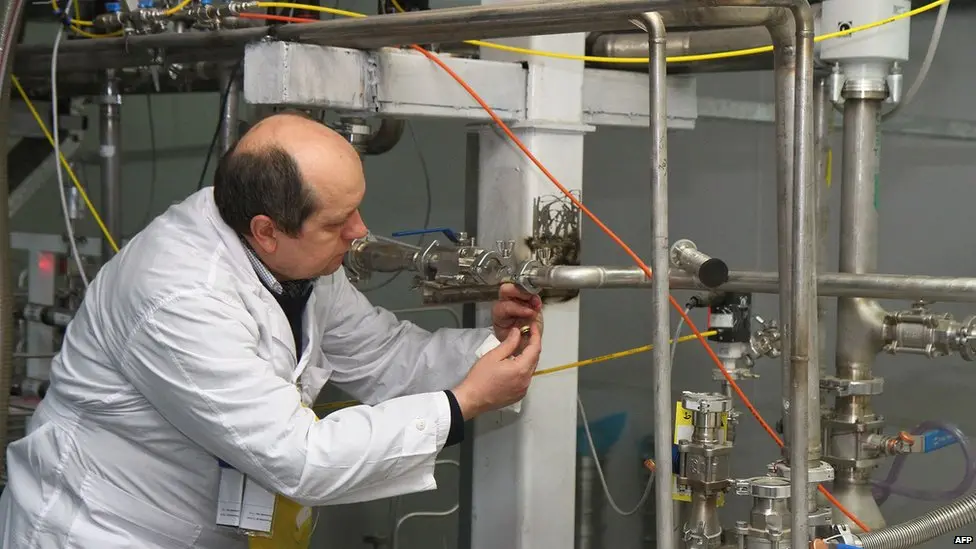
Iran’s uranium enrichment progress is centered around three key sites, each playing a different but complementary role:
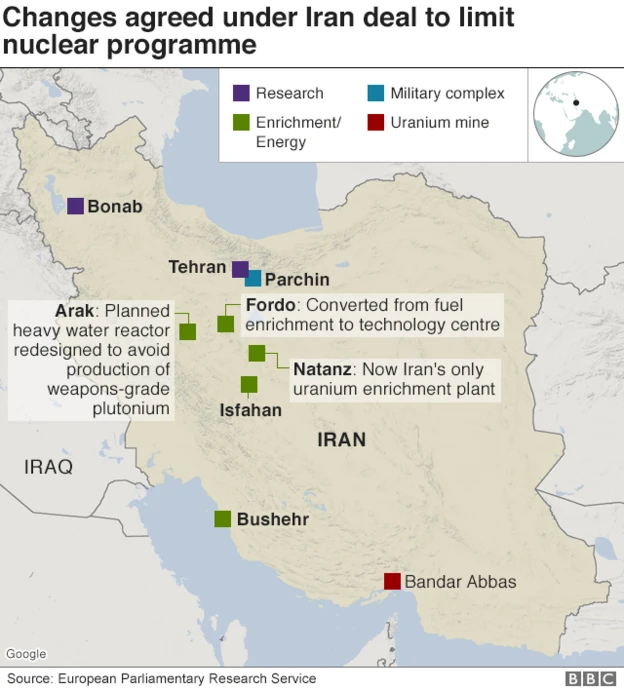
Iran insists its program remains peaceful. Yet, with enriched uranium stockpiles growing and monitoring increasingly limited, concerns about Iran’s nuclear weapons program continue to mount. Tehran’s decision to limit IAEA inspections has made it harder than ever to know exactly how far they’ve progressed—or how close they are to making the leap.
So, while Iran may not currently possess a bomb, it now appears to have most of the pieces required to assemble one on short notice. And in the complex language of nuclear diplomacy, that may be enough to qualify as a nuclear threshold state. The question now isn’t just what Iran can do—but when, if, and under what conditions it might decide to do it.
Back in 2015, a moment of cautious optimism took hold in global diplomacy. After years of sanctions, secret enrichment, and military threats, Iran and six world powers—the U.S., UK, France, Germany, Russia, and China—signed what became known as the Joint Comprehensive Plan of Action, or JCPOA.
At its core, the Iran nuclear deal was a trade-off: Tehran would dramatically scale back its nuclear program, cap uranium enrichment at 3.67%, reduce its centrifuges, and allow intrusive IAEA inspections—all in exchange for relief from crippling economic sanctions on Iran’s nuclear program.
For a time, the deal worked—at least on the surface. Iran’s breakout time to a potential nuclear bomb stretched to over a year, and the IAEA repeatedly verified Iran’s compliance.
But in May 2018, under the Trump administration, the U.S. unilaterally withdrew from the JCPOA—a decision that, for many, marked the beginning of the deal’s unraveling. Citing concerns that the agreement was too limited in scope and time-bound, Washington reimposed harsh sanctions, aiming for a policy of “maximum pressure.”
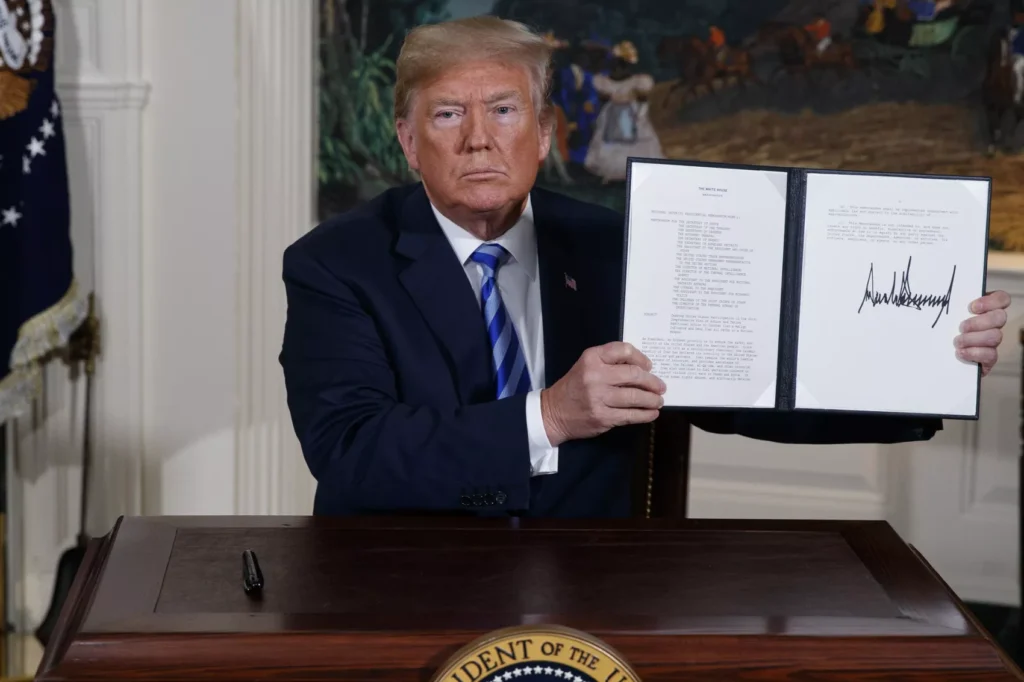
Iran, in turn, began breaching the deal’s limits step by step—enriching uranium beyond the cap, installing advanced centrifuges, and gradually reducing cooperation with the IAEA. By 2020, the deal was on life support.
As of 2025, attempts to revive the JCPOA—or craft a new, broader agreement—have stalled. Negotiations in Vienna and other European capitals have taken place intermittently, but deep mistrust persists on both sides.
Iran wants full sanctions relief and security guarantees. The U.S. and EU, meanwhile, demand verifiable limits not only on enrichment but also on missile development and regional activities.
There have been rumors of informal “understandings” to prevent further escalation, but no binding deal has emerged. For now, the JCPOA remains technically alive, but functionally collapsed—a ghost of the diplomatic breakthrough it once was.
So, if the JCPOA was once seen as the most promising tool to curb the Iran nuclear threat, its collapse has left behind a dangerous vacuum—one filled not by diplomacy, but by brinkmanship, uncertainty, and growing instability.
For Israel, Iran’s nuclear ambitions are not just a theoretical concern—they’re an existential threat. Israeli officials have repeatedly vowed to prevent Iran from obtaining a nuclear bomb, by force if necessary. Over the past decade, this stance has translated into covert operations, cyberattacks, sabotage of nuclear facilities like Natanz, and targeted assassinations of key scientists. In 2025, Israeli defense leaders continue to stress that “no options are off the table.”
Read also: Israel-Iran Conflict 2025 Explained
Across the Gulf, Saudi Arabia shares the alarm—though its response has taken a different form. Riyadh has long warned that if Iran becomes a nuclear threshold state, it may seek similar capabilities for itself, potentially triggering a regional arms race. While the Kingdom continues to voice support for diplomacy, it has also quietly invested in civilian nuclear infrastructure—perhaps to hedge its bets in case talks fail.
Meanwhile, the United States and European Union remain committed—at least officially—to preventing a nuclear-armed Iran through diplomatic means. Both continue to back IAEA inspections, push for renewed negotiations, and apply economic pressure through targeted sanctions on Iran’s nuclear program. Still, there’s growing concern that the window for diplomacy may be closing, and that containment—not rollback—may be the more realistic goal going forward.
For years, Iranian leaders have maintained a consistent line: Iran’s nuclear program is peaceful, legal under international law, and intended solely for civilian purposes like energy production and medical research. Officials from the Supreme Leader to foreign ministry spokespeople have repeatedly stated that Iran is not seeking a nuclear bomb, and that doing so would violate Islamic principles—a claim rooted in a fatwa reportedly issued by Ayatollah Khamenei.
Yet while these statements continue, actions on the ground have raised questions. The enrichment of uranium to 60%, development of advanced centrifuges, and restrictions on IAEA inspections in Iran seem—at least from the outside—to suggest a more complex reality. Some analysts argue that Iran’s leaders may be deliberately maintaining strategic ambiguity: staying just below the threshold of weaponization to maximize leverage while avoiding outright confrontation.
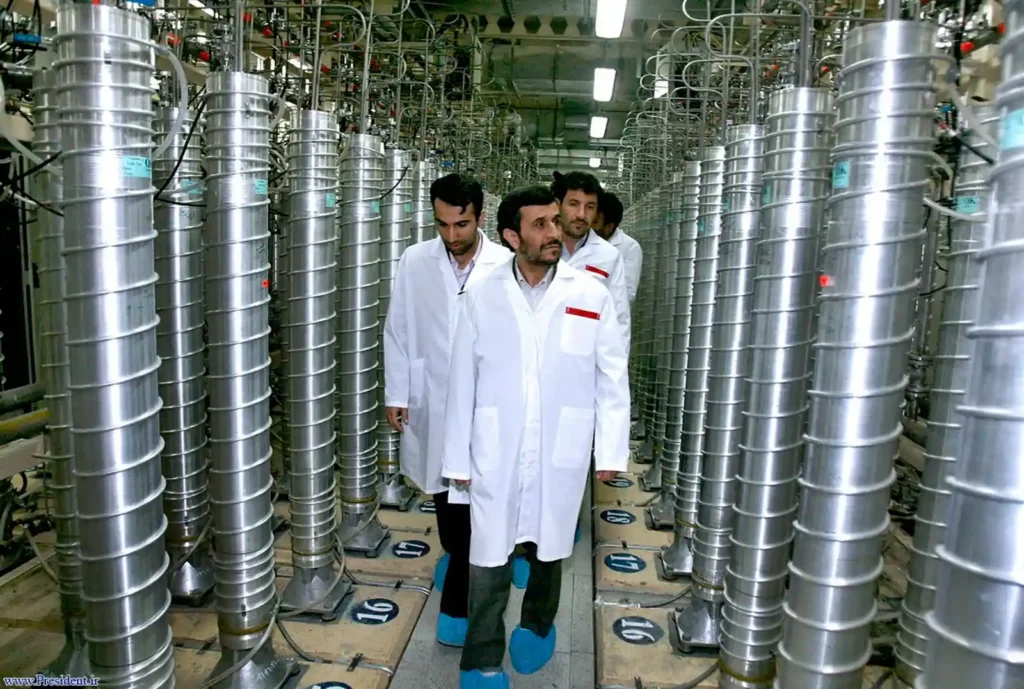
Still, Tehran insists that it has no intention of crossing that line. Iranian negotiators have argued that it was the U.S. withdrawal from the JCPOA in 2018—not any inherent shift in Iranian policy—that triggered the current crisis. From their perspective, Iran is responding to broken promises, not pursuing a nuclear weapons program. Whether this argument holds depends heavily on what happens next.
Read also: Israel Attacks Iran in Massive Overnight Strikes Targeting Nuclear Facilities
And that brings us to 2025.
In early 2025, attempts to revive the Iran nuclear deal have shown faint signs of life. European intermediaries and Gulf state envoys have reportedly facilitated backchannel talks, though no formal agreement has been reached. There is speculation that a new “interim deal” might be on the table—one that would freeze Iran’s uranium enrichment levels in exchange for partial sanctions relief. But mutual distrust remains high, and domestic politics on all sides complicate progress.
Beyond Iran itself, the future of nuclear non-proliferation may hinge on how this standoff is resolved. If Iran crosses the threshold—or is perceived to have done so—it could shatter the fragile credibility of the global non-proliferation regime. Other countries, particularly in the Middle East, might feel compelled to follow suit.
For now, Iran may still be a nuclear threshold state—technically capable, but politically undecided. Whether it chooses the path of restraint or escalation could shape not just the fate of the Iran nuclear program, but the stability of an entire region.