Follow Us:

Follow Us:

Not every war starts with a bang. Some begin in silence—on a server, in a line of malicious code, or through a phishing email disguised as routine correspondence.
Cyber warfare, while often invisible to the public eye, may be one of the most significant battlegrounds of the 21st century. Unlike traditional wars, it doesn’t always involve soldiers or missiles. Instead, it’s waged in the digital ether—through cyber weapons, covert operations, and a maze of vulnerabilities that most people don’t even know exist.
There’s a growing sense that modern conflicts are no longer just fought in the air, land, or sea—but in data centers, power grids, and satellite links. And while this shift might seem futuristic or abstract, the threat is not hypothetical. From the Stuxnet worm that reportedly sabotaged Iran’s nuclear program to the crippling ransomware attack on Colonial Pipeline in the U.S., examples of cyber warfare are no longer rare—they are alarmingly real.
What makes it interesting is, it’s not always clear when an attack is an act of war, who’s truly behind it, or how a country should respond. So what is cyber warfare, really? How did we get here, and where is this heading? This analysis explores the types of cyber warfare, the evolving tactics, and the uncertain landscape of international law and cyber defense.
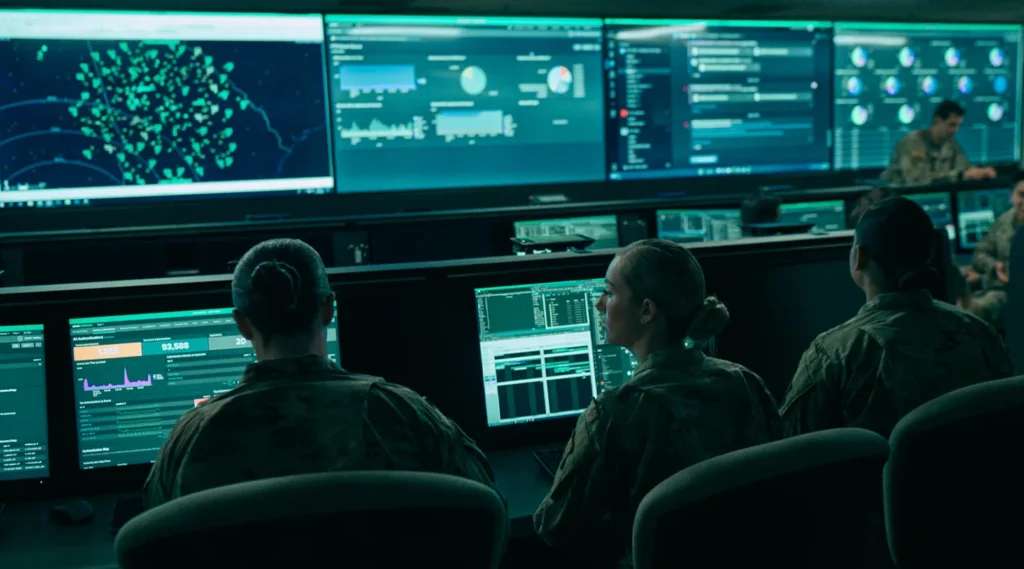
At its core, cyber warfare refers to hostile activities conducted through digital means—usually by nation-states or state-backed actors—intended to disrupt, damage, or gain advantage over another country’s critical systems. Unlike conventional warfare, where damage is physical and visible, cyber warfare targets invisible realms: networks, infrastructure, databases, and the very fabric of digital communication.
But defining it isn’t always straightforward.
There’s still no universally accepted legal definition of cyber warfare, and that’s part of what makes it so complex. Most experts would agree that it involves offensive cyber operations that either cause physical damage (like shutting down a power grid), compromise national security, or manipulate information to destabilize a country. These attacks often unfold silently and without clear attribution—sometimes even leaving the targeted nation unsure of who exactly hit them.
Key characteristics of cyber warfare might include:
It’s tempting to lump all malicious activity online into one basket, but in reality, there are important distinctions between cyber warfare, cybercrime, and cyberterrorism—even if the tools sometimes look the same.
Cybercrime is generally financially motivated and typically carried out by individuals or organized criminal groups. Think credit card theft, ransomware attacks for profit, or hacking into databases to sell personal data. The goal isn’t war—it’s money.
Cyberterrorism, on the other hand, involves politically or ideologically motivated attacks by non-state actors. These might include attempts to spread fear, disrupt public services, or influence political processes—sometimes with significant psychological impact. However, unlike state-based cyber warfare, these operations don’t usually fall under the umbrella of international armed conflict.
Cyber warfare is more strategic and state-directed. It may involve similar cyber warfare tactics—like data breaches, malware, or system takeovers—but the intent is different. It’s about national advantage, deterrence, or geopolitical leverage. And it often plays out in the shadows, far from public view.
That said, the lines are increasingly blurred. A ransomware group might be operating independently—or quietly backed by a government. A propaganda campaign could be the work of a terrorist cell—or a military psychological operation. These gray areas make attribution difficult, and international response even harder to calibrate.
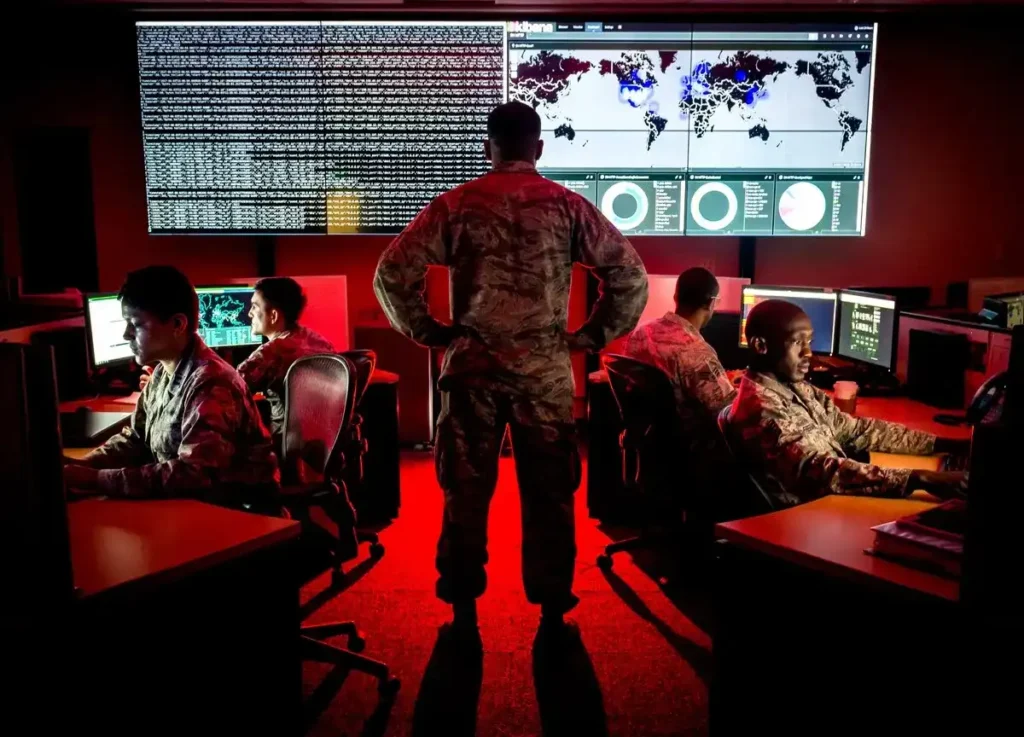
To understand cyber warfare today, it helps to rewind to when the internet itself was still young—and military strategists were just beginning to grasp the potential of digital disruption.
In the early 1990s, the concept of using cyberspace as a battlefield was still more science fiction than strategy. But even then, signs were emerging. During the Gulf War, U.S. forces reportedly experimented with disabling Iraqi command and control systems—marking one of the earliest instances of cyber warfare operations supporting kinetic action, although the details remain hazy.
By the late ’90s and early 2000s, cyber operations became more visible. Governments and militaries began building dedicated cyber units. Yet for many observers, cyber warfare still felt theoretical—something to worry about in the future.
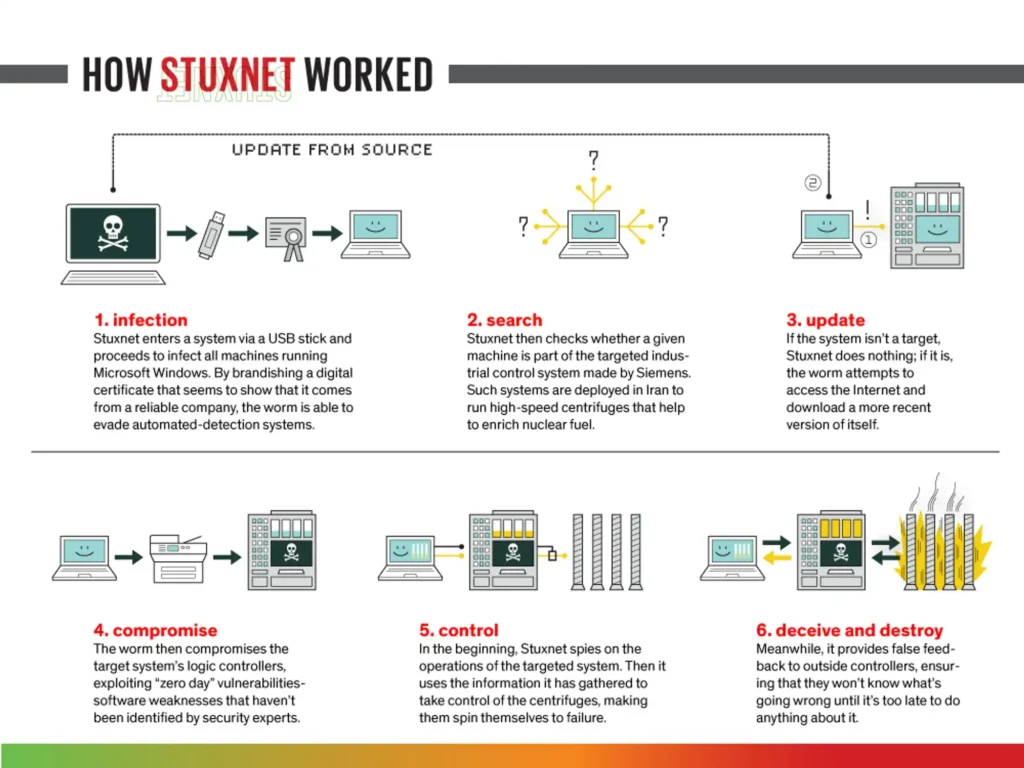
That illusion shattered in 2010, with the emergence of a game-changing digital weapon: Stuxnet.
Discovered by cybersecurity researchers, Stuxnet was a highly sophisticated worm believed to be jointly developed by the United States and Israel. Its mission was to silently sabotage Iran’s uranium enrichment program by targeting centrifuges at the Natanz facility.
What made Stuxnet extraordinary was the fact that it caused real-world, physical destruction without a single bomb being dropped. It crossed a threshold: cyber weapons could now alter geopolitical outcomes. This marked what many now consider the true beginning of modern cyber warfare tactics—not just hacking for information, but using code to cause strategic damage.
Fast forward to 2017, and the world witnessed another turning point with NotPetya. Disguised as ransomware, this cyber warfare attack was later attributed to Russian military hackers and allegedly aimed at destabilizing Ukraine. But the malware didn’t stop at national borders. It spread like wildfire, crippling global companies like Maersk, FedEx, and pharmaceutical giant Merck. The total damage was estimated in the billions.
NotPetya demonstrated the unpredictable nature of cyber weapons—once released, they don’t necessarily stay within their intended target zone. And unlike conventional bombs, code can leap across systems in seconds, turning local conflicts into global digital crises.
In 2020, the world learned of the SolarWinds cyber operation, a massive espionage campaign that quietly infiltrated U.S. government agencies and Fortune 500 companies through a compromised software update.
This wasn’t an act of destruction like Stuxnet or NotPetya—it was a patient, long-term cyber warfare tactic aimed at strategic gain. And it underscored a growing truth that the most dangerous cyber operations may not make headlines until long after the damage is done.
These cases—Stuxnet, NotPetya, and SolarWinds—aren’t just isolated incidents. They represent milestones in a much larger transformation: the evolution of warfare itself. Today, cyber capabilities are integrated into military planning around the world. Nations build cyber weapons not only to use them, but also to signal power, deter adversaries, or establish red lines in a domain where rules remain ambiguous.
And as threats grow—ranging from state-sponsored sabotage to proxy cyber groups—cyber defense strategies have become critical to national resilience. Yet the pace of offense often seems to outstrip defense, raising difficult questions about how prepared we truly are.
So, is this the future of war—or just one part of it? The answer likely depends on how the world responds to the growing complexity and blurred boundaries of this invisible, evolving battlefield.
Not all wars are fought with bullets and bombs. Some begin with an email, a line of malicious code, or a few seconds of connectivity to the wrong server. Cyber warfare tactics are as varied as they are sophisticated, and unlike conventional weapons, they often strike without warning—and without a clear culprit. Let’s imagine a scenario.
A government employee opens a routine-looking email. There’s an attachment—an invoice, perhaps. What they don’t know is that it contains malware, quietly installing itself deep within the network. No alarms go off. No data is lost. Not yet.
Over days or weeks, the malware escalates. It might lock sensitive files and demand a ransom—ransomware. Or worse, it may lie dormant, gathering intelligence for a more devastating strike.
The incident like this happened in the WannaCry ransomware attack in 2017 paralyzed hospitals in the UK and disrupted organizations across the globe. Although originally blamed on criminals, many analysts suspect that state-level actors were involved, or at least enabled the tools used.
Then there’s Distributed Denial-of-Service (DDoS) attacks, which don’t require stealth but overwhelm websites or servers with traffic until they collapse. Think of it as sending millions of fake users to the front door of a government server—until no real one can get through.
In 2007, Estonia faced a wave of such attacks—crippling banks, media outlets, and even parliament sites. Many believe it was retaliation for the removal of a Soviet-era statue. Whatever the cause, it was one of the earliest examples of cyber warfare attacks shutting down a nation’s digital life without firing a shot.

Read more about the types of cyber warfare attacks here
Cyber warfare isn’t just about disruption. It’s about espionage—long, patient infiltrations of networks, silently gathering data, reading private emails, or monitoring defense plans. And unlike physical spying, cyber espionage can be done remotely, with fewer risks and wider reach.
Sabotage, too, has found new meaning. As seen in Stuxnet, which allegedly damaged Iran’s nuclear centrifuges, cyber sabotage targets physical infrastructure by attacking the digital systems controlling them. Power grids, water treatment plants, and transportation systems are now viewed as vulnerable “soft targets” in an increasingly connected world.
Perhaps the most subtle—but equally dangerous—tactic is misinformation.
Not all cyber warfare aims to crash servers or steal secrets. Some of it aims to manipulate perception—to shape political outcomes, fracture public trust, or stoke unrest. During the 2016 U.S. elections, disinformation campaigns—largely attributed to foreign actors—spread across social media, exploiting societal divisions. While not a “cyber attack” in the traditional sense, these campaigns are now recognized as a central pillar of cyber warfare operations.
Misinformation blurs the line between cyber tools and psychological warfare. It doesn’t damage infrastructure, but it can weaken democracies, shift narratives, and even influence elections.
What makes all of this especially troubling is the blending of these tactics. A modern cyber operation might begin with a phishing email, escalate into ransomware, exfiltrate classified data, and conclude with a media campaign that misrepresents the facts—all in one coordinated move. And often, the most effective attacks don’t just use one weapon—they combine many.
As these kinds of attacks become more frequent and complex, a pressing question emerges: What rules apply to cyber warfare? Can it be regulated like conventional war? Should it be?
The truth is: it’s complicated.
The United Nations has made efforts to establish norms through its Group of Governmental Experts (GGE), which released voluntary guidelines encouraging states not to attack critical infrastructure in peacetime. But these are non-binding. They rely on goodwill—and cyber attackers often thrive in the gray areas of law and accountability.
A more detailed attempt at clarification came through the Tallinn Manual, a non-binding academic study by legal and military experts that explores how international law might apply to cyber warfare. It offers guidance on issues like state responsibility, sovereignty, and the use of force in cyberspace.
Still, major challenges remain:
The answers aren’t always clear—and that’s part of the problem.
If cyber warfare is the new battlefield, then cyber defense strategies are the digital equivalent of walls, shields, and early-warning systems. But unlike traditional defenses, protecting against cyber attacks isn’t just about building taller firewalls or installing antivirus software. It’s about anticipating threats, adapting constantly, and accepting that some attackers may already be inside the system.
In this environment, deterrence—once a cornerstone of military strategy—isn’t so simple. Unlike nuclear weapons or visible armies, cyber weapons are often hidden until they’re deployed. There’s no clear red line, no show of force that can reliably prevent an attack. So how do nations respond?
Around the world, countries have begun to elevate cyber defense to a national security priority. Agencies like the U.S. Cyber Command, the UK’s National Cyber Security Centre (NCSC), and Israel’s Unit 8200 play critical roles in monitoring threats, coordinating responses, and in some cases, conducting offensive operations.
These organizations often operate in close collaboration with intelligence agencies and military branches—reflecting the reality that cyber warfare is now deeply integrated into modern defense planning.
Still, even the best-prepared agencies face major hurdles: limited visibility across private infrastructure, rapid changes in attacker tactics, and the ever-present difficulty of attribution.
A key truth in cyber warfare defense is that much of the critical infrastructure—energy grids, financial systems, healthcare networks—is owned by the private sector. That means governments can’t fight this battle alone.
In recent years, there’s been a growing push toward public-private partnerships. Governments now work more closely with tech companies, internet providers, and cybersecurity firms to share threat intelligence and coordinate responses to attacks.
Initiatives like the U.S. Cybersecurity and Infrastructure Security Agency (CISA) promote real-time collaboration between federal agencies and private businesses. These efforts, while still evolving, may prove crucial in bridging the gap between national defense and corporate vulnerability.
But collaboration can be slow, and trust doesn’t come easily. Companies fear reputational damage, while governments fear leaks. In this space, building mutual trust may be as important as building code.
Given the scale and stealth of today’s threats, a growing number of experts argue that traditional perimeter-based security models are no longer enough. Enter Zero Trust Architecture—a cybersecurity framework built on the assumption that no user, device, or system should be trusted by default, even inside the network.
Instead of simply defending the digital borders, Zero Trust focuses on continuous verification, least-privilege access, and segmentation. It’s a shift in mindset: assume breach, limit damage, and respond quickly.
This model aligns with a broader move toward proactive defense. That includes threat hunting, red-teaming exercises, AI-driven anomaly detection, and even cyber deterrence postures—where states signal their offensive capabilities as a warning to potential adversaries.
Still, no system is foolproof. Zero Trust may reduce risks, but it can’t eliminate them. And with cyber warfare threats evolving constantly, defense must be just as dynamic.