Follow Us:
Follow Us:

Just how strong is China’s military in 2025? That question is becoming harder to ignore, and even harder to answer with certainty.
The People’s Liberation Army has undergone sweeping reforms, expanded its global presence, and made serious technological leaps. But beneath the headlines, how much of that power is real, and how much is still evolving?
A recent flare-up, where a Chinese warship allegedly targeted a German aircraft with a military-grade laser, has reignited concerns about Beijing’s willingness to push boundaries.
At the same time, Taiwan is holding its largest-ever war drills, bracing for scenarios that once felt hypothetical. So, is China’s military truly a peer to the U.S.? Or is it still catching up?
In 2025, China’s military will remain the largest in the world by personnel, with roughly 2 million active-duty troops. But sheer military size doesn’t always equate to effectiveness, and questions persist around training, logistics, and combat readiness.
Backed by a substantial Chinese military budget of around $225–250 billion, second only to the U.S., the People’s Liberation Army (PLA) continues its push toward high-tech modernization. That said, analysts caution that spending efficiency and transparency remain uncertain.
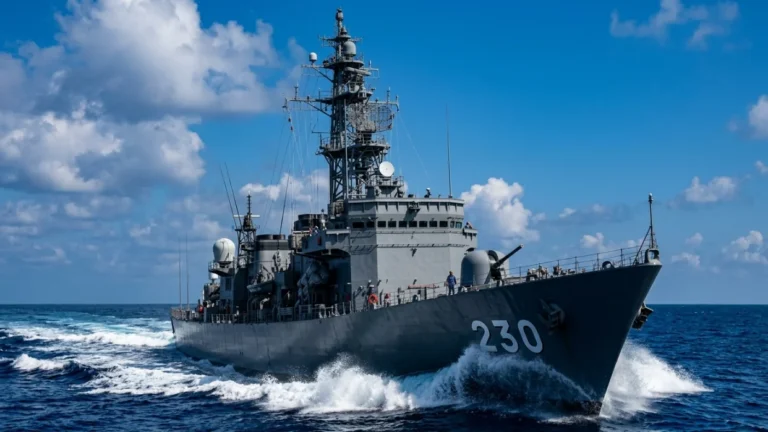
The PLA is made up of five main branches. The PLA Army (PLAA) is being streamlined and restructured for mobility and tech-driven warfare. The PLA Navy (PLAN) now operates the world’s largest fleet by vessel count, though its global reach is still debated.
The PLA Air Force (PLAAF) is expanding its fighter and drone fleet, while the PLA Rocket Force (PLARF) oversees an increasingly sophisticated missile and nuclear weapons arsenal.
Lastly, the Strategic Support Force (SSF) handles cyber, electronic, and space warfare, though its full capabilities remain opaque.
When we talk about how powerful China’s military is, one of the first things that comes up is its defense spending.
In 2025, China’s defense budget is officially reported at around 1.6 to 1.7 trillion yuan, which converts to roughly $240 billion USD. That figure makes it the second-largest military spender in the world, right after the United States, which still leads by a significant margin with a defense budget of over $880 billion.
Read also: How Strong Is Japan’s Military Compared to China Today?
In comparison, India’s defense budget hovers around $80 billion, and Russia’s, especially post-Ukraine war strain, is estimated at $100–110 billion, though much of that is directed toward its ongoing operations and domestic defense production.
That said, comparing budgets isn’t always apples-to-apples. China spends about 1.6%–1.7% of its GDP on defense, according to data from the Stockholm International Peace Research Institute (SIPRI). That’s lower than the U.S., which spends around 3.5%, but the sheer size of China’s economy means even that smaller percentage supports massive modernization efforts.
Still, the real question is how that money is spent, and what capabilities it’s producing.
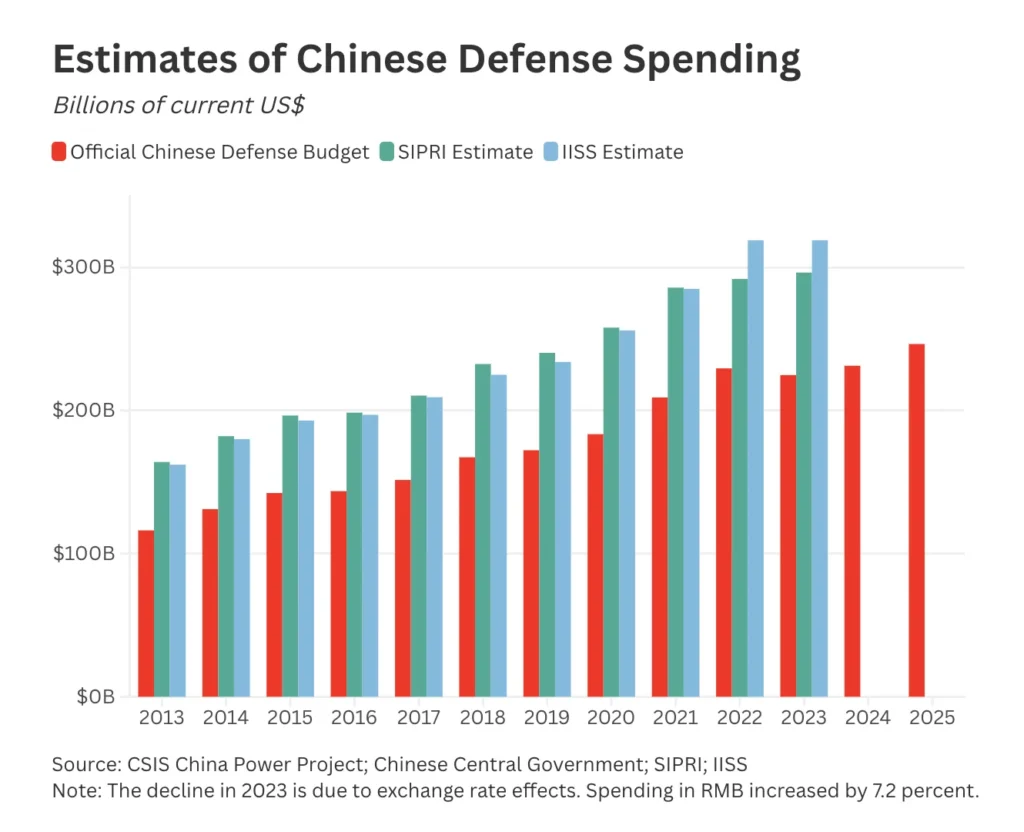
There’s growing attention to how much of China’s military budget is allocated to research and development (R&D). While official breakdowns are limited, open-source intelligence and reports from RAND Corporation and CSIS suggest that a rising share, possibly 20% or more, is going toward advanced tech, including hypersonic weapons, AI-enabled systems, and next-generation missiles.
China’s pursuit of PLA modernization appears closely tied to these investments, particularly in domains like cyber, space, and long-range precision strike.
Still, it’s worth noting that not all analysts agree on how transparent or efficient this spending is. Some Western defense experts argue that China may under-report actual figures or classify certain military-related expenditures under other budgets.
Others point out that despite the rapid growth, challenges remain in command structure reform, personnel quality, and integration across branches.
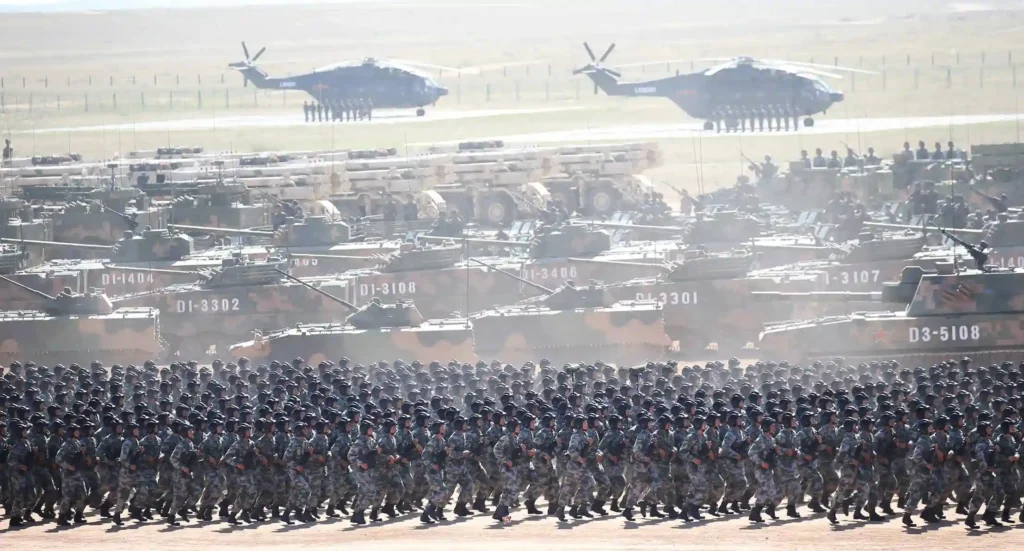
When looking at how strong is China’s military in 2025, the role of the PLA Ground Force, still the largest branch of the People’s Liberation Army, can’t be overlooked. While it’s true that China has been shifting focus toward naval, air, and strategic capabilities, its ground forces remain a massive component of its overall military posture.
Estimates suggest the PLA Army still fields around 975,000 active-duty troops, which makes it the largest land force in the world. But numbers alone don’t tell the full story.
For years, China’s ground forces were seen as bulky and outdated, relying on large formations and Soviet-era doctrine. That image is changing, slowly, but noticeably. As part of broader PLA modernization efforts, Beijing has been reducing troop numbers in favor of a more mobile, better-equipped, and technologically advanced army.
A good portion of China’s defense resources is now going into upgrading equipment, reorganizing units for rapid deployment, and enhancing command-and-control systems.
Take artillery, for example. China has significantly expanded and modernized its artillery arsenal, particularly with long-range rocket systems.
One notable system is the PHL-16 multiple launch rocket system, which some analysts argue rivals the U.S. HIMARS in terms of range and firepower. These developments could give the PLA an edge in area-denial or border-conflict scenarios, especially along sensitive fronts like the Himalayas or the Taiwan Strait.
When it comes to tanks, the PLA is reportedly shifting from older Type 59 and Type 96 models toward more modern platforms like the Type 99 and Type 15.
The Type 99 is a heavy main battle tank designed for open terrain, while the lighter, more mobile Type 15 is suited for mountainous and high-altitude regions, perhaps not coincidentally, areas where China has ongoing border disputes.
However, while these tanks are technologically improved, it’s unclear whether they match the real-world battlefield performance of Western systems like the U.S. M1 Abrams or Germany’s Leopard 2.
Another area where the PLA is quietly improving is logistics. The ability to move and supply troops quickly over vast distances has historically been one of China’s weaker points.
But recent reforms suggest a growing emphasis on joint logistics hubs, digitalized supply chains, and enhanced transport fleets. These changes might not grab headlines, but they’re essential for any force hoping to operate effectively in a modern, high-intensity conflict.
Over the past decade, the PLAN has grown from a largely coastal defense force into what many now describe—cautiously, as a near-peer blue-water navy.
By most counts, China operates the world’s largest navy in terms of total vessels, with estimates putting the number at over 370 warships, including more than 60 submarines. That raw number alone doesn’t tell the whole story, but it does suggest clear strategic intent.
Read also: How powerful is the Chinese Navy compared to the U.S. Navy?
A major symbol of China’s naval rise is its fleet of aircraft carriers. The Liaoning, a refitted Soviet-era carrier, was China’s first real experiment with carrier operations. It’s primarily a training platform, but it marked an important starting point.
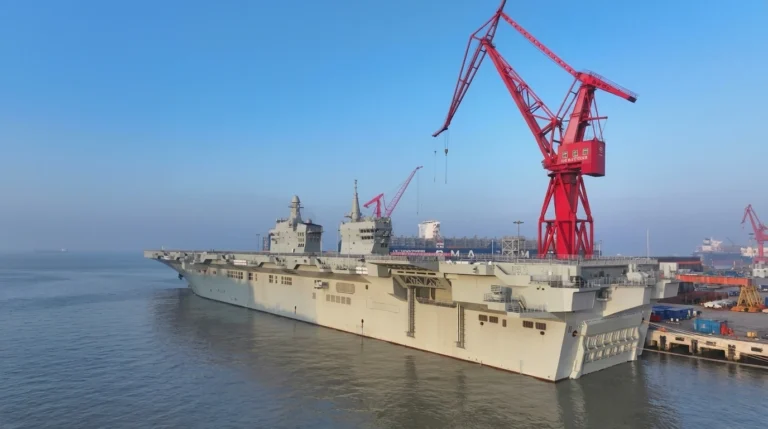
The Shandong, launched in 2019, is China’s first domestically built carrier and a step forward in capability. But it’s the new Fujian, launched in 2022 and still undergoing sea trials as of 2025, that could mark a major leap. It features an electromagnetic catapult system, much like the U.S. Navy’s latest carriers, which—if it works as intended—could allow for quicker aircraft launches and a broader range of planes.
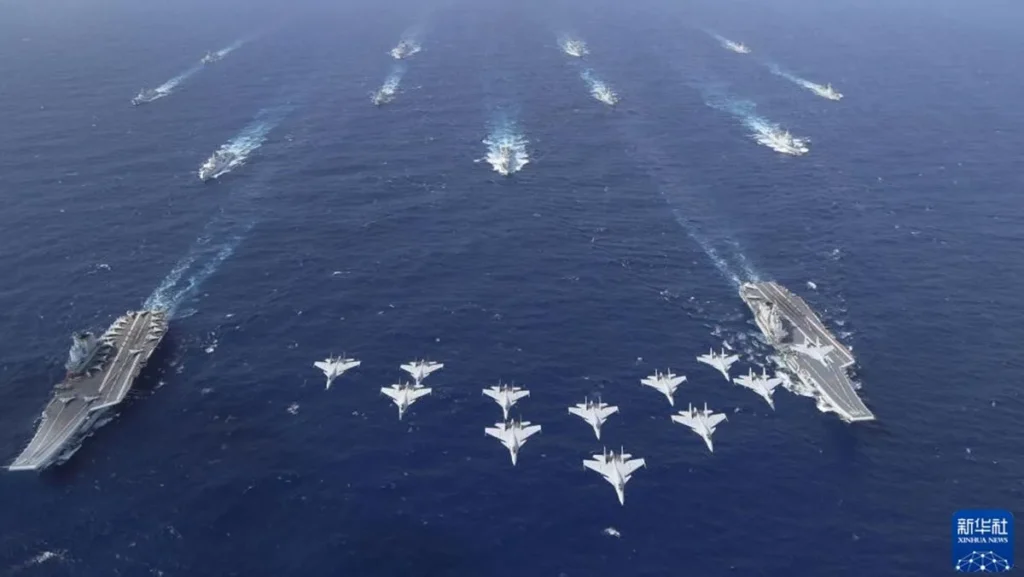
Still, whether China can project carrier-based air power at scale is not entirely clear.
The PLA Navy is still gaining experience in joint maritime-air operations, carrier battle group coordination, and long-range deployments, areas where navies like the U.S. have decades of practice. Some analysts suggest that China’s carriers are still more symbolic than decisive in operational terms, at least for now.
Read also: How Strong Is South Korea’s Military Today?
Meanwhile, China’s growing naval presence in the South China Sea and the broader Indo-Pacific reflects more immediate forms of power projection. Through island-building, patrols, and regular maritime drills, China has solidified its grip on contested waters. It has also extended operations into the Indian Ocean, increased port calls in Africa and the Middle East, and maintained a base in Djibouti, marking its first overseas military facility. These activities indicate that the PLA Navy is not just growing, it’s moving outward.
Of course, the real measure of naval power isn’t just the number of ships or bases, but how well a navy can sustain operations, defend sea lines of communication, and deter rivals.
While China’s military rank in terms of naval capability is rising fast, it’s still likely that the PLAN lags behind the U.S. Navy in global reach, combat experience, and carrier air wing sophistication.
So, while China’s naval modernization is undeniably impressive, and its ambitions increasingly global, the extent to which the PLA Navy can translate this into sustained maritime dominance remains uncertain. It’s a force clearly in transition, but whether it’s ready for high-intensity, blue-water warfare on par with top-tier navies is still up for debate.
When evaluating how strong is China’s military in 2025, the combination of air and missile power—driven by the PLA Air Force (PLAAF) and the PLA Rocket Force (PLARF)—offers some of the clearest signs of China’s high-tech ambitions.
These two branches are at the center of China’s push to compete with, or perhaps someday challenge, top-tier military powers like the U.S. in both regional and strategic domains. That said, the real-world effectiveness of these systems is still the subject of debate.
China’s development of fifth-generation fighter aircraft is perhaps the most visible example. The J-20 “Mighty Dragon”, already in service with the PLAAF, is often compared to the U.S. F-22 Raptor, though it’s not entirely clear if it meets the same standards in terms of stealth, sensors, or maneuverability.
What does seem likely is that the J-20’s capabilities have improved—particularly with newer domestic engines—and the aircraft is now being deployed in greater numbers across eastern and southern theater commands.
The J-31, another stealth platform still under development, is rumored to be aimed at carrier operations, but there’s little confirmed about its operational readiness.
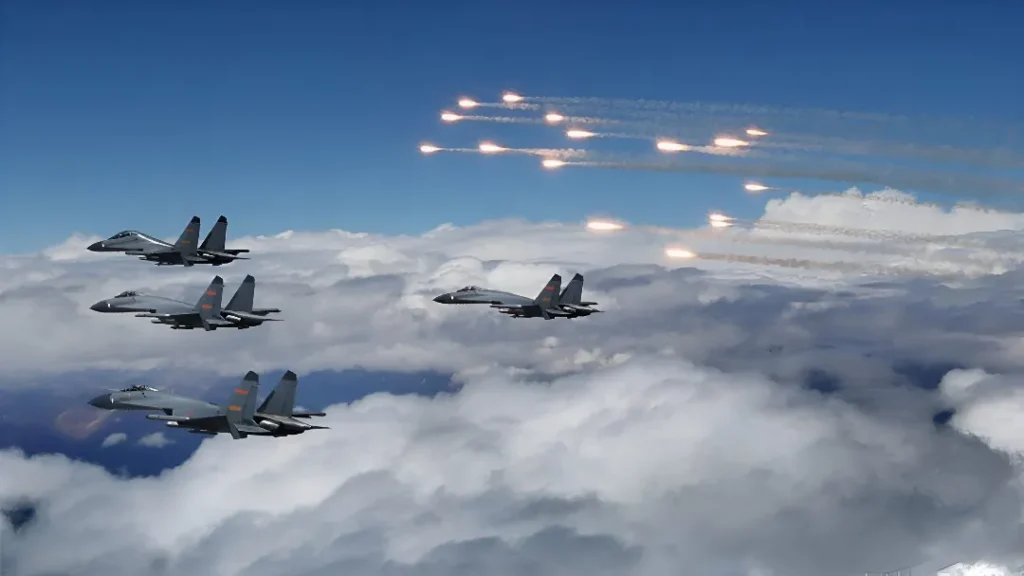
Alongside these fighters, China has been aggressively expanding its use of unmanned aerial vehicles (UAVs). Systems like the Wing Loong and CH-series drones are not only exported widely but are also reportedly integrated into Chinese strike and reconnaissance missions.
These drones could give China a significant advantage in surveillance and asymmetric operations, particularly in contested areas like the Taiwan Strait or the South China Sea. Still, whether the PLAAF can integrate drones into complex, multi-domain combat scenarios as seamlessly as Western forces do remains unclear.
Read also: Is China Preparing to Invade Taiwan?
Then there’s the strategic bomber fleet. The H-6K, a heavily upgraded version of a Cold War-era design, now features extended range and precision-strike capability. It can reportedly carry long-range cruise missiles and has been spotted conducting patrols around Taiwan and in the Western Pacific.
More intriguing, though still unconfirmed, is the development of the H-20, a next-gen stealth bomber that could represent a major leap in China’s strategic air power. If the H-20 enters service this decade, it could significantly enhance China’s ability to project power and complicate U.S. and allied planning in the Indo-Pacific.
On the missile front, the PLARF commands an arsenal that many analysts now see as one of the most formidable in the world.
China has deployed a wide range of ballistic missiles, from the short-range DF-11 and DF-15 to the intercontinental-range DF-41, which is believed to be capable of carrying multiple nuclear warheads.
Particularly notable is the DF-17, a hypersonic glide vehicle system that reportedly travels at speeds above Mach 5 while maneuvering mid-flight—making it harder to intercept with existing missile defenses.
The PLA’s missile forces, combined with advances in targeting and reconnaissance, could pose serious challenges to U.S. bases and carrier strike groups in the region. Still, there’s uncertainty over just how accurate, survivable, or scalable these systems are in a prolonged, high-intensity conflict.
Altogether, China’s investments in advanced air and missile systems speak to an ambitious and fast-evolving strategy. Whether these platforms give Beijing a definitive edge, or just narrow the gap, depends on how well they’re integrated, supported, and tested under real-world conditions. For now, they reflect a military that’s growing more capable, but still untested in modern, full-scale combat.
When asking how powerful China’s military is, one area that increasingly draws global attention is its nuclear arsenal. For years, China maintained a relatively modest stockpile compared to the United States and Russia, emphasizing a policy of “minimum deterrence.” But that posture appears to be shifting—subtly, but significantly.
As of 2025, most Western estimates, including those from the U.S. Department of Defense and SIPRI, suggest that China possesses over 500 operational nuclear warheads. That number has more than doubled in just a few years, and if current trends hold, Beijing could be on track to exceed 1,000 warheads by the early 2030s.
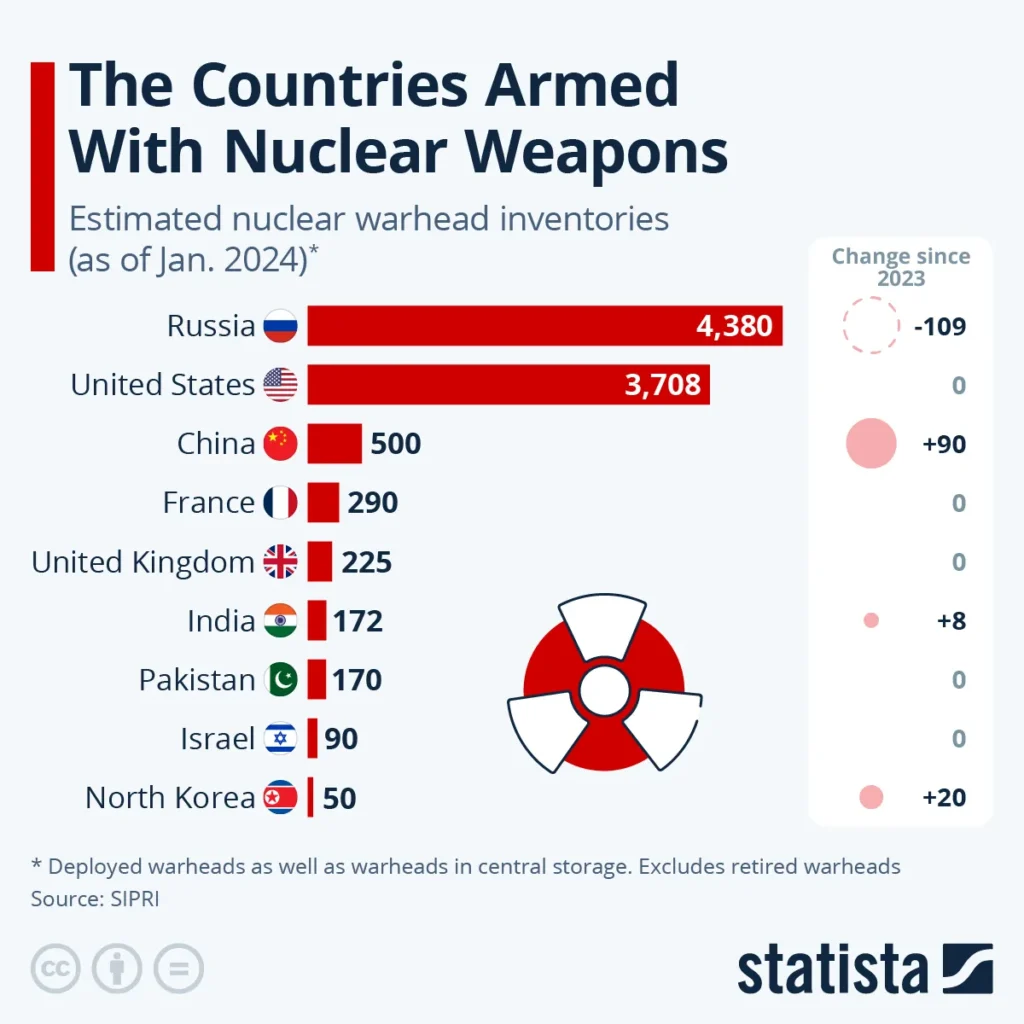
While still far behind the U.S. and Russia in raw numbers—each with roughly 1,500 deployed strategic warheads—China’s rapid buildup raises new strategic questions, especially given the broader uncertainty about its long-term nuclear doctrine.
One of the biggest developments is China’s push to achieve a credible second-strike capability—the ability to respond with nuclear force even after absorbing a first strike. Until recently, China’s retaliatory capability was seen as relatively limited, relying heavily on silo-based missiles and road-mobile launchers.
But recent construction of new missile silo fields in western China, paired with the deployment of more survivable systems like the DF-41 ICBM (reportedly capable of carrying multiple independently targetable reentry vehicles, or MIRVs), suggests a clear effort to increase survivability and response flexibility.
China is also making steady progress toward developing a nuclear triad, the classic structure of land-based missiles, submarine-launched ballistic missiles (SLBMs), and strategic bombers.
On the land leg, the PLA Rocket Force now fields a mix of older and newer ICBMs, some of which are solid-fueled and more mobile, making them harder to detect and preempt.
At sea, the Jin-class nuclear-powered ballistic missile submarines (SSBNs) represent China’s current underwater deterrent. These subs are equipped with JL-2 SLBMs, and a next-generation JL-3 is reportedly in development, with a longer range that would allow strikes on the continental U.S. without venturing far from Chinese waters.
While operational challenges—like quieting the subs and ensuring effective command and control—likely remain, the sea leg of China’s triad is clearly maturing.
The air leg is the least developed, but it’s not being ignored. The current H-6K bomber is believed to be nuclear-capable, and the in-development H-20 stealth bomber could provide Beijing with a true long-range strategic air delivery option once it becomes operational.
Of course, it’s still unclear how China intends to use this growing arsenal. Publicly, China maintains a “no first use” policy, but its expanding capabilities and lack of transparency have led some analysts to question whether that stance could change under pressure. So while China may not yet be a nuclear peer to the U.S. or Russia in strict numerical terms, its nuclear modernization efforts are reshaping the strategic landscape—quietly but steadily.
One of the less visible, but arguably most important, dimensions of how strong China’s military is in 2025 lies in its pursuit of emerging technologies and dominance in the cyber and electronic domains.
While the full scope of these capabilities is hard to verify, there’s growing evidence that PLA modernization includes serious investments in areas like artificial intelligence (AI), quantum computing, and cyber warfare.
China has made AI a national priority, and the military appears to be integrating it into decision-making, surveillance, and autonomous systems. Whether this translates into a decisive edge remains unclear, but it likely enhances situational awareness and speeds up command processes.
Similarly, China is pouring resources into quantum technologies, from secure communications to quantum radar, though many of these capabilities are still experimental.
In the cyber realm, specialized PLA cyber units—possibly under the Strategic Support Force—are believed to be capable of both offensive and defensive operations. Past incidents suggest a capacity for espionage and disruption, though how resilient these units would be in a prolonged cyber conflict is uncertain.
Meanwhile, electronic warfare (EW) has become a major focus. The PLA is reportedly developing jamming systems, anti-satellite weapons, and tools for spectrum dominance. All of these points to a military that sees the next battlefield as digital, orbital, and data-driven, even if the outcome of such a contest is still difficult to predict.