Follow Us:
Follow Us:

When you look at Asia today, the spotlight keeps swinging back to a simmering standoff between two regional heavyweights: Japan and China.
Just recently, in December 2025, jets from People’s Liberation Army Navy carrier group allegedly locked fire-control radar onto fighters from Japan Air Self‑Defense Force off the coast of Okinawa.
That kind of radar lock is one of the most aggressive acts short of firing a missile, and Tokyo called it “extremely regrettable.” With recent incidents, tensions between Tokyo and Beijing have ratcheted up dramatically.
Amid this rising stare-down, many wonder just how strong is the Japan military these days? Can Japan punch above its weight when China looms so large?
In this post, we’ll dig into what “military strength” really means. If push came to shove, how well could Japan hold its ground? And maybe more importantly, what kind of conflict could the world realistically be looking at?
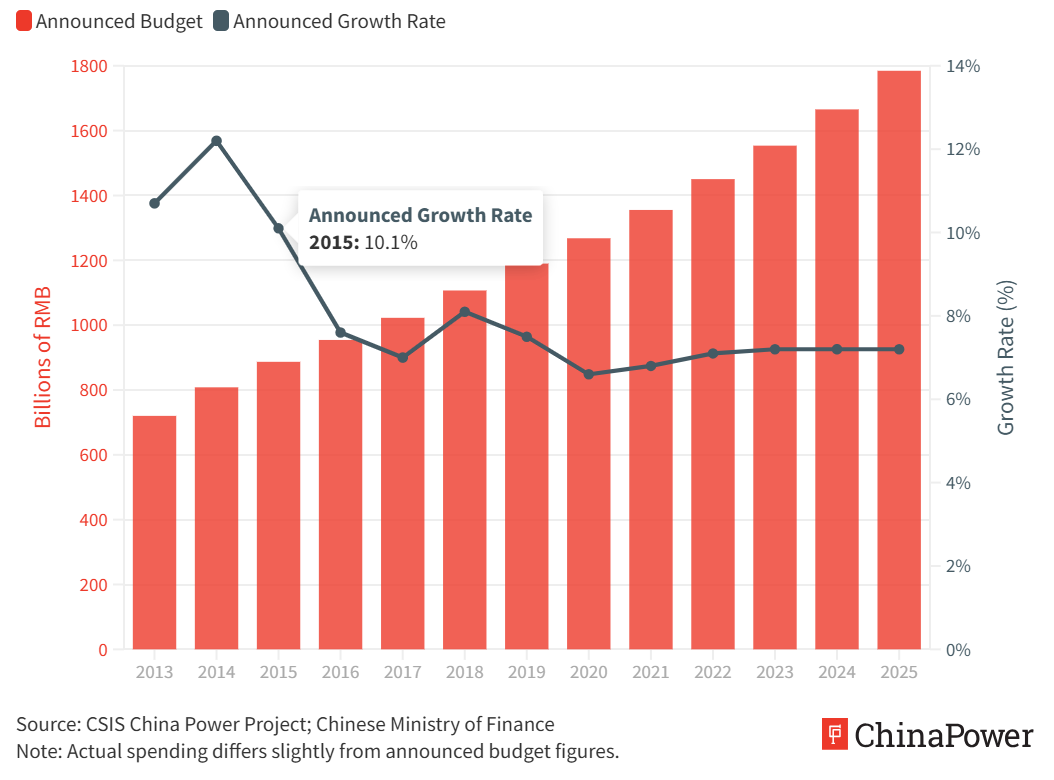
China’s official defense budget for 2025 is about ¥1.78 trillion (~US $246 billion), reflecting a 7.2% increase over the previous year.
This rise continues a long-term trend: China has been steadily raising its military expenditures for many years, fueled by ambitions to modernize its forces, from missiles, ships, submarines, to cyber, space and other “new domain” capabilities.
Although official numbers list China’s defense spending as roughly 1.5–1.7% of GDP, many analysts believe the real figure could be substantially higher when you account for so-called “off-budget” spending (e.g. arms manufacturing, research, infrastructure, paramilitary, etc.).
All in all, by many measures, China remains one of the top two global military spenders, often described as having the “largest navy in the world” and continuing to build power-projection capabilities.
So in raw financial terms and breadth of investment, China still leads by a wide margin.
Read also: How powerful is the Chinese Navy compared to the U.S. Navy?
Meanwhile, Japan has sharply upped its defense ambitions.
In 2025, its defense budget reportedly jumped to a record high, somewhere around ¥11 trillion (including a supplementary budget), which pushes its defense spending toward roughly 2% of GDP.

Back in 2024, Japan spent about US $55.3 billion on defense, a 21% increase from 2023 and the biggest annual rise since the early post-war years.
The extra funds reportedly are going into serious upgrades: long-range strike capabilities (missiles, long-range deterrents), improved air defense, more ships/submarines, and boosting readiness especially around southwestern Japan.
On top of hardware upgrades, part of the budget aims to address structural issues, like recruitment difficulties (Japan has demographic challenges) and modernizing defense infrastructure and support.
So Japan clearly isn’t standing still, it’s ramping up more than it has in decades, and doing so fairly aggressively compared to its own post-WWII norms.
More spending doesn’t always translate directly into a bigger or better military, but it gives a sense of direction, intent, and potential.
In short, yes, Japan is catching up, and closing some of the gap. But China remains stronger in overall capability and scale, especially if we consider not just what’s spent, but what these budgets support.
Roughly speaking, China has far more personnel overall than Japan. Because China’s population is far larger and its military doctrine accommodates large standing and reserve forces, its scale advantage remains substantial.
Japan’s SDF, though well trained and equipped, simply doesn’t match China’s capacity for sheer manpower or mass mobilization.
| Country | Ground (army) | Navy | Air (air force) | Other (rocket / strategic / support) | Approx. total active (all services)* |
| China (PLA) | ~960,000 (PLA Ground Force / PLAGF). | ~250–260,000 (PLA Navy, incl. marines/aviation). | ~395–403,000 (PLA Air Force / PLAAF). | ~120,000+ (Rocket Force + strategic/support elements; plus large reserve/paramilitary pools). | ~2.0–2.1 million (total PLA active personnel commonly cited). |
| Japan (SDF) | ~140,000 (Japan Ground Self-Defense Force — ~139,600 as cited in official MOD reporting). | ~50,000–51,000 (Japan Maritime Self-Defense Force). | ~43,000–44,000 (Japan Air Self-Defense Force). | n/a (JSDF has smaller, specialized support & reserve cadres; total SDF active ~230k–250k). | ~230,000–250,000 (total SDF active personnel; numbers vary slightly by year). |
Well… not automatically. It’s a bit more complicated than “more troops = stronger military.”
Here’s why:
Bottom line? China undoubtedly has a manpower advantage in active forces and reserves. But in modern warfare, numbers alone don’t decide outcomes.
A smaller but well-equipped, well-trained, strategically deployed force (like Japan’s SDF) can be highly effective under the right circumstances.
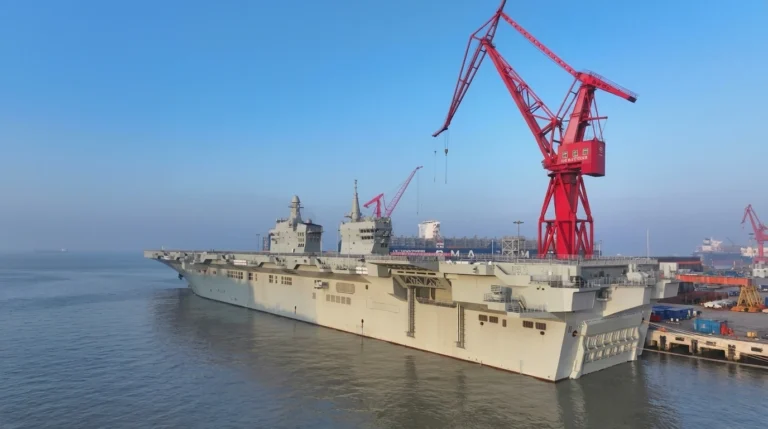
If we’re just talking about size, China’s navy is the heavyweight in the room. It has more hulls, more shipyards, and a much bigger pipeline of new warships rolling out every year.
China’s been churning out destroyers, frigates, submarines, and even aircraft carriers at a pace that feels almost industrial.
Read also: How Strong Is China’s Military in 2025? Power Breakdown
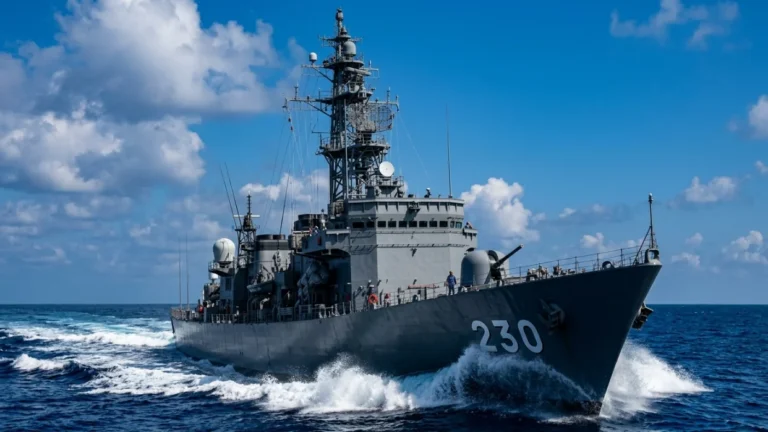
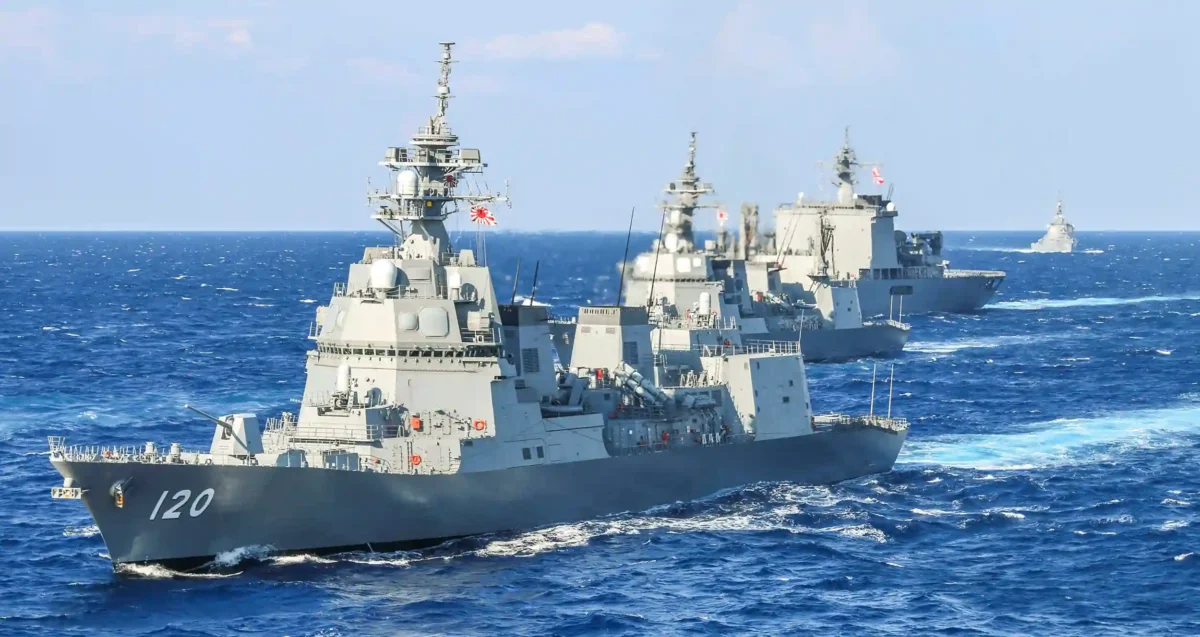
Japan’s navy, on the other hand, is smaller overall but it’s extremely polished, well-trained, and laser-focused on operations close to home. Think fewer ships, but really capable ones.
Japan leans heavily on high-end destroyers, advanced anti-submarine warfare, and some of the best-trained crews in the region. Its Aegis-equipped ships are top-tier, and its submarine force is genuinely respected worldwide. So even though the raw numbers don’t favor Japan, the quality of its fleet is nothing to shrug at.
In a wide, open-ocean fight or a prolonged high-intensity conflict, China’s sheer scale would probably matter a lot. More ships mean more options, more firepower, and more staying power.
But in a more limited, close-to-Japan scenario, especially around the Ryukyus or the East China Sea, Japan might actually hold the upper hand in certain moments. Its crews train constantly in those waters, its anti-sub and air-defense skills are sharp, and its ships are designed around protecting sea lanes and denying access.
Add in the fact that Japan would almost certainly be fighting closer to home, with shorter logistics and more predictable terrain, and things start to look a lot less one-sided.
So the real answer is: China has the quantitative advantage, but Japan has localized strengths that could absolutely matter depending on the scenario. The winner isn’t guaranteed; it depends on where, how, and for how long the fight plays out.
If you zoom out and look at the airpower balance between Japan and China, the gap feels pretty real, but it’s also not as simple as “one side wins.”
China has spent years building a huge, diverse air arsenal. They fly modern jets like the J-20 stealth fighter, upgraded J-16 multirole aircraft, and a big fleet of older but still useful J-10s.
On top of that, they’ve got long-range bombers such as the H-6K, which can launch cruise missiles from well outside Japan’s defensive bubble. And because China leans heavily on missile power, they back all of this up with a ton of long-range anti-ship and land-attack missiles that can shape a fight before aircraft even show up.
Japan’s approach is almost the opposite; fewer aircraft, but much higher quality per jet and a tighter, more integrated defense system. Their F-35 fleet is growing fast, and those stealth jets are arguably the most advanced fighters in East Asia right now.
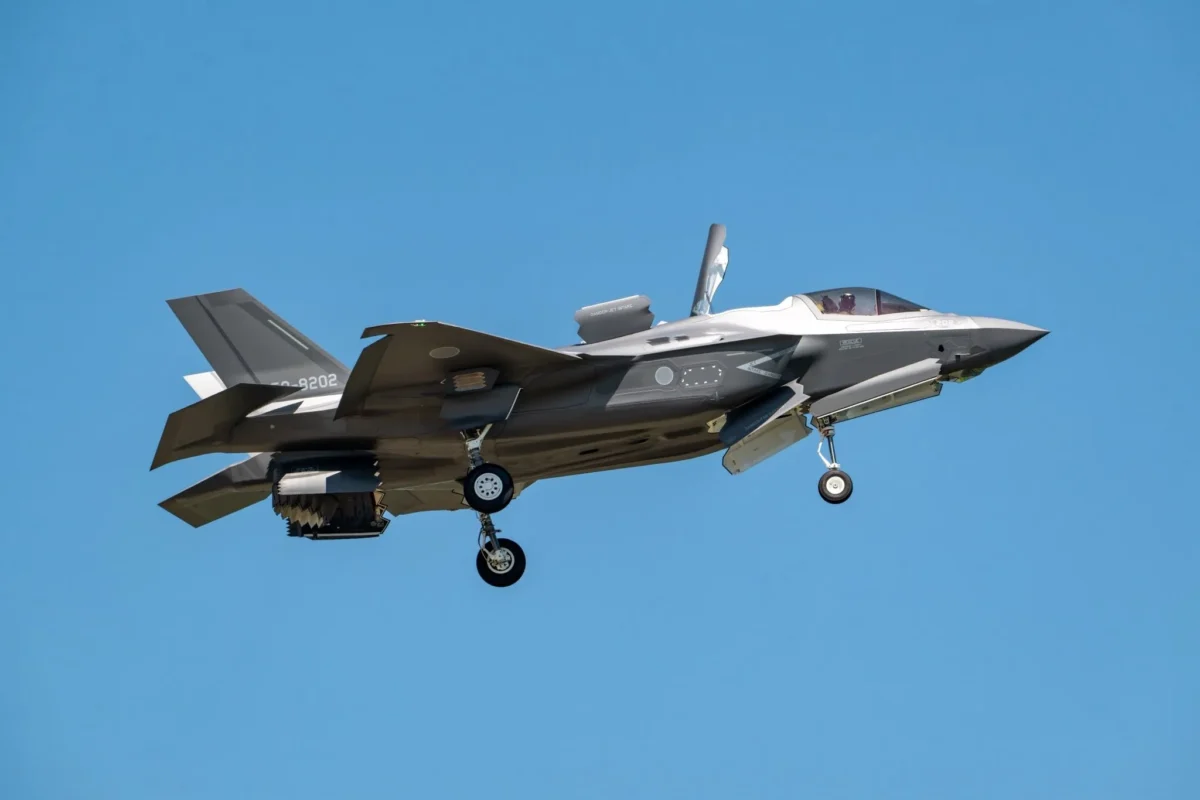
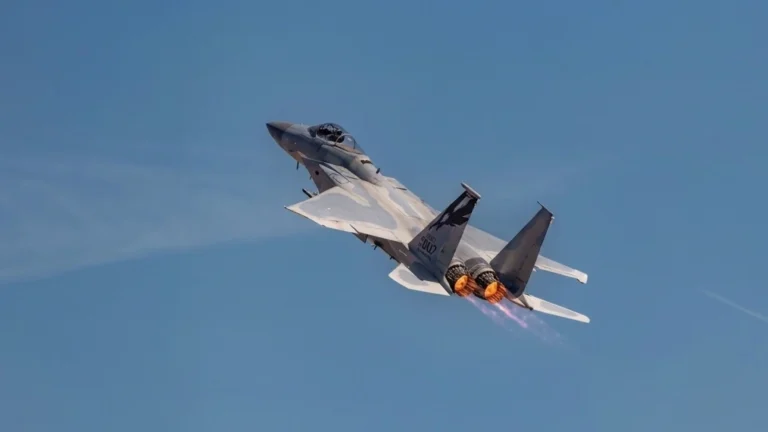
Japan also runs one of the best air-defense networks in the region: modern Patriot PAC-3 batteries, Aegis-equipped destroyers, and layered radar coverage that makes it tough for an opponent to sneak in. Even Japan’s older fighters, like the F-15J, are getting major upgrades to keep them competitive.
So who “wins”?
If you’re talking raw numbers and the ability to sustain a long air campaign, China has the upper hand. Their inventory is larger, their missile reach is longer, and they can simply throw more assets into the fight.
But if the scenario is a quick, defensive clash near Japan’s own territory, Japan’s F-35s, radar coverage, and missile-defense layers give them a real shot at blunting an attack or at least holding their ground. It’s one of those matchups where the outcome depends a lot on where the fight happens and who has the initiative, not just who has more jets.
When you look at ground forces and homeland defense, the contrast between China and Japan almost feels like two different philosophies rather than two armies preparing for the same kind of fight.
China has a massive ground force, hundreds of thousands of active-duty troops, modernized brigades, missile units, and an internal security machine that’s basically built for large-scale, long-duration operations. Their land power is designed to project strength along multiple fronts, not just toward Japan.
Think Taiwan, the Korean Peninsula, and even India. That scale gives China a lot of flexibility, even if not every unit is top-tier.
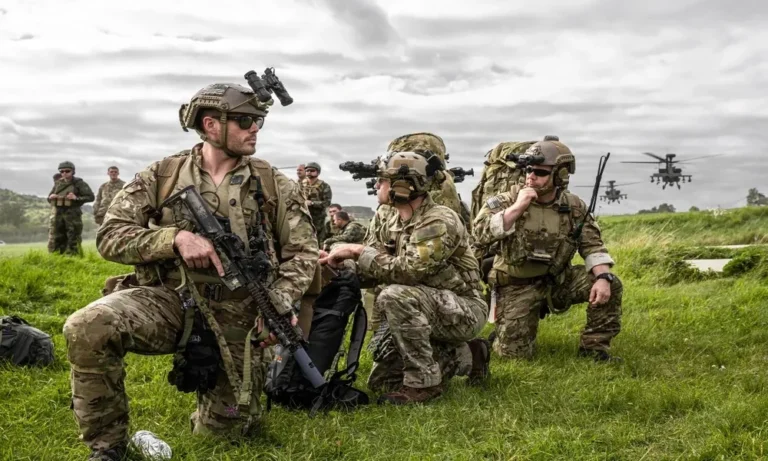
Japan, meanwhile, leans heavily into a defense-first posture. Their Ground Self-Defense Force is much smaller, but it’s organized around high-readiness units, quick response forces, and layered homeland protection.
Japan has been reshaping its force structure to defend its southwestern islands, places like Okinawa and the Senkakus, by beefing up missile batteries, amphibious brigades, and rapid-deployment teams. They’re not built to invade anyone; they’re built to make Japan’s home turf extremely costly to crack.
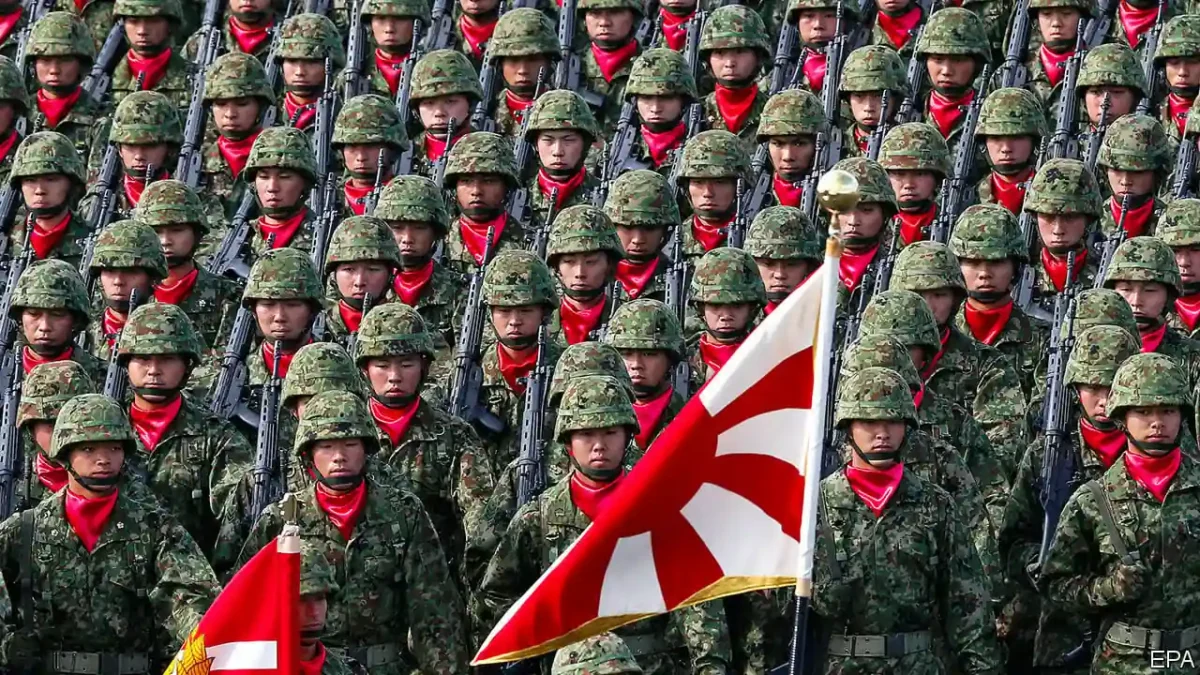
So who’s better positioned? In a broad regional sense, China has the advantage simply because of sheer numbers, logistics depth, and the ability to sustain a long fight.
But if the discussion is strictly homeland defense, Japan arguably has the more strategically tuned setup. Their forces are positioned exactly where tensions are hottest, they train specifically for defending narrow island chains, and their alliance with the U.S. acts as a massive force multiplier.
In short: China has continental power on its side; Japan has geographic focus, readiness, and layered defenses on its side. Again, the “advantage” depends on whether the fight is everywhere, or right on Japan’s doorstep.
Alliances and geography are the quiet, underrated forces that can completely flip the balance between Japan and China. China might have the bigger military on paper, but it sits on a sprawling coastline and has to juggle multiple regional flashpoints at once.
Japan, by contrast, is basically a chain of fortified islands sitting right in the middle of the first island chain, a natural barrier China has to push through if things ever get ugly. That geography gives Japan built-in choke points, predictable attack paths, and defensive advantages you simply can’t manufacture.
And then there’s the alliance factor. Japan doesn’t fight alone. The U.S.–Japan security pact means American bases, ships, fighters, and missile defenses are already in the neighborhood. Even if Japan’s constitution limits certain offensive actions, the alliance fills in those gaps with capabilities Japan doesn’t have to field itself.
So, could geography determine the winner? Honestly, it could heavily shape the outcome. China’s forces are larger and more diversified, but projecting power across water against defended islands is one of the hardest missions in modern warfare. Japan’s terrain, defensive layout, and early-warning networks make any approach slow, predictable, and risky.
If we’re talking strictly on paper (e.g., troop numbers, ships, jets, budgets), then no, Japan isn’t “stronger” than China.
China’s military is bigger, better funded, and built for regional power projection in a way Japan’s isn’t. But the moment you shift the question from “Who’s larger?” to “Who’s harder to beat?” the answer gets a lot less tidy because raw numbers don’t always tell you who actually has the advantage in a real-world scenario.
Japan’s military is smaller, sure, but it’s extremely high-tech, tightly coordinated, and built specifically for defending a very tough stretch of island terrain.
Add in Japan’s training standards, its F-35 fleet, its missile defenses, plus the U.S. alliance sitting in the background… and suddenly the matchup isn’t “big vs. small,” it’s more like “broad power vs. specialized, sharpened power.”
So if we’re talking about overall global strength, China likely comes out ahead. But if the question is who holds up better in a fight near Japan’s own backyard, the answer could shift and maybe shift pretty dramatically. Japan doesn’t need to overpower China everywhere; it just needs to be a nightmare to attack. And it very likely is.