Follow Us:

Follow Us:

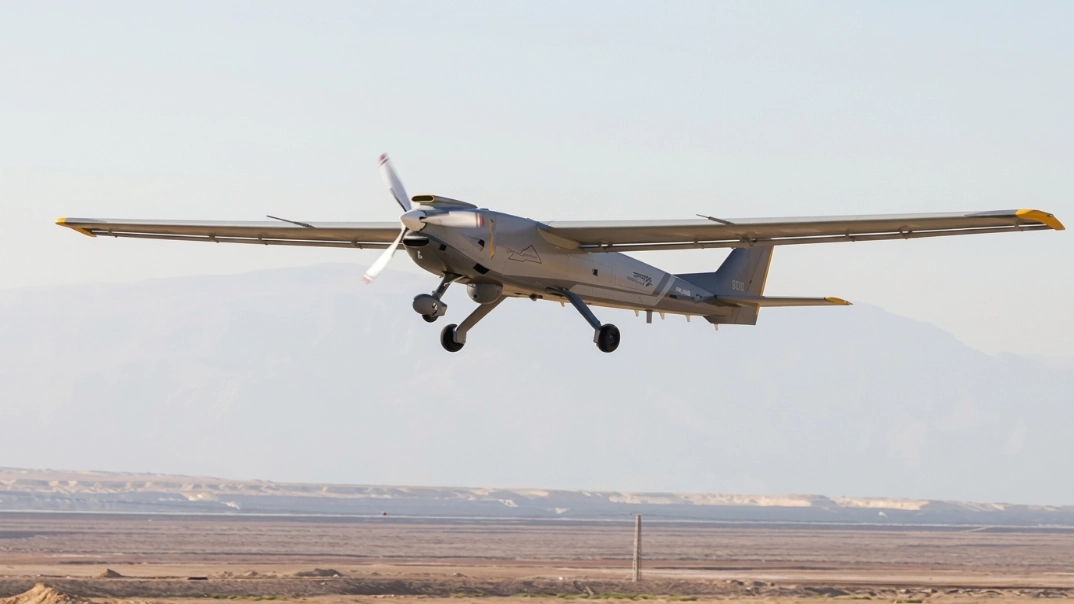
Defense Feeds, Haifa – Modern naval warfare is no longer defined solely by destroyers, frigates or aircraft carriers. Increasingly, military planners are looking at commercial vessels as potential force multipliers, and Elbit Systems’ new Hermes 650 drone carrier concept reflects that shift.
Unveiled as a modular solution for maritime operations, the concept would allow ordinary merchant ships to launch and recover long-endurance unmanned aircraft without the need for a purpose-built aircraft carrier.
The proposal offers an alternative approach to expanding naval aviation. Instead of investing billions in new capital ships, navies could adapt existing commercial vessels to support intelligence, surveillance and reconnaissance missions using unmanned aircraft. It’s a concept designed around flexibility, lower cost and rapid deployment rather than traditional fleet expansion.
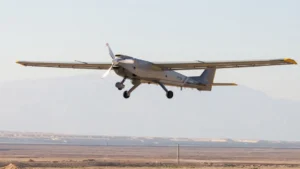
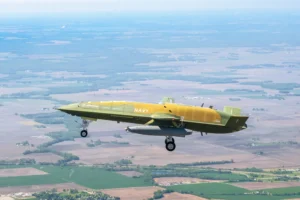
At the center of the proposal is the Hermes 650 drone carrier, which pairs Elbit’s Hermes 650 Spark unmanned aircraft with a containerized launch and recovery system that can be installed aboard merchant vessels.
Unlike conventional aircraft carriers that require complex flight decks and arresting systems, the concept relies on modular equipment designed for faster integration. That means commercial ships could potentially be configured to support drone operations without extensive structural modifications, allowing governments to expand maritime surveillance capacity more quickly than building dedicated naval vessels.
The Hermes 650 itself is designed as a medium-altitude, long-endurance unmanned aircraft capable of conducting intelligence, surveillance and reconnaissance missions over extended periods. Depending on mission requirements, it can also support target acquisition, maritime domain awareness and communications relay operations.
By combining the drone with civilian shipping platforms, Elbit is proposing a model that places persistent airborne surveillance much closer to operational areas while reducing pressure on conventional naval aviation assets.
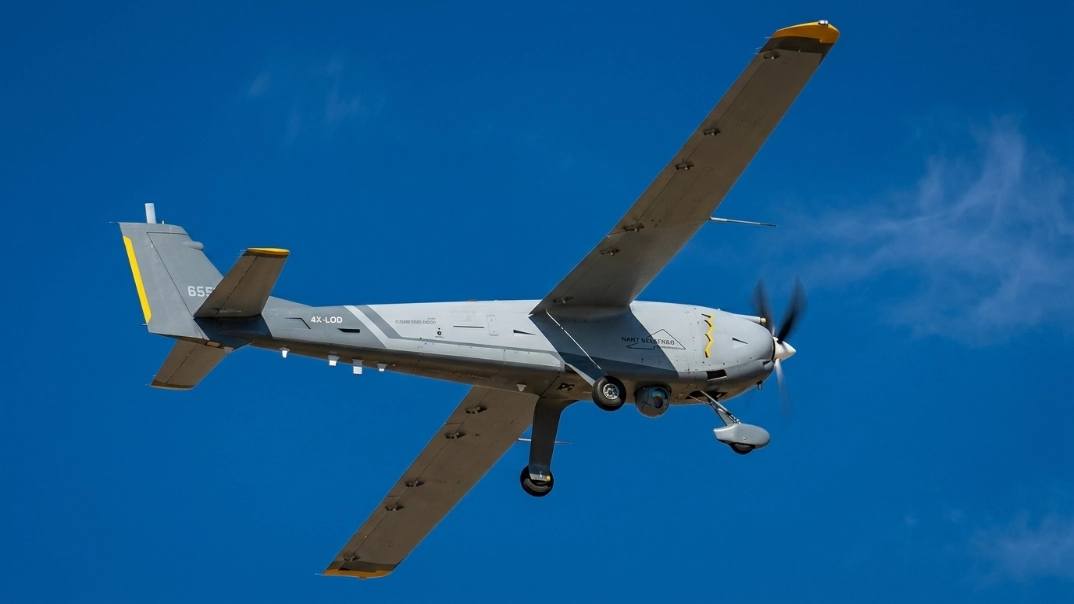
The operational value of the Hermes 650 drone carrier lies less in replacing aircraft carriers and more in expanding where unmanned aircraft can operate.
Many navies face growing demands to monitor vast maritime regions while operating with limited numbers of major warships. Assigning expensive frigates or amphibious ships solely to surveillance missions is not always the most efficient use of those assets.
A converted merchant vessel equipped with autonomous aircraft could provide continuous intelligence coverage around shipping lanes, offshore infrastructure or expeditionary task groups without tying up frontline combat ships.
For military planners, this creates additional flexibility. Merchant-based drone platforms could operate independently, support humanitarian operations or augment larger naval formations by extending the range of airborne reconnaissance.
The concept also reflects the broader evolution of naval aviation. As unmanned systems become more capable, the requirement for every aircraft to operate from a traditional carrier is gradually diminishing. Instead, distributed launch platforms may allow commanders to position airborne surveillance assets wherever they are most needed.
The Hermes 650 drone carrier arrives at a time when navies are increasingly embracing distributed maritime operations. Rather than concentrating all capabilities aboard a handful of high-value ships, modern fleet concepts emphasize spreading sensors, weapons and command nodes across a wider network of platforms.
Commercial vessels equipped with unmanned aircraft fit naturally into that strategy. They can supplement naval task groups, support maritime security missions or maintain surveillance in areas where deploying a destroyer would be unnecessary or economically inefficient.
The proposal also highlights another growing trend within the defense industry: designing military capabilities that can be rapidly adapted to existing civilian infrastructure. Containerized missile launchers, modular command centers and portable drone systems are all part of the same philosophy—creating capabilities that can be deployed quickly without lengthy shipbuilding programs.
Whether navies ultimately adopt the concept will depend on operational testing, regulatory considerations and customer requirements. Questions surrounding survivability, command-and-control integration and rules governing the use of civilian vessels during military operations will also influence future procurement decisions.
Even so, the Hermes 650 drone carrier represents an innovative approach to maritime air power. Rather than attempting to replicate the capabilities of traditional aircraft carriers, it offers a more agile and affordable option for expanding naval aviation.
As autonomous systems continue to reshape maritime operations, concepts like this could give smaller navies and expeditionary forces new ways to project surveillance capability across increasingly contested waters without investing in a full-sized carrier fleet.