Follow Us:
Follow Us:

The question “is China preparing to invade Taiwan?” is starting to feel less like speculation and more like a strategic possibility.
While decades of Taiwan Strait tensions have unfolded as a slow, grinding buildup, recent events suggest the situation may be entering a far more volatile phase.
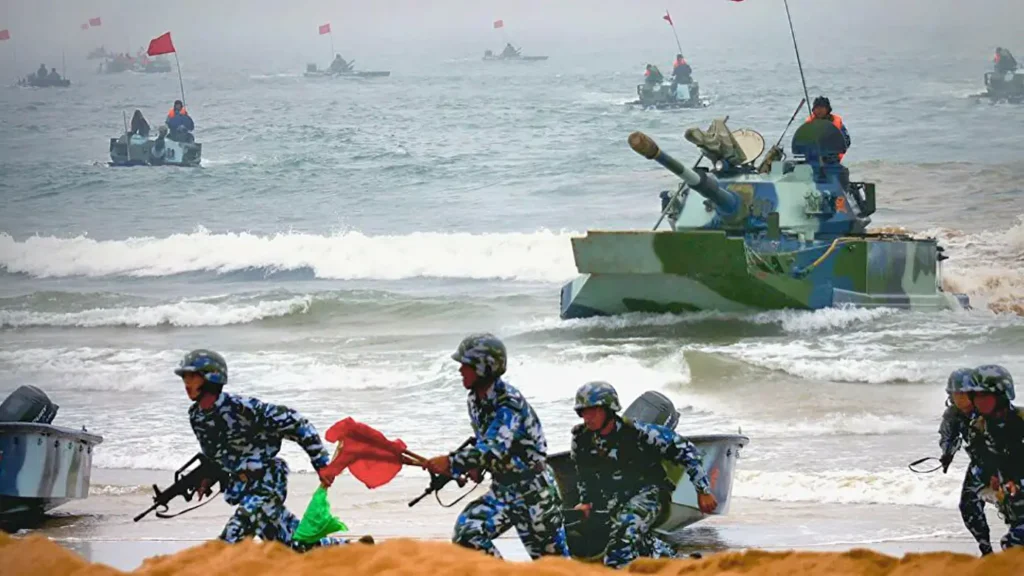
Just this week, the PLA launched large-scale amphibious drills featuring “tank boats” just off Taiwan’s coast. Some analysts see these maneuvers as clear “rehearsals” for invasion, warning that key elements of a full-scale assault appear to be materializing.
Others, however, argue these actions still fall within the realm of grey-zone warfare—intended to intimidate Taiwan and test red lines without crossing into open conflict.
Taipei, meanwhile, is responding in kind. Its record-breaking Han Kuang drills, featuring U.S.-supplied HIMARS and Sky Sword II systems, are widely interpreted as a show of force, possibly even a direct reply to what some in Taiwan are calling the clearest signs of war in Taiwan in years.
These exercises coincide with a tightening of Chinese export controls on Taiwanese defense firms, as well as increasingly aggressive rhetoric emerging from the CCP war plans Taiwan narrative.
But perhaps the most unsettling twist lies in the timeline. Top U.S. defense officials are now openly warning that Beijing could be on track to attempt an invasion as early as 2027—a date once viewed as unlikely, but now gaining serious credibility.
In that context, the question is no longer just if China is preparing for war—it’s how soon.
To fully grasp why the question “is China preparing to invade Taiwan” resonates so strongly today, it’s essential to understand the deeper historical context that has shaped China-Taiwan relations for over seven decades.
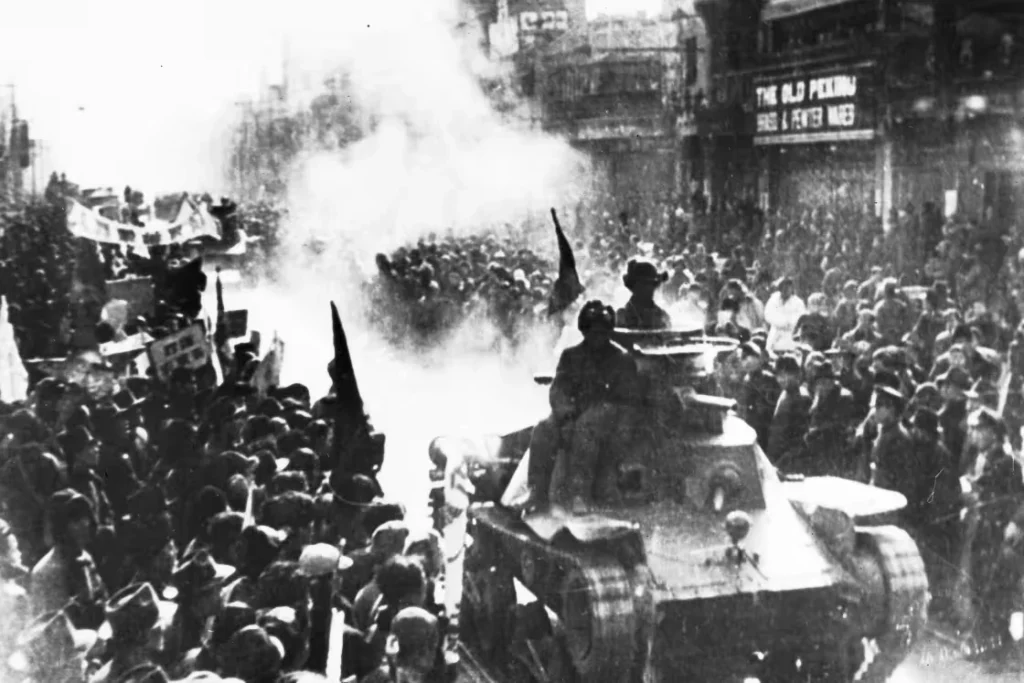
The roots of this tension trace back to 1949, when the Chinese Civil War ended with the Communist Party of China (CCP) establishing the People’s Republic of China (PRC) on the mainland.
Meanwhile, the defeated Nationalist government, the Kuomintang (KMT), retreated to the island of Taiwan, where it maintained its own government, constitution, and military. Since then, both sides have claimed to be the rightful government of all China, though only one, Beijing, holds the seat at the United Nations.
This divergence in governance created a unique geopolitical status: Taiwan operates as a self-governing democracy with its own elections, foreign policy, and vibrant civil society, yet it is not formally recognized as an independent state by most countries, including the United States.
Read also: Why Is Taiwan So Important to the US?
This is largely due to the One-China policy, a diplomatic framework under which countries acknowledge Beijing’s claim that there is only one China, and that Taiwan is part of it, even if, in practice, they maintain unofficial ties with Taipei.
This is where things get diplomatically complicated: while the U.S. does not recognize Taiwan as a sovereign state, it also doesn’t recognize Beijing’s sovereignty over Taiwan.
Instead, Washington follows a policy of “strategic ambiguity”, pledging support for Taiwan’s self-defense through the Taiwan Relations Act without explicitly guaranteeing military intervention. This delicate balance has more or less held for decades, but it may be wearing thin.
From Beijing’s perspective, reunification with Taiwan isn’t merely a political objective; it’s a core national goal—and, arguably, a matter of regime legitimacy. The CCP war plans Taiwan narrative is often framed around historical destiny and national pride.
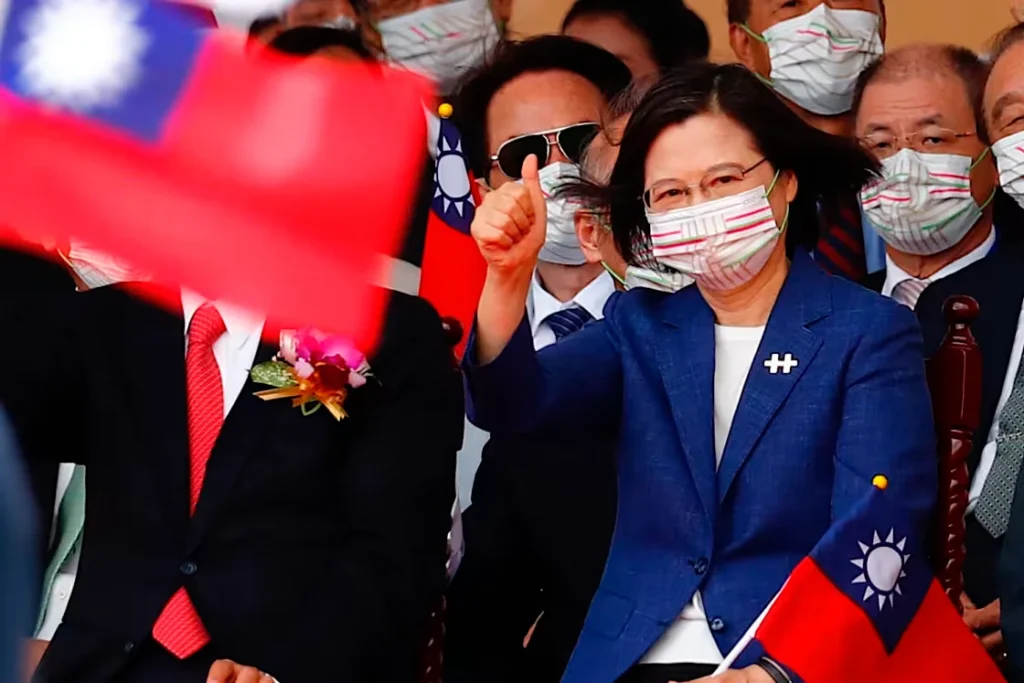
Meanwhile, for many in Taiwan, especially younger generations—the idea of being absorbed into the mainland is not only unpopular, it’s increasingly seen as incompatible with their democratic identity.
So when we talk about China Taiwan invasion signs, or rising Taiwan Strait tensions, we’re not just witnessing a new geopolitical flashpoint. We’re watching the slow unraveling of a decades-old status quo—one built on unresolved history, unspoken red lines, and competing visions of sovereignty.
When asking “is China preparing to invade Taiwan?”, one of the strongest indicators people look to is activity on the ground, or more precisely, in the air and at sea. And in recent months, those movements have been difficult to ignore.
There has been a noticeable uptick in Chinese military drills near Taiwan, particularly involving both naval and air assets. PLA warships, including destroyers and amphibious landing ships, have been conducting coordinated maneuvers in the Taiwan Strait and just east of the island.
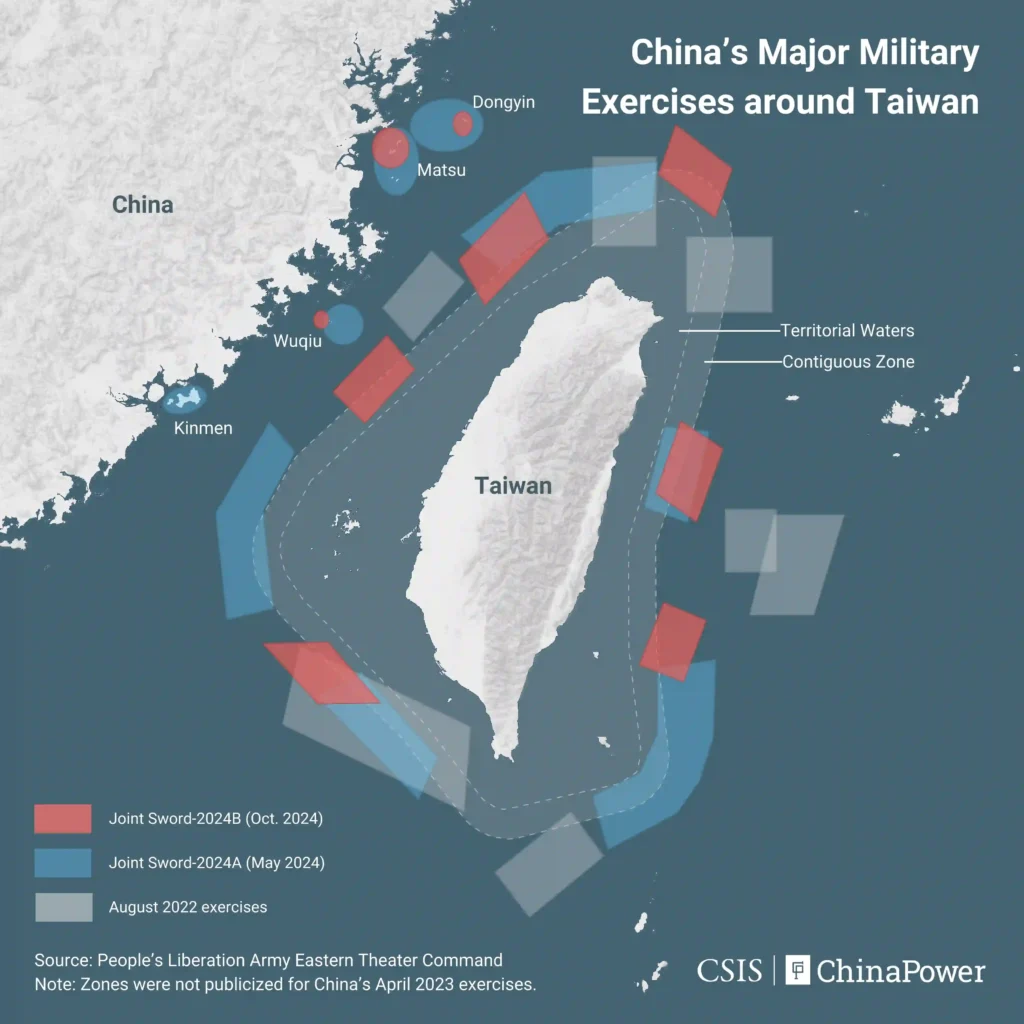
In some cases, these vessels operate dangerously close to Taiwan’s air defense identification zone (ADIZ), prompting intercept responses from Taiwanese F-16s.
While Beijing often frames these drills as “routine,” the scale, frequency, and realism of the exercises suggest they could also be simulated invasion scenarios, or at the very least, rehearsals to test response times.
Likewise, Chinese air incursions have grown increasingly bold. In several instances, PLA aircraft have crossed the so-called “median line” of the Taiwan Strait, a boundary once informally respected by both sides. These flights often involve large formations of fighter jets, bombers, and electronic warfare planes.
Read also: How powerful is the Chinese Navy compared to the U.S. Navy?
Some observers believe such moves may be intended to normalize a military presence near Taiwan, gradually shifting the status quo without triggering a full-blown response.
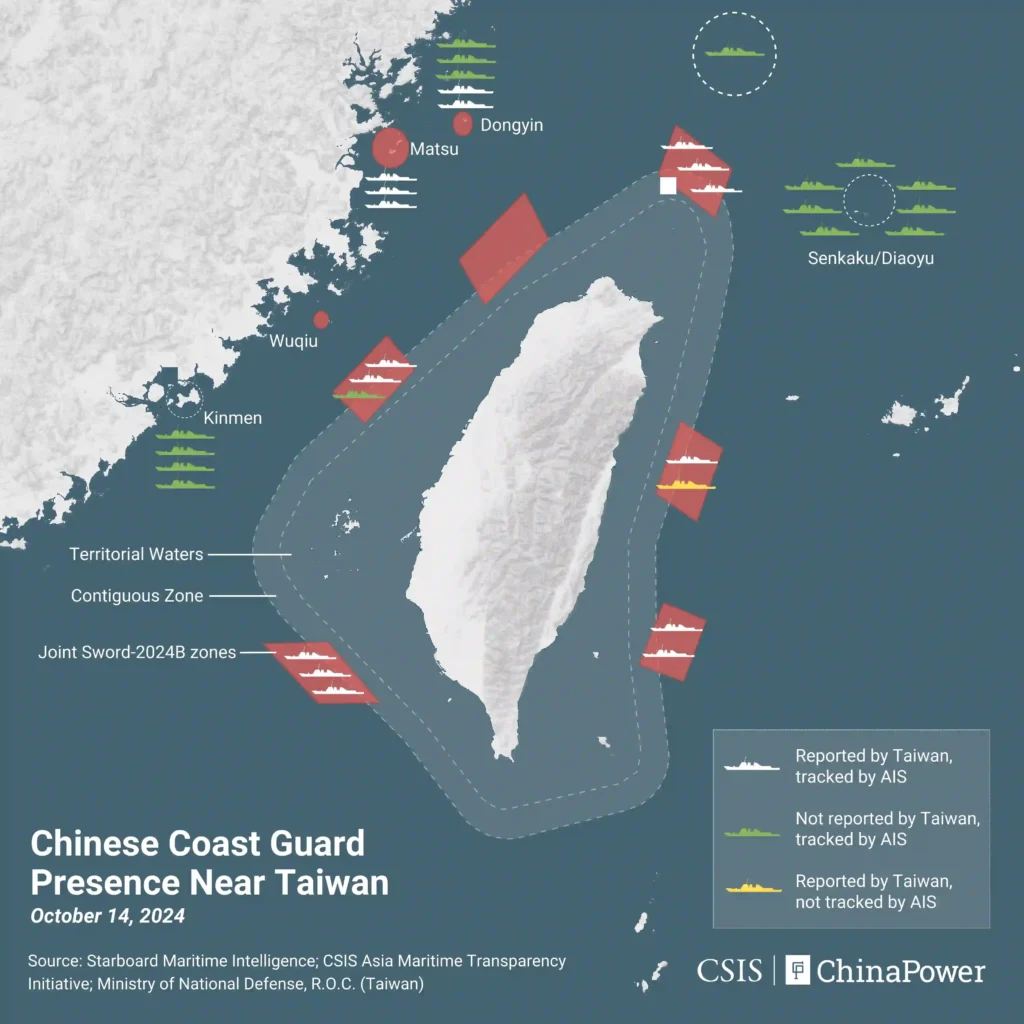
Adding to the concern are satellite images and open-source intelligence reports, which appear to show logistical preparations on the mainland.
Analysts have pointed to expanded infrastructure near key coastal military bases—such as the construction of new barracks, fuel storage facilities, and vehicle staging areas in Fujian province, directly across from Taiwan.
While this could be standard military modernization, the geographic focus has raised eyebrows. Some experts suggest it might indicate PLA troop mobilization or preparations for rapid deployment capabilities in the event of a conflict.
Read also: How Strong Is China’s Military
Still, it’s important to be cautious. None of this is definitive proof of imminent war. Much of the China Taiwan invasion signs we’re seeing could also be interpreted as psychological pressure—a show of force designed to shake morale in Taipei and signal deterrence to the U.S. and its allies.
In fact, China has historically blended military drills with political messaging, especially during moments of high diplomatic tension.
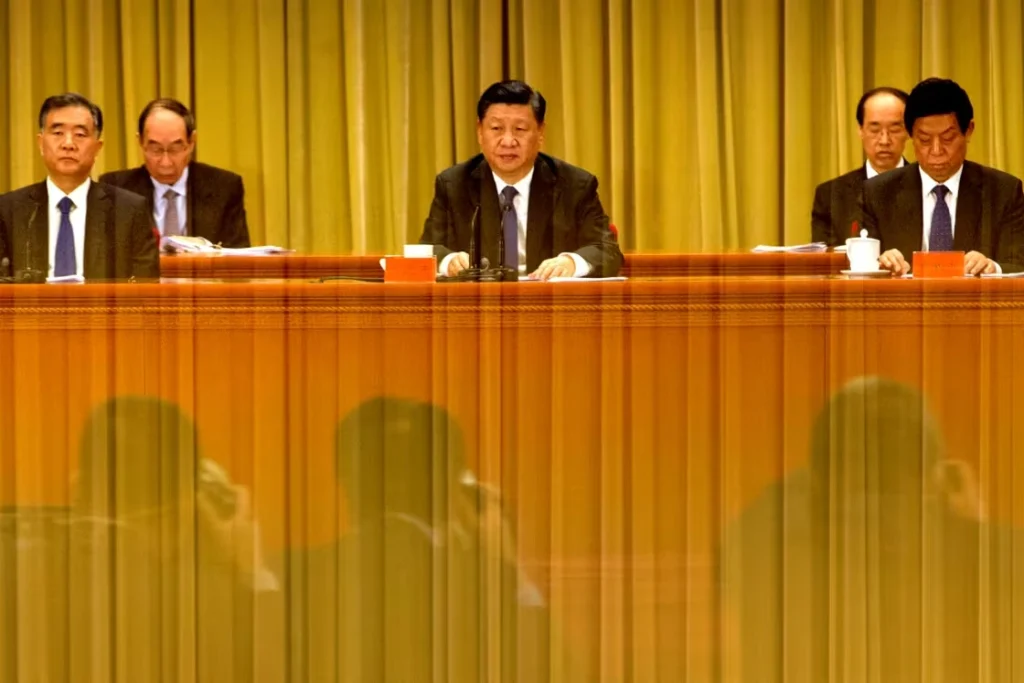
In recent speeches, Xi Jinping has adopted language that, while not overtly declaring war, has grown noticeably more assertive.
He continues to describe Taiwan reunification as a “historic mission” and a “non-negotiable goal,” often invoking the phrase “national rejuvenation”—a long-term strategic vision where Taiwan is seen as a missing piece of China’s rise.
Although Xi rarely offers specific timelines, some observers suggest the rhetorical urgency in his remarks has sharpened since 2022, especially as domestic pressures mount and international tensions grow.
The CCP media apparatus has also become more aggressive. State outlets such as People’s Daily and Global Times frequently run opinion pieces condemning so-called “Taiwan separatists” and accusing the West—particularly the U.S.—of provoking instability in the region.
These articles often employ a nationalistic tone, framing Taiwan not as a separate political entity, but as a “renegade province” awaiting rightful return. While this kind of rhetoric isn’t new, it does appear to be intensifying in both frequency and severity—potentially as part of an effort to normalize the idea of forced reunification in the minds of the Chinese public.
Adding to the unease is Beijing’s anti-separatist legislation, which some experts view as laying the legal groundwork for future action. Laws like the Anti-Secession Law (enacted in 2005 but cited more recently in official speeches) explicitly authorize the use of “non-peaceful means” if Taiwan formally declares independence.
More recently, some analysts have noticed shifts in domestic propaganda trends, including TV dramas, school textbooks, and even gaming content that reinforce patriotic narratives and emphasize Taiwan as an inseparable part of China.
While this may simply be internal messaging to consolidate nationalism, it could also be seen as ideological preparation—gearing society toward the idea that military action, if taken, would be both justified and inevitable.
Of course, rhetoric doesn’t always translate into immediate action. Beijing could be using verbal escalation as a form of strategic signaling—intended to deter Taiwan from moving closer to de facto independence, and to warn external actors like the U.S. not to “interfere.”
Still, when coupled with growing Taiwan Strait tensions and increasingly hostile media narratives, these political cues may reflect more than just words. They might be early warning signs that the CCP war plans in Taiwan are not just theoretical—but beginning to take shape on both the narrative and psychological front.
In recent months, Taiwan has reportedly faced a surge in cyber attacks, many of which have targeted critical infrastructure, including power grids, transportation systems, and government websites. Though attribution in cyber warfare is notoriously murky, Taiwanese cybersecurity officials have suggested that many of these intrusions bear the hallmarks of state-sponsored actors, likely linked to the People’s Liberation Army’s cyber units.
These attacks don’t seem random. Some coincide with major diplomatic events, like high-profile U.S.-Taiwan meetings or weapons sales, hinting that they could be calibrated responses rather than isolated incidents.
At the same time, economic pressure has become another tool in Beijing’s arsenal. China has recently imposed import bans and export restrictions on Taiwanese goods ranging from pineapples and fish to semiconductor-related materials.
While each measure is often justified on technical or regulatory grounds, the broader pattern seems aimed at creating economic instability and reminding Taipei, and its allies, of the cost of defiance.
These moves may not qualify as full-scale sanctions, but they fall into what analysts call economic coercion, and they seem designed to subtly erode Taiwan’s resilience without triggering a direct confrontation.
Then there’s the information war—an often-overlooked but growing concern. Taiwan has become a prime target for disinformation campaigns, particularly on social media platforms and messaging apps like LINE and Facebook.
These campaigns, sometimes attributed to Chinese content farms or so-called “patriotic hackers,” often spread fake news about Taiwan’s military readiness, political scandals, or public panic over food and energy shortages.
In some cases, doctored videos and false headlines are timed to coincide with Chinese military drills near Taiwan, possibly to create confusion, sow distrust in democratic institutions, or weaken morale.
Individually, these actions may not signal imminent invasion. But taken together, they reflect a broader strategy—what some describe as hybrid warfare—where pressure is applied across multiple fronts without ever formally declaring war. In this light, cyber intrusions, economic threats, and disinformation aren’t just side skirmishes.
They may be part of the CCP war plans in Taiwan, aimed at softening the island before any potential military operation. Or, just as plausibly, they could be long-term tactics to keep Taiwan destabilized and off-balance, without ever pulling the trigger.
Over the past few years, and especially in recent months, we’ve seen growing signs that Washington is adjusting its approach, not only rhetorically, but strategically.
One of the most telling developments has been a gradual reconfiguration of U.S. military posture in the Indo-Pacific. The Pentagon has been increasing deployments of advanced assets—like F-22s, B-1 bombers, and carrier strike groups, to Guam, Okinawa, and other forward-operating bases.
While these shifts are often framed as routine rotations, they likely reflect a desire to enhance response readiness in the event of a Taiwan contingency. Some defense analysts argue this may be part of a broader effort to deter Chinese aggression by signaling that the U.S. can project force quickly if necessary.
There’s also growing cooperation through joint military drills, many of which now feature scenarios closely resembling a Taiwan crisis.
For instance, RIMPAC 2024—the world’s largest naval exercise—included more extensive amphibious landing simulations and island defense operations, exercises that some observers interpreted as indirect signs of a China-Taiwan invasion.
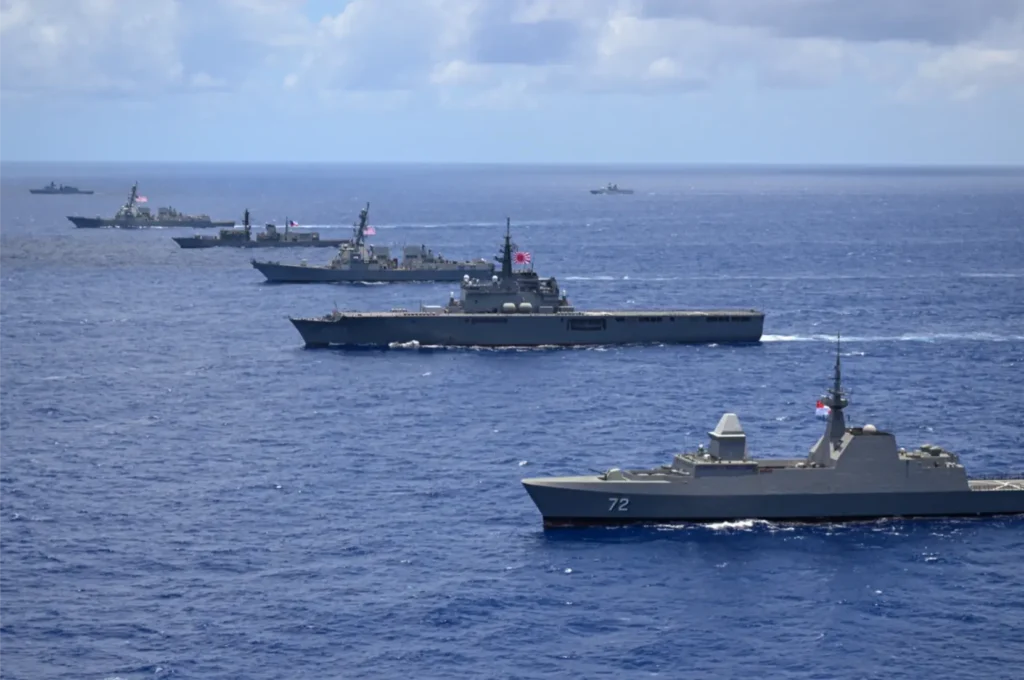
Beyond the U.S., key allies like Japan, Australia, and the Philippines have become more vocal in supporting Taiwan’s security, with trilateral drills and new defense agreements hinting at a loosely coordinated regional strategy to respond to any future conflict in the Taiwan Strait.
On the arms sales front, the U.S. has steadily ramped up support for Taiwan’s defense readiness.
In the past two years alone, Taiwan has received approvals for a range of systems—from F-16V fighter jets and HIMARS launchers to anti-ship Harpoon missiles and advanced radar systems. These transfers may not be game-changers individually, but collectively they reflect an effort to build up Taiwan’s asymmetric defense capabilities, making a full-scale invasion riskier for Beijing to attempt.
Still, it’s worth noting that U.S. policy remains intentionally cautious. Despite these moves, the Biden administration—like those before it—continues to maintain “strategic ambiguity” about whether it would intervene militarily in a Taiwan conflict. That ambiguity is designed to deter both sides: discouraging China from acting aggressively, while also dissuading Taipei from declaring formal independence, which could be seen as a red line for Beijing.
All of this suggests that, even if Washington isn’t convinced an invasion is imminent, it clearly sees the risk as growing. Whether these shifts are enough to change Beijing’s calculus remains unclear—but the fact that the U.S. and its allies are reshaping their posture in response is, in itself, a revealing signal that the stakes are rising.
Analysts at major think tanks like CSIS, Brookings, and RAND Corporation have been closely tracking both the rhetoric and the realities on the ground, and while their interpretations vary, many agree that the window for potential conflict seems to be narrowing.
The Center for Strategic and International Studies (CSIS), for example, has conducted detailed wargaming simulations of a potential Taiwan Strait conflict, and the findings are sobering. In most scenarios, the PLA can mount a serious invasion attempt—but faces high costs, especially if the U.S. and Japan intervene.
These simulations suggest that while China might technically be able to seize parts of Taiwan, doing so could lead to massive losses and long-term strategic setbacks. This may explain why Beijing is still investing heavily in gray-zone operations—like Chinese military drills near Taiwan and cyber disruption—rather than jumping straight to war.
Experts from RAND have echoed this caution, noting that the CCP war plans for Taiwan likely include not just military timelines but political and psychological calculations as well.
RAND analysts have pointed out that, while the People’s Liberation Army is rapidly modernizing, certain capabilities—such as large-scale amphibious logistics and sustained air superiority—may still be underdeveloped for an operation of this scale.
That doesn’t mean an invasion is off the table, but it does suggest Beijing might prefer to delay and continue shaping the battlespace through intimidation, cyber pressure, and disinformation.
Meanwhile, Brookings Institution scholars tend to focus on the long-term strategic outlook, warning that Taiwan defense readiness must not only involve hardware but also institutional and civil resilience.
Some argue that signs of war in Taiwan may not come in the form of a sudden military assault, but rather a gradual erosion of Taiwan’s confidence and alliances. If Beijing can create the perception that U.S. support is shaky or that Taiwanese resistance would be futile, it might achieve political submission without firing a shot.
That said, most experts also acknowledge that predictions can be fragile. A sudden shift in Taiwan Strait tensions, an unplanned skirmish, or even domestic instability in China could alter Beijing’s timeline dramatically.
While many still see 2027, based on Xi Jinping’s reported directive to be “militarily ready” by then, as the most plausible horizon, others argue that conflict could come sooner or much later, depending on a mix of economic pressures, U.S. elections, and regional diplomacy.