Follow Us:
Follow Us:

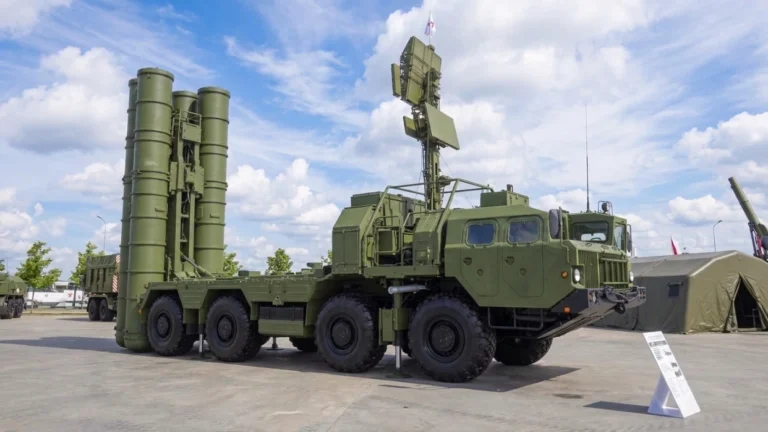
In July 2025, Taiwan took delivery of its first Harpoon Coastal Defense System launchers from the United States. What catches the eye isn’t the arrival of some next-gen superweapon, but the return of the Harpoon, an anti-ship missile that’s been around since the late ’70s.
At first glance, that feels almost anachronistic. After all, military planners everywhere are pouring money into missiles that can travel several times the speed of sound, yet Taiwan is leaning on a subsonic veteran.
And still, the Harpoon refuses to fade away. More than thirty nations keep it in their arsenals. Its longevity hints at a mix of adaptability, reliability, and strategic value that newer systems have yet to fully displace. Which naturally leads to the question: what, exactly, keeps the Harpoon so relevant? Its range? Its launch flexibility? Or maybe the simple fact that it works when it’s supposed to.
The Harpoon anti-ship missile is a long-serving, all-weather, over-the-horizon weapon built for one blunt purpose “to smash surface warships”. Technically it’s a subsonic cruise missile, which means it flies under the speed of sound, skimming just above the waves to slip beneath enemy radar.
Unlike some missiles built for only one launch method, the Harpoon can be fired from a destroyer’s deck, a submerged submarine, a coastal battery hidden in plain sight, or even from an aircraft streaking overhead.

The Harpoon anti-ship missile was first conceived in the early 1970s, at a time when the U.S. Navy wanted a dependable way to strike targets beyond the horizon. The spark came partly from the lessons of the Yom Kippur War in 1973, where anti-ship missiles had suddenly proved decisive in naval combat.
McDonnell Douglas, later absorbed by Boeing, won the contract to develop the Harpoon as a multi-platform solution. By 1977, it was in service and spread fast, becoming one of the most widely adopted anti-ship missiles on Earth. Over time, the design kept evolving, each new variant fine-tuning guidance systems, sharpening resistance to countermeasures, and adapting to new launch platforms.
On paper, the specs don’t shout “futuristic.” A baseline Harpoon carries an effective range of about 124 kilometers (roughly 67 nautical miles), with some upgraded versions reportedly reaching beyond 200 kilometers. Its cruising speed hovers around 850 kilometers per hour.
This means, it’s not the fastest missile in the world, but its sea-skimming flight path and advanced targeting make it harder to detect until it’s too late. The warhead, a 221-kilogram high-explosive blast/fragmentation type, isn’t delicate either; it’s meant to punch straight through a ship’s hull and detonate inside, where it hurts most.
The Harpoon isn’t a flashy weapon. It doesn’t streak across the sky at hypersonic speeds, nor does it rely on some exotic propulsion system. What it does instead is lean on decades of refinement. It works by blending tried-and-tested propulsion with a multi-layered guidance system designed to give its target as little reaction time as possible. On paper, it might look “slow”, but in practice, it forces its target into a panicked, split-second decision under fire.
The guidance system is where the Harpoon earns its reputation. Right after launch, it relies on inertial navigation, essentially an onboard dead-reckoning system that keeps track of where it is, no matter what. During the mid-course phase, it can pull in GPS updates to sharpen accuracy, adjusting on the fly if a ship tries to change course.
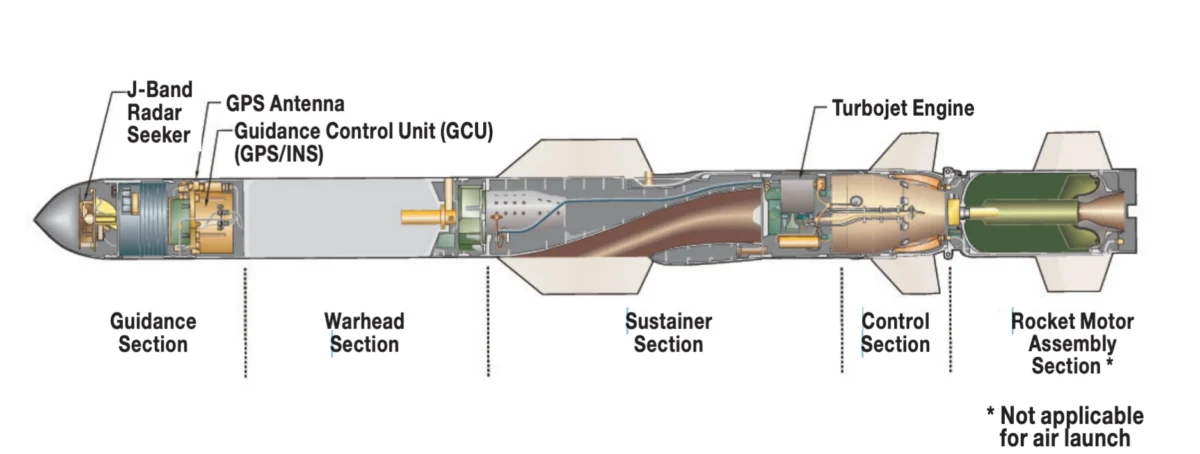
Then, in the final stage, it flips to active radar homing, letting the missile find and lock onto the target by itself. Even if someone manages to jam satellites or interfere with navigation signals, that last phase makes sure the Harpoon can still find its way to the target. This was evidenced in the 1980s, during the Iran-Iraq War, Harpoon missiles were credited with several ship sinkings despite electronic countermeasures.
Another reason the Harpoon has stuck around is sheer versatility. Launch platforms are everywhere. A U.S. destroyer like an Arleigh Burke can fire it from its deck.
A submarine can slip one off beneath the waves. Aircraft, like the Navy’s P-8 Poseidon, can drop it from above, and there are also truck-mounted coastal defense batteries that can roll it right up to a shoreline.
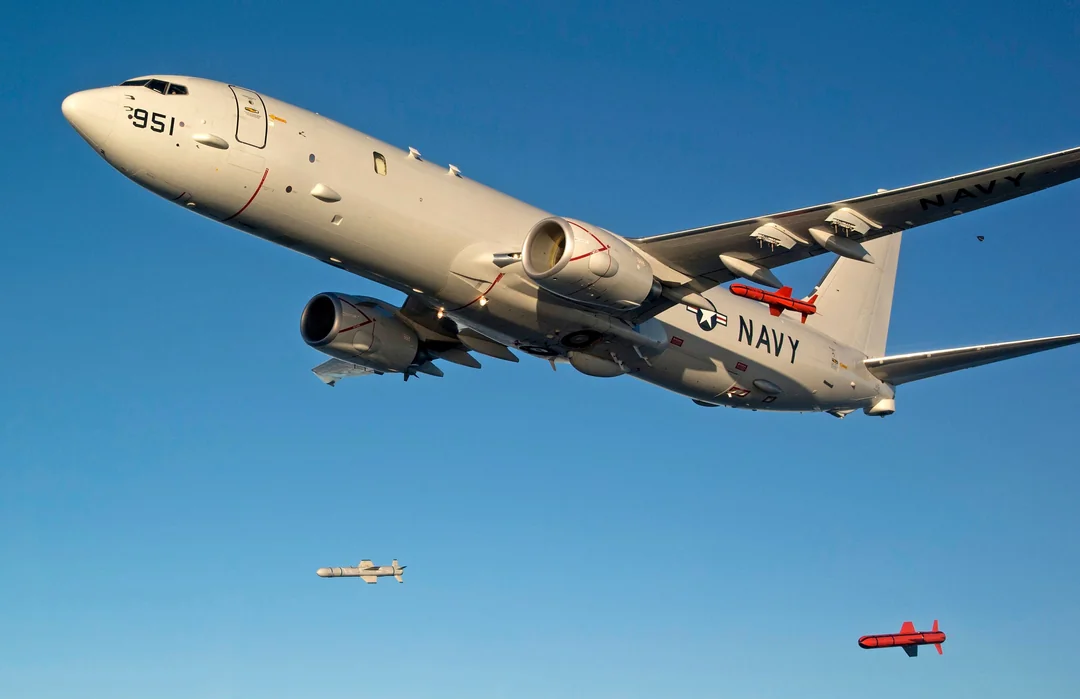
The Harpoon’s flight profile is another key to its effectiveness. The Harpoon can sneak. It flies just a few meters above the ocean (what’s called sea-skimming), and stays hidden from most long-range radar until it’s almost on top of the target. Sometimes, just before hitting, it pulls off a little trick called a “pop-up” maneuver—climbing quickly, then diving down at the hull or waterline.
The point is to smash through the ship’s defenses and make sure the explosion floods compartments. Back in 1986, during Operation El Dorado Canyon, U.S. Navy forces simulated sea-skimming Harpoon attacks against Libyan ships. This simulation demonstrated how even heavily armed vessels could be overwhelmed by low-altitude missiles coming in fast and undetected.
If there’s one thing commanders value above shiny new tech, it’s reliability. And the Harpoon, for all its age, has built up a combat résumé that newer missiles can only aspire to. Unlike systems that mostly live inside exercises or carefully staged tests, the Harpoon has been fired in anger, against real ships, in real wars, under conditions no simulator could perfectly mimic.
Its battlefield credibility goes back a long way. During the Iran–Iraq War in the late 1970s and early ’80s, Iranian missile boats used Harpoons against Iraqi naval vessels.
Take the Operation Morvarid in 1980 for example. In this operation, the missile showed that it could function even in the messy, shallow waters of the Persian Gulf, where ships are harder to hide and radar clutter is everywhere. That kind of environment has tripped up plenty of other anti-ship systems, but the Harpoon proved adaptable.
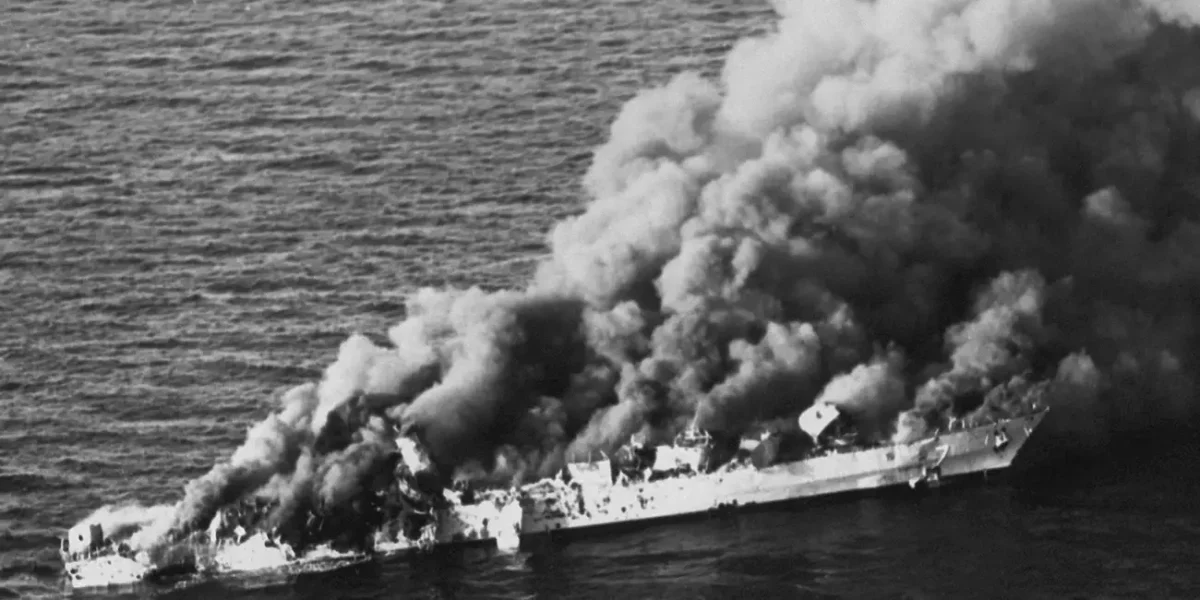
That reputation deepened in 1988 during Operation Praying Mantis, when U.S. forces used Harpoon missiles as part of coordinated surface and air strikes against Iranian warships.
The best-known incident was the sinking of the frigate Sahand, where Harpoons helped finish the job. Analysts often point to this as a textbook case of how the missile fits seamlessly into multi-domain operations—surface ships, aircraft, and missiles all working together.
Even in the 21st century, the Harpoon continues to prove its relevance. During the 2022 Russo-Ukrainian War, Ukrainian forces reportedly used Harpoon coastal batteries to strike the Russian tug Vasily Bekh, which was carrying supplies near Snake Island. It wasn’t a massive warship, but the strike demonstrated that the Harpoon could still be adapted to modern asymmetric warfare—fired from truck launchers, far from a traditional naval base, yet still effective.
What all this seems to show is that repeated use under fire matters. Crews trust the missile because they know how it behaves when the sea is rough, when the target is maneuvering, or when electronic countermeasures are buzzing around. That sort of predictability under pressure is, in many ways, a “hidden weapon” in itself. One that experimental or next-generation systems can’t offer until they’ve actually been blooded in combat.
Another reason the Harpoon has survived so long is its almost chameleon-like ability to adapt to different platforms. It can be fired from a destroyer’s deck, a submarine’s torpedo tube, a maritime patrol aircraft, or even a truck parked near the coastline. For adversaries, that makes it difficult to guess where a strike might come from.
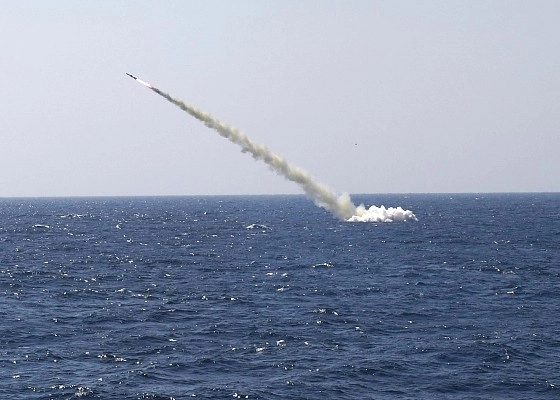
From a practical standpoint, this flexibility also makes life easier for navies. A country with both frigates and patrol aircraft can field the same missile system on both, which simplifies training and logistics. The newer Block II and II+ models can even be retrofitted onto older systems, which means you don’t have to rebuild the whole weapons suite just to stay current.
Money always matters in defense planning, and here the Harpoon has another advantage. As of around 2020, a Block II Harpoon came in at roughly US$1.4 million per unit. By comparison, newer long-range or hypersonic anti-ship missiles can cost several times that, sometimes even tens of millions apiece. That difference in price changes the equation. It’s not just about how powerful one missile is, but how many salvos a navy can realistically buy, stockpile, and keep ready.
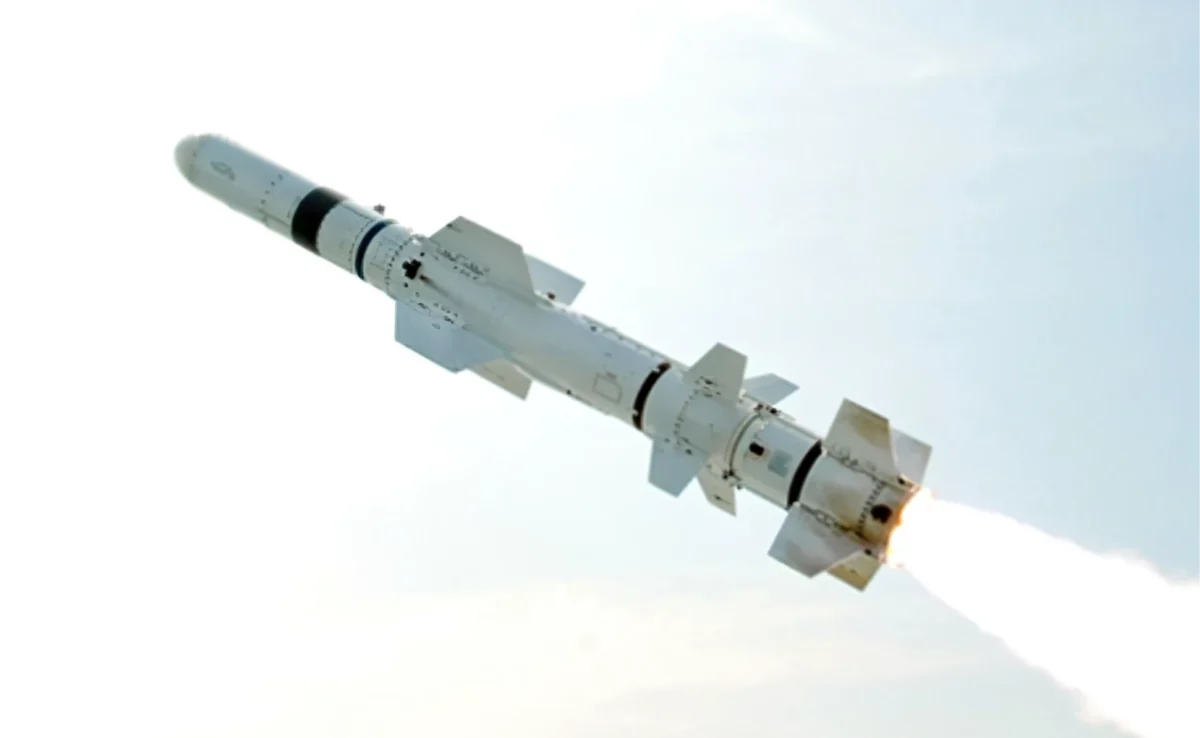
The Harpoon’s affordability is supported by its massive production history. Thousands of Harpoons have been built over the years, which means a well-established supply chain, spare parts in circulation, and a training infrastructure that doesn’t need to be reinvented.
Boeing often emphasizes this “proven logistics chain,” in its marketing because it’s a tangible advantage. This means that navies aren’t starting from scratch when they buy Harpoons. They can plug into an existing ecosystem that has been tested across dozens of operators worldwide.
This cost advantage translates directly into operational flexibility. For many naval planners, the critical question is not just “how powerful is each missile?” but “how many salvos can we buy, store, and sustain over time?” A missile in the $1.4 million range allows navies to field larger magazines, conduct more frequent live-fire training, and maintain readiness for prolonged engagements.
Nonetheless, cheaper isn’t automatically better. If a missile can’t get through modern layered defenses, such as advanced shipborne radar and interceptors, then firing more of them won’t help much.
In this context, its lower price becomes less of a bargain, as more of them may be intercepted before hitting their targets. This is why ongoing upgrades to the Harpoon’s targeting algorithms and survivability are so important. Without those, its cost advantage risks becoming a false economy.
The Harpoon still carries some notable strengths, though its effectiveness today is more nuanced than in the past. Its sea-skimming flight profile, combined with active radar homing in the terminal phase, remains a tricky combination for defenders. Ships often don’t spot the missile until the last few moments, leaving crews with very little time to react.
In some cases, even highly trained teams can be forced into rushed decisions, which is exactly the kind of stress Harpoon was designed to exploit. The Block II upgrade arguably sharpened this edge further, particularly in coastal waters where radar clutter already makes detection difficult.
The Block II and II+ models, along with related derivatives like the SLAM-ER, can use GPS/INS guidance for mid-course corrections and even receive datalink updates in flight. In practical terms, this means the missile can adjust if a ship changes course—or in some cases re-acquire a moving target altogether.
The Block II+ in particular added “net-enabled” updates, which allow operators to redirect or fine-tune its attack after launch. That adaptability, while not unique in today’s missile landscape, still makes the Harpoon a more unpredictable threat than its age might suggest.
Recent U.S. Navy programs hint at efforts to keep the system credible. Between 2024 and 2025, upgrades focused on seeker improvements and extending the service life of existing stocks.
Boeing, for its part, has tested new configurations under the “Block II Update” banner, suggesting the missile’s architecture isn’t yet at the end of its development curve.
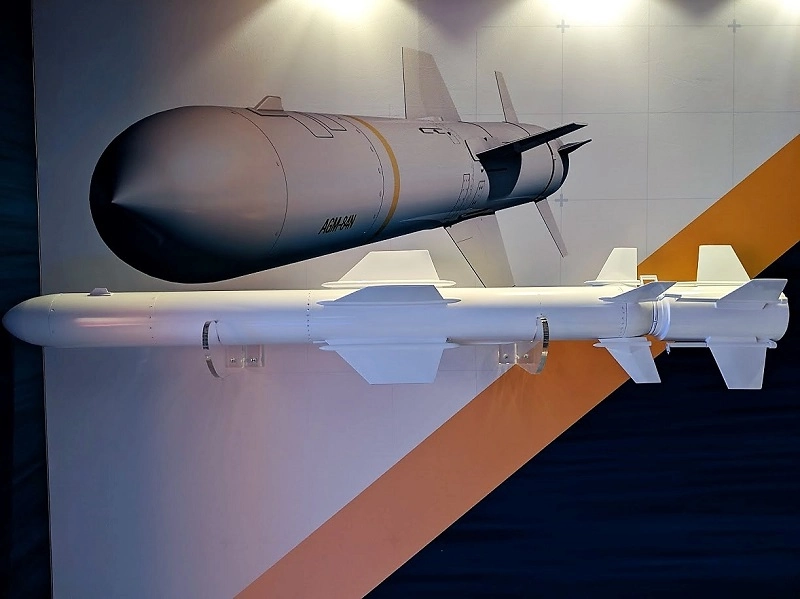
Still, the limitations are real. The Harpoon’s subsonic speed means it is slower than emerging supersonic or hypersonic systems, which gives layered defenses, long-range interceptors, modern radar networks, and close-in weapon systems (CIWS), a bit more time to react. Its survivability, therefore, seems most reliable when used in massed volleys or alongside other weapons that distract or overwhelm defenses.
Range can also be an issue: while some air-launched versions reach well beyond 200 kilometers, several of today’s cutting-edge anti-ship missiles outdistance it significantly.
Another growing concern is the evolution of multi-static radar networks, satellite-based detection, and AI-assisted sensor fusion. These tools are specifically designed to spot sea-skimming threats earlier, which could erode one of the Harpoon’s longest-standing advantages.
This is likely why the U.S. Navy and Boeing have emphasized seeker upgrades and datalink improvements. Without them, the Harpoon might risk slipping from “proven workhorse” into “easy target” against top-tier adversaries.
When looking at how the Harpoon stacks up against rivals like the French Exocet or the newer Norwegian Naval Strike Missile (NSM), it’s probably fair to say that each reflects slightly different priorities.
The Harpoon’s biggest strength may not lie in cutting-edge technology but in its long service history. It has been built in the thousands, used in real conflicts, and adopted by dozens of navies.
The Exocet has also been combat-proven, most famously during the Falklands War, but its overall production and global reach seem a bit more limited. The NSM, meanwhile, represents the “next generation,” with stealthier shaping and an advanced seeker, though it lacks the decades of real-world use that the Harpoon enjoys.
From a technical perspective, the Harpoon could be seen as sitting somewhere between its two competitors. The Block II+ and air-launched versions, for instance, can outrange standard Exocet models.
Still, the NSM generally pushes the envelope further, with ranges often cited beyond 185 km and a survivability profile that includes infrared imaging guidance. Speed isn’t a major differentiator here, since all three remain subsonic, but their flight profiles and countermeasure resistance do create meaningful differences in how they might perform against advanced defenses.
Cost and logistics also play into the equation. Recent Harpoon variants have been priced at roughly US$1.4 million per unit, making them cheaper than the more technologically ambitious NSM.
For countries that value numbers and compatibility with existing systems over stealth and bleeding-edge sensors, Harpoon still looks like a pragmatic choice. The Exocet falls into a similar price range, but it doesn’t quite match the Harpoon’s versatility in terms of integration across ships, submarines, aircraft, and even coastal defense batteries
That said, the Harpoon’s age does show in some areas. Compared with the NSM’s stealth shaping and imaging infrared seeker, the Harpoon’s radar-based guidance is arguably more detectable by modern warning systems.
Even though recent upgrades have improved its ability to handle cluttered coastal environments, the NSM was built from the outset with littoral combat in mind. The Exocet, too, has kept pace through updated variants with stronger resistance to electronic countermeasures, narrowing the Harpoon’s once-clear advantage.
In the bigger picture, the Harpoon probably remains a well-rounded and cost-effective missile, especially for navies that value proven reliability and global interoperability. But when measured purely against the latest generation of anti-ship weapons, it does face challenges. Its effectiveness may increasingly depend not on one-shot kills but on coordinated tactics, where multiple missiles are used together to overwhelm modern naval defenses.