Follow Us:
Follow Us:

The P-8 Poseidon isn’t usually the kind of aircraft that makes front-page headlines. It doesn’t roar over stadium flyovers or drop bombs in live war zones. And most people don’t think about patrol planes when they picture modern warfare. Yet the P-8 Poseidon has been in the spotlight lately.
Singapore has signed on for four of them, Germany has rolled out its first in national colors, and even Denmark is debating whether it should join the club; mostly because of the growing concerns in the Arctic. That unease isn’t new.
Back in 2006, a Chinese submarine managed to do the most unthinkable thing; surfacing within a few miles of the USS Kitty Hawk carrier group near Okinawa.
No one had noticed it coming. For many naval officers, it was a sobering moment. If a submarine could sneak that close to one of America’s most powerful fleets, what else might be possible? Incidents like that left a lasting mark and they explain why countries keep investing in tools like the Poseidon.
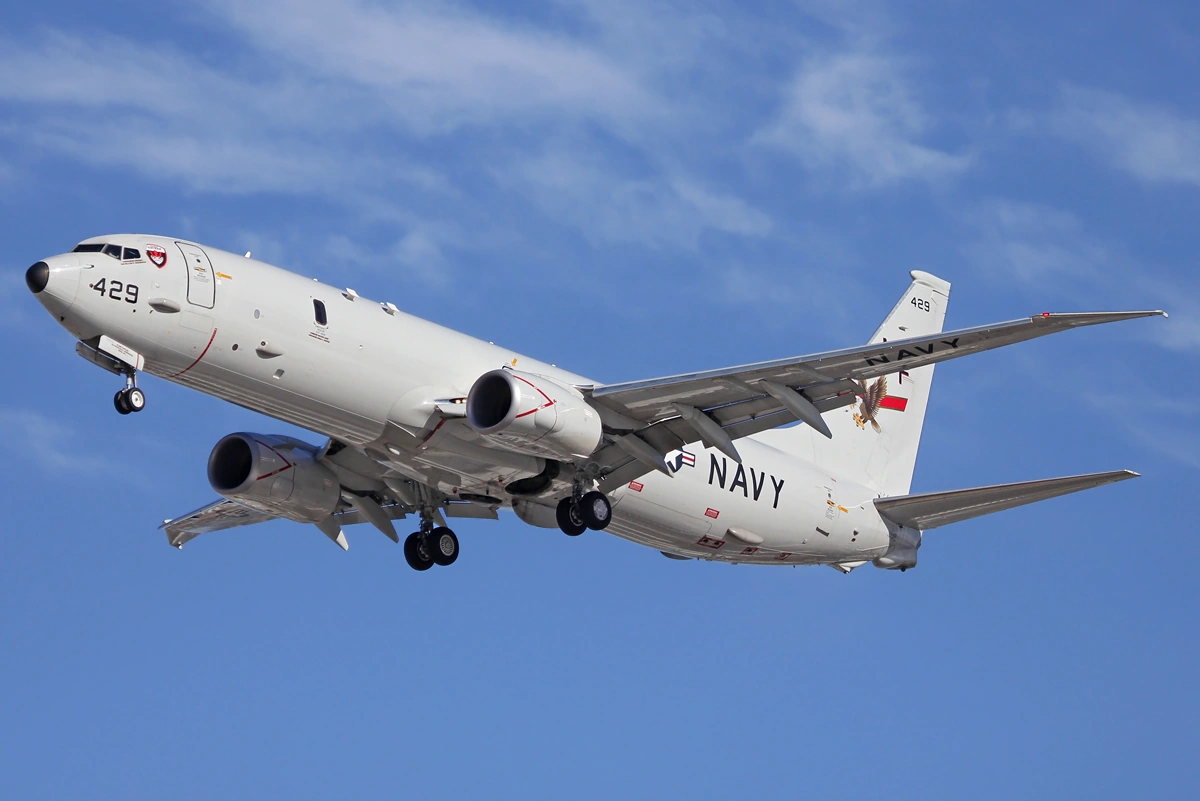
People usually call the P-8 Poseidon a “submarine hunter,” but it doesn’t quite capture the whole picture. This aircraft can cover thousands of miles, drop sonobuoys, launch torpedoes, even hand off tracking data to warships or other planes.
At the same time, not everything about it is settled. Some of the new upgrades sound impressive on paper but raise questions once you dig deeper.
So, what exactly is the P-8 Poseidon?
To most people, the Poseidon looks like just another commercial jet. But it wasn’t built to carry holidaymakers. Inside it’s packed with sensors, sonobuoys, and consoles, all tuned for one purpose; to chase submarines. The reason is straightforward enough. Submarines don’t advertise where they are, and they can get uncomfortably close before anyone notices.
The Poseidon gives the Navy a faster, wider set of eyes and ears, able to scan the sea from above and, if necessary, it can even attack, carrying torpedoes or anti-ship missiles under its wings. If you imagine the ocean as a dark, crowded neighborhood, the P-8 is like a detective flying overhead, listening for the faintest clue of who’s moving around below.

The value of this becomes clear when you think about submarines. They’re meant to be invisible, slipping quietly across oceans. Satellites can’t track them, and ships are too slow to cover such wide areas. That’s where the Poseidon steps in. It can patrol huge stretches of water in a single mission, and if it spots something threatening, it can drop torpedoes or fire anti-ship missiles.
The story really begins with the P-3 Orion. The Orion entered service in the 1960s and became the backbone of maritime patrol during the Cold War. It had served for decades, flying endless patrols during the Cold War, tracing Soviet subs across vast oceans.
Over time, it built a name for reliability. By the early 2000s, many of the aircraft were worn down. Their systems felt dated, and more importantly, they weren’t really suited for the kind of challenges navies were beginning to face (e.g., stealthier submarines, larger areas to monitor, and a tempo of operations that kept speeding up).
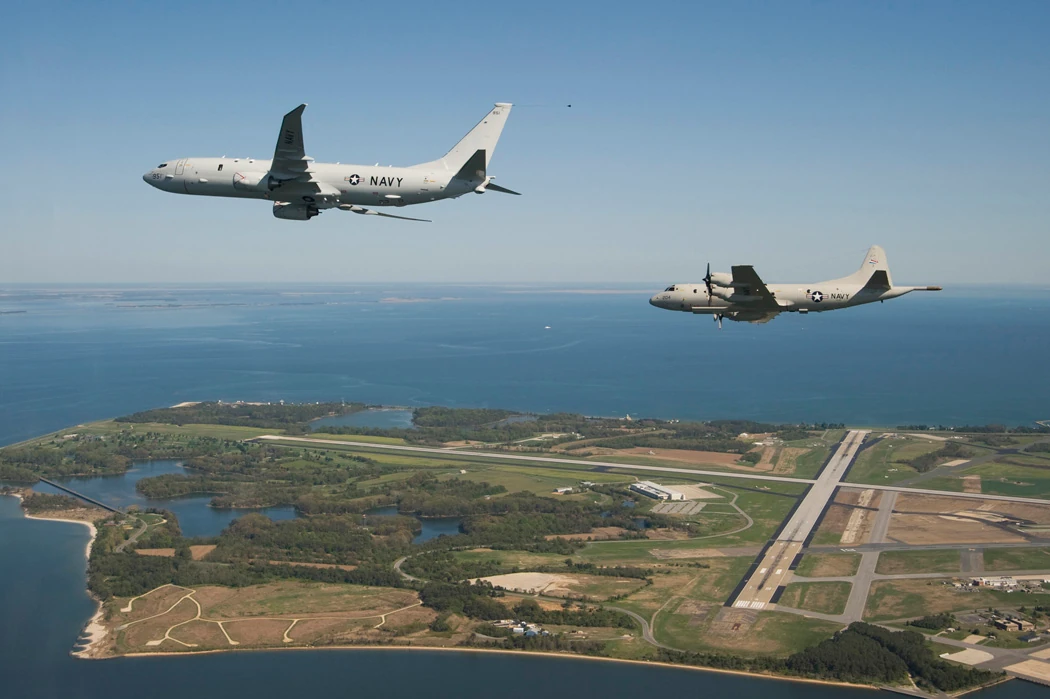
Boeing’s solution was surprisingly down-to-earth. Rather than spend years designing something entirely new, the company suggested reworking the 737 (the same jet millions of people fly on for holidays or business trips).
At first it sounded a little strange, but the logic was solid; the 737 was already everywhere, parts were easy to come by, and with the right tweaks, it could be pushed further with military modifications.
Development kicked off in the early 2000s, and by 2009 the first Poseidon was flying. Four years later, the Navy started using it in real missions. Crews moving over from the Orion noticed the difference straight away.
The P-8 was faster, more comfortable, and packed with sensors the older planes never had. Some described it as going from an old analog radio to a modern smartphone; same purpose, but a whole new way of working.
Even then, the Navy didn’t throw out the Orions right away. For a while, both aircraft flew side by side, one slowly fading out while the other grew into its role. That overlap says a lot about how cautious militaries can be with change. But step by step, the Poseidon became the backbone of U.S. maritime patrols and then other countries started taking notice.
Key specifications
| Feature | Details |
| Base Airframe | Modified Boeing 737-800ERX |
| Crew | 9 (flight + mission specialists) |
| Range | Around 1,200 nautical miles (ASW mission radius) |
| Endurance | 4+ hours on station at long ranges |
| Sonobuoy Capacity | Up to 120 (deployable, active/passive, multi-static) |
| Radar | AN/APY-10 multi-mode radar (surface search, periscope detection) |
| EO/IR Sensors | MX-20HD digital turret for imaging |
| Acoustic Systems | Advanced acoustics suite for processing sonobuoy data |
| Weapons Bay | 5 internal stations for torpedoes (Mk 54 lightweight torpedoes) |
| Wing Hardpoints | 6 external pylons for Harpoon anti-ship missiles or additional stores |
| Speed | High-subsonic (Mach 0.8 cruise) |
| Ceiling | 41,000 ft (but usually operates much lower for ASW missions) |
When people hear that the P-8 Poseidon can carry more than a hundred sonobuoys, it sounds technical, almost abstract. Maybe the easiest way to understand this is by picturing the sonobuoys as tiny floating microphones.
The P-8 Poseidon carries them, and when the crew suspects a submarine is in the area, they start dropping them into the sea. Each one sinks just below the surface. Some transmit actively, sending out pings that bounce off objects underwater. While others remain passive, listening for faint sounds like a submarine’s engine, propeller cavitation, or even the turbulence created by its movement.
While the buoys are doing their job in the water, the Poseidon stays above, looping in the sky and pulling in all the signals they send back. The crew sorts through the noise, looking for patterns that might hint at a submarine (it’s more like piecing together a puzzle from scattered clues).
One of the tricky things about submarines is that they’re designed to vanish. Still, total invisibility isn’t possible. At some point, a sub has to break the surface — maybe a periscope, maybe an antenna. That’s when the Poseidon’s AN/APY-10 radar gets its chance. It can catch details that would normally disappear in the clutter of waves, spotting something as small as a periscope against the ocean’s surface, even at long distance.
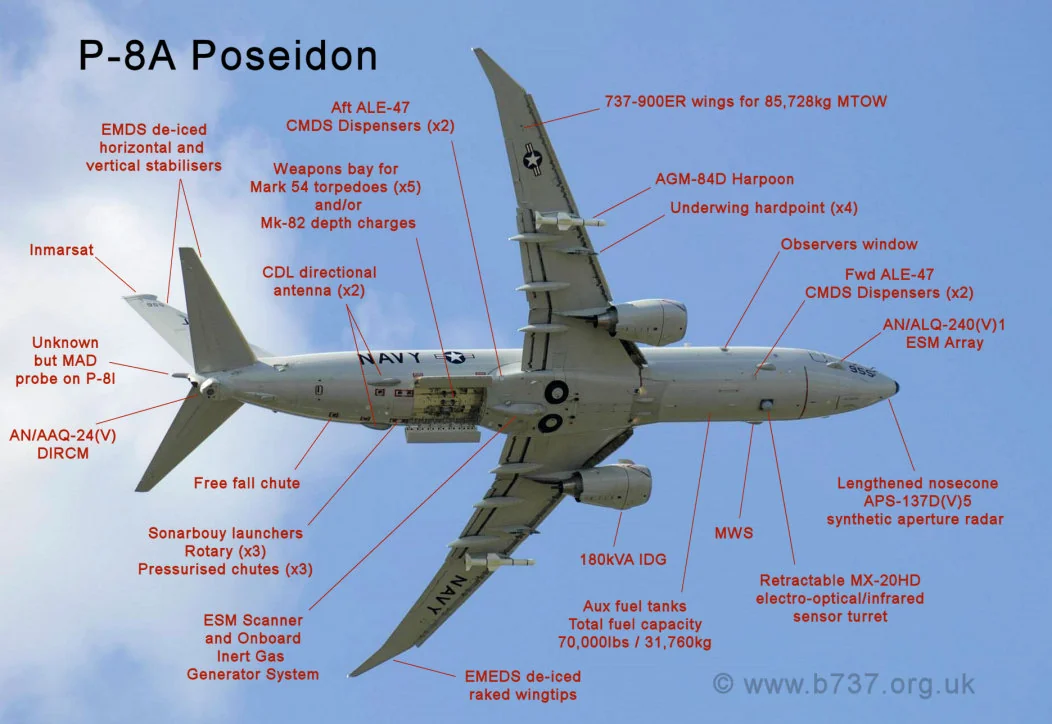
Alongside radar, the Poseidon leans on its infrared and optical cameras to pick up smaller signs. Infrared gear can highlight warm spots, maybe an exhaust outlet or the faint heat left behind by a submarine that just submerged.
Besides, it also has a magnetic anomaly detector (MAD), basically a sensor that notices tiny changes in the Earth’s magnetic field whenever a big lump of metal, like a submarine hull, passes through.
The real strength is how these tools work together. Radar might give a hint, infrared might back it up, and magnetic readings could confirm the presence of something solid below. It’s a layered detection system.
The Poseidon isn’t just a scout plane that finds targets and calls for backup. It can deal with threats itself. If the crew confirms a submarine, they can release a Mk 54 lightweight torpedo from the internal bay. This weapon combines the best parts of older U.S. It’s smaller than the old Cold War torpedoes, but faster.
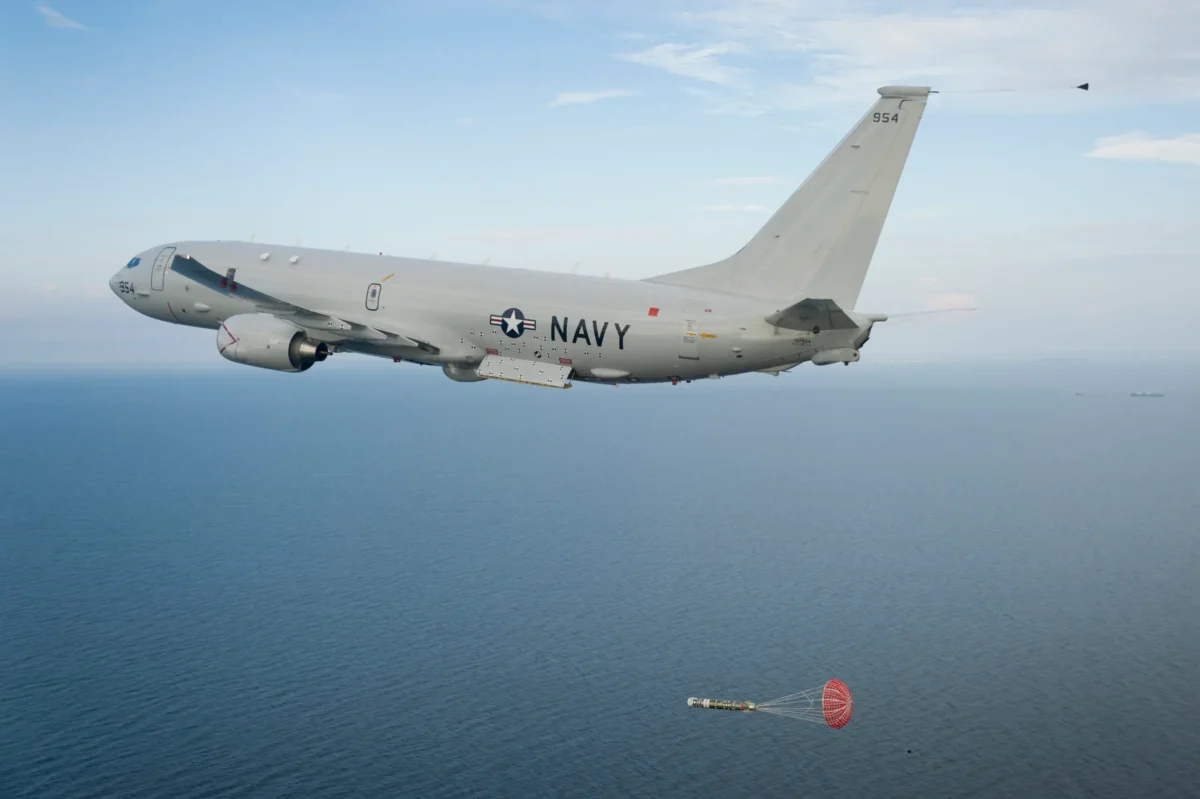
In the water it can get down to roughly 1,500 feet and move at better than 40 knots. It doesn’t need constant guidance either; it listens with its own sonar and will keep going after the target, even if the sub dives or swings away.
Read also: Next-Generation MK 54 MOD 2 Torpedo
For surface targets the P-8 can carry AGM-84 Harpoon missiles on its wings. They fly low over the water (sea-skimming) and can reach roughly 70 nautical miles, so the plane can punch at ships from a fair distance. Depending on how a navy outfits the aircraft, it can also be fitted to drop depth charges or lay mines (if the mission calls for it).
One of the Poseidon’s real advantages is endurance. On a normal patrol it can fly about 1,200 nautical miles out, remain on station for four hours or more, and still return home. If tankers are available, aerial refueling stretches that time even further, letting it watch over whole oceans rather than just nearby waters. The older P-3 Orion could also range far, but the P-8 does it quicker and with sensors that are much more advanced.
Stretching patrols over places like the Indian Ocean or Arctic isn’t easy. With the Poseidon’s range, though, navies can close many of the gaps that used to give submarines room to hide. Of course, even with long legs, it still depends on tankers for the very longest missions, so it isn’t unlimited.
The Poseidon’s speed is one of the things it inherited from its 737 roots. It can cruise around Mach 0.8, or roughly 500 knots, which is a big jump over the old propeller-driven Orion. That extra speed matters; if a submarine or ship shows up far from the patrol area, the plane can get there faster. Instead of chugging along at 300 knots, it can cover the distance in a fraction of the time.
Altitude is part of the picture. The P-8 can get as high as 41,000 feet, which really opens up the radar’s view. Hundreds of miles of ocean can be scanned from above. Still, for things like dropping buoys or weapons, the plane comes down closer to the surface to get the job done. The ability to shift quickly between those altitudes; high for the search, low for the hunt; gives it flexibility that older patrol planes didn’t always have.
Think of the P-8 as more than a submarine hunter; it’s a flying eye and ear for a whole fleet. At its simplest, its ISR (intelligence, surveillance, reconnaissance) job is to find things, confirm what they are, and share that picture with others. It does that with radar, cameras, acoustic gear, and data links that let it push information to ships, other aircraft, or shore command centers in near real time.
So when the P-8 says “there’s something there,” other units can act on that information almost immediately.
In practical terms, that looks like a few concrete things. The AN/APY-10 radar can scan wide areas and cue cameras to zoom in on suspicious contacts. MX-20 or similar EO/IR turrets give clear imagery day or night. The sonobuoy and acoustic suite listens below the surface.
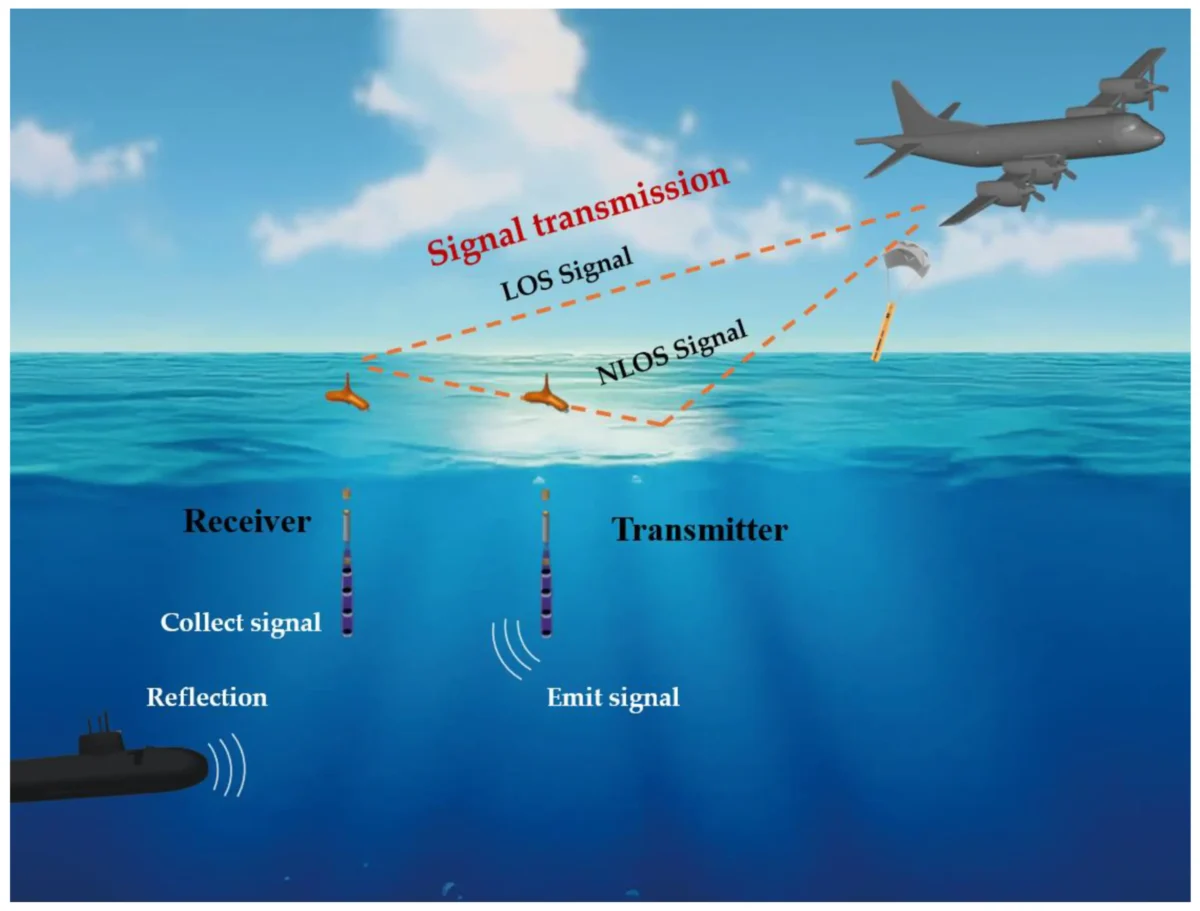
All those sensors are fed into mission consoles where specialists correlate the data. The plane also carries secure radios and tactical datalinks (for example Link-16 on many P-8s), so the tactical picture isn’t stuck on the aircraft; it becomes part of the fleet’s picture.
Because it can carry different sensor loads and weapons, the P-8 is useful in many missions beyond hunting subs. It can do maritime domain awareness, basically spotting and tracking merchant ships, smugglers, or fishing boats that are behaving oddly.
It can provide over-the-horizon targeting, passing precise coordinates to a ship or missile battery that can’t see past the curve of the earth. It’s often used for ELINT/COMINT-style tasks too, listening for radio traffic or radar emissions, though what it can do in that space depends on the navy and how the plane is fitted.
There’s also a humanitarian and law-enforcement angle that sometimes gets missed. Poseidons have been used to search for missing boats, direct rescue helicopters, map oil spills from above, and verify compliance with sanctions or fishing laws.
Because it can cover a lot of sea in one sortie and keep working for hours, it’s often the first asset commanders send when they need a reliable picture quickly.
All that said, it’s not magic. The P-8’s sensors are powerful, but they have limits: sea state, weather, and deliberate countermeasures can make detection harder. And while it can share a great deal of data, the value of that data depends on how well it’s fused with other sources; satellites, ships, drones, and human reporting.