Follow Us:
Follow Us:


Defense Feeds – Romania Eyes 216 Abrams Tanks as it moves forward with one of its largest defense procurement endeavors.
The Ministry of National Defence seeks parliamentary approval to expand its Main Battle Tank program, aiming to replace aging Soviet-era armor, enhance combat readiness, and meet NATO capability goals.
This plan includes acquiring 216 Abrams tanks, support vehicles, ammunition, training systems, and logistic packages.
It also integrates industrial cooperation to produce and maintain these tanks domestically, boosting Romania’s defense industry and ensuring long-term sustainability amid rising regional security challenges.
According to the Ministry of National Defence (MoND), Stage I Phase 2 of the program—worth approximately 458 million US dollars—will outfit a full armored battalion with modern M1A2 SEPv3 Abrams tanks.
This package will include ammunition, machine guns, spare parts, simulation and testing systems, logistical support services and comprehensive training.
The SEPv3 variant is the latest evolution of the battle-proven Abrams platform, featuring enhanced armor protection, upgraded electronics suites, improved targeting systems and more efficient power management, making it one of the most advanced tanks in NATO service.
Phase II is an even bigger undertaking, estimated at 6.48 billion euros (around 7.6 billion US dollars).
It covers the acquisition of 216 Abrams tanks along with 76 derivative vehicles designed to bolster both tank and infantry formations.
Beyond delivering the hardware, this phase also encompasses supply network packages, training facilities, and educational infrastructure to ensure long-term operational capability.
Importantly, the plan also integrates measures for defense-industrial cooperation, allowing components, subsystems and maintenance to be handled inside Romania.
This localization strategy is expected to strengthen the national defense industry, create skilled jobs and improve sustainment efficiency.
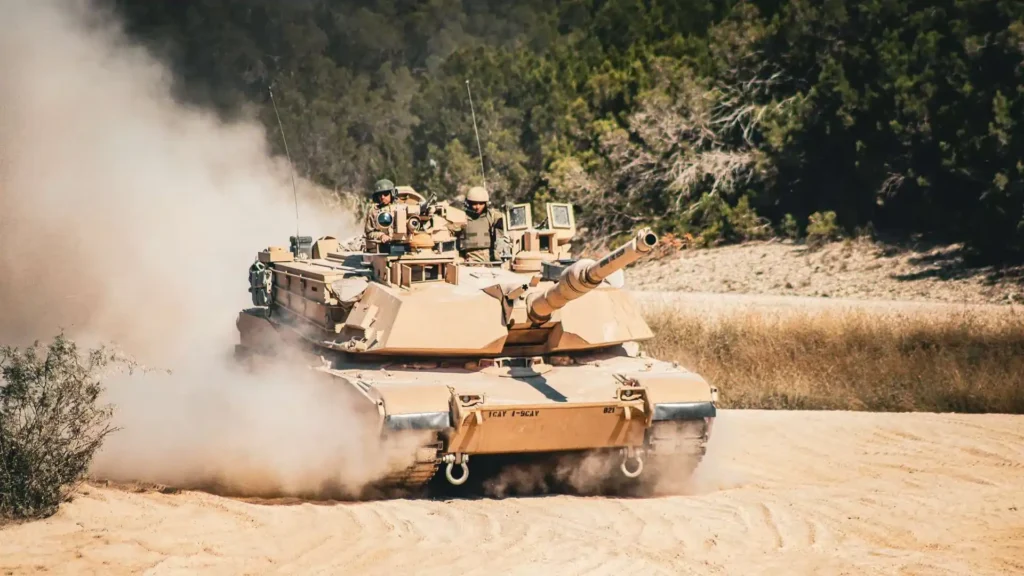
Romania’s shift to Abrams tanks began in 2023 with Stage I Phase 1, which involved securing 54 refurbished M1A2 SEPv3 main battle tanks and 12 derivative chassis from US Army surplus under a government-to-government agreement between Bucharest and Washington.
That deal, worth just over one billion US dollars, is currently in progress with deliveries scheduled to conclude by 2028.
The introduction of the Abrams represents a significant modernization step for the Land Forces, replacing older T-55 and TR-85 tanks that have been in use for decades.
As part of NATO’s collective defense posture, interoperability is critical, and the American-made Abrams offers standardized systems and communications links compatible with allied forces.
These upgrades align with Romania’s Armed Forces Transformation Program, which runs through 2040, and reflect broader efforts to adapt its military to contemporary threats, most notably those arising from Russia’s ongoing aggression against Ukraine.

The scale of the planned acquisition makes it one of Romania’s most ambitious military purchases in decades.
Full implementation would place the country among NATO’s more capable land forces in terms of armored warfare, enhancing deterrence and regional stability.
Modern armor is a core element in combined arms operations, and the Abrams SEPv3’s battlefield survivability, mobility and firepower significantly outclass legacy systems.
Defense officials emphasize that the tanks will not only support Romania’s national defense requirements but also allow it to better fulfill commitments under NATO and EU defense planning frameworks.
The local industrial participation provisions in Phase II are a strategic choice, ensuring Romania’s defense sector benefits from technology transfer, maintenance contracts, and potentially future export capabilities.
If Parliament approves the MoND’s proposal, work could begin on finalizing contracts as early as 2026, paving the way for a steady rollout of equipment over the following decade.
For Romania, this modernized armored fleet would be a milestone in the long-term vision to transform its armed forces into a modern, well-equipped, and fully interoperable military force ready to respond to evolving security challenges in Eastern Europe.