Follow Us:
Follow Us:

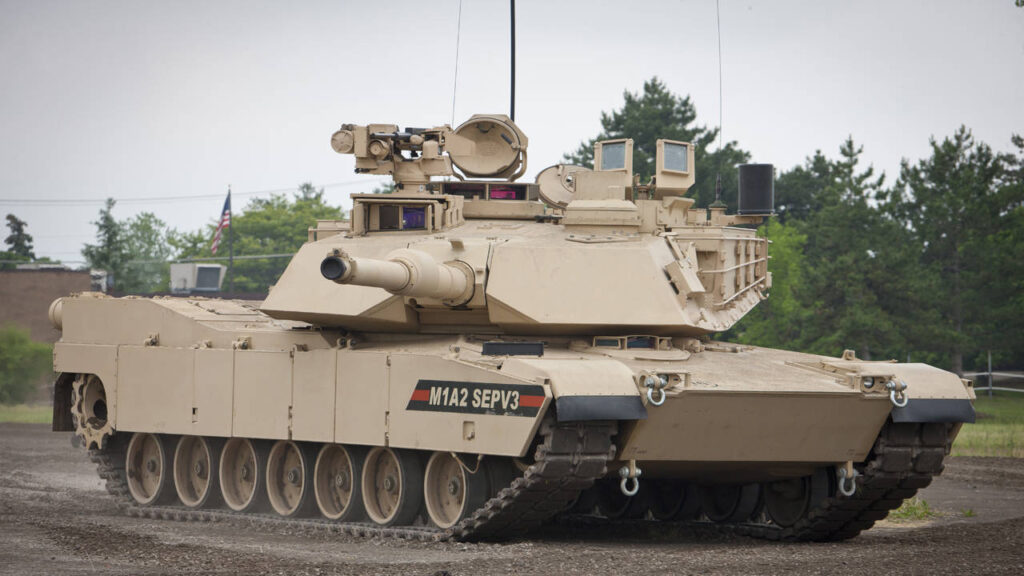
The M1A2 Abrams has been in service for decades, and on the surface, it might seem like the kind of platform that modern warfare would have already left behind.
After all, military conversations today are filled with talk of drone warfare, AI-driven targeting systems, and high-speed missile threats. Yet the Abrams continues to stand at the center of America’s armored warfare strategy, and not just out of tradition.
What’s surprising is how this tank, originally designed in the late 20th century, continues to evolve in ways that many defense analysts believe keep it ahead of the curve. Some have even argued that the most recent iteration, known as the M1A2 SEP v3, may be the most advanced and survivable tank in the world today.
That may sound like an overstatement, especially in an age where mobility and networks often seem to trump sheer firepower, but the data and battlefield feedback suggest otherwise.
Recent events in Ukraine have unexpectedly reignited global interest in heavy armor. While some predicted the death of the main battle tank, the brutal ground fighting there has shown that tanks still play a vital role, though only when paired with the right technology and doctrine.
The Abrams, with its powerful gun, layered armor, and sophisticated battlefield sensors, may represent exactly the kind of hybrid platform needed in this new age of warfare.
So why does the Abrams endure? What makes it not only relevant, but arguably essential in today’s strategic landscape? The answers may not be what you expect.
To understand why the M1A2 Abrams tank still matters today, it helps to look back at where it came from. The story of the Abrams began in the uneasy decades of the Cold War, when the U.S. and its NATO allies were preparing for a potential armored confrontation with the Soviet Union across the plains of Europe.
By the 1970s, the U.S. Army had come to the conclusion that its main battle tanks, especially the M60 Patton series, were no longer enough to counter increasingly advanced Soviet armor.
There were concerns that American tanks might be outgunned and out-armored in a future war, particularly against vehicles like the T-72, which was fast, powerful, and being produced in large numbers. So the U.S. military needed something radically better.
That’s where the M1 Abrams tank enters the picture. Officially adopted in 1980, the M1 was a bold leap forward. It featured composite armor (including layers of depleted uranium in later models), a digital fire control system, and a unique gas turbine engine.
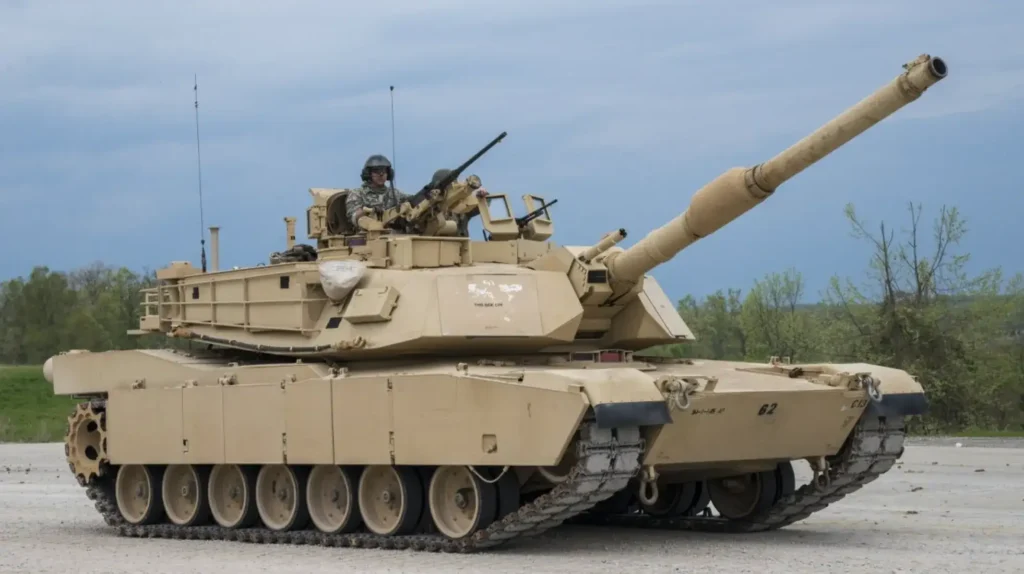
Compared to its predecessors, it was faster, better protected, and far more advanced in terms of crew survivability. Some military historians suggest that this shift marked one of the biggest leaps in tank development since World War II.
The first major upgrade came with the M1A1, introduced in the mid-1980s. This variant replaced the original 105mm gun with a more powerful 120mm smoothbore cannon, based on a German design, and introduced improved armor packages. The timing was significant.
The M1A1 arrived just as Cold War tensions were beginning to shift, and it would soon see its first real test in the deserts of the Middle East.
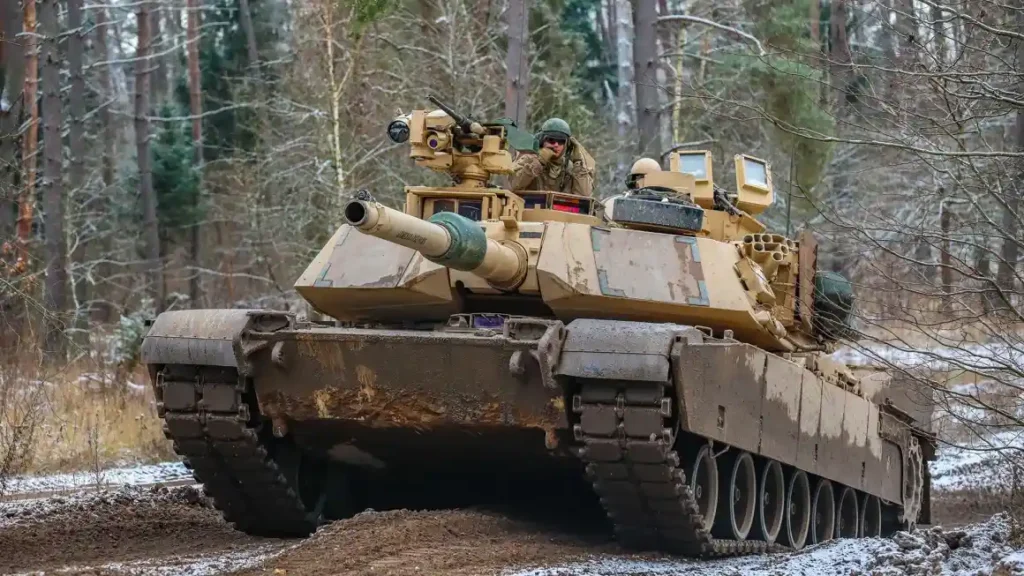
During the 1991 Gulf War, the M1A1 proved devastatingly effective. In battles like 73 Easting, Abrams tanks reportedly destroyed Iraqi armored vehicles at long range before they could even return fire. This performance arguably cemented the Abrams’ reputation as one of the most dominant tanks of the era.
Still, the Army wasn’t done refining the platform.
The M1A2 Abrams variant emerged in the 1990s as a more networked, digitally capable tank. It retained the same powerful gun and armor but introduced significant internal upgrades: an improved fire control system, integrated command-and-control features, and better crew interfaces.
Some analysts have described the M1A2 as more of a battlefield “node” than a traditional tank. This is a vehicle that could not only fight, but also help coordinate the larger battle around it.
Over the years, the M1A2 has gone through multiple iterations, with perhaps the most significant being the M1A2 SEP v3 Abrams. This version includes a suite of M1A2 Abrams upgrades focused on survivability, lethality, and digital integration.
Read also: AbramsX: The Future of Tank Warfare? What You Need to Know
While it may not look radically different from the outside, the SEP v3 has reportedly improved power management, better armor against emerging threats (including drones and IEDs), and advanced data systems that allow it to communicate seamlessly with other platforms on the battlefield.
In a sense, the M1 Abrams series has never stopped evolving. What began as a response to Cold War fears has gradually transformed into a platform designed to meet the unpredictable challenges of modern warfare.
And while some experts suggest that the age of heavy armor may be winding down, the Abrams continues to suggest otherwise. It’s quietly adapting, quietly surviving, and possibly still setting the standard for what a modern main battle tank can be.
The M1A2 Abrams tank has often been described as a “rolling fortress,” and while that phrase may sound dramatic, there is probably some truth to it. What makes this platform so formidable is the combination of armor, firepower, mobility, and advanced systems working in concert.
Each element has been carefully engineered over time, and together they help explain why the M1A2 Abrams specs continue to set a high benchmark for main battle tanks around the world.
The Abrams has long been known for its heavy protection, and the M1A2 variant continues that legacy. While exact details are classified, most open-source assessments suggest the tank uses composite armor layered with ceramics, steel, and in some variants, depleted uranium inserts.
This combination is believed to offer strong protection against both kinetic energy penetrators and shaped-charge explosives.
The M1A2 SEP v3 has reportedly enhanced this even further with upgraded armor modules and additional underbelly protection, likely in response to the increasing use of IEDs and top-attack munitions. It might not be invulnerable, but it does appear to be one of the most survivable tanks currently fielded.
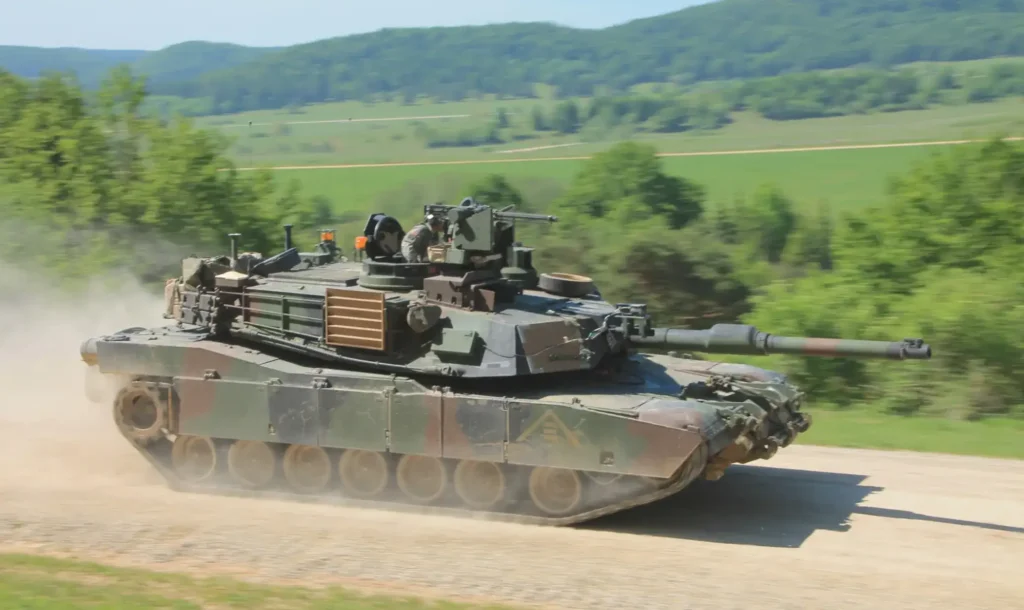
The Abrams was always meant to deliver a powerful punch, and the M1A2 Abrams’ firepower reflects that intent. The tank is armed with the 120mm M256 smoothbore cannon, capable of firing a variety of ammunition types, including armor-piercing fin-stabilized rounds (APFSDS) and high-explosive anti-tank projectiles.
In combat scenarios, this weapon has been known to engage and destroy enemy armor at long ranges—some reports suggest distances exceeding 3,000 meters, though actual battlefield effectiveness can vary depending on terrain, visibility, and the opponent.
In addition to its main gun, the M1A2 carries a coaxial 7.62mm machine gun, a loader’s 7.62mm weapon, and a commander’s .50-caliber machine gun for close-in defense.
Read also: M1E3 Abrams Tank: Specs and Features of the Future U.S. Army MBT
The mobility is often overlooked in discussions about tanks. This tank, despite weighing over 70 tons (the estimated M1A2 Abrams weight varies slightly by variant), the tank is surprisingly nimble for its size. That’s largely due to its powerpack, a gas turbine engine known as the Honeywell AGT1500.
This M1A2 Abrams engine delivers around 1,500 horsepower, enabling the tank to reach speeds of roughly 40 to 45 miles per hour on roads, and perhaps 30 mph off-road.
While the engine is thirsty or fuel efficiency is not its strength, it provides excellent acceleration and relatively smooth operation, even in extreme environments like deserts or rugged terrain.
The crew layout also reflects lessons learned over decades of armored warfare. The M1A2 typically operates with four crew members: commander, gunner, loader, and driver.
Each crew station is ergonomically designed to maximize efficiency and communication, and the commander benefits from a suite of tools that allow for rapid decision-making on the move. In modern variants like the SEP v3, the digital displays and internal systems likely offer improved coordination between crew members and external forces.
Perhaps what truly separates the M1A2 Abrams tank from older models and many global counterparts is its growing network of sensors and electronic systems. These include thermal imaging sights, laser rangefinders, GPS navigation, and various battlefield management systems.
The SEP v3 version is said to feature improved target acquisition capabilities, enhanced electronic warfare resilience, and better integration with drones and UAVs.
| Category | Details |
| Crew | 4 (Commander, Gunner, Loader, Driver) |
| Weight | Approx. 73.6 tons (66.8 metric tonnes) |
| Main Armament | 120mm M256 Smoothbore Cannon |
| Secondary Armament | • 1× .50 cal (12.7mm) M2 machine gun • 2× 7.62mmM240 machine guns |
| Engine | Honeywell AGT1500 Gas Turbine Engine (1,500 horsepower) |
| Top Speed | ~42 mph (67 km/h) on road~30 mph (48 km/h) off-road |
| Operational Range | ~265 miles (426 km) with internal fuel |
| Armor | Composite armor with depleted uranium layers (classified). Enhanced in SEP v3 with improved underbody and turret protection |
| Fire Control System | Computerized, Laser rangefinder, Thermal imaging, stabilized gun |
| Sensors & Targeting | • Commander’s Independent Thermal Viewer (CITV) • Gunner’s Primary Sight (GPS • Blue Force Tracker and battlefield management systems |
| Upgrades in SEP v3 | • Improved power generation & management • Enhanced armor • Ammunition data link • Networking capabilities • Optional Trophy Active Protection System (APS) |
| Fuel Type | JP-8 jet fuel (multi-fuel capable) |
The M1A2 SEP V2 has already brought the Abrams into the digital age. It introduced better displays, upgraded communications, improved thermal sights, and a stronger power system.
But as warfare continues to shift, especially with the rise of drones, top-attack weapons, and sensor-rich environments, the SEP V3 may represent a more urgent response to emerging threats.
Perhaps the most important area of improvement in the M1A2 SEP V3 Abrams is battlefield survivability. This version reportedly adds enhanced armor, including better underbody protection to counter roadside bombs and mines.
While details remain classified, many analysts believe the turret armor has also been upgraded to handle newer anti-tank threats. These changes suggest that the Army is preparing the Abrams to survive in high-threat, multi-domain environments.
Another critical piece of the puzzle is the integration of active protection systems (APS). The Trophy APS, originally developed in Israel, has been tested and in some cases fielded on Abrams platforms. It offers a last line of defense by detecting incoming projectiles and intercepting them before impact. While not standard on every SEP V3, its inclusion points to the growing recognition that armor alone may no longer be enough.
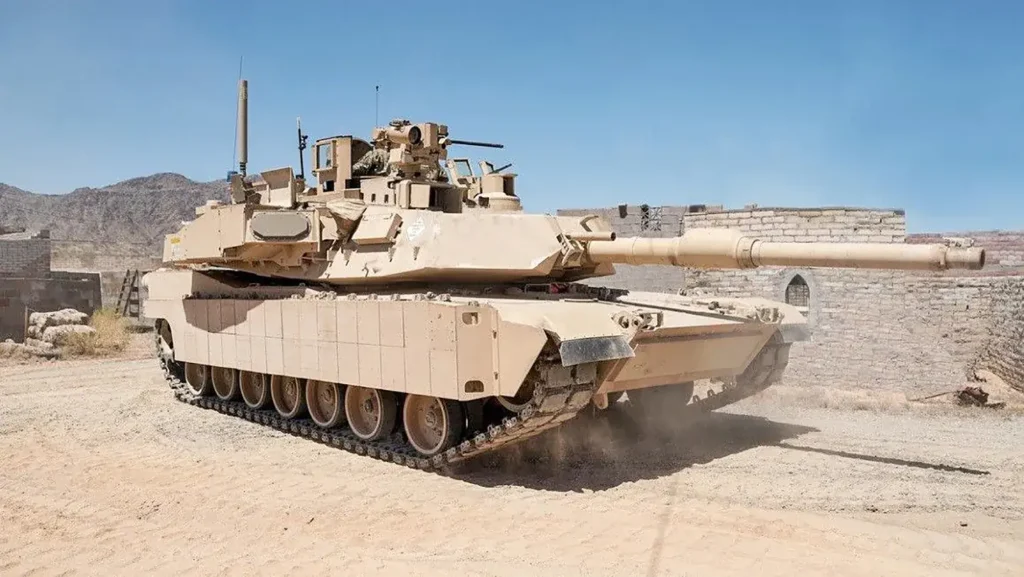
In terms of M1A2 Abrams upgrades, the SEP V3 also includes a new ammunition data link, improved power generation, and better connectivity for joint operations. These features may allow the tank to not only fight more effectively, but also operate as a real-time node in larger tactical networks.
The M1A1 and M1A2 Abrams tanks were first put to the test during the 1991 Gulf War. There, they reportedly outmatched Iraqi T-72s, often destroying enemy armor from beyond visual range. The success of the Abrams in that conflict helped cement its place as a premier main battle tank.
In the years that followed, Abrams tanks, especially the M1A2 variants, played a key role in both the Iraq War and the war in Afghanistan.
In urban combat settings like Fallujah or during wide-ranging patrols in hostile terrain, Abrams units were frequently called upon to support infantry, clear roads, and provide mobile firepower under fire.
However, these wars also exposed the tank’s limitations.
In Afghanistan, for example, the mountainous terrain and IED threats created serious challenges. Some analysts suggest that while the Abrams remained effective, it had to rely heavily on supporting logistics and air cover. Even so, its heavy armor likely helped save lives, especially during ambushes and IED strikes.
The Abrams’ role in Ukraine, as of 2024–2025, appears more complex. While a number of M1A1 variants have reportedly been delivered to Ukraine, their impact is still unfolding. Early reports suggest that terrain, maintenance demands, and drone warfare are all influencing how these tanks are being deployed.
It’s too early to draw firm conclusions, but Ukraine may become a critical proving ground for whether legacy tanks like the Abrams can adapt to rapidly evolving battlefields.
Read also: Abrams Tanks Are Not the Best Fit for Ukraine: Here’s Why
Internationally, the Abrams tank has also found a home in several export markets. Egypt has operated hundreds of Abrams tanks since the 1990s, many of them assembled locally under U.S. license. Poland recently made headlines with its decision to acquire over 300 M1A2 SEP v3 tanks, likely signaling a shift toward NATO-standard platforms in response to regional tensions.
Taiwan is also set to receive dozens of M1A2T variants, a custom version adapted for its island terrain and strategic needs. These deals suggest that despite its age, the Abrams still carries enough weight—figuratively and literally—to reassure U.S. allies facing conventional threats.
Any serious conversation about modern tanks eventually circles back to the question: how does the M1A2 Abrams tank compare to its likely adversaries? Among these, Russia’s T-90 is often brought up.
Both tanks represent the latest iterations of long-standing design philosophies, one rooted in U.S. doctrine prioritizing crew survivability and combined arms warfare, and the other shaped by Soviet-era priorities like mobility, cost-efficiency, and sheer numbers. While it’s difficult to make definitive judgments, especially since performance can be deeply affected by terrain, training, and tactics—some comparisons can still be drawn.
One of the Abrams’ most consistent strengths lies in its protection and survivability. The M1A2, particularly in the SEP v3 configuration, is believed to carry significantly more advanced composite and reactive armor than the T-90, and has optional integration of active protection systems like Trophy.
While Russia has made strides with reactive armor and soft-kill countermeasures on the T-90M, the Abrams tank is generally thought to offer a more robust shield against both kinetic penetrators and modern anti-tank guided missiles. That said, this heavier armor also comes with trade-offs, especially in terms of fuel consumption and logistical footprint.
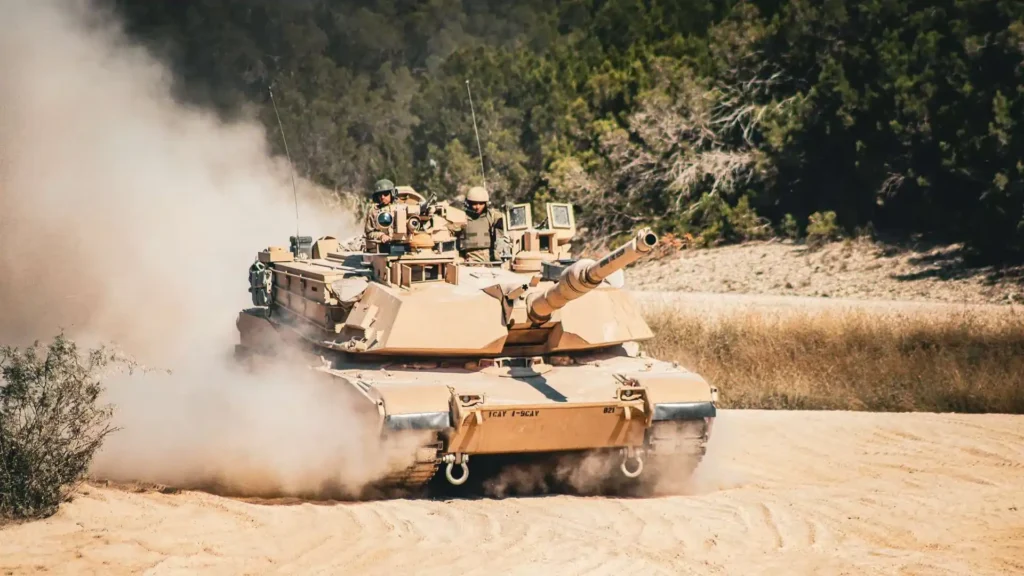
In terms of firepower, both tanks field 120mm- and 125mm-caliber smoothbore guns, respectively, and are capable of firing a variety of modern ammunition types.
The M1A2 Abrams features a manually loaded gun, whereas the T-90 uses an autoloader, allowing for a smaller crew and slightly lighter profile. While the Abrams is known for its precision at longer ranges, the T-90’s smaller silhouette and reactive armor give it a better chance of avoiding detection and surviving first contact, at least in theory.
Mobility is another area where opinions differ. The M1A2 Abrams engine, a gas turbine producing 1,500 horsepower, gives the tank solid speed and acceleration for its weight. However, it is known for being fuel-hungry and somewhat maintenance-intensive.
The T-90, by contrast, is lighter, roughly 45 to 50 tons depending on configuration—and generally easier to transport and sustain in the field. That could make it more agile in certain conditions, particularly in areas with poor infrastructure.
However, perhaps the most important difference is not what’s on paper, but how the tanks are supported. The Abrams tank is typically used in conjunction with powerful ISR (intelligence, surveillance, and reconnaissance) assets, air cover, and highly networked ground forces.
The T-90, while capable, may not always operate in environments with the same level of tactical integration or logistical depth.
So, which is better? It likely depends on the context. The M1 Abrams tank may have an edge in direct confrontation, particularly in open terrain, with strong support, but the T-90’s lighter weight, lower cost, and high production volume could make it more flexible in prolonged conflicts.