Follow Us:
Follow Us:

Defense Feeds – Pakistan inducts Chinese Z-10ME attack helicopters, replacing aging Cobras and marking a major step in modernizing its combat helicopter fleet.
Pakistan inducts Chinese Z-10ME attack helicopters in a significant upgrade to its battlefield capabilities, marking a key shift in the country’s rotary-wing strike force.
Visual evidence—including images and videos shared on social media—confirms the arrival of these advanced Chinese helicopters, painted in a dark camouflage scheme and clearly bearing Pakistan Army Aviation Corps insignia.
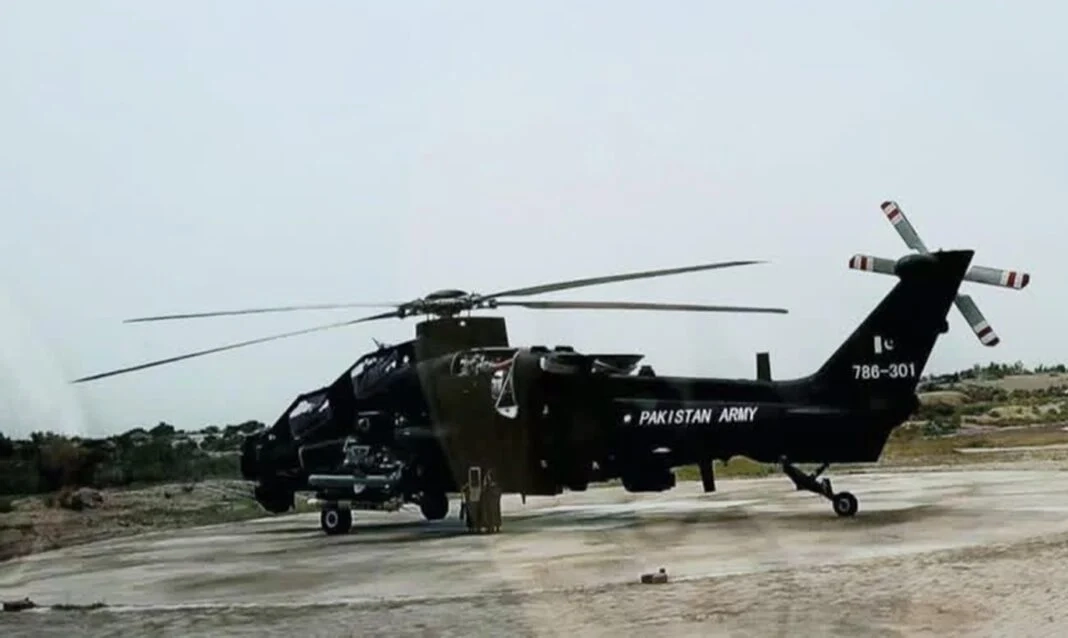
The Z-10ME attack helicopter, an export variant of China’s indigenous Z-10 developed by the Changhe Aircraft Industries Corporation under AVIC (Aviation Industry Corporation of China), is now officially in Pakistan’s arsenal.
This delivery represents the first operational deployment of the Z-10ME in the country, ending years of speculation, field trials, and procurement rumors.
It also highlights the strengthening of Pakistan-China military cooperation, as the Pakistan Army continues transitioning away from its aging fleet of AH-1F Cobra helicopters—once the backbone of its close air support capability.
This strategic acquisition not only boosts Pakistan’s air attack capabilities but also reflects a growing regional trend.
As traditional Western defense suppliers grow increasingly constrained by political considerations, countries like Pakistan are turning to Chinese defense exports that offer modern systems, faster deliveries, and fewer geopolitical obstacles.
The Pakistan Army has relied on the AH-1F Cobra helicopters since the early 1980s. Though they served well over decades of counterinsurgency and border security operations, the aging fleet has become increasingly difficult and expensive to maintain.
Originally manufactured in the United States, the Cobras were robust platforms, but their limitations in modern battlefield environments have long been acknowledged.
In 2015, the U.S. had approved a sale of the more advanced AH-1Z Viper helicopters to Pakistan.
However, the deal was later suspended due to rising tensions between Washington and Islamabad, particularly surrounding security cooperation and regional politics. This diplomatic freeze created a capability gap in Pakistan’s attack helicopter fleet.
China, a long-time strategic ally of Pakistan, quickly emerged as an alternative supplier. Reports and defense rumors over the past few years pointed to Pakistan’s growing interest in the Chinese Z-10 series.
Trials and test evaluations were carried out, but no formal announcement followed—until now, when credible imagery confirmed the presence of Z-10MEs on Pakistani soil.
The lack of official government statements from either Beijing or Islamabad has not dampened the significance of the development.
According to defense observers, the appearance of operational aircraft indicates that the program has moved from evaluation to implementation.
The Z-10ME is a significant leap from earlier Z-10 variants. Designed specifically for export, it includes upgrades tailored for rugged and high-altitude operational environments like those found in northern Pakistan and bordering regions.
Some of the key improvements include:
Unlike earlier Z-10 models, the Z-10ME lacks the mast-mounted millimeter-wave radar dome seen in some configurations. However, this does not necessarily diminish its operational capability.
The model acquired by Pakistan is believed to retain high-end targeting systems and modern avionics, offering an effective replacement for the outgoing Cobras.
Visually, the helicopters feature a dark, stealth-inspired camouflage, consistent with Chinese Army aviation livery.
Their deployment aligns with broader modernization goals set by the Pakistan Army to strengthen its rapid-response and close air support capabilities.
This induction of the Z-10ME also speaks to the growing military-industrial relationship between China and Pakistan.
Over the past decade, the two nations have collaborated on several major defense projects, most notably the co-development of the JF-17 Thunder fighter jet.
The delivery of Z-10MEs may be another milestone in a long-term strategy to reduce dependency on Western military suppliers.
Although the exact number of Z-10MEs delivered has not been officially disclosed, regional analysts suggest this could be the beginning of a phased procurement program.
If successful in field trials and early deployment, the Pakistan Army may order more units to fully replace its entire legacy fleet of Cobras.
For Beijing, this deal also represents a successful entry of its attack helicopter platform into an export market long dominated by Western arms. It reflects China’s rising profile as a defense exporter in Asia, Africa, and the Middle East.
For Islamabad, acquiring the Z-10ME offers a practical solution to an urgent operational need—delivering a capable, modern attack helicopter without the political and bureaucratic hurdles that often come with Western equipment.
As of now, operational readiness and full deployment timelines remain uncertain, and independent verification of their active service status is still lacking.
However, the mere presence of Z-10MEs with Pakistani markings on domestic soil confirms what many analysts have anticipated—a new chapter in Pakistan’s air combat doctrine.