Follow Us:
Follow Us:

Few ships manage to stay relevant for thirty-plus years, but the Arleigh Burke class has. The first one entered service just as the Cold War ended, at a time when the U.S. Navy wasn’t sure what kind of wars it would fight next.
Three decades after the first Arleigh Burke joined the fleet, the class is still being refined rather than retired. In late 2025, the Navy’s newest variant, USS Ted Stevens (DDG-128), completed trials that marked the latest phase of the Flight III evolution.
These destroyers introduce the AN/SPY-6 radar, built for spotting targets that earlier sensors struggled with, from stealth aircraft to high-speed missile threats.
The continued work at Huntington Ingalls and Bath Iron Works shows how adaptable the design has been; it has turned into a long-running industrial rhythm rather than a closed chapter.
Each new iteration of the Arleigh Burke pushes the limits of a hull first conceived in the late 1980s. Costs have climbed, timelines have slipped, and engineers are having to work harder to integrate systems that the original designers never imagined.
Some observers see the Navy’s continued reliance on the class as a sign of symptom of institutional inertia (or a reluctance to take risks on unproven replacements).
Others argue it’s simply a practical choice: the Burke works, and replacing a working system is rarely easy to justify.
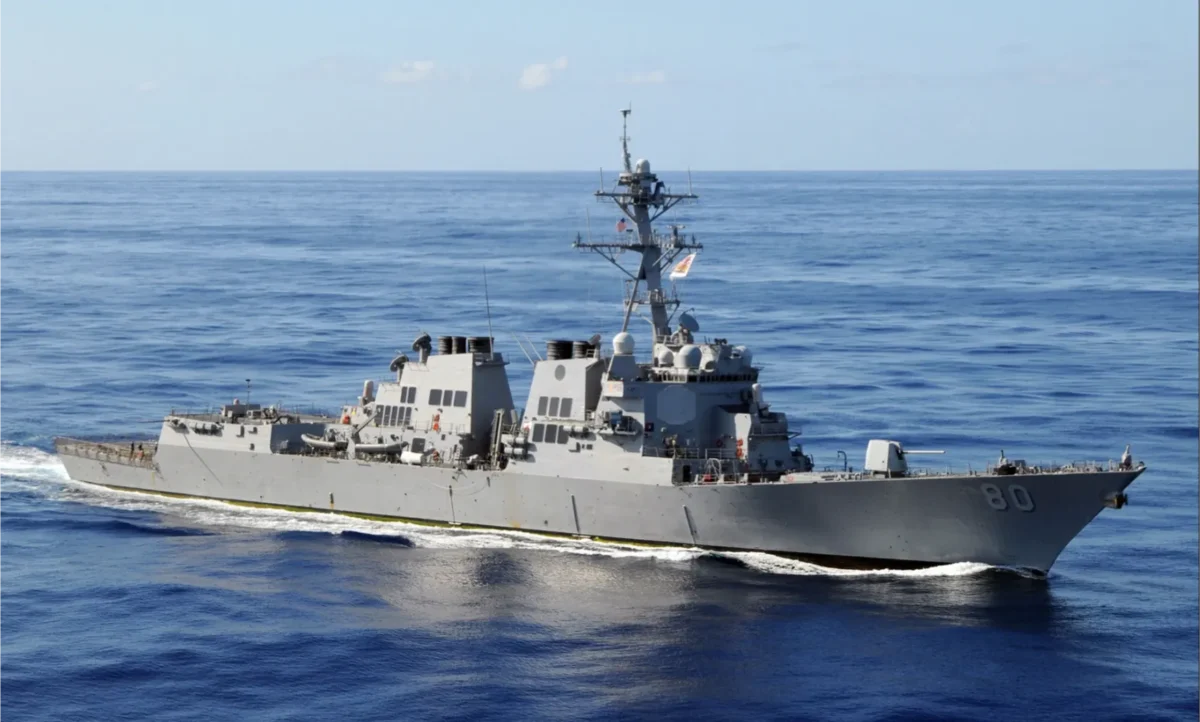
The Arleigh Burke endures because it works, or at least, it works well enough. Its design manages to balance offense and defense in a way few warships can. With the Aegis Combat System, Mk 41 Vertical Launch System, and an array of advanced radars, a single destroyer can take on air, surface, and submarine threats and even join in ballistic-missile defense.
That range of missions is what keeps it essential, though it also means every new upgrade piles more weight onto an aging but remarkably adaptable frame.
What exactly keeps Arleigh Burke in the fight after all these years? Is it because the ship has evolved through layers of smart engineering and steady upgrades?
To answer this, it helps to look at five main technologies that define the class. Each one a piece of the puzzle that’s kept it effective despite decades of change in naval warfare.
The Arleigh Burke-class destroyer came along in a strange moment. The Cold War had just ended, and the Navy suddenly didn’t have the rival it had trained for.
For the first time in decades, America’s sailors were preparing for a war that didn’t exist yet. They built a destroyer that could handle almost anything. It was strong, all steel, and smart enough to fight multiple battles at once.
So that’s where the DDG-51 class came from. It was named after Admiral Arleigh Burke, a World War II commander who championed fast, aggressive destroyer tactics. The ship that took his name broke a few rules. Instead of the lightweight aluminum seen on earlier designs, it went back to all-steel construction; heavier, but much tougher.
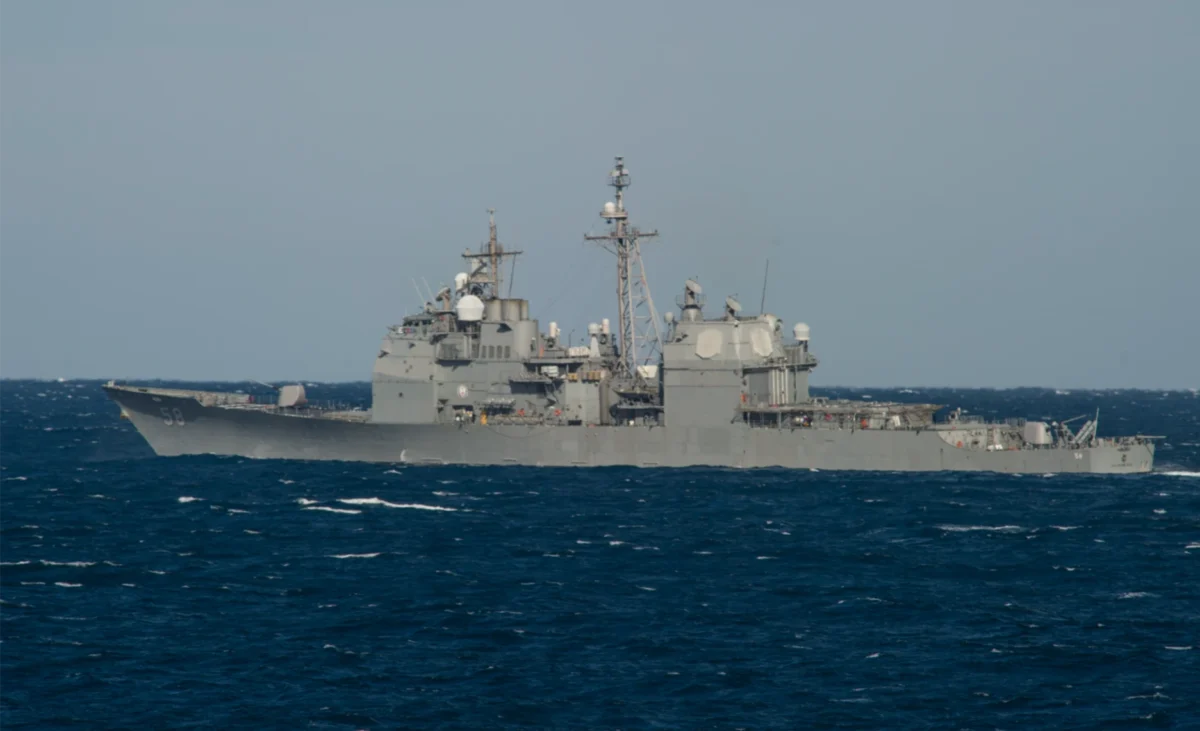
This destroyer could switch roles fast: anti-air, anti-submarine, surface combat, all handled through the same network. The secret was Aegis Combat System, the computer system that linked its sensors and weapons so the crew could spot and deal with multiple targets almost instantly.
The Arleigh Burke has ended up being the Navy’s steady hand through decades of change. More than seventy of these destroyers have hit the water, and shipyards are still building new ones.
Each new version brings some kind of upgrade: sharper radar, stronger missiles, smarter systems. But the ship’s character hasn’t really changed. It’s steady, adaptable, and tough enough to matter in almost any fight.
Read also: USS Zumwalt DDG-1000: America’s Most Advanced Destroyer
Maybe that’s the secret. It’s not the flashiest destroyer, and it’s definitely not the newest idea. But it’s reliable. And in a world where technology moves faster than trust, reliability is a kind of power on its own.
You could say Aegis is the brain of Arleigh Burke. It takes in radar and sensor data, figures out what’s going on, and helps the crew react fast. When it first showed up decades ago, it changed how the Navy handled threats. On these destroyers, Aegis ties everything together so the ship can protect itself and sometimes the whole group around it.
If you strip it down, Aegis is what keeps the ship thinking straight. The radar might catch a blip (e.g., something fast, small, and possibly dangerous), and Aegis jumps into action. It starts guessing what that thing could be, comparing its speed, height, and direction to patterns it already knows. Maybe it’s an incoming missile, maybe it’s nothing.
Then it matches that information with the right weapon: perhaps a SM-2 or SM-6 missile from the Mk 41 Vertical Launch System, or a burst from the close-in Phalanx gun if the threat gets too close. The whole process happens so quickly that most of this happens before a human even says a word.
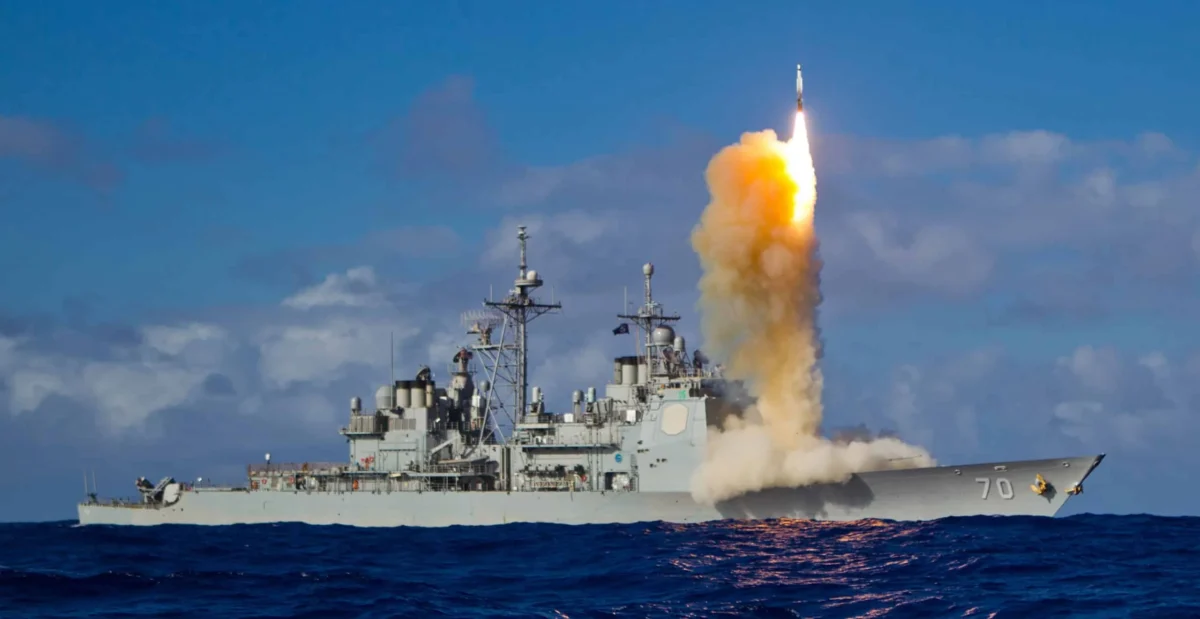
That’s what makes the Aegis weapon system so effective. It turns a destroyer into something close to a thinking machine. Everything is connected: the radars on the mast, the missiles below deck, the sonar deep in the hull, all feeding into the same decision loop. This gives the Arleigh Burke the ability to fight on several fronts at once. It can track a submarine beneath the waves, engage a hostile jet overhead, and still be ready to intercept a ballistic missile hundreds of miles away.
The system’s role in ballistic missile defense (BMD) might be its most demanding job yet. Aegis-equipped destroyers use upgraded software and long-range interceptors to shoot down missiles during the midcourse phase, essentially, while they’re flying through space.
This Aegis system is what lets American ships quietly build a defensive line across oceans, from the waters near Japan to the Mediterranean. The hypersonic and complex multi-missile strikes still pose a problem, but it remains one of the few systems on Earth that has actually intercepted real missiles in testing, which says a lot about its maturity.
What’s interesting about Aegis is how much it’s changed over time. The version used on the first Arleigh Burkes back in the ’90s and the one running on the new Flight III ships are barely comparable.
The newer setup, working with the AN/SPY-6 radar, is said to spot much smaller targets and at almost double the range. Still, the core idea hasn’t really changed; see what’s coming, make a decision fast, and strike before the enemy can.
If Aegis is the destroyer’s brain, the AN/SPY radar is its eyes, and over the years, those eyes have gotten a serious upgrade.
The original AN/SPY-1D radar, which equipped the early Arleigh Burke destroyers, was already impressive for its time. It used what’s called a phased-array system. Instead of one radar dish that turns to scan the sky, it used thousands of small, fixed antenna elements that could steer radar beams electronically.

Think of it like having a spotlight that can instantly swivel and focus in any direction, tracking hundreds of targets at once without moving an inch. That ability gave the Arleigh Burke its reputation for “seeing the unseen,” whether it was an incoming missile skimming over the waves or a jet flying high above the clouds.
The new AN/SPY-6, now being installed on the Flight III destroyers, takes that same concept and scales it up dramatically.
Each radar face is made up of modular “building blocks,” which an advanced digital radar arrays that can detect smaller, faster, and stealthier targets at much longer ranges. The difference is a bit like upgrading from a sharp pair of eyes to an entire network of telescopes that all share what they see in real time.
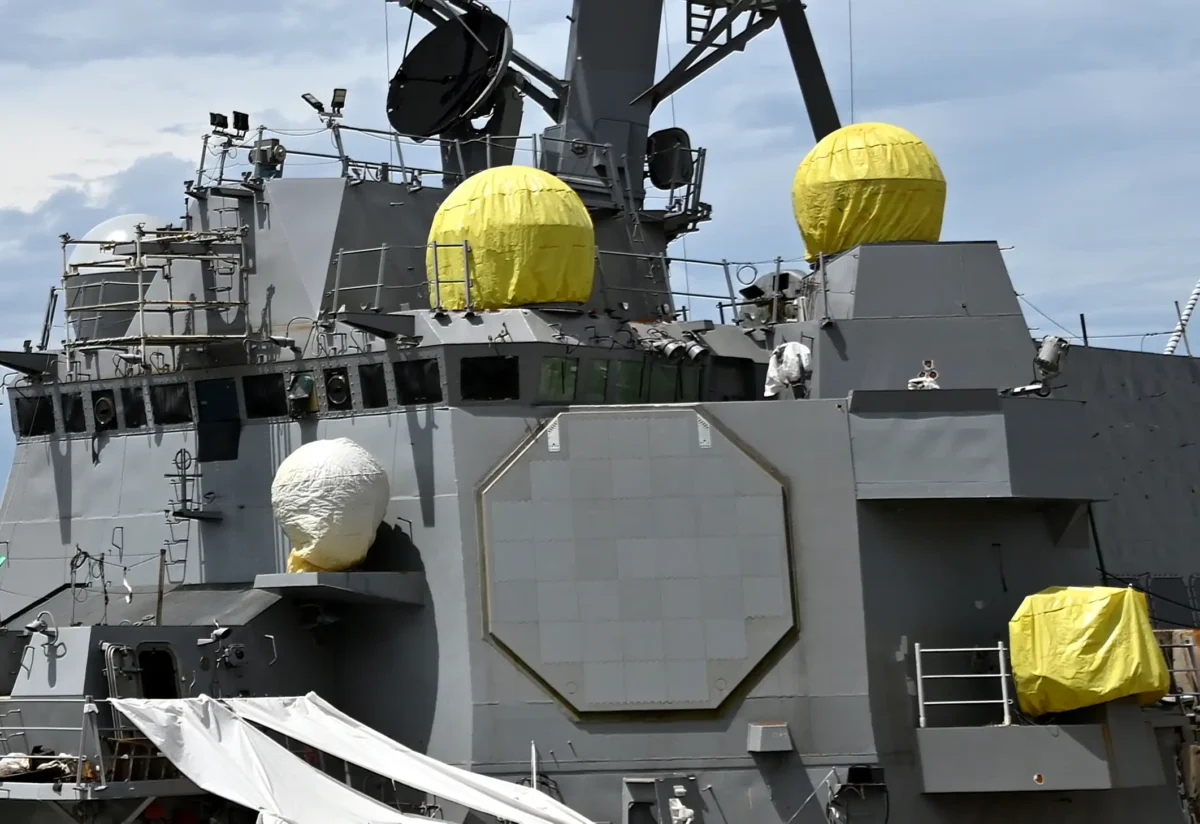
The SPY-6 radar has changed what the Burke can actually see. The radar can follow a ballistic missile from hundreds of miles out, yet still track a drone buzzing near the waves. It’s also designed to shrug off most electronic interference.
Moving from the old SPY-1 to the SPY-6 basically takes the destroyer from “good eyesight” to “near-total vision.” That upgrade is what keeps a design from the last century useful against today’s faster, smarter weapons.
If the Aegis system is the brain and the radar is the eyes, then the Mk 41 Vertical Launch System or VLS is the Arleigh Burke’s muscle.
Each Arleigh Burke destroyer can carry around 96 launch cells, basically like missile tubes built right into the deck. Instead of the older rotating launchers, these cells fire straight up, which means the ship doesn’t have to turn before responding to a threat. When the idea first appeared, it changed how modern warships fought—and even now, it’s a big reason why the Burke still feels so flexible.
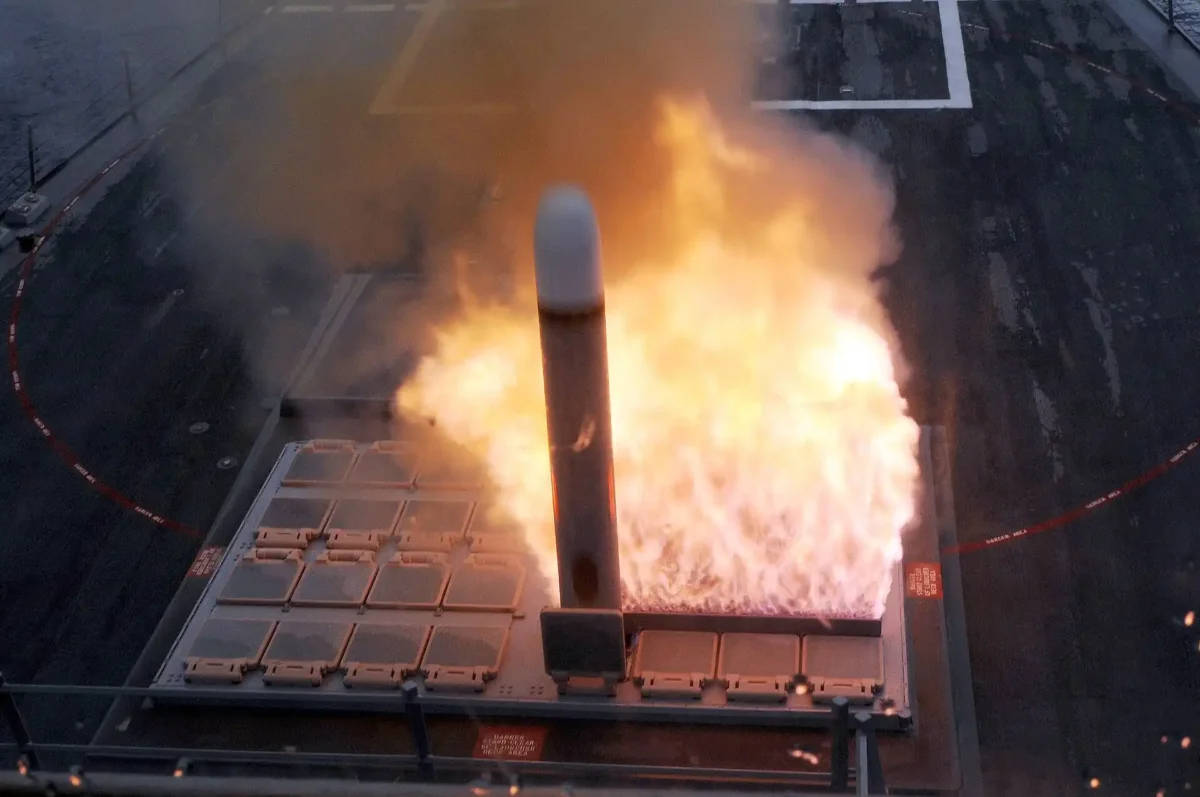
What makes the Mk 41 system special is how many different missiles it can handle. The crew might load Tomahawks if the job is to hit something on land. For air or missile defense, they’d use SM-2 or SM-6 missiles instead.
Read also: Tomahawk Missile: U.S. Navy’s Long-Range Precision Strike Weapon
And if there’s a submarine threat, they can fire ASROC torpedoes from the same setup. It’s one launcher doing all that; the same launcher can support long-range strikes, intercept fast aerial threats, or take out underwater targets, all without changing the hardware.
In real life, that flexibility means Burke can switch jobs in no time. It might be firing Tomahawks at a target deep inland one moment, and just a few minutes later, it’s turning around to shoot down an incoming missile. Of course, some analysts note that the VLS’s cell count and reload limitations could become a challenge in longer conflicts, especially against swarm tactics or mass missile attacks.
One of the clever things about the Arleigh Burke’s design is that it was built to be both tough and hard to spot. It’s still a 9,000-ton hunk of steel cutting through the ocean, but the Navy tried to make it less obvious on enemy radar.
The secret mostly comes down to shape. The ship’s surfaces are angled so radar waves scatter off in other directions instead of returning to the source. That means on a radar screen, the Burke doesn’t stand out as sharply, it might just show up as a faint blur.
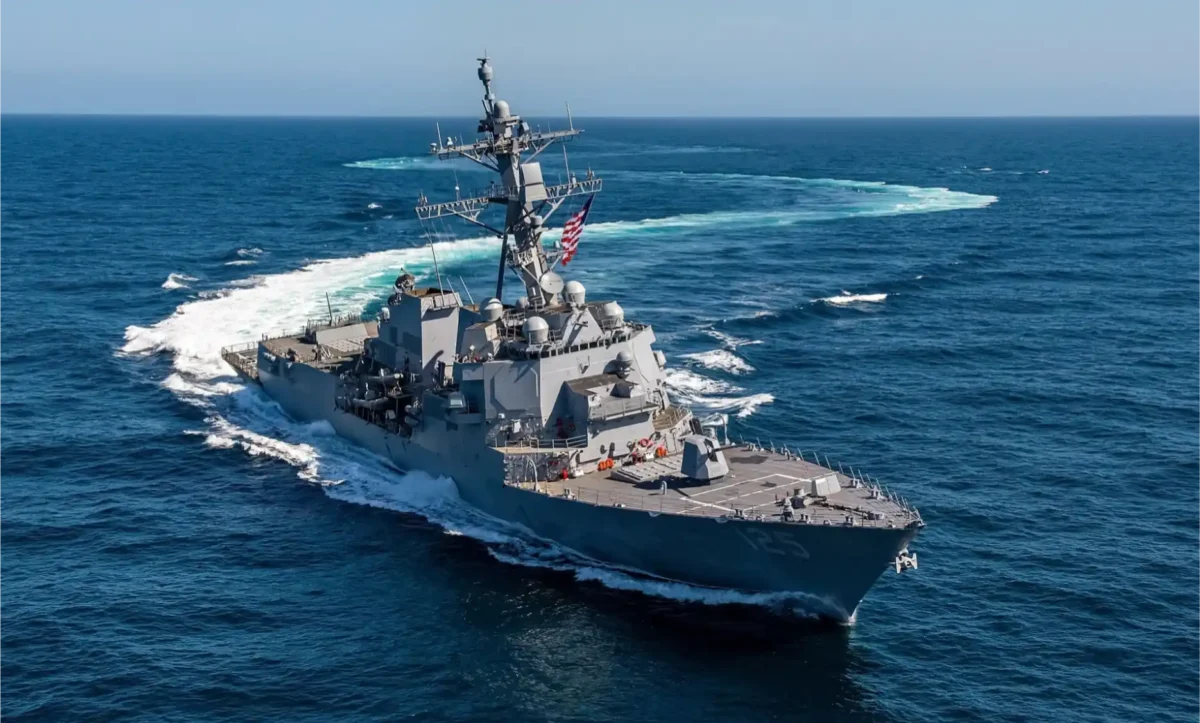
The designers also paid attention to what the ship is made of. Some parts use composite materials that don’t reflect radar as much, and key heat sources are carefully shielded to make the ship’s infrared signature smaller. That helps against missiles that home in on heat or radar reflections.
But where the Arleigh Burke really earns its reputation is in survivability. Inside the ship, everything’s split into separate sections with layers of backup systems. If one part floods or catches fire, the crew can seal it off so the rest stays functional. Sailors spend a lot of time running drills and repair exercises for exactly that reason. The goal is to keep the ship alive even when it takes damage.
Read also: Why the Arleigh Burke Class is Mass Produced Compared to Others
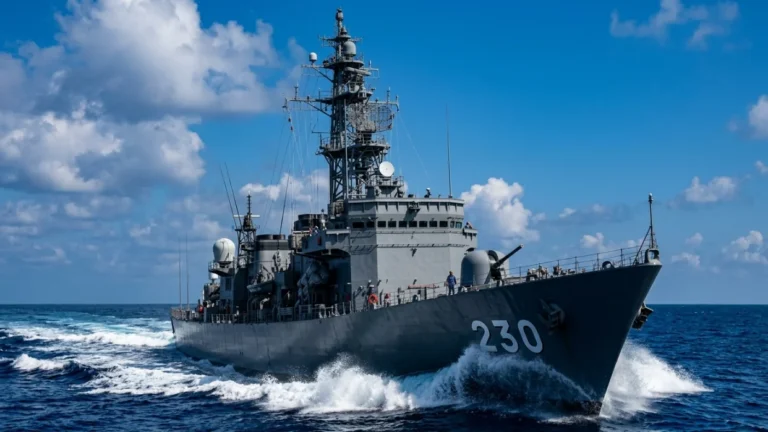
The Arleigh Burke-class destroyer. The ship runs on gas turbines. It’s very similar to the engine in a jet airliner. The Navy uses a setup called COGAG, which basically means “combined gas and gas.” Instead of one big engine, there are four smaller ones that can be mixed and matched depending on what’s needed. Using two engines when cruising across calm seas. And when needed to sprint, it fires up all four and you’re off.
This system gives the destroyer a good balance; it’s fast, efficient, and surprisingly simple compared to the nuclear-powered setups on bigger ships. These engines can push the Burke up to around 30 knots, which is pretty quick for a 9,000-ton warship. And because the turbines are well-tested commercial designs, they’re reliable.
What’s more interesting now is what those engines are indirectly supporting: power. Modern warships are becoming floating power stations because everything, radars, sensors, weapons, runs on electricity.
The newest Burke, the Flight III version, reportedly generates much more power than older ones. That design will stay relevant for whatever’s next; directed-energy weapons, railguns, maybe even advanced radar suites that guzzle electricity.
That said, there’s a limit to how much power you can draw from a ship designed in the late ’80s. Adding more generators or advanced cooling systems takes up space that’s already spoken for. So, while the Arleigh Burke could support smaller energy weapons in the future, there’s only so much room to grow.