Follow Us:
Follow Us:

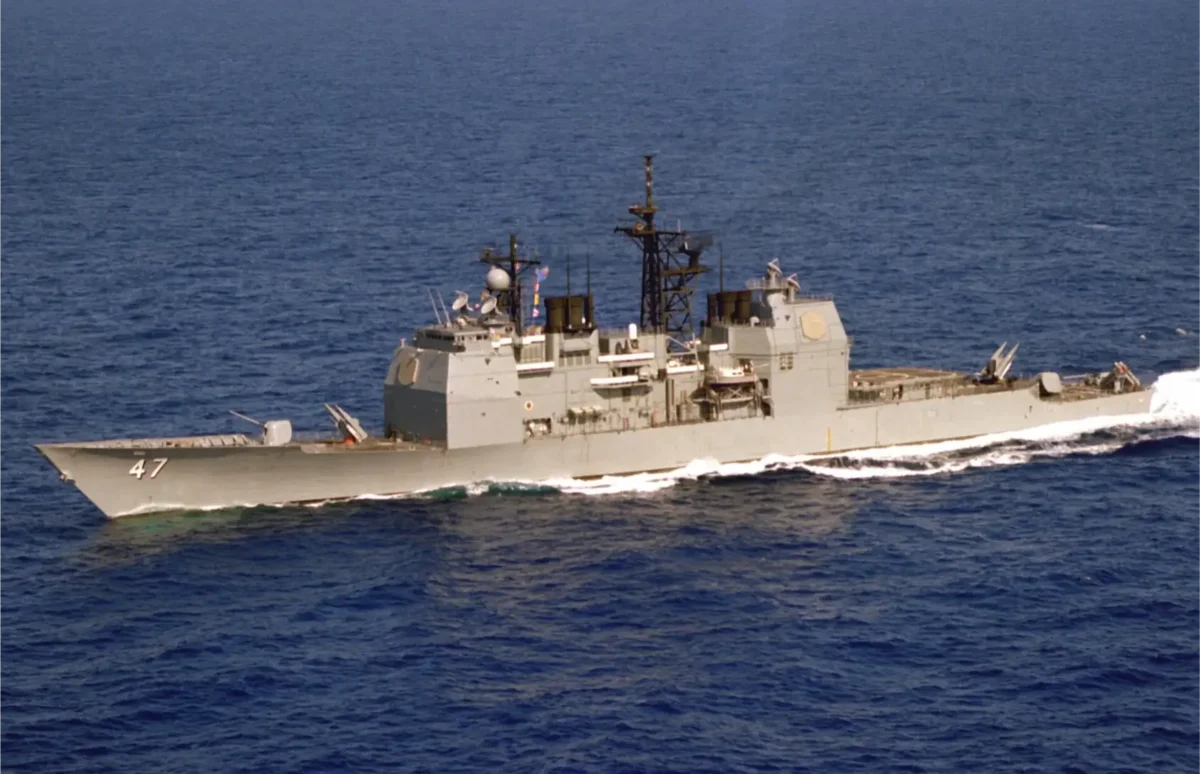
The Ticonderoga-class cruiser might not be the flashiest ship in the Navy, but it has quietly been the brain and backbone of American sea power for nearly four decades.
These ships carried the sensors and missile capacity that could, at least in theory, shape the outcome of a major conflict long before anyone fired the first shot. If you’ve ever seen a carrier strike group operate smoothly, there’s a decent chance a “Tico” was doing the heavy thinking behind the scenes.
Now the Navy seems ready to close this chapter, and the shift feels bigger than just retiring an aging platform. Depending on how you look at it, this move could be a necessary step toward a more modern fleet or a risky bet that today’s replacements can genuinely fill the gap.
I’d argue that the answer isn’t totally clear yet, and that uncertainty is exactly what makes the Ticonderoga story worth digging into.
The Ticonderoga story really starts in the late Cold War, when the U.S. Navy was trying to figure out how to spot and stop threats coming from just about every direction. Instead of designing a massive battleship-style platform, they took a somewhat practical route: build a ship around a new brain rather than a new body.

That “brain” was the Aegis Combat System, something that, at the time, probably felt closer to science fiction than standard naval hardware.
Aegis could track dozens of targets at once and guide missiles with a level of coordination that other navies, at least from what most analysts suggest, didn’t quite have yet. So the Ticonderogas ended up being less about brute size and more about smart firepower.
If there’s one thing that sets the class apart, it’s how much it can do at the same time. A single cruiser can manage air defense for an entire carrier strike group, launch long-range missiles at land targets, and handle anti-submarine operations, all without feeling stretched thin.
Their loadout is no joke either. The vertical launch system (VLS) cells let them carry a mix of Standard Missiles, Tomahawks, ASROCs, etc. When people talk about the Ticos being “heavily armed,” it’s not an exaggeration; the numbers alone make that clear.

I’d argue that this flexibility is a big part of why so many Navy officers still speak fondly of them. They’re old, sure, but they were built to solve a long list of problems at once.
Aegis ties everything together, making the cruiser less of a missile truck and more of a battlefield coordinator. It’s the system that lets them see farther and react faster, and to this day, some observers say the Ticos still punch well above their age because of it.
These cruisers have shown up in almost every major U.S. operation since the 1980s. Whether it was launching Tomahawks during the opening hours of Desert Storm, providing air defense in the Persian Gulf, or escorting carriers through tense hotspots, the Ticonderogas were usually there in the background doing work that didn’t always make headlines.
What’s interesting is how consistently they’ve been involved in those “first strike” moments. When a U.S. president needed a precise, long-range opening shot, a Tico was often the one sending the message. That role gave the class a kind of quiet credibility. People inside the Navy might disagree on budgets and future ship designs, but most would admit the Ticonderogas delivered when it counted.
If anything, their career highlights read like a timeline of American naval strategy over the last 40+ years. And even though the Navy is preparing to phase them out, it’s hard not to see them as ships that earned their place in the history books.
At this point in their lives, the Ticonderoga cruisers are basically running on the naval equivalent of “high mileage.” Decades of deployments mean they’ve spent years taking constant punishment: saltwater corrosion, temperature swings, engine strain, and the nonstop rattling that comes with pushing thousands of tons of steel through rough seas.
I’d guess that most sailors who’ve served on these ships could point to spots where the age really shows: wiring that’s been patched so many times it looks like a family tree, pipes that need more frequent inspections, or compartments where the wear just feels baked in. None of that is unusual for ships this old, but it does mean the Navy spends more time and effort just keeping them ready for basic operations.
What complicates things is that these aren’t simple fixes anymore. Something as routine as replacing insulation or accessing an older radar component can turn into a multi-week job because the original layout wasn’t designed with modern maintenance in mind. Engineers sometimes have to open up bulkheads or reroute cables just to reach what they’re trying to repair.
There have also been reports (often couched in careful language), that some aging systems are becoming harder to support simply because the industry that built them no longer exists in the same form. Parts have to be custom-made, and technicians familiar with the older equipment are retiring. So the Navy ends up juggling rising costs, shrinking expertise, and ships that need more attention every year.
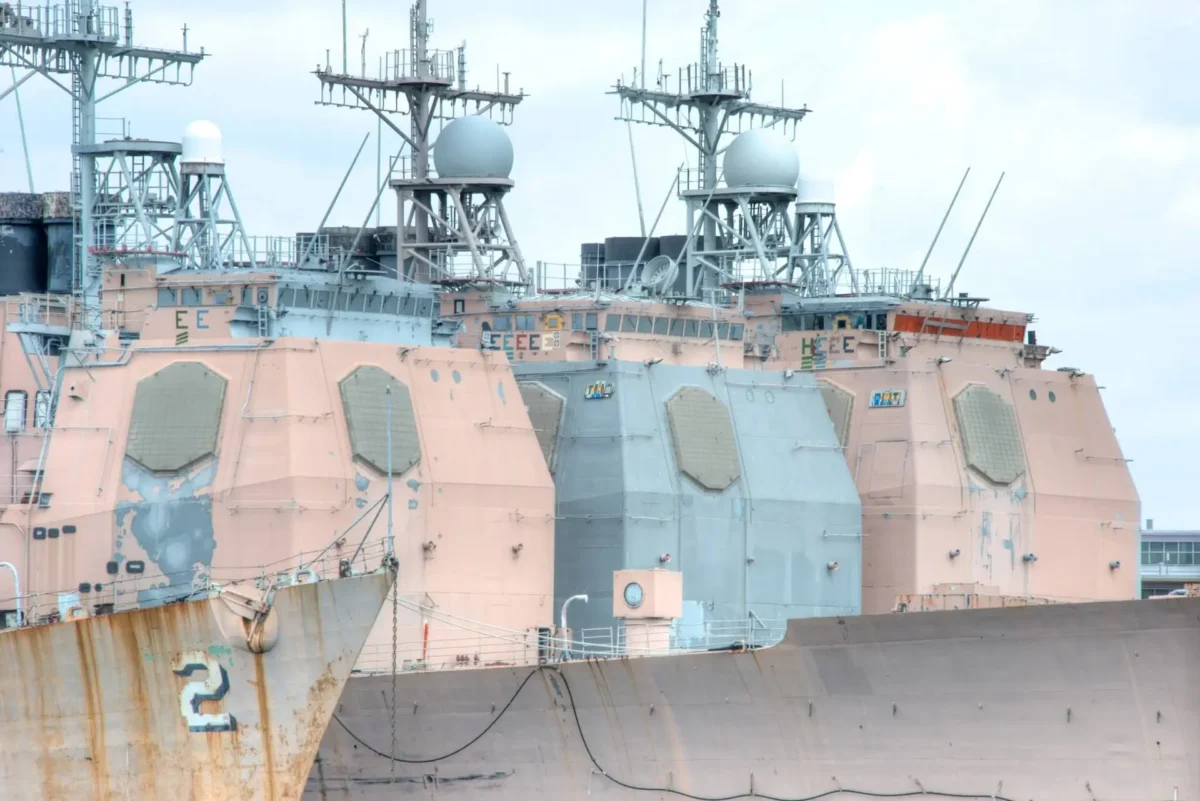
All of this doesn’t mean the Ticos are falling apart; they still operate and still have value. But the maintenance curve is getting steeper, and I’d argue the Navy is looking at that trend and quietly asking itself how much longer it can justify the trade-offs.
The cost debate is where things get complicated, because on paper it looks simple: fix the old ships or buy brand-new ones.
Upgrading a Ticonderoga isn’t like swapping a few circuit boards and calling it a day. Once the Navy opens one of these cruisers up for a major overhaul, more problems tend to surface. Shipyard crews sometimes describe it like renovating a 40-year-old house; you start by replacing the kitchen cabinets, and suddenly you’re finding wiring issues, water damage, or ancient fixtures no one has touched since the ’80s.
For a Tico, that might mean:
Each of those steps has a price tag, and they add up fast. The rough estimate places some of these modernization packages in the $500–600 million range per ship. And even after spending that kind of money, you still end up with a platform limited by its 1980s hull structure and overall design philosophy.
On the other hand, new Flight III Arleigh Burke destroyers cost around $2 billion each. That’s obviously a bigger hit upfront, but they come with major advantages, like
It’s a bit like choosing between restoring a classic car or buying a new hybrid. The old car might still run beautifully with enough money and attention, but it’ll never match the efficiency, technology, or long-term reliability of something purpose-built for today’s needs.
I’d guess that from the Navy’s perspective, the math isn’t just about the dollars spent today, it’s about the “opportunity cost” over the next 20–30 years. Pouring hundreds of millions into an older ship that may still struggle with modern threats might feel harder to justify when that same money could help field a newer, more adaptable class.
Losing the Ticonderoga cruisers is going to change the shape of the fleet in ways the Navy is still trying to sort through. These ships weren’t just extra firepower floating around; they were the ones carrying a big chunk of the air-defense load for carrier groups.
Once they’re gone, that responsibility gets passed mostly to the Arleigh Burke destroyers. The Burkes are strong performers, no question, but they weren’t originally designed to carry the entire air-defense command role on their backs..
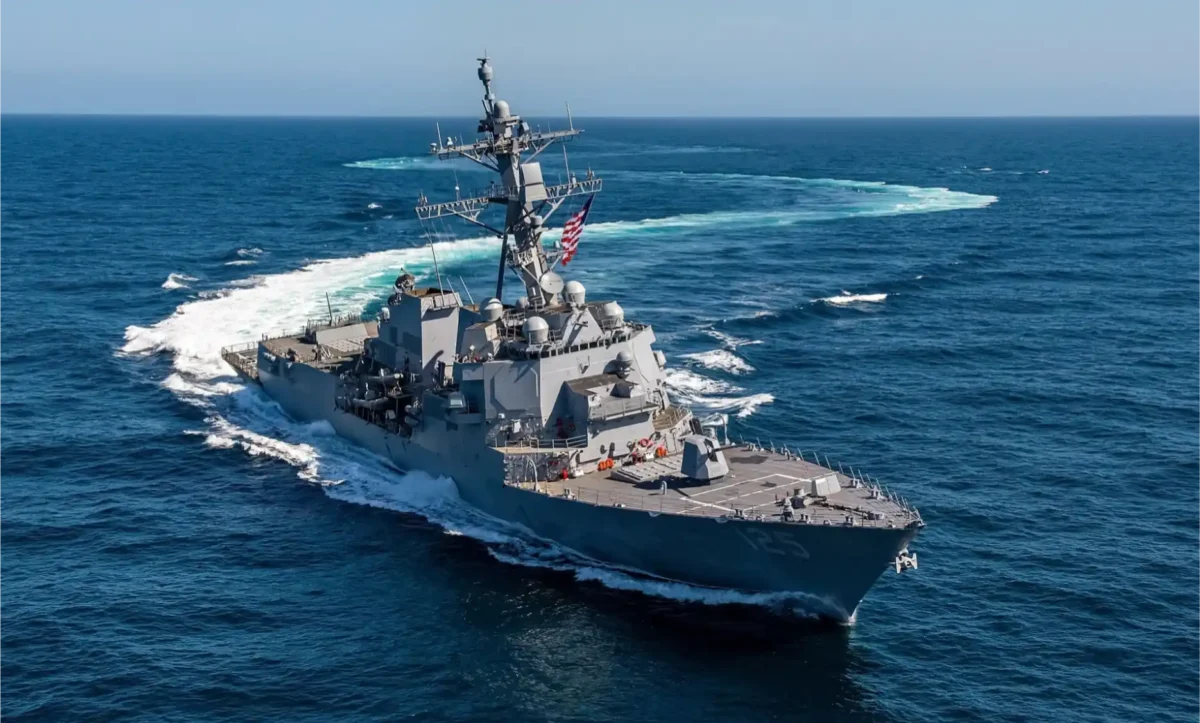
What this might mean is that the destroyers will have to stretch a bit more. That could turn into more deployments, tighter schedules, and less breathing room when different hotspots flare up at the same time. I wouldn’t call it a crisis, but it does put more weight on a fleet that already runs pretty hard.
The bigger strategic picture is a little fuzzier. The cruisers carried a lot of missile cells, and losing that concentrated firepower probably nudged the Navy into rethinking how it spreads capability across the fleet.
Some people say the Navy is already leaning toward a more distributed approach; more ships, each carrying smaller slices of capability, instead of relying on a few heavy hitters to do most of the work. If that’s true, then the Tico retirements might just speed up a shift that was already happening.
During the transition, there might be a decent chance that certain gaps will be felt more sharply. Until whatever comes after the Burkes actually shows up, the fleet just won’t have as many high-capacity ships to anchor air-defense missions or launch big salvos if a conflict broke out. That doesn’t automatically put the U.S. at a disadvantage, but it does tighten the margin for error in a world where rivals are rolling out faster missiles and better tracking systems.
The Navy’s immediate move has been pragmatic: lean on the Arleigh Burke-class destroyers to pick up much of the cruisers’ workload while work continues on a true next-generation replacement. That’s sensible in the short term, Burke Flight III ships already have modern radars and lots of VLS cells, so they can absorb many of the Ticos’ duties without an overnight capability collapse.
Still, that’s not a perfect swap; Arleigh Burkes weren’t originally intended to shoulder the same degree of air-defense command and control that cruisers handled, so pushing them into that role stretches operational concepts a bit.
Beyond the Burkes, the Navy is counting on the DDG(X) / Large Surface Combatant effort as the long-term answer: a bigger, more flexible ship designed from the keel up to host future power and sensors.
In theory, DDG(X) should give the fleet a way to reclaim the concentrated missile capacity and command space that’s being retired with the Ticonderogas.
But there are two big hurdles here: first, DDG(X) is still largely on the drawing board and funded at a relatively modest level in recent budgets; second, similar past programs have slipped and inflated in cost. That means the DDG(X) could arrive later and pricier than planners hope, so relying on it as the near-term remedy feels optimistic.
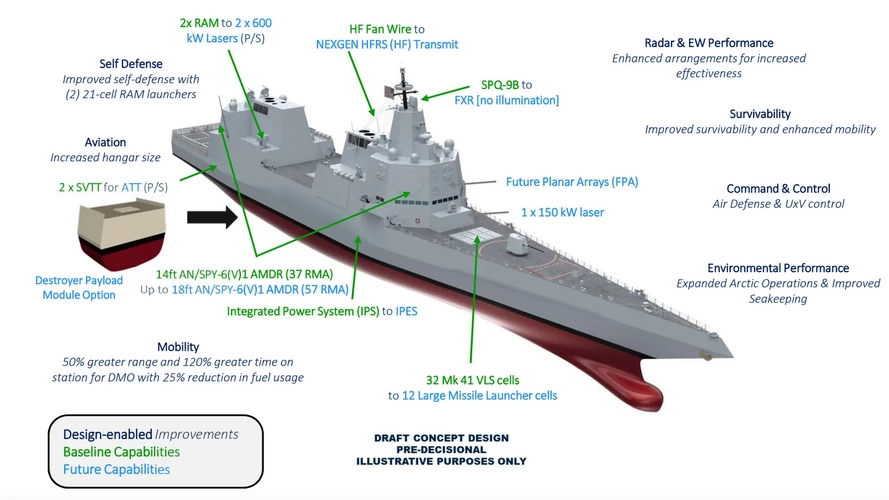
This sequence funnels into a broader doctrinal shift that’s already been under discussion: move from a handful of “big-gun” platforms toward a more distributed architecture, with more hulls carrying parts of the fight rather than concentrating capability in a few ships.
That approach has real advantages, but it also requires substantial investment in numbers, logistics, and networking. If the Navy trims cruisers but fails to accelerate procurement and networking fast enough, the fleet risks a period where neither the old concentrated model nor the new distributed model is fully in place. That mismatch would be the riskiest outcome.
On costs and politics, the picture is messy. Upgrading and life-extending legacy cruisers can look cheaper short term, but the per-ship modernization bills and creeping maintenance costs add up and the alternative, buying new DDGs or future LSCs, hits the budget much harder up front.
Congress has been active in shaping both the pace of retirements and funding priorities, sometimes protecting specific hulls or insisting on procurement that diverges from the Navy’s preferred timeline.
That tug of war matters: if budgets don’t match the strategic intent (buy fewer, more capable ships vs. buy more, distributed platforms), planners will be forced into tradeoffs that reduce readiness or slow modern capability fielding. Recent budget discussions have signaled a willingness to invest in shipbuilding, but that doesn’t automatically smooth the path for a quick, clean replacement.
Some analysts argue that the Navy’s push to retire most of the Ticonderoga-class cruisers is long overdue.
According to the Chief of Naval Operations, Admiral Michael Gilday, these cruisers are showing signs of serious material decline: “we’re seeing cracks … we’re seeing challenges in the material conditions” in ships that average over 30 years old. He’s warned that modernization isn’t just costly, it’s unpredictable, calling some of the older radar systems “approaching obsolescence” in the face of modern missile threats.
On the other side, there’s significant skepticism around how wisely modernization funds were spent. A major report from the U.S. Government Accountability Office (GAO) accuses the Navy of “wasted costs” and “weak oversight” while trying to life-extend these cruisers.
According to the GAO, billions went into modernization efforts, but only a few of the ships are expected to deliver the extra service life the Navy promised. Some experts even call the $1.84 billion reportedly wasted “a sign that the Navy’s priorities should have leaned more toward new construction than renovation.”
Yet there are voices defending the decision to keep some Ticos around a little longer, especially the ones that have already been modernized.
For example, Secretary of the Navy Carlos Del Toro, himself a former cruiser sailor, said that the three ships getting service-life extensions are “only the ones … that have completed modernization and have the material readiness needed to continue advancing our Navy’s mission. “That suggests a more cautious, selective retirement strategy rather than a blanket decommissioning.
According to a Congressional Research Service (CRS) report, lawmakers are worried that the Navy is pulling the plug on some of its most capable surface combatants too aggressively. The report notes that each replacement cruiser might cost over $1 billion.
In particular, Congress has expressed frustration with the Navy’s decision to decommission five Ticonderogas that had already been modernized. As the CRS points out, the service had already poured hundreds of millions of dollars into those ships, but, under current plans, they’ll be retired after only 30–36 years of service instead of the full 40 years originally envisioned.
In a December 2024 report, the GAO found that the Navy spent about $3.7 billion to modernize seven of the cruisers, but only three will complete their modernization. Even more striking: four of those ships, after taking billions in overhaul work, were divested before ever returning to deployment.
GAO also noted “significant quality issues” during the upgrade, including contractors delivering poor-quality work on important systems like the sonar dome of USS Vicksburg and additional time and money had to go into rework.