Follow Us:
Follow Us:

The unveiling of the Kheibar Shekan missile in February 2022 marked a turning point for Iran’s growing arsenal of advanced ballistic technology. As tensions simmer across the Middle East, this missile—nicknamed the “Fortress Breaker”—has drawn attention for its ability to challenge regional defenses and rival global missile systems.
Designed by the Islamic Revolutionary Guard Corps (IRGC), the Kheibar Shekan ballistic missile reflects Iran’s ambition to develop cutting-edge deterrent capabilities that can evade even the most modern interception networks, such as Israel’s Arrow-3 and the US Patriot system.
Unlike Iran’s previous liquid-fueled systems like the Shahab series, the Kheibar missile represents a major leap forward with its solid-fuel propulsion, maneuverable reentry vehicle (MaRV) design, and high-speed attack profile. These improvements are not just technical details—they signal a missile that is faster to launch, harder to detect, and more difficult to intercept.
But this missile is more than just numbers and specifications—it’s a symbol of Iran’s military independence and strategic patience. As Western sanctions limited access to foreign technology, projects like the Kheibar Shekan filled the gap, reducing reliance on imports while refining homegrown expertise. The missile’s lower production cost, mobile launch capability, and battlefield versatility make the Kheibar Shekan missile cost-efficient in ways that rival systems are not.
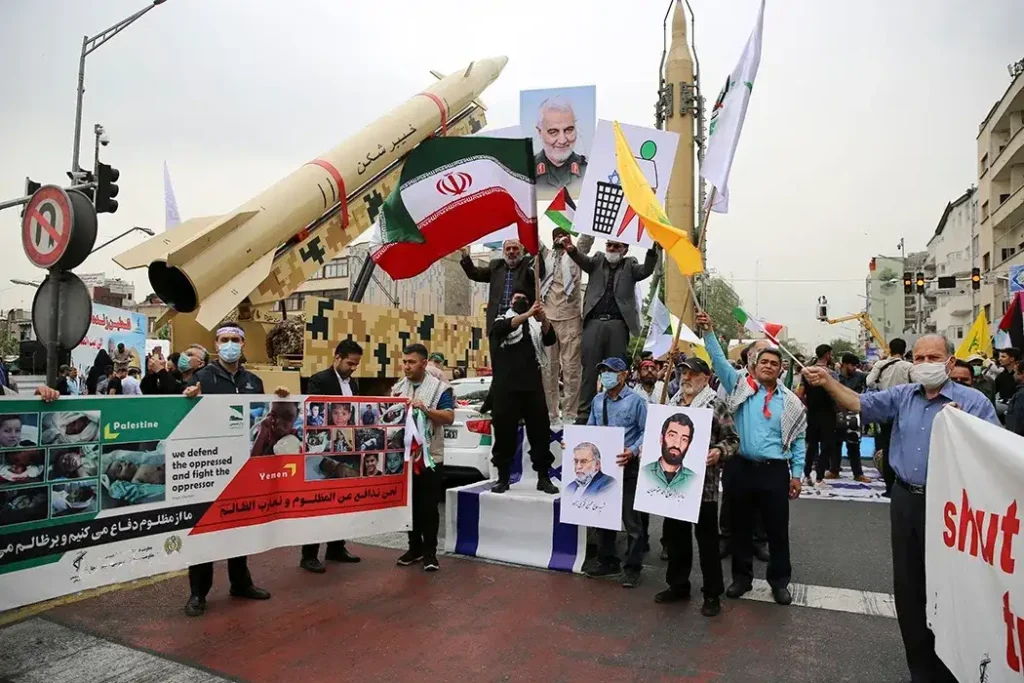
In this post, we dive deeper into its design, history, and future. The Kheibar Shekan stands as proof that Iran’s missile industry—from the Khaybar missile to the potential future Iranian hypersonic missile—is advancing faster than many observers expected.
The Kheibar Shekan missile is not just another addition to Iran’s ballistic missile lineup—it represents a significant leap in both design philosophy and combat capability. Developed as a third-generation medium-range ballistic missile (MRBM), this weapon combines cutting-edge materials, improved propulsion systems, and precision-guided warhead technology to address the limitations of earlier Iranian missiles such as the Emad and Shahab series. Its construction favors lightweight composites, reducing overall mass by nearly one-third compared to its predecessors, which allows for easier transport and faster launch preparation—six times quicker than older models, according to Iranian sources.
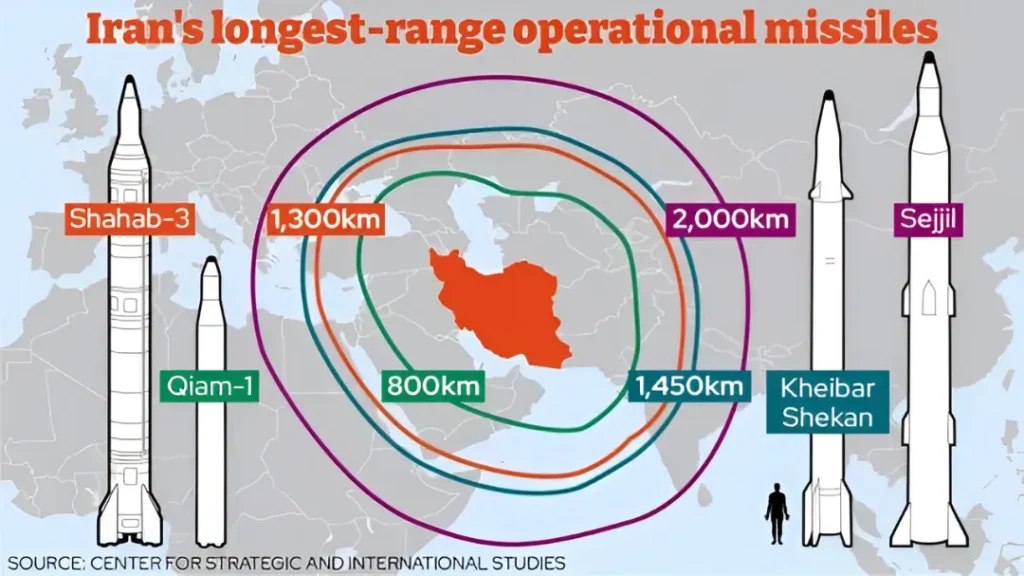
When discussing the technical attributes of the Kheibar missile, its range becomes one of the most debated and strategically important factors. The missile boasts a reported operational reach of approximately 1,450 kilometers, though some sources suggest it might be capable of pushing up to 1,800 kilometers under optimal conditions.
This places key targets in Israel, Iraq, Saudi Arabia, and the eastern Mediterranean well within its strike envelope, solidifying the Kheibar Shekan missile range as a game-changing aspect of Iran’s military reach. Measuring 11.4 meters in length and 0.76 meters in diameter, with a launch weight between 4.5 to 6.3 tons, the missile is designed to carry a 550-kilogram warhead, a figure that balances destructive capability with aerodynamic efficiency.

But it’s not just about distance; speed and survivability are also critical in the missile’s battlefield value. Featuring a two-stage solid-fuel engine derived from the Fateh family, the Kheibar Shekan missile’s speed allows the weapon to reach terminal velocities estimated at Mach 2 to Mach 3 during reentry. Its maneuverable reentry vehicle (MaRV) features a tri-conic warhead design optimized to evade missile defense systems like Israel’s Arrow-3 and America’s THAAD.
Read also: Sejjil Missile – Iran’s Advanced Medium-Range Ballistic Missile
These attributes elevate the Kheibar Shekan ballistic missile beyond earlier regional threats by giving it a credible chance to penetrate modern anti-missile networks, a key concern for countries worried about Iranian missile deployments. Its mobile launch platform—a 10-wheel commercial-style truck chassis—further ensures that the missile remains a “shoot-and-scoot” system, ready to reposition and fire again before being detected by enemy satellites or drones.
One of the standout features of the Kheibar Shekan missile lies in its launch and deployment versatility. Unlike the earlier liquid-fueled Shahab and Emad systems, which required extensive fueling and preparation time—making them vulnerable to preemptive strikes—the Kheibar missile Iran has been designed for rapid, mobile deployment. Built around a solid-fuel propulsion system, this missile can be launched with minimal setup, slashing operational preparation time by as much as sixfold compared to previous Iranian missiles. This makes it a “ready when needed” weapon, capable of being repositioned and fired with remarkable agility.
Read also: Israel-Iran Conflict 2025 Explained: Timeline, Causes & What’s Next
The missile is carried on a commercial-style 10-wheel transporter-erector-launcher (TEL) chassis, a decision that allows it to blend into civilian road networks and evade easy detection by satellite reconnaissance. This mobility not only complicates the efforts of adversaries like Israel or the United States to identify and neutralize launch positions but also enhances the missile’s deterrence value.
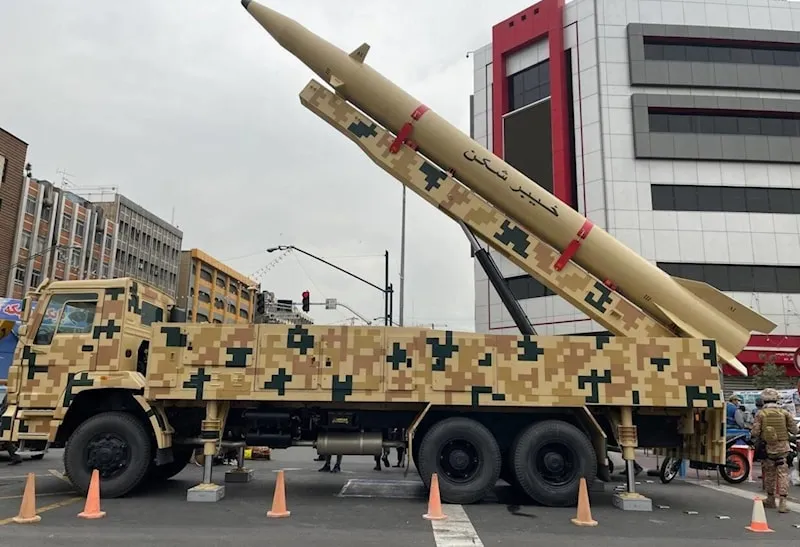
Furthermore, the system is designed for dual-launch capability, meaning two Kheibar Shekan ballistic missiles can be mounted and potentially fired from the same vehicle, doubling offensive power without increasing logistical footprint. This deployment approach aligns with Iran’s broader doctrine of asymmetric warfare—avoiding head-to-head confrontation in favor of unpredictable, decentralized force projection.
Read also: Khorramshahr-4 Ballistic Missile
The operational flexibility of the Kheibar Shekan missile also reflects its purpose as a survivable and cost-effective deterrent. Because the missile’s design incorporates lighter composite materials and a modular launch system, it reduces logistical burden while enabling quick setup in various terrains—from mountainous regions near the Iraqi border to desert plains or even coastal roads.
This not only expands Iran’s missile reach but also ensures that the Kheibar Shekan missile cost remains lower than more complex or fixed-site systems employed by rivals. As a result, the Kheibar Shekan perfectly fits into Iran’s strategic need for fast, hard-to-target, and tactically flexible weapon platforms.
Since its public unveiling in February 2022, the Kheibar Shekan missile has quickly moved from display stands and parade grounds to actual combat scenarios, proving that this system is not merely a prototype or political showpiece but an active component of Iran’s military strategy.
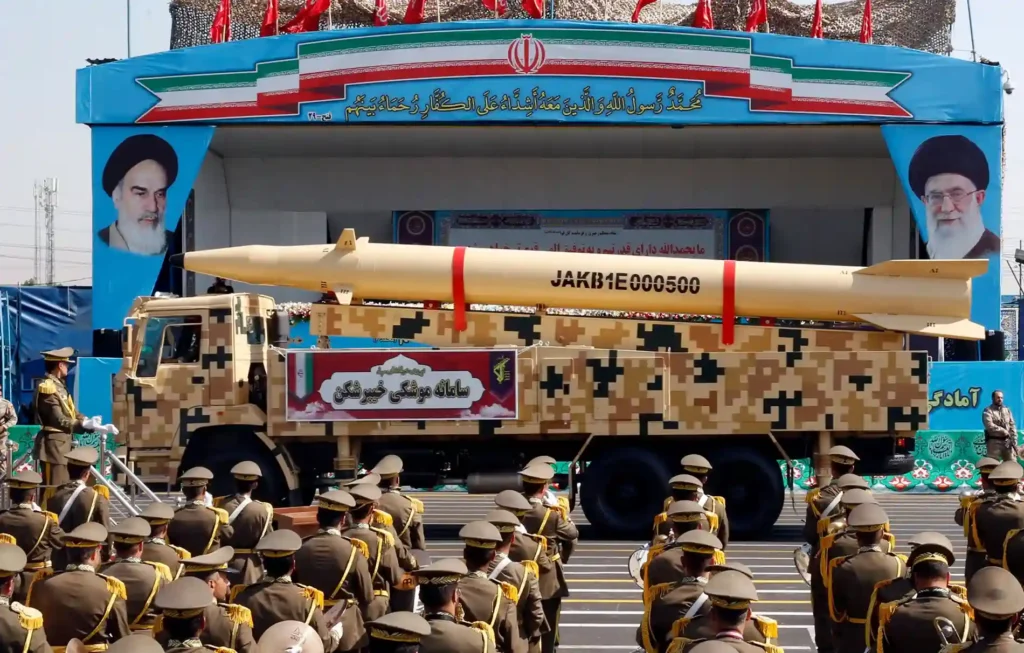
The missile made headlines when it was showcased during the 43rd anniversary of the Iranian Revolution, a carefully chosen event that highlighted both its symbolic and strategic importance. Analysts quickly noted that the Kheibar Shekan ballistic missile represents not only a technological evolution but also a clear signal of Iran’s readiness to use modern missile forces as a central pillar of its deterrent posture.
The real test of the Kheibar Shekan missile range and precision came during operations in early 2024. In January, the missile was reportedly used in strikes targeting Mossad-linked facilities in Erbil, Iraq, and ISIS positions in Idlib, Syria, covering distances approaching its maximum 1,450-kilometer range.
These strikes were among the first confirmed battlefield uses of the system and demonstrated the Kheibar missile Iran program’s ability to deliver warheads with high accuracy on distant strategic targets. Iranian media emphasized the success of these attacks as a warning to regional adversaries, showcasing the missile’s capability to bypass surveillance and air defenses to reach high-value targets.
In April 2024, the Kheibar Shekan missile played a critical role in a large-scale missile barrage aimed at Israel during a brief period of heightened conflict. Reports from both Iranian and foreign sources indicate that several missiles, believed to include Kheibar Shekan units, successfully breached Israel’s multi-layered missile defense systems, including the much-touted Arrow-3 shield.

This event spurred renewed international attention on the missile’s design, especially its maneuverable warhead meant to confuse or evade interception. For military observers and regional powers, the message was clear: the Kheibar Shekan ballistic missile, unlike older Iranian missiles, could no longer be dismissed as unreliable or second-rate. It had joined the ranks of real, combat-proven threats in the volatile Middle East arena.
To understand the true impact of the Kheibar Shekan missile, it’s essential to compare it with Iran’s earlier missile systems and explore where it stands in the broader evolution of regional missile technology. Previous generations of Iranian missiles—such as the Shahab-3, Sejjil-2, and Emad—relied heavily on liquid-fuel propulsion, which made them more predictable and less suitable for rapid, mobile deployment.
These older systems required lengthy fueling times and permanent launch sites, making them easier targets for pre-emptive strikes or sabotage. By contrast, the Kheibar missile Iran breaks this dependency with a modern solid-fuel engine that offers faster launch readiness and improved storage longevity, a crucial shift in Iran’s missile doctrine.
Additionally, while earlier systems were limited by relatively simple, unguided warhead designs, the Kheibar Shekan ballistic missile incorporates a maneuverable reentry vehicle (MaRV) and a tri-conic warhead capable of adjusting its path during descent. This makes it much harder for missile defense systems to predict and intercept, giving the Kheibar Shekan missile speed and accuracy advantages that previous platforms lacked.
Compared to Israel’s Jericho missiles or the Saudi Arabian DF-3 systems, Iran’s Kheibar Shekan missile range—estimated around 1,450 kilometers—also ensures that it can strike high-value targets across the region without leaving Iranian airspace, complicating enemy air defense calculations. These features underscore the missile’s role as a bridge between conventional MRBMs and the more experimental Iranian hypersonic missile programs like the Fattah, which are still in development or limited operational status.
The Kheibar Shekan missile has redefined Iran’s position in the regional missile race by offering a powerful blend of mobility, range, and precision that earlier Iranian missiles lacked. With a reach of over 1,400 kilometers, solid-fuel propulsion, and a maneuverable warhead designed to evade even advanced missile defense systems like Israel’s Arrow-3, the Kheibar missile Iran project has demonstrated its real-world effectiveness in recent military operations across Iraq, Syria, and Israel. Its cost efficiency, lightweight design, and rapid launch capability mark a significant departure from the liquid-fueled, cumbersome systems of the past, making the Kheibar Shekan ballistic missile both a strategic and tactical game-changer.
As Iran continues developing more advanced systems, such as the Iranian hypersonic missile, the Kheibar Shekan missile serves as a foundation for future technologies that could reach even further with greater speed and complexity. Its successful deployment sends a clear message to regional rivals and global powers: Iran’s missile force is evolving rapidly, making the region’s security landscape more unpredictable and challenging.