Follow Us:
Follow Us:

In the ever-evolving world of modern warfare, a new name has emerged that is causing significant concern among military strategists worldwide, the Fattah-1 hypersonic missile.
Officially unveiled by Iran’s Islamic Revolutionary Guard Corps (IRGC) in June 2023, this cutting-edge missile system represents a monumental leap in Iran’s missile technology and regional defense capabilities.
But what exactly is the Fattah 1 hypersonic missile, and why has its arrival sent ripples through defense communities from the Middle East to the Western world?
The Fattah 1 missile is more than just another entry in the long list of Iranian hypersonic missile projects. It is the country’s first confirmed operational hypersonic medium-range ballistic missile (MRBM), capable of reaching velocities between Mach 13 and Mach 15.
This staggering speed not only dwarfs many conventional missile systems but also allows the Fattah 1 missile to evade and outmaneuver state-of-the-art missile defense shields such as the Israeli Iron Dome and the American Patriot systems.
For context, a Mach 15 missile travels at approximately 18,500 kilometers per hour—a speed so fast that most interceptors would struggle to detect, lock onto, and neutralize it before it reaches its target.

What truly distinguishes the Fattah-1 missile is not merely its speed, but its combination of solid-fuel propulsion and an actively maneuverable reentry vehicle (MaRV).
This maneuvering ability during the final phase of flight enables the missile to adjust its trajectory, greatly complicating interception efforts by defense systems reliant on predictable missile paths.
This design is a testament to Iran’s advancing military research capabilities, positioning the Fattah-1 hypersonic missile at the forefront of the next generation of regional strike weapons.
So, in this post, we’ll provide an in-depth look at the development, technical features, and global implications of the Fattah‑1 missile Iran program. From its role in reshaping regional security dynamics to its potential influence on future missile defense systems, the Fattah missile stands as a critical development that demands close international attention.
The Fattah-1 missile is the result of years of technological development by Iran’s Islamic Revolutionary Guard Corps (IRGC), with its official unveiling taking place in June 2023.
Although Iran first hinted at hypersonic missile advancements in late 2022, few defense analysts outside the country anticipated such rapid progress toward an operational system.
The missile’s debut was accompanied by declarations from Iranian officials boasting of its ability to penetrate “all missile defense shields,” signaling a bold new step in Iran’s missile doctrine.
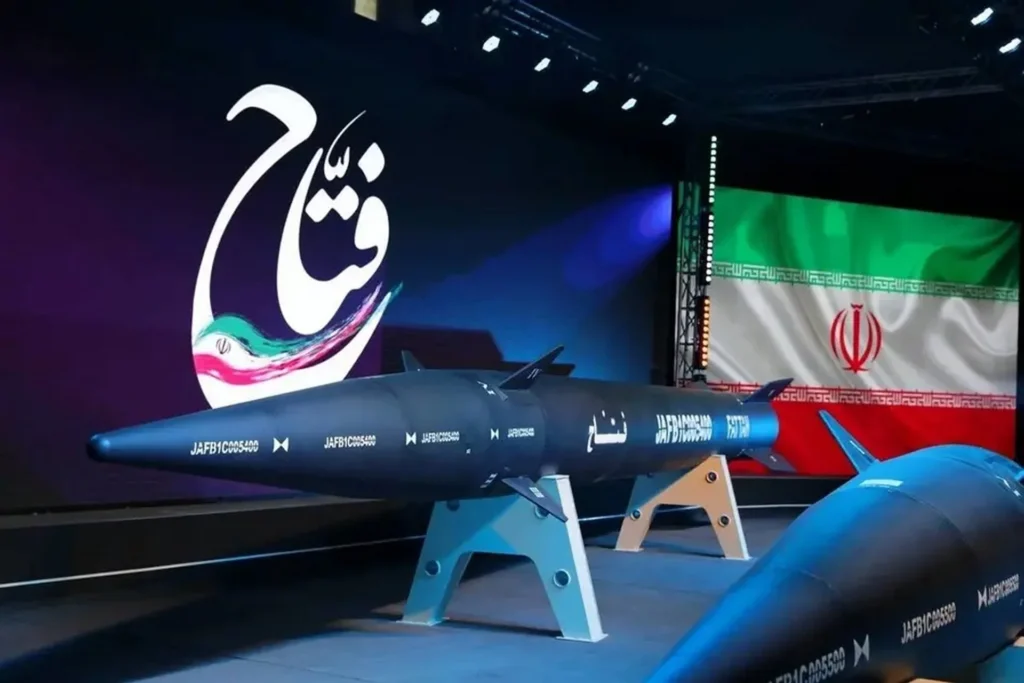
The development of the Fattah-1 ballistic missile marks a significant shift from previous Iranian missile designs, such as the Sejjil and Ghadr series, which relied heavily on traditional ballistic flight paths.
By integrating solid-fuel propulsion and maneuverable reentry vehicle technology, the Fattah-1 represents Iran’s first serious foray into hypersonic weaponry, a domain previously dominated by military powers such as China, Russia, and the United States.
Read also: Israel-Iran Conflict 2025 Explained: Timeline, Causes & What’s Next
According to defense reports, the Fattah 1 missile entered limited production in late 2022, with testing and refinement continuing into early 2023.
Its public presentation in June that year was widely viewed as a direct message to regional adversaries, particularly Israel and the Gulf States, underscoring Iran’s expanding strike reach and deterrence posture.
Military analysts believe the missile is now a part of Iran’s operational inventory, ready for deployment if regional conflicts escalate.
The Fattah 1 hypersonic missile is engineered to deliver unmatched speed, precision, and survivability on the modern battlefield. It features a two-stage solid-fuel propulsion system, enabling rapid launch readiness and reduced logistical complexity compared to liquid-fueled systems.
Once airborne, the missile can reach speeds of Mach 13 to Mach 15, making it one of the fastest hypersonic ballistic systems currently deployed in the region.
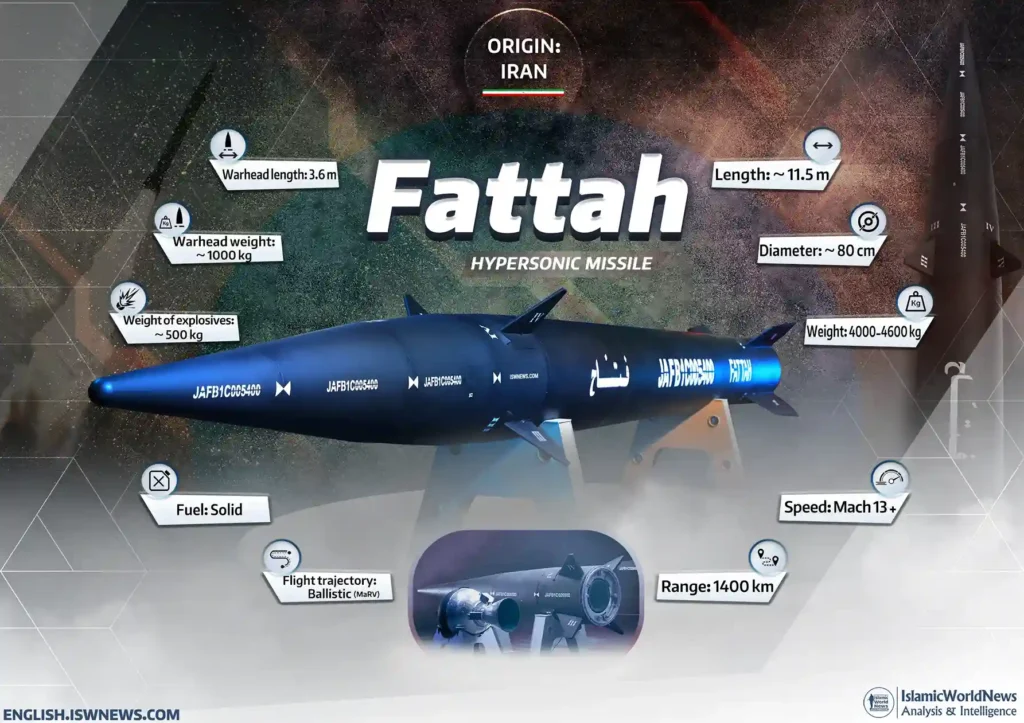
With an operational range estimated at 1,400 kilometers, the Fattah 1 missile range places critical targets across the Middle East, including Israel, U.S. bases in the Gulf, and parts of Eastern Europe, within striking distance.
Its maneuverable reentry vehicle (MaRV) design allows the missile to alter its trajectory during the terminal phase, making interception by conventional anti-missile defenses, such as the Iron Dome, Arrow, and Patriot systems, exceedingly difficult. This advanced capability not only enhances the missile’s penetration potential but also increases its overall accuracy.
Read also: Sejjil Missile – Iran’s Advanced Medium-Range Ballistic Missile
The Fattah-1 ballistic missile can reportedly carry a warhead weighing between 350 to 450 kilograms, capable of delivering either conventional or potentially nuclear payloads. Its guidance system combines inertial navigation (INS) with global navigation satellite systems (GNSS), providing a circular error probable (CEP) of approximately 20 to 50 meters.
Such precision significantly enhances its effectiveness against high-value, hardened, or time-sensitive targets, raising the stakes for regional defense planners.
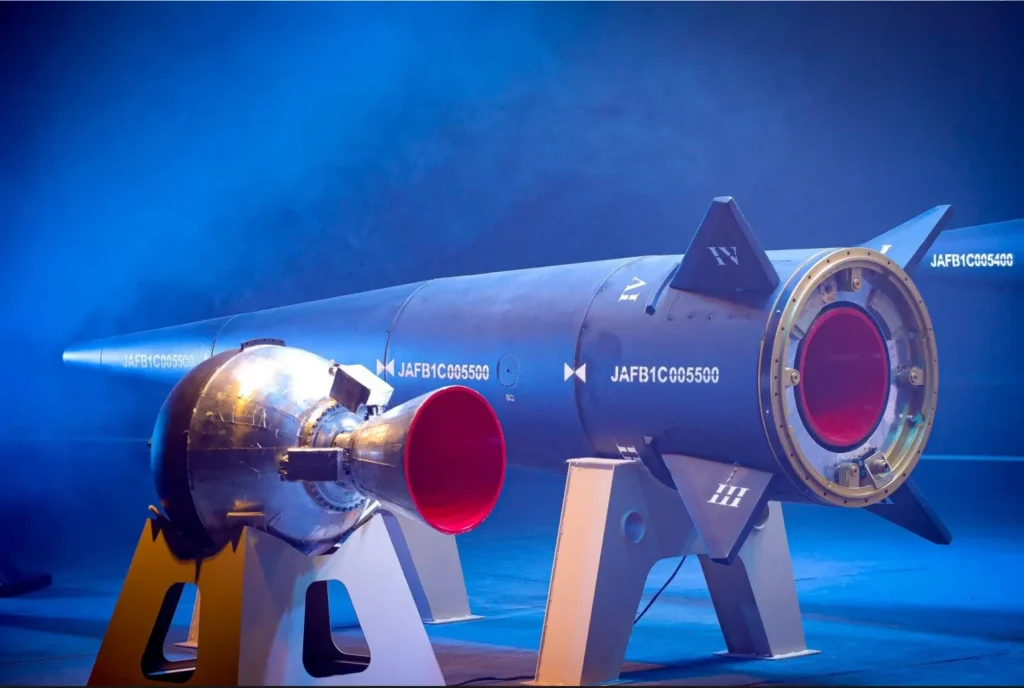
The deployment of the Fattah-1 hypersonic missile marks a pivotal shift in the strategic military balance of the Middle East. Its extreme speed, maneuverability, and evasion capabilities pose a direct challenge to some of the most sophisticated missile defense systems in the world, including Israel’s Iron Dome, David’s Sling, and the U.S.-operated Patriot missile batteries.
These defense platforms, designed primarily for intercepting traditional ballistic missiles, are less effective against hypersonic threats that can alter their flight paths at ultra-high speeds.
Read also: Khorramshahr-4 Ballistic Missile
For Israel and other regional adversaries, the Fattah 1 missile represents a significant escalation in Iran’s offensive capabilities. Its ability to deliver precision strikes against military bases, infrastructure, or high-value targets within a 1,400-kilometer radius increases the risk of sudden, hard-to-intercept attacks.
This could force neighboring countries to reassess their defense strategies, invest in next-generation interceptors, and develop new early-warning and tracking technologies specifically designed for hypersonic threats.
Internationally, the introduction of the Iranian hypersonic missile Fattah-1 adds complexity to global non-proliferation efforts and raises concerns among Western defense alliances.
The missile’s potential compatibility with a nuclear warhead has amplified worries about regional stability, as it could serve as both a strategic deterrent and a first-strike weapon in a high-stakes conflict.
As Iran continues to develop the next-generation Fattah-2 hypersonic glide vehicle, the balance of power in the Middle East is set to enter a new, more uncertain phase.
Since its official unveiling, the Fattah-1 hypersonic missile has moved beyond the testing phase and into operational deployment.
Reports from regional conflict monitoring sources confirm that the missile was used during the October 2024 strikes on Israel, marking its first known combat application.
Defense analysts and satellite imagery assessments indicated that at least some of the incoming missiles matched the flight profiles and speeds consistent with the Fattah-1 system.
Read also: Kheibar Shekan Missile: Iran’s Third-Gen Ballistic Powerhouse
These operational uses have validated Iran’s claims about the missile’s ability to evade modern missile defense systems.
Israeli defense sources acknowledged the difficulty in tracking and intercepting the missiles due to their high maneuverability and hypersonic velocity, with several warheads reportedly reaching their intended targets or causing defensive systems to misfire.
This demonstrated capability has raised alarm among regional militaries, as existing interception technologies appear insufficient to fully neutralize such fast and adaptable threats.
The successful deployment of the Fattah-1 missile in real-world combat signals a new chapter in Iran’s tactical doctrine. Its solid-fuel design allows for rapid launch without extensive preparation, enabling quick-strike scenarios that can overwhelm enemy defenses with little warning.
Military experts now consider the Fattah-1 not just a symbolic technological achievement but a functional, battlefield-ready weapon system that could see wider use if regional tensions escalate further.
The introduction of the Fattah 1 hypersonic missile presents significant challenges for current missile defense systems. Unlike conventional ballistic missiles that follow predictable parabolic trajectories, hypersonic missiles like the Fattah-1 can perform unpredictable maneuvers during flight, particularly in the terminal phase, making tracking and interception by systems such as the Patriot, Iron Dome, David’s Sling, and Arrow missile defenses far more difficult.
Read also: 5 Reasons Why Ballistic Missiles Are Hard to Intercept
One of the main countermeasure challenges is the sheer speed of the Fattah-1 missile. Traveling at up to Mach 15, the missile reduces response times to mere seconds, potentially overwhelming radar and interception systems not specifically designed to handle hypersonic threats.
Furthermore, its maneuverable reentry vehicle (MaRV) complicates the task of calculating an interception point, forcing defenders to develop new algorithms, faster-response interceptors, and advanced directed-energy weapons or space-based sensors.
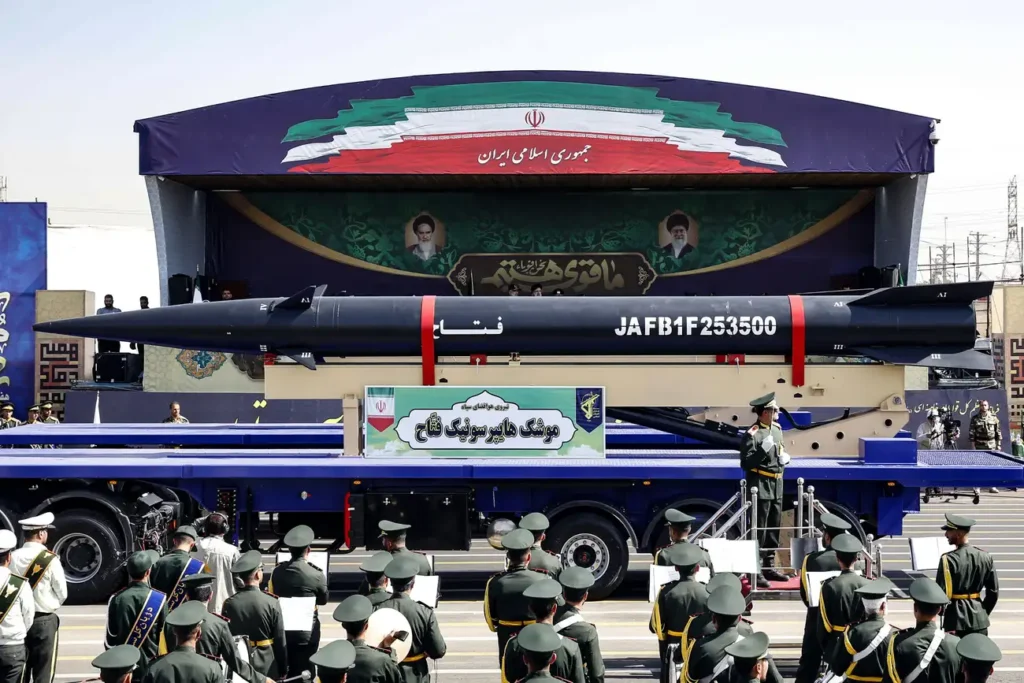
Defense experts suggest that only the next generation of hypersonic missile defense technologies, including directed energy weapons (lasers), hypersonic interceptors, and improved space-based early warning systems, might offer effective countermeasures against systems like the Fattah-1.
Until such defenses are operational, the missile poses a serious challenge to regional and possibly global military security frameworks, raising concerns in NATO, Israel, and Gulf Cooperation Council (GCC) nations about the growing sophistication of Iran’s missile arsenal.
The emergence of the Fattah-1 hypersonic missile represents a turning point in Iran’s strategic military capabilities and has significantly altered the defense landscape of the Middle East.
As the first operational hypersonic weapon in the region, the Fattah-1 showcases Iran’s ability to develop sophisticated missile technology independently, narrowing the technological gap with global military powers such as the United States, Russia, and China.
While the Fattah-1 missile is already a formidable asset, Iran’s rapid unveiling of the Fattah-2 hypersonic glide vehicle (HGV) indicates that this is only the beginning of a broader hypersonic weapons program.
Future developments are likely to focus on extending range, improving maneuverability, and integrating new guidance systems, potentially making these missiles even harder to detect and intercept.
For regional and global defense planners, the operational deployment of the Iranian hypersonic missile Fattah-1 demands urgent reassessment of missile defense strategies. Nations within its strike radius, including Israel, U.S. military installations, and Gulf States, must invest in next-generation interceptors and early-warning systems designed specifically for hypersonic threats.
As Iran continues to refine this technology, the balance of power in the Middle East may continue to shift, introducing new risks and complexities into already tense geopolitical dynamics.