Follow Us:
Follow Us:

Ever wondered what kind of helicopter flies into a warzone just to pull someone out? Meet the HH-60 Pave Hawk, the U.S. Air Force’s elite combat rescue helicopter, designed to go where others can’t and bring people home alive.
Built by Sikorsky and based on the iconic Black Hawk platform, the HH-60 Pave Hawk helicopter isn’t your average military chopper. It’s a mission-driven machine, customized for combat search and rescue (CSAR) operations. You’ll find it flying in and out of enemy territory, braving storms, or hovering above natural disasters to save lives.
What makes it special? It’s got upgraded avionics, a reinforced airframe, in-flight refueling, and one of the most rugged mission profiles of any Air Force aircraft.
The original HH-60G Pave Hawk entered service in the late 1980s and quickly proved its worth in places like Iraq, Afghanistan, and even during Hurricane Katrina. With its ability to fly at night, navigate in bad weather, and survive under fire, it’s become one of the most reliable helicopters for rescue missions.
Now, a newer version is taking over — the HH-60W Jolly Green II. This HH-60W combat rescue helicopter offers longer range, better protection, and advanced sensors. Still, the legacy of the Pave Hawk helicopter lives on through its long list of missions and the airmen who fly it.
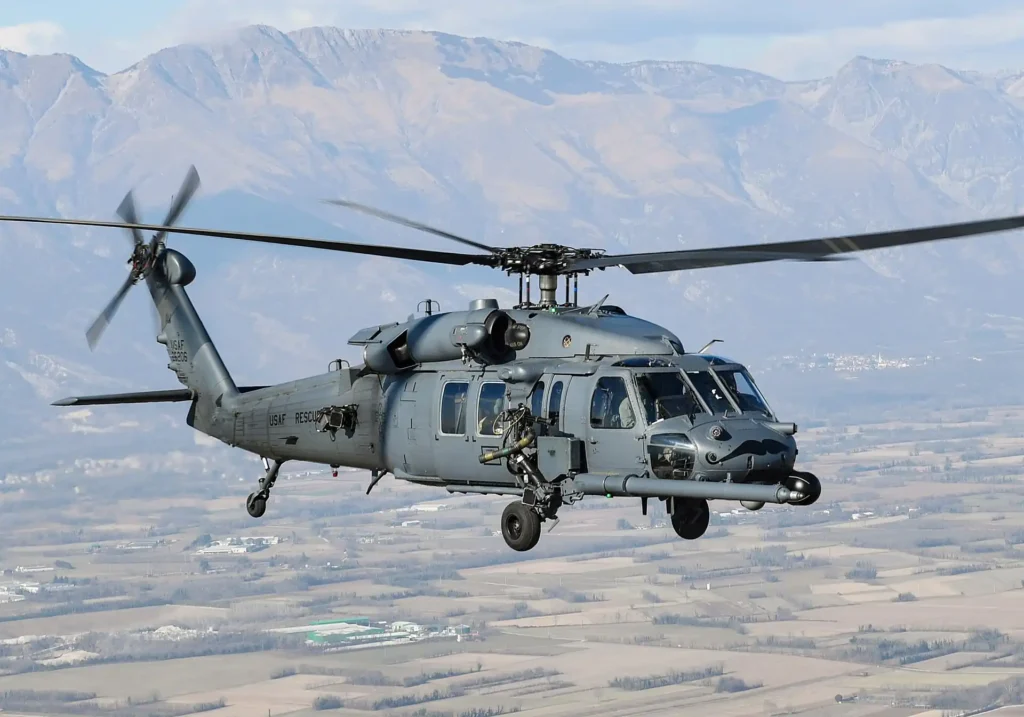
Whether you call it the HH-60 helicopter, the Pave Hawk, or just “rescue,” this aircraft is built for one thing — saving lives.
In this post, we’ll break down the story behind the Sikorsky HH-60 Pave Hawk, explore its features, and explain why it’s been a crucial part of U.S. airpower for decades.
The story of the HH-60 Pave Hawk starts in the 1980s when the U.S. Air Force needed a helicopter that could do more than just transport troops. It needed something fast, reliable, and tough enough to fly into enemy territory, pick up wounded personnel, and get out safely. The solution? Modify an existing workhorse — the UH-60 Black Hawk — and turn it into a rescue-focused combat helicopter.
That’s how the Sikorsky HH-60 Pave Hawk was born. The Air Force began with the MH-60G Pave Hawk, a special operations variant of the Black Hawk developed for U.S. Special Operations Command. These early models were equipped with long-range navigation, secure communications, and infrared sensors. By 1991, the CSAR mission became a priority, and the aircraft evolved into the HH-60G Pave Hawk, focused solely on rescue and recovery.
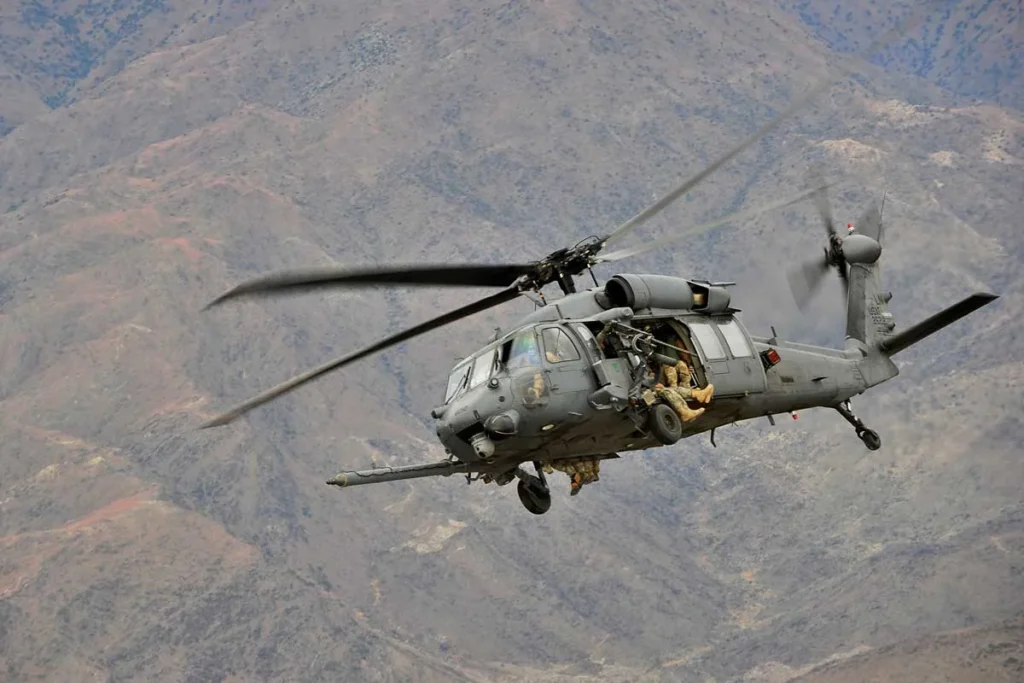
The “PAVE” in Pave Hawk stands for “Precision Avionics Vectoring Equipment,” and that’s no marketing gimmick. The upgraded avionics included an inertial navigation system (INS), GPS/Doppler radar, and automatic flight control — all designed to help crews fly low and fast, even in total darkness or bad weather. These systems became a game-changer for night missions and high-risk recoveries.
Another key upgrade was the addition of a retractable in-flight refueling probe, giving the HH-60 helicopter extended range. Auxiliary fuel tanks and armored seats were also added, making it more survivable in hostile environments. Unlike the standard Black Hawk, the HH-60 Pave Hawk helicopter came ready for combat with defensive countermeasures like radar warning receivers, missile warning systems, and flare/chaff dispensers.
As operational needs grew, so did the number of missions. From the deserts of the Middle East to the jungles of Southeast Asia, the HH-60 Pave Hawk became the go-to platform for life-or-death rescues. Its robust design, mission flexibility, and unmatched capabilities set the standard for what a combat rescue helicopter should be.
When it comes to saving lives in extreme conditions, the HH-60 Pave Hawk stands apart. Every component of this combat rescue helicopter is tailored for precision, survivability, and rapid response — whether it’s flying into a firefight or extracting injured personnel during a natural disaster.
One of the most important aspects of the Pave Hawk helicopter is its advanced avionics suite. The aircraft uses a combination of GPS/Doppler navigation, inertial systems, and satellite communication (SATCOM) that allows it to operate independently in remote or GPS-denied environments. It also features Have Quick secure radio systems for encrypted voice communication, ensuring safe coordination during sensitive missions.
Night operations are where the Sikorsky HH-60 Pave Hawk truly shines. The cockpit is fully compatible with night vision goggles (NVGs), and the helicopter is equipped with a forward-looking infrared (FLIR) camera mounted on the nose. This allows pilots to identify terrain, targets, or survivors in low-light or no-light environments — a critical asset during high-risk rescues.
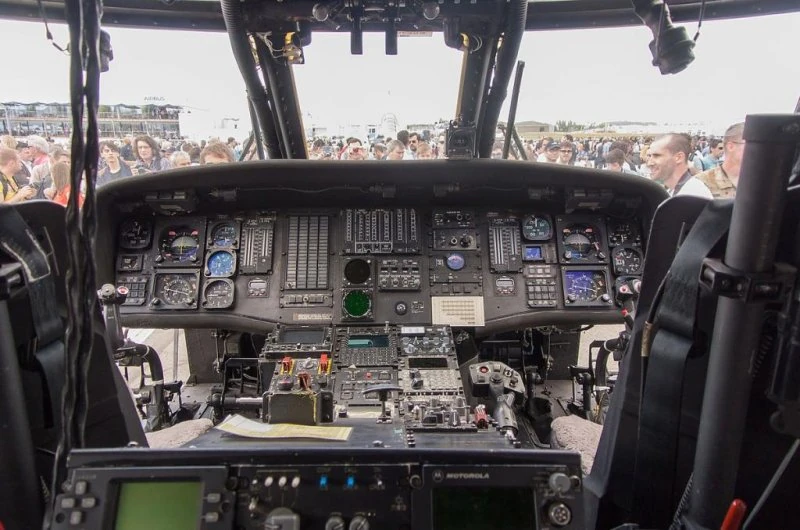
The HH-60 Pave Hawk cockpit is built for control and situational awareness. It includes weather radar, a digital map system, and multiple heads-up displays that reduce pilot workload. Combined with its automatic flight control system, pilots can maintain stability during hover or refueling operations with incredible precision.
Survivability is another strong point. The HH-60 helicopter comes with defensive countermeasures such as radar warning receivers, missile approach warning systems, and flare/chaff dispensers. It also features self-sealing fuel tanks, armored crew seats, and bullet-resistant flooring, increasing its chance of returning safely under hostile fire.
Read also: MH-6 Little Bird Helicopter: Why It’s a Game-Changer in Special Ops
For medical missions, the aircraft carries a rescue hoist capable of lifting 600 pounds from 200 feet below. Inside, the cabin can be configured for medevac operations with space for litters and emergency care gear. Additional auxiliary fuel tanks can extend the helicopter’s range up to 600 nautical miles when refueled in-flight, a critical factor for deep recovery missions.
In short, the HH-60G Pave Hawk isn’t just a transport helicopter — it’s a flying emergency room, command post, and frontline rescue team all rolled into one.
While many helicopters can fly, few perform with the versatility and ruggedness of the HH-60 Pave Hawk. Under the hood, this combat rescue helicopter is built to endure punishing conditions while carrying out highly complex missions, from precision landings under fire to high-altitude medevac extractions.
Powering the HH-60 helicopter are two General Electric T700-GE-700 or 701C turboshaft engines, each delivering around 1,560 shaft horsepower. This gives the Pave Hawk helicopter enough muscle to lift heavy loads while maintaining speed and maneuverability. The engines are also equipped with infrared suppressors to reduce heat signatures and lower vulnerability to heat-seeking missiles — a key feature when operating in hostile areas.
In terms of speed, the Sikorsky HH-60 Pave Hawk can reach a maximum cruising speed of approximately 184 miles per hour (159 knots). Its unrefueled range is about 504 nautical miles, and thanks to its retractable in-flight refueling probe, that range can be extended significantly. This ability to refuel midair allows the aircraft to stay in the fight for hours, a capability that’s essential for long-distance or multi-phase rescue operations.

The helicopter’s maximum gross weight comes in at around 22,000 pounds, including fuel, crew, equipment, and mission payload. It can lift external cargo loads of up to 8,000 pounds with its cargo hook system, although its real focus is usually on troop or medical transport.
Inside, the aircraft is crewed by two pilots, a flight engineer, and a gunner, with room to carry pararescue specialists and up to 12 fully equipped troops or multiple stretchers. The HH-60 Pave Hawk cockpit offers advanced avionics and situational awareness systems, enabling the crew to operate effectively even in low visibility or combat environments.
With a rotor diameter of 53.6 feet, an overall length of 64.8 feet, and a height of about 16.7 feet, the HH-60G Pave Hawk is a mid-size helicopter that packs a big punch. It fits easily on transport aircraft or ships, giving it global reach when paired with the right logistics.
These specifications prove that the HH-60 Pave Hawk helicopter is more than capable — it’s built for high-stakes missions, where failure simply isn’t an option.
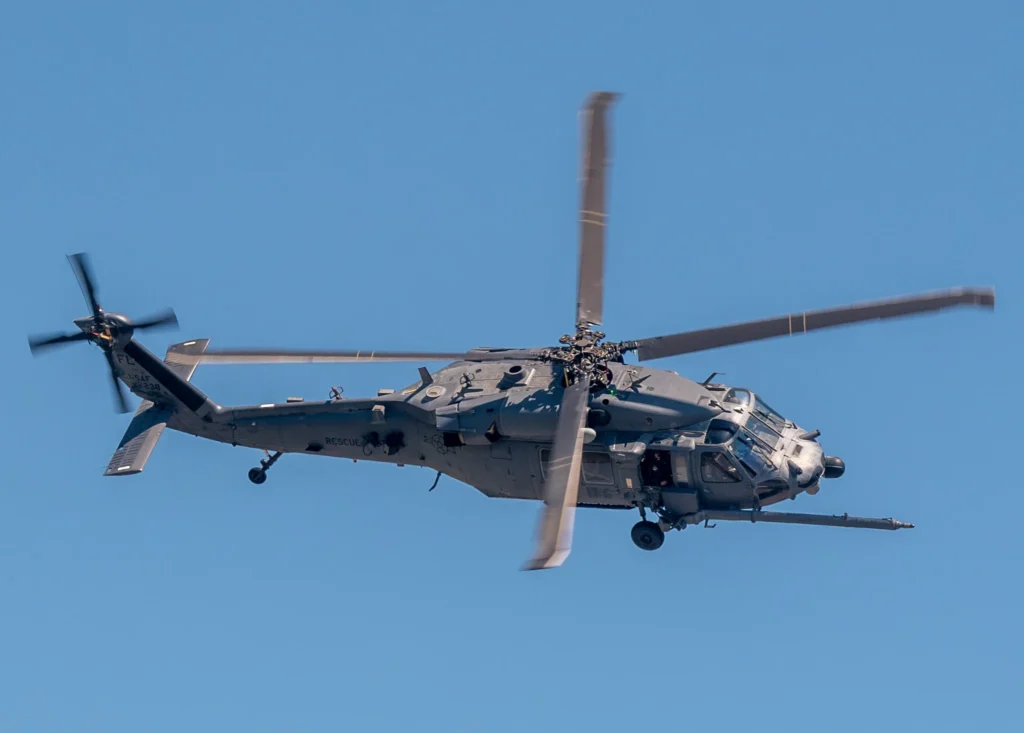
The HH-60 Pave Hawk isn’t just a machine, it’s a lifeline. Designed to operate where most aircraft can’t, it has served as the backbone of the U.S. Air Force’s combat search and rescue (CSAR) mission for more than three decades. Whether flying into enemy territory under fire or pulling survivors from a flood zone, the HH-60 helicopter is often the first in and the last out.
Its primary role is combat rescue, recovering downed aircrew or isolated personnel from behind enemy lines. Since its introduction, the HH-60G Pave Hawk has participated in every major U.S. conflict, including Desert Storm, Operation Allied Force, Operation Enduring Freedom, and Operation Iraqi Freedom.
These weren’t routine missions. Crews often flew in at night, under fire, and with little room for error. The combination of speed, precision, and onboard protection made the Pave Hawk helicopter the platform of choice for these high-risk recoveries.
Read also: Pave Hawk vs Black Hawk: What Sets These Helicopters Apart?
But its value doesn’t stop at the battlefield. The Sikorsky HH-60 Pave Hawk has also played a major role in humanitarian missions. After Hurricane Katrina in 2005, HH-60s rescued hundreds stranded on rooftops and in flooded neighborhoods.
During the 2011 tsunami in Japan and the Mozambique floods of 2000, these helicopters delivered food, extracted injured civilians, and provided medical aid in hard-to-reach places. In many of these operations, the Pave Hawk’s rescue hoist and NVG-compatible cockpit were essential.
Its versatility extends beyond combat and disaster relief. The HH-60 also supports medical evacuations, personnel insertions and extractions, and even diplomatic evacuations. In 2021, the HH-60G was among the aircraft deployed during the final withdrawal of American forces from Afghanistan — a mission that demanded speed, stealth, and flexibility.
Each mission carried out by the HH-60 Pave Hawk helicopter is a testament to its reliability, toughness, and the aircrews who operate it. Whether it’s pulling a pilot out of enemy territory or dropping supplies to earthquake victims, this helicopter has proven again and again that it’s built to save lives, not headlines.
Over time, the HH-60 Pave Hawk family has evolved through a series of upgrades and new models, each designed to keep pace with changing missions and more dangerous environments. Let’s look at how this iconic helicopter has transformed.
The story begins with the MH-60G Pave Hawk, originally developed for special operations forces. These helicopters had extended-range fuel systems, advanced avionics, and defensive countermeasures.
In 1991, as the Air Force focused more on dedicated rescue missions, the design shifted to the HH-60G Pave Hawk, optimized specifically for combat search and rescue. This version kept much of the same equipment but tailored the mission kit for recovering personnel behind enemy lines.
Over the years, the HH-60G received incremental improvements, including updated GPS navigation, improved weather radar, and more secure communication systems. These upgrades kept the aircraft relevant through multiple wars and humanitarian crises.
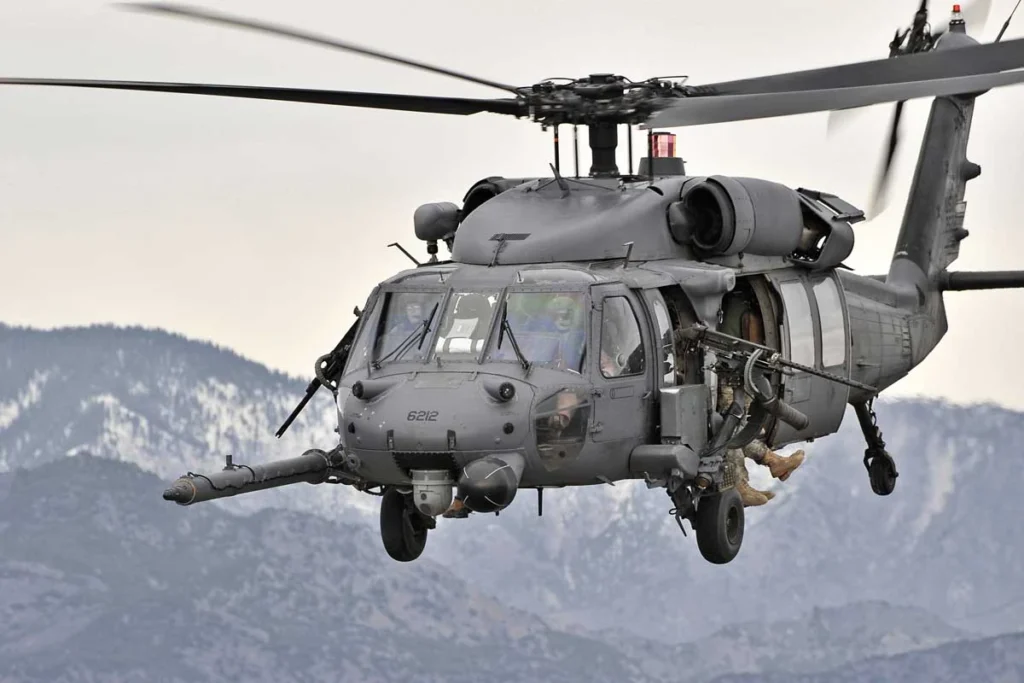
The future of Air Force rescue operations arrived with the HH-60W helicopter, also known as the Jolly Green II. While it looks similar to the Pave Hawk, it’s an entirely new platform under the skin. It carries nearly double the internal fuel, boosting range to over 650 nautical miles without extra tanks.
The HH-60W cockpit features modern glass displays, upgraded mission computers, and cybersecurity protections — all vital for today’s complex airspace.
Protection is another huge leap forward. The HH-60W combat rescue helicopter has improved armor plating, new defensive countermeasure systems, and an upgraded electrical system that supports more advanced sensors and jamming equipment.
With the Sikorsky HH-60 Pave Hawk gradually being replaced, the Jolly Green II promises the next generation of rescue crews even more survivability and flexibility wherever they’re needed.
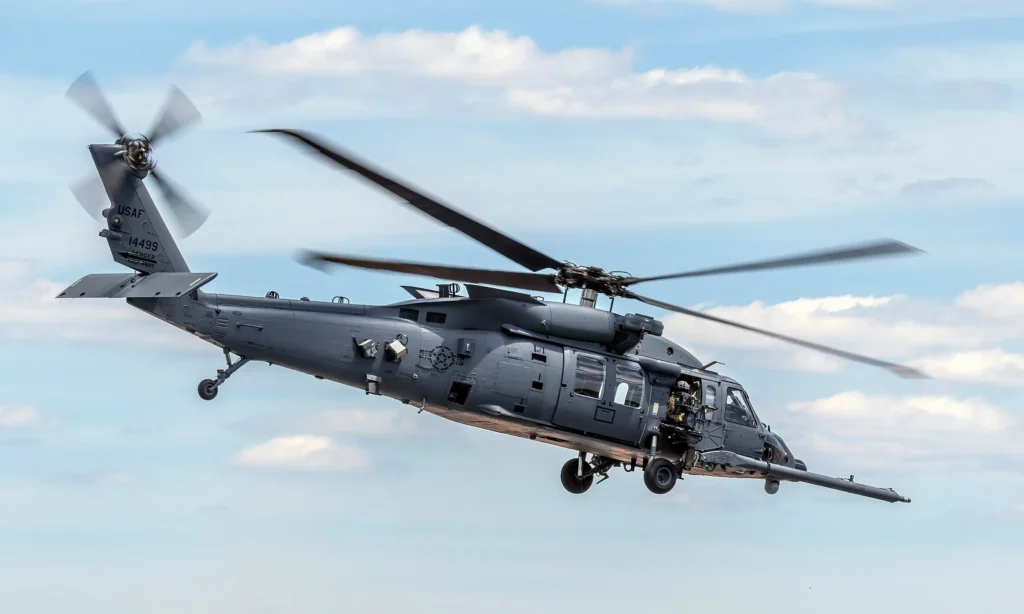
After decades of lifesaving service, the HH-60G Pave Hawk is gradually being retired. The transition marks the end of an era — and the beginning of a more advanced chapter with the HH-60W Jolly Green II. But this shift isn’t happening overnight. It’s been a carefully phased process to ensure that rescue capabilities remain uninterrupted while the Air Force upgrades its fleet.
The Air Force began retiring the HH-60G Pave Hawk in earnest around 2023, with the goal of replacing it entirely by late 2025. By the end of 2024, many active-duty and reserve squadrons had already received initial deliveries of the HH-60W combat rescue helicopter, and training programs were fully underway.
One of the most symbolic moments came in December 2024, when the 56th Rescue Squadron at Aviano Air Base in Italy flew its final mission in the HH-60G, officially closing a 30-year operational chapter.
Currently, the HH-60W helicopter is being deployed across key rescue squadrons in the continental U.S., Europe, and the Pacific. Designed to meet modern combat demands, the new platform brings significantly improved range, survivability, and digital systems that make it far more adaptable for tomorrow’s battlespaces.

Despite the excitement surrounding the Jolly Green II, the Air Force isn’t rushing the process. Some Air National Guard units and Air Force Reserve components still operate the HH-60 Pave Hawk helicopter, particularly in support or humanitarian roles. These units are expected to complete the transition by mid-2026, depending on budget cycles and mission readiness assessments.
The retirement of the Sikorsky HH-60 Pave Hawk also means the end of a platform that defined combat rescue for an entire generation. From Desert Storm to Afghanistan to domestic disaster relief, the HH-60 helicopter proved that it could go anywhere, anytime, and bring people back alive.
The HH-60 Pave Hawk has carved out a legendary role in the U.S. Air Force as the helicopter that never backs down from danger. From war-torn battlefields to natural disaster zones, this rugged aircraft has carried out some of the most critical and courageous missions in modern military history. Its advanced cockpit, robust design, and powerful rescue systems made it the ideal combat rescue helicopter for over three decades.
Though the HH-60G Pave Hawk is nearing the end of its operational life, its legacy lives on in the HH-60W Jolly Green II, a next-gen HH-60W helicopter designed to meet the challenges of modern warfare and evolving rescue missions. As the transition continues, Air Force rescue units are gaining more range, firepower, and survivability than ever before.
Whether you’re an aviation enthusiast, military analyst, or someone curious about the tools that save lives, the story of the HH-60 Pave Hawk helicopter is one of innovation, bravery, and mission-first engineering. It’s not just a machine, it’s a symbol of the Air Force’s promise: “These things we do, that others may live.”