Follow Us:
Follow Us:

Not long ago, footage emerged from the U.S. Air Force combat search and rescue drill in Eastern Europe—amid rising regional tensions and concerns over NATO readiness. What caught the attention of many wasn’t just the daring mock-extraction of a downed pilot behind enemy lines—it was the aircraft involved.
At first glance, it looked like a standard UH-60 Black Hawk, the same helicopter that’s been a backbone of U.S. Army operations for decades. But it wasn’t. It was the HH-60 Pave Hawk, a lesser-known, heavily modified cousin built for some of the military’s most dangerous missions.
This moment serves as a reminder that while the Black Hawk is iconic, its variants—especially the Pave Hawk—have quietly evolved to meet the needs of special operations, medevac, and search and rescue missions that go far beyond conventional troop transport.

To the untrained eye, the two helicopters may seem interchangeable. But in reality, the differences between the Pave Hawk vs Black Hawk reflect entirely different combat roles, engineering priorities, and service philosophies between the U.S. Army and the U.S. Air Force.
So, what actually sets them apart? And why does it matter now?
When the U.S. Army began looking for a new utility helicopter in the 1970s, it was responding to hard-learned lessons from Vietnam.
The iconic Huey had done its job, but it had limits—especially when it came to survivability, lift capacity, and versatility in modern combat. What followed was the development of the UH-60 Black Hawk, a helicopter that would go on to define U.S. military mobility for the next several decades.
First introduced in the early 1980s, the Black Hawk was designed to be a rugged, fast, and reliable tactical transport helicopter. Its primary mission was to move troops and equipment quickly across the battlefield, often under fire.
But from the beginning, there was an emphasis on making it adaptable. Over time, the Black Hawk’s role has expanded far beyond basic transport—it has been used for air assault, command and control, medevac, and even close air support when equipped with weapons systems.
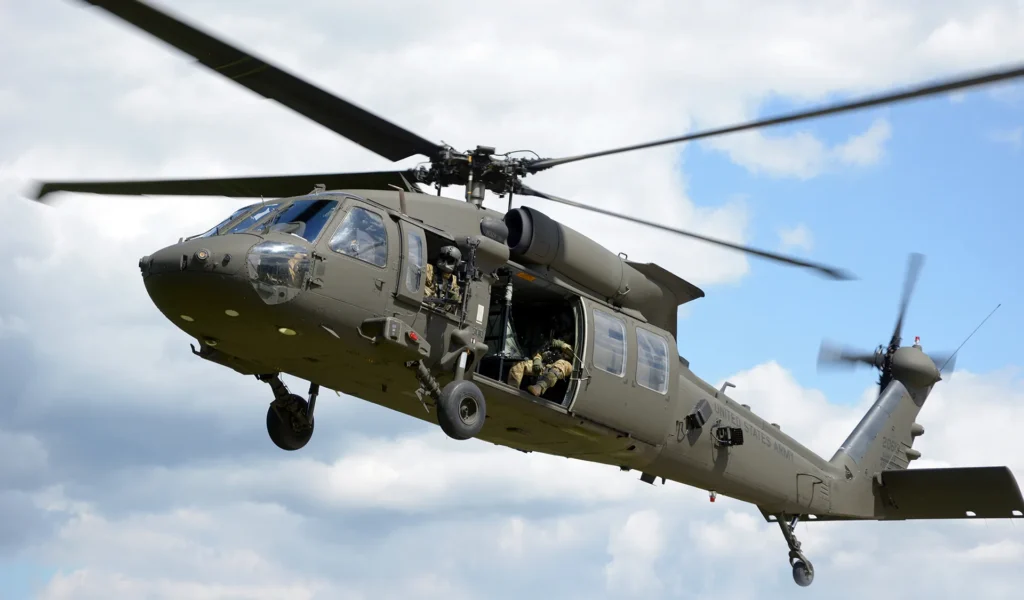
In terms of specs, the standard UH-60 can cruise at speeds of over 150 knots (about 280 km/h), carry 11 fully equipped troops, and lift around 9,000 pounds of internal and external cargo. Its twin engines and reinforced airframe give it resilience in high-threat environments, while its modular design makes it easier to upgrade or adapt for different missions.
This balance of speed, power, and flexibility has made it a go-to platform not only for the U.S. Army, but also for allies and partners around the world.
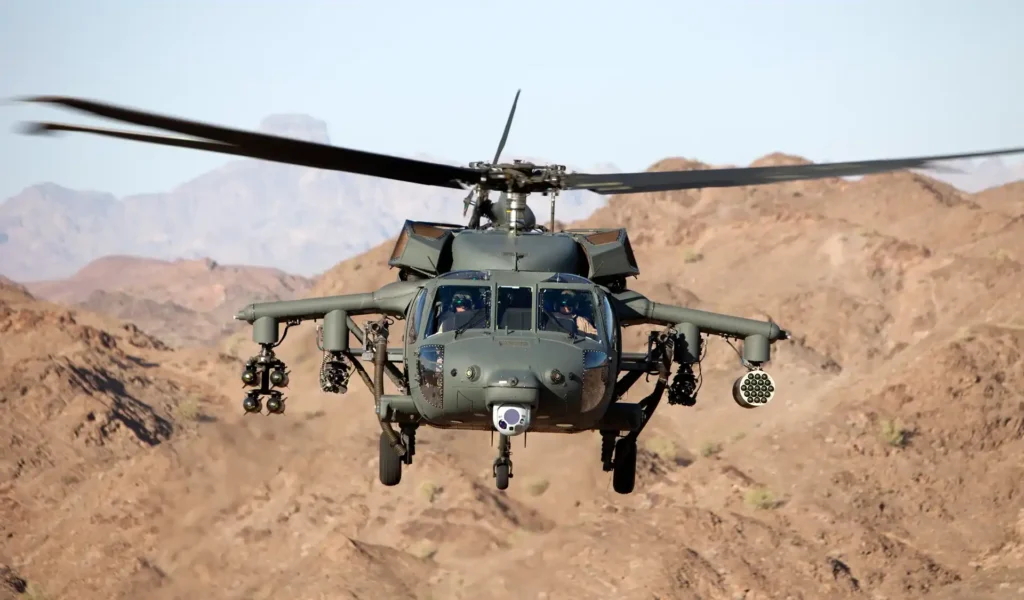
Today, variants of the Black Hawk are in service in more than 30 countries. From Australia to Poland, from Colombia to South Korea, militaries around the globe have adopted the Black Hawk for its proven performance in both conventional warfare and humanitarian operations.
Its reputation is grounded in decades of combat use—from Mogadishu and Afghanistan to more recent deployments in Eastern Europe and the Indo-Pacific.
But as capable as it is, it wasn’t built for everything. That’s where specialized variants like the HH-60 Pave Hawk come in—aircraft designed not just to move soldiers, but to extract them from behind enemy lines, often under the most extreme conditions imaginable.
At first glance, the HH-60G Pave Hawk looks nearly identical to the UH-60 Black Hawk. And that’s no coincidence—it is based on the same airframe. But while the Black Hawk was built to serve as a general-purpose utility workhorse for the U.S. Army, the Pave Hawk was designed with something far more specific—and arguably more dangerous—in mind.
Developed in the 1980s and fielded by the U.S. Air Force, the Pave Hawk was engineered to perform Combat Search and Rescue (CSAR)—missions where speed, precision, and survivability can mean the difference between life and death.
Its job is to fly deep into hostile territory, often under fire or in complete darkness, to rescue downed pilots, special operators, or other isolated personnel. It may also perform medevac operations under combat conditions, especially when conventional helicopters can’t safely get in or out.
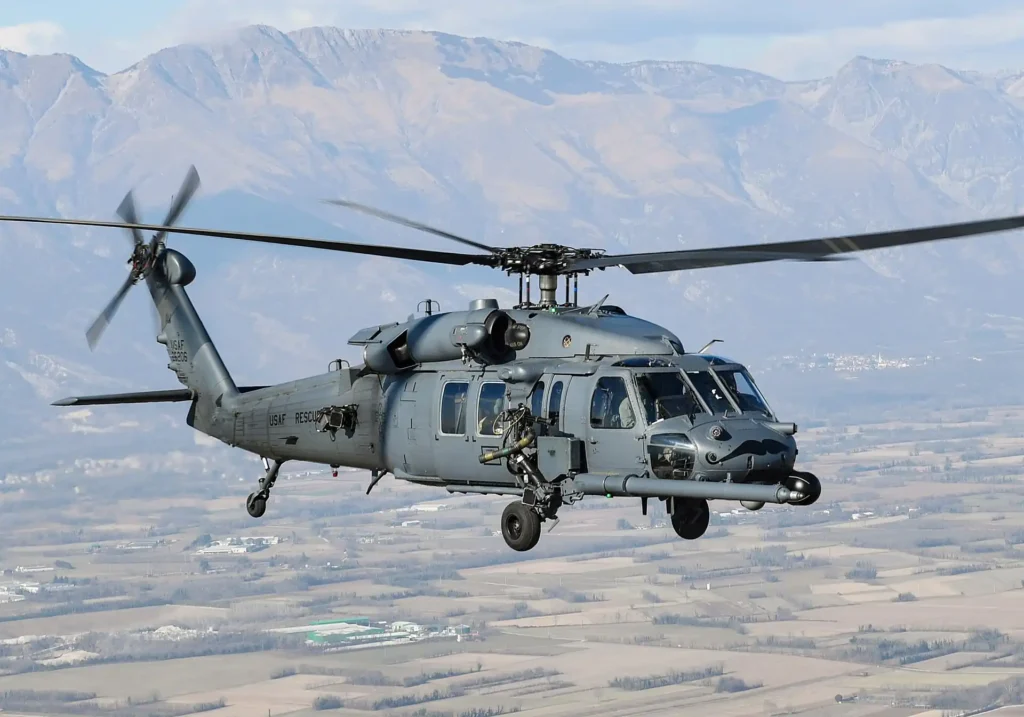
To do this, the HH-60 Pave Hawk carries a suite of mission-specific upgrades that set it apart from its Army counterpart. These include an advanced radar and forward-looking infrared (FLIR) system for night and all-weather flying, in-flight refueling capability, and upgraded defensive systems such as radar warning receivers and countermeasures to avoid heat-seeking missiles. Its rescue hoist, external gun mounts, and secure communications gear make it far more than just a transport helicopter—it’s a flying lifeline.
While the Black Hawk typically operates in coordinated battlefield roles, the Pave Hawk is often deployed in more isolated, high-risk environments. It’s used by specialized units such as the U.S. Air Force’s pararescue teams (PJs), whose entire mission revolves around saving lives in the most hostile conditions imaginable.

That said, the Pave Hawk and Black Hawk still share much of the same DNA—and that’s part of what makes the Pave Hawk so effective.
By building on a proven platform and then layering on advanced rescue and special ops helicopter capabilities, the Air Force was able to create a reliable, flexible, and incredibly tough aircraft tailored to one of the most demanding jobs in modern warfare.
Though the UH-60 Black Hawk vs HH-60 Pave Hawk share the same core airframe, their roles, equipment, and tactical use cases reflect two very different philosophies of military aviation.
The Black Hawk, developed for the U.S. Army, is first and foremost a utility helicopter. It’s meant to do a bit of everything—airlift troops, deliver supplies, evacuate casualties, or even serve as a mobile command post.
During operations in Iraq and Afghanistan, Black Hawks were routinely used to insert infantry squads into contested zones, transport weapons and ammunition to forward operating bases, or ferry injured soldiers to field hospitals. Its strength lies in versatility, not specialization.
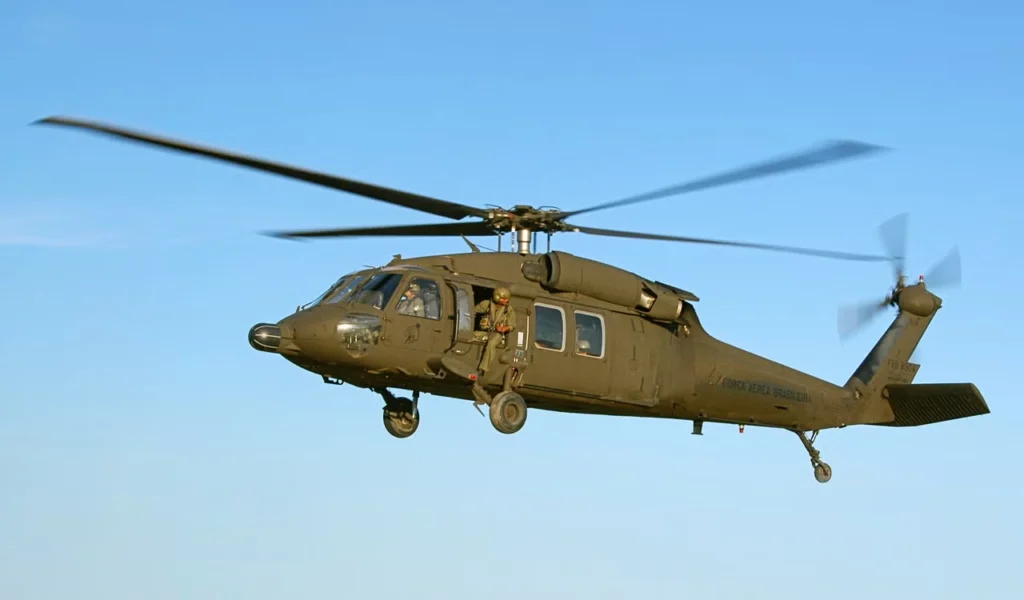
By contrast, the HH-60 Pave Hawk, fielded by the U.S. Air Force, was designed specifically for Combat Search and Rescue (CSAR)—a high-risk mission profile requiring more than just troop lift.
For example, during Operation Inherent Resolve in Syria and Iraq, Pave Hawks were tasked with extracting isolated personnel, including downed pilots and special operations troops, from areas threatened by ISIS fighters. These aren’t missions where you send just any helicopter—the Pave Hawk was built for that danger zone.
The Black Hawk is designed to be lean and modular, making it easier to deploy and maintain in large numbers. It can be armed with door-mounted M240 machine guns for basic defense, and its interior can be quickly reconfigured depending on the mission. But its equipment is generally kept mission-neutral—built for transport, not stealthy extractions.
The Pave Hawk, however, comes loaded. It’s equipped with a fixed aerial refueling probe, giving it near-limitless range when paired with a tanker aircraft like the HC-130J Combat King II.
In 2018, during Arctic rescue exercises, Pave Hawks demonstrated this capability by flying extended sorties in subzero conditions—something a standard Black Hawk would struggle to accomplish.
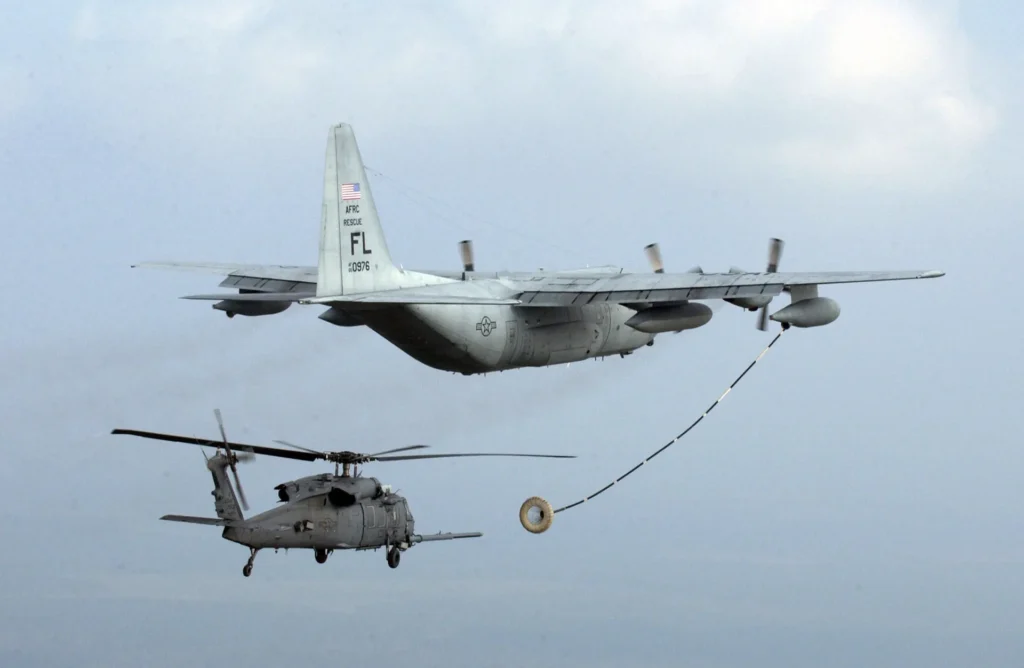
Pave Hawks also carry .50 caliber GAU-18/A machine guns, electronic countermeasures, chaff and flare dispensers, and infrared jammers—designed to survive in high-threat environments.
The Black Hawk is typically equipped with standard navigation systems and can be fitted with night vision goggle (NVG) compatibility, allowing it to operate after sunset—but within limits. It’s effective, but largely dependent on pilot skill and external support when flying in low visibility.
The Pave Hawk, on the other hand, is purpose-built for night and low-level flying. It includes forward-looking infrared (FLIR) cameras, terrain-following radar, radar altimeters, and advanced GPS/inertial navigation systems. These allow it to fly nap-of-the-earth—hugging the contours of mountains and valleys—to avoid detection by radar or hostile fire.
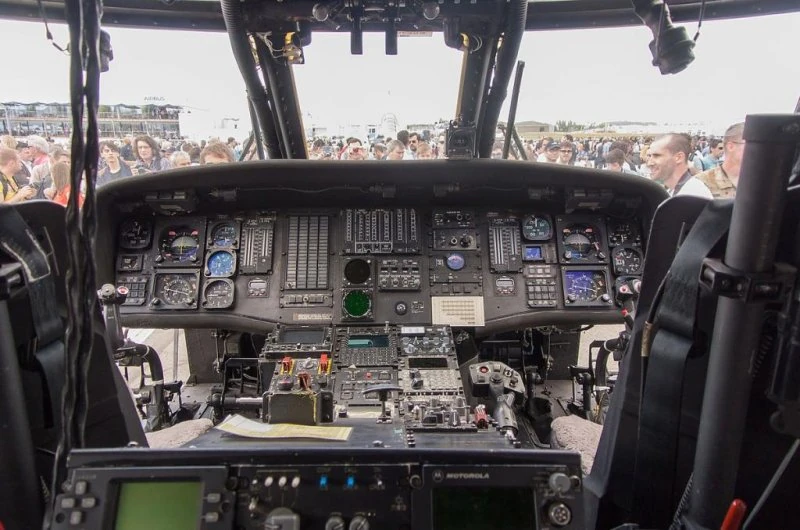
In real missions—like those in northern Afghanistan or the Horn of Africa—Pave Hawks have flown into mountainous regions at night, under cover of darkness, using terrain-following radar to evade enemy watchposts and extract personnel without alerting hostile forces. This is not just a “nice-to-have”—it’s often what keeps the crew alive.
Due to its modular design and broader role, the Black Hawk is significantly cheaper to build and maintain. Depending on the variant, it typically costs around $20 million USD, with lower long-term maintenance costs thanks to its standardized parts and simpler avionics.
The Pave Hawk, by contrast, is more expensive—estimated at $40 million or more per aircraft. That cost comes from its specialized components, survivability upgrades, and advanced sensors.
Additionally, its maintenance is more intensive, with ground crews needing to service more sensitive electronic systems and mission gear. This means the Pave Hawk is usually deployed in smaller numbers and reserved for missions where its extra capabilities are truly needed.
To put it in perspective: if the mission involves moving a platoon across open terrain under moderate threat, the UH-60 Black Hawk is likely the first choice—efficient, proven, and available in large numbers.
But if the call comes to extract a wounded pilot stranded in a remote valley under cover of darkness—possibly surrounded by enemy forces—then the Pave Hawk is the tool for the job.
Both helicopters serve critical roles within their respective branches—the Black Hawk for the U.S. Army, and the Pave Hawk for the U.S. Air Force—but they reflect two very different philosophies of airpower: one focused on mobility and scale, the other on precision and survivability.
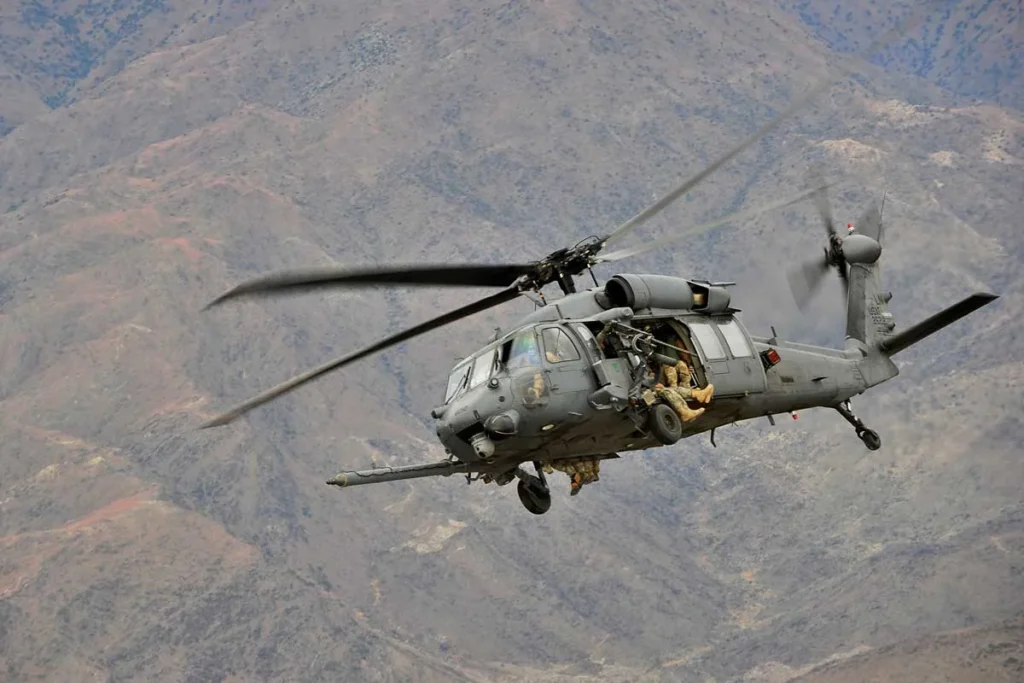
When comparing the Pave Hawk vs Black Hawk, theory only tells part of the story. To truly understand the differences between these helicopters, it’s helpful to look at where and how they’ve actually been used—in the chaos of combat, the urgency of disaster zones, and the high-risk moments that don’t always make the headlines.
The UH-60 Black Hawk has arguably become one of the most recognized military helicopters in the world—and for good reason. Since entering service in the late 1970s, it’s been a core part of U.S. Army operations in nearly every major conflict, from Operation Just Cause in Panama to Desert Storm, and more recently, Iraq and Afghanistan.
In Afghanistan, for instance, Black Hawks were used not just to transport troops into Taliban-held valleys, but also for casualty evacuation (medevac) and logistics.
Their ability to land in rough terrain, move quickly, and carry a range of payloads made them invaluable in places where roads were either mined or nonexistent. Even beyond combat, Black Hawks have served U.S. allies—from Colombia to the Philippines—as part of joint operations or security assistance.
A well-known (and somewhat dramatized) example of Black Hawk use was the 1993 Battle of Mogadishu, where two Black Hawks were shot down in Somalia—an incident that later inspired the book and film Black Hawk Down.
While tragic, the event highlighted how deeply embedded the Black Hawk is in U.S. military operations, and how it can sometimes be pulled into roles beyond what it was initially intended for.
While the HH-60 Pave Hawk shares a similar silhouette, its story plays out in much more focused, high-stakes missions. As part of the U.S. Air Force’s combat search and rescue (CSAR) teams, Pave Hawks have been repeatedly called upon to recover downed airmen, extract wounded special operations forces, and respond to emergencies in both combat zones and natural disaster areas.
One illustrative example comes from the early years of the Iraq War, where Pave Hawks were used to recover pilots who had crashed behind enemy lines—often under fire, in hostile territory, and at night.
In these situations, their night vision systems, electronic countermeasures, and in-flight refueling capabilities often made the difference between life and death.
In 2011, during Operation Tomodachi, Pave Hawks participated in humanitarian relief efforts following the earthquake and tsunami in Japan, helping deliver aid and evacuate injured civilians.
Similarly, they’ve been deployed to aid hurricane and flood victims in the U.S. and abroad, showing that while they are purpose-built for war, their capabilities can be adapted to crisis response.