Follow Us:
Follow Us:

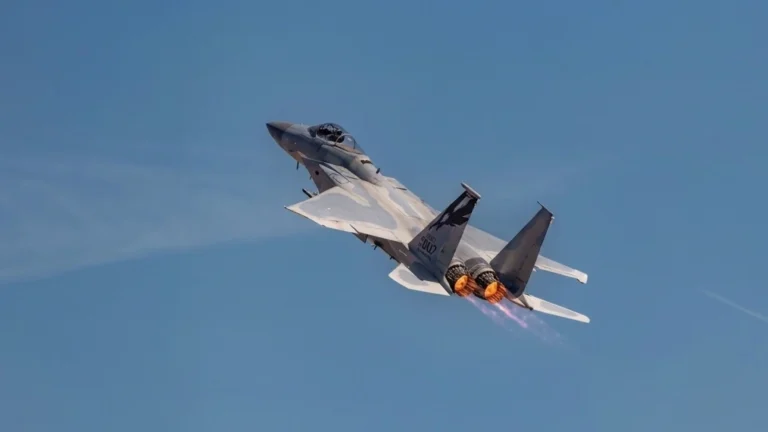
Most people would probably assume that a jet designed in the late 1970s should feel pretty outdated by now. The F-16 Viper, doesn’t quite fit that picture. Instead of fading into the background, it keeps finding ways to stay useful, almost as if it’s been aging in reverse.
Just a few weeks ago, for instance, Poland decided to put serious money into its fleet. Reports say Warsaw has agreed to a deal worth around $3.8 billion to upgrade 48 of its F-16C/D Block 52+ jets to the newer F-16V (Viper) standard. That might seem like old school catching up, but it really is a big deal. Greece, too, has already upgraded about 30 of its fleet and is eyeing many more.
And starting next year, a new layer of “digital armor” known as Viper Shield is going to arm the jets with even stealthier defenses.

It’s almost surprising that these fighter planes are getting cash and cutting-edge tech now, when you’d expect them to be mothballed. Maybe that’s the point, rather than retire them, many countries are betting that the F-16 Viper is still worth investing in.
So, why is that? How come a jet born long before the F-35 era can still be considered a top-tier asset in 2025?
When the U.S. Air Force first started thinking seriously about the F-16 back in the late 1960s and early ’70s, the mood in aviation circles was a little tense. Vietnam had shown that speed and heavy payloads weren’t everything.
Pilots were getting into close-range dogfights where agility and visibility mattered more than raw size. Out of that frustration grew the idea of a “lightweight fighter,” something that would be small, nimble, and cheap enough to buy in large numbers.
The story goes that a group of engineers and officers, often called the “Fighter Mafia”, pushed hard for this new approach. Some of the people pushing the idea believed that a lighter, more agile jet, one that gave the pilot a clear view out of the cockpit, might actually do better in a real fight than the heavier, high-tech aircraft then in service.It was a controversial pitch at the time, but General Dynamics ended up taking the contract.
Read also: F-20 Tigershark: Advanced Cold War Jet That Never Served
The funny part is that the very first YF-16 showed its potential almost by mistake. During a ground test in 1974, the test pilot pushed the throttle a bit harder than planned, and instead of just rolling down the strip, the jet lifted itself off the ground. It wasn’t part of the schedule at all, more of an accident. That unplanned leap into the air ended up convincing a lot of skeptics that the design had real promise.
From there, the F-16 Fighting Falcon entered production as a multi-role fighter, though most crews quickly started calling it the “Viper.” The nickname stuck, some say it reminded pilots of the snake’s aggressive look, while others point to the resemblance with the spacecraft in the old Battlestar Galactica series that was popular at the time.
What really set the F-16 apart was the little things that pilots noticed right away. The jet used fly-by-wire controls and the canopy was a big bubble with no heavy frame blocking the view.
On top of that, instead of the usual stick between the knees, the designers put a small side-stick on the right armrest. For today’s pilots those details might feel ordinary, but back in the mid-’70s they were almost shocking.
The F-16 people see flying today doesn’t really look like the ones that first came off the line back in the late ’70s. The design has been pushed and pulled in so many directions since then, new engines, new electronics, stronger frames, that it’s almost hard to compare the two.
Meanwhile, a lot of the other jets from that same period have already been retired or sit in museums, while the Viper just keeps getting updates.
The turning point toward what many now call the “Viper” standard didn’t come all at once. It built up slowly, as the U.S. Air Force and several foreign operators realized the airframe still had plenty of room to grow.
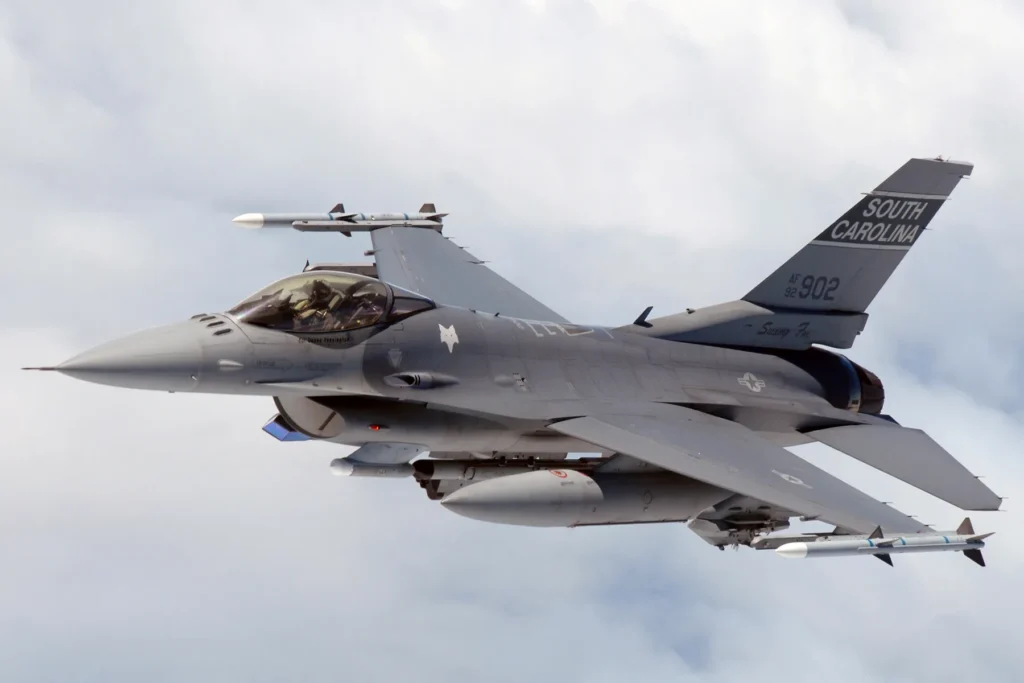
By the 1990s, and especially into the early 2000s, the F-16 was already showing up in new “blocks,” each one a little different from the last.
Some had stronger engines, others carried radar that could finally keep pace with modern threats, and pretty soon they were flying with targeting pods that allowed for precision strikes the first models were never meant to do.
Different countries wanted their own flavor too, Israel added its own systems, Greece asked for tweaks, Taiwan pushed for others. The airframe, instead of reaching its limit, just kept bending to whatever role it was given.
The biggest leap, though, came with the F-16V, often called the “Viper upgrade.” That’s when the jet picked up an AESA radar, big glass displays in the cockpit, and a suite of updated defenses against electronic threats.
From then on, “Viper” stopped being just a nickname pilots liked to use. It marked the jet’s second life, proof that a fighter born in the Cold War could still stand alongside much newer designs.
If the Viper has aged better than most jets from the 1970s, it probably comes down to one thing: the basics were right. The airframe was built to be light and responsive, not weighed down with extras. That foundation left plenty of room to grow.
The airframe blends the wings into the body, and with a strong engine pushing it along, the jet could twist and turn in ways that surprised people at the time. Pilots who flew it back then still mention how alive it felt in a tight turn, and even now it’s not exactly outclassed. A pilot once joked that sitting in a Viper was like strapping to a rocket with wings. Maybe that’s too dramatic, but it does capture how lively the jet feels when you’re at the controls.
Over the years, the Viper’s avionics and radar systems have been steadily upgraded. The early versions had fairly basic, mechanically scanned radar, good enough for the time, but nothing fancy. As upgrades rolled in, those sets were swapped out for better ones.
The newest Block 70 and Block 80 versions boast AESA (Active Electronically Scanned Array) radars. Pilots say this radar has the ability to manage multiple targets at once, track things more cleanly, and it’s much harder to jam. On top of that, the jet picked up datalinks, helmet sights, and advanced targeting pods.
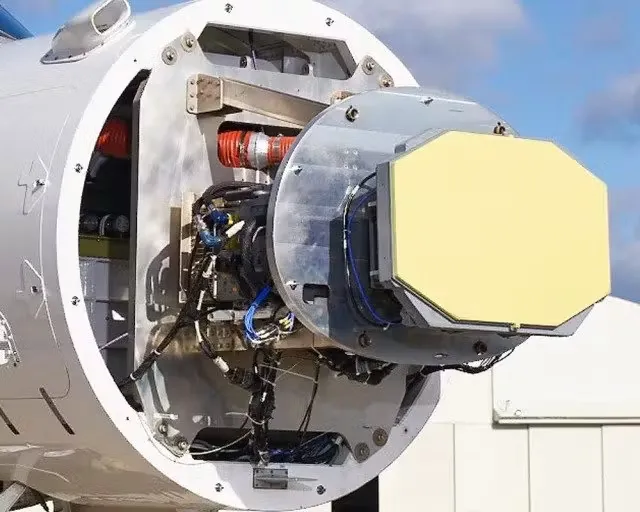
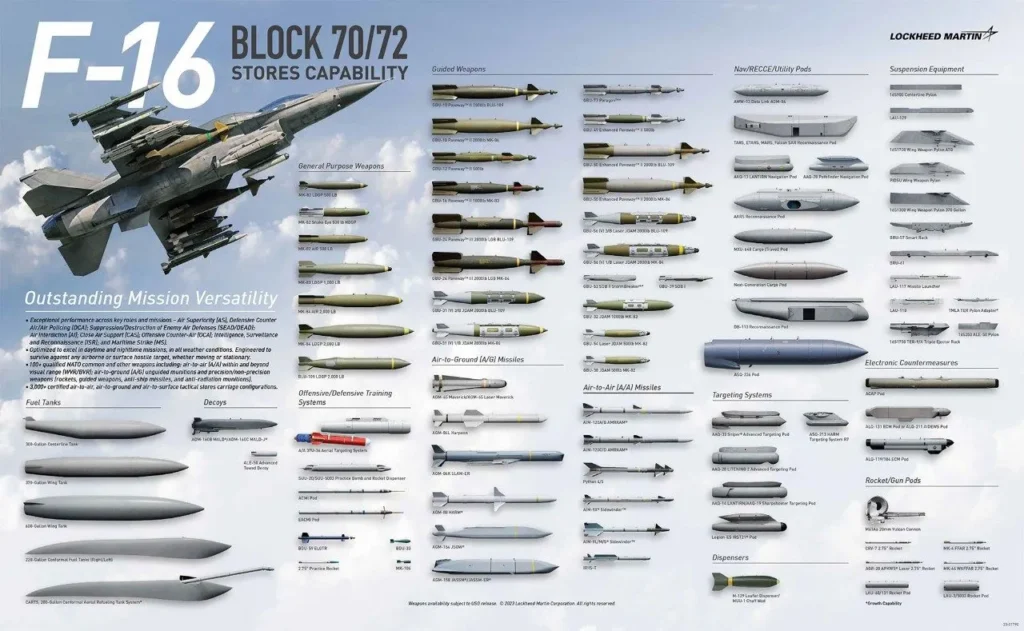
When it comes to weapons, the Viper has always been able to punch above its weight. In a fight, the Viper can sling Sidewinders up close or AMRAAMs when the target’s farther out.
The same jet can roll out with smart bombs, radar-killing missiles, or even anti-ship weapons if the mission calls for it. Not many jets from its time could swap around like that, which is probably why countries as different as the U.S., Taiwan, and Poland still stick with the F-16 instead of moving on completely.
The F-16 has lasted as long as it has because it evolves over time. Every decade or so, there’s been another round of tweaks. The newest package, known as the Block 70/72, is really the heart of the Viper’s revival. It looks like the same old F-16, but inside it’s a very different machine.
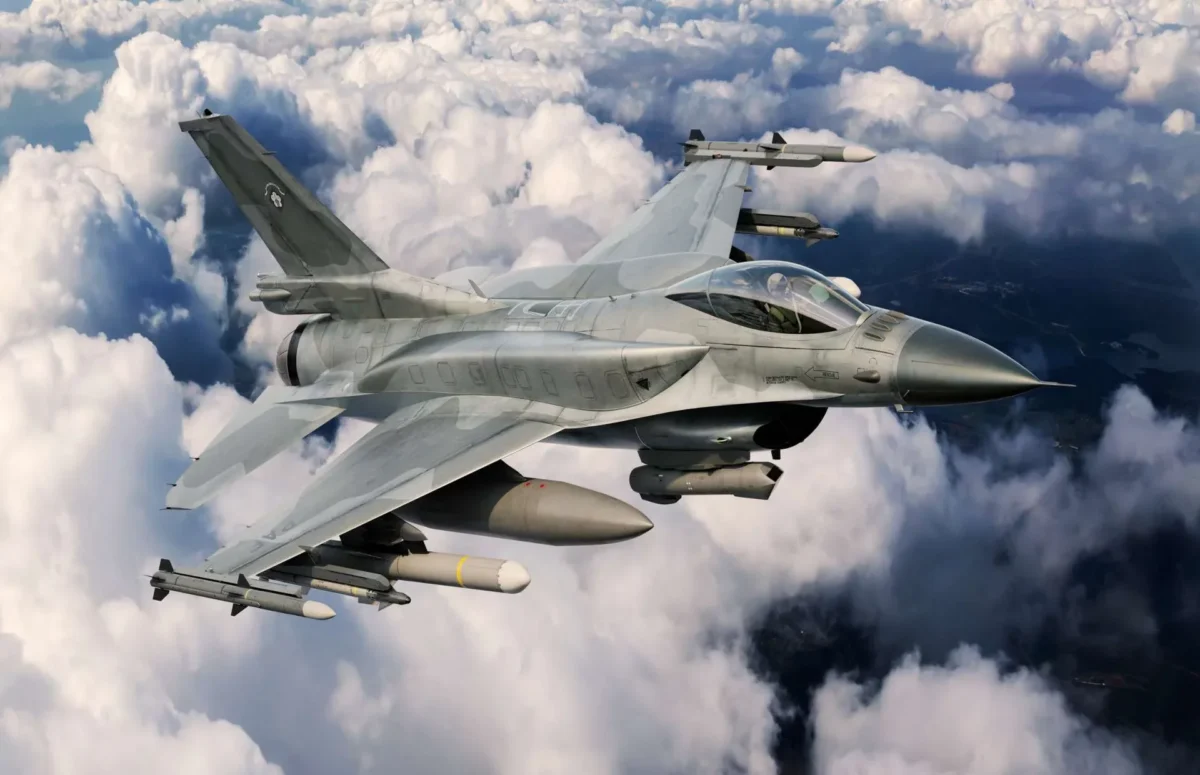
The APG-83 radar is probably the single change that pushes the Block 70 into a different class. Older F-16 radars were fine for their day, but they were basically single-beam systems. The original sets worked like a single searchlight.
The AESA system changed that by using thousands of smaller modules that can fire in different directions at once. The result is a radar that can pick out smaller objects, track several aircraft at the same time, and hold its picture even in heavy jamming. That means the pilot isn’t just seeing more, it’s information that stays reliable when things get messy.
The cockpit has also been completely reworked. Early jets had simple gauges with a few small displays tacked on. In earlier models, pilots had to juggle a bunch of round gauges and small displays.
The newer cockpit cuts that clutter down to a single, wide color screen. It can be reconfigured on the fly, radar one moment, weapons the next. With the updated mission computer behind it, the jet can handle far more information without forcing the pilot to chase it all.
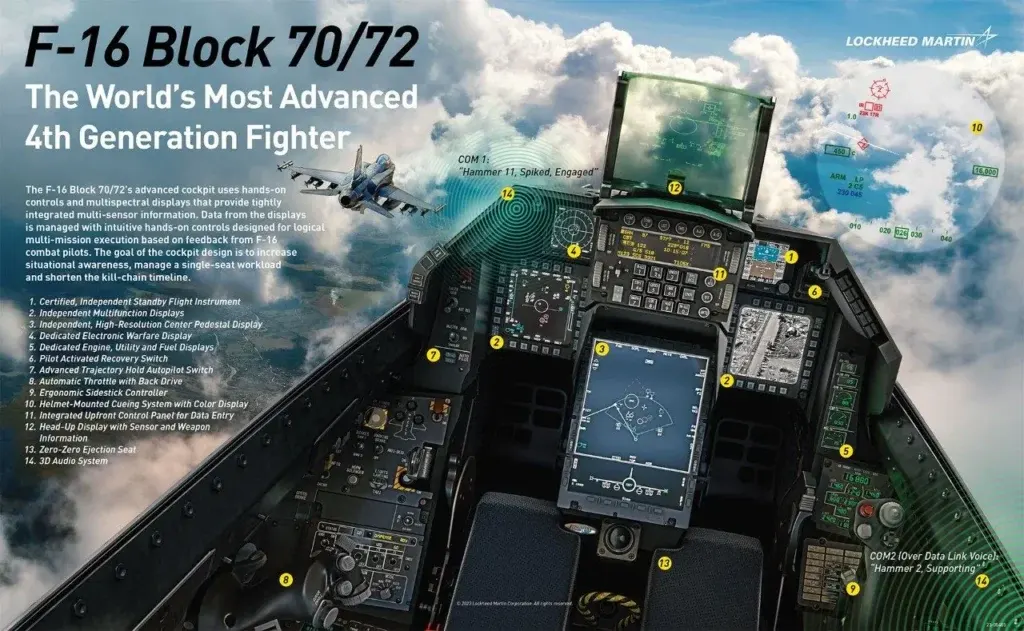
Another important change is the structural life extension program. Older fighters usually hit their limit at around 8,000 hours in the air. The latest F-16s were strengthened enough to push that figure to about 12,000. Put another way, countries buying them now aren’t looking at a short-term stopgap, they’re getting machines that could still be on the flight line in the 2040s.
Then there’s the Viper Shield electronic warfare suite, which is being rolled out now. This system can detect, jam, and in some cases even deceive enemy radars or missiles before they become a threat.
In today’s environment, where surface-to-air missiles have become extremely dangerous, that’s as vital as having a good radar or fast missiles.
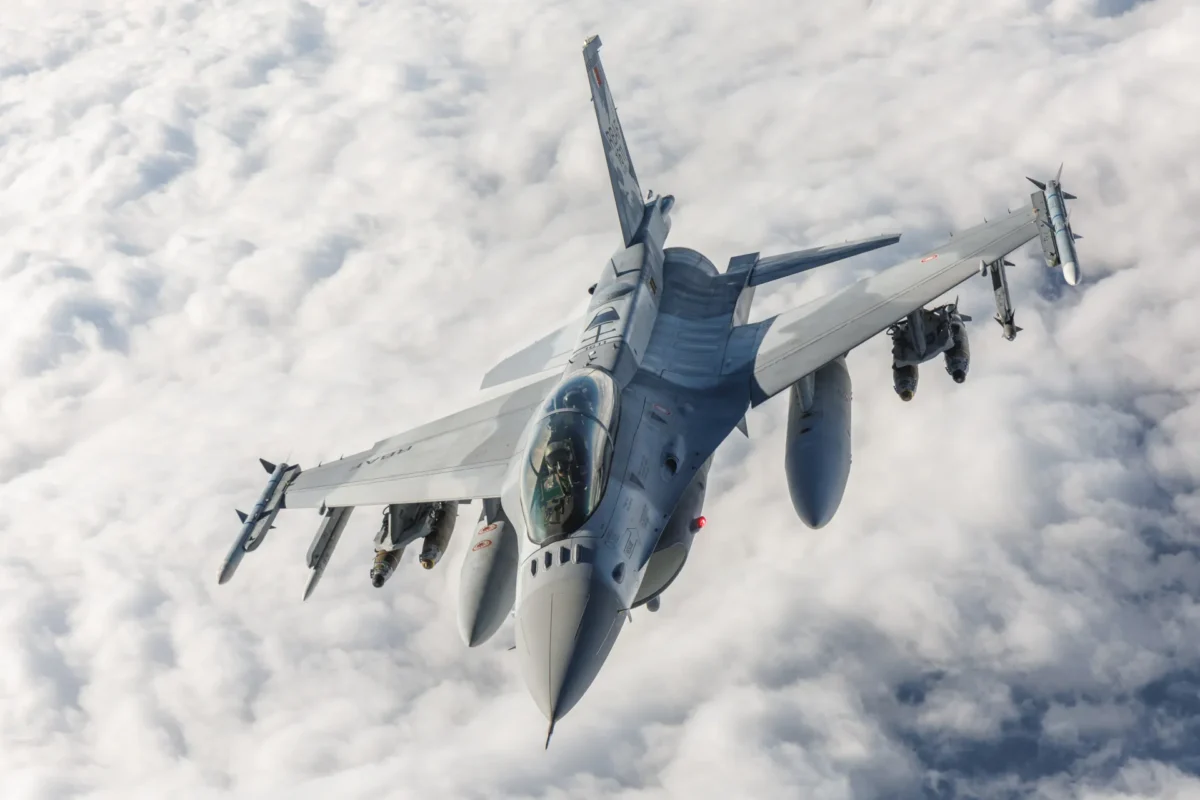
The F-16’s global spread also means it never looks quite the same from one country to another.
Read also: Lockheed Expands F-16 Block 70 Program via Philippine Technology Alliance
When people bring up modern fighters, the F-35 almost always dominates the conversation. It’s newer, stealthier, and built around a very different set of ideas. On paper, that should leave little room for an older jet like the F-16 Viper. Yet the story isn’t that simple.
One of the Viper’s strongest cards is cost. Depending on how you run the numbers, a brand-new Block 70 F-16 might come in at half or even a third of what a new F-35 costs to buy and maintain.
For smaller air forces, or even for big ones trying to stretch their budgets, that difference matters. If a country needs to cover its skies every day, not just prepare for a once-in-a-generation high-end war, then a fleet of Vipers may look like the more practical option.
Take a hypothetical example; suppose a nation has to patrol long borders and keep fighters on alert around the clock. Flying nothing but F-35s sounds impressive on paper, but in reality it could wear down both the budget and the crews that keep them running. That’s where the F-16 still earns its keep.
Let the Vipers take the everyday patrols and exercises, and save the F-35s for the tougher jobs. It’s a compromise, but probably a smarter one than putting all the weight on a single type of aircraft. That sort of “high-low” balance has been a theme in air power planning since the Cold War, and the F-16 still slots neatly into the “low” side, though “low” here doesn’t mean weak, just more affordable and versatile.
Then there’s versatility. The F-35 was designed with a heavy emphasis on strike missions and intelligence gathering. The F-16, by contrast, grew up as a multirole workhorse. It can fly air patrol in the morning, suppress enemy air defenses in the afternoon, and drop precision bombs at night.
In places where air forces don’t have the luxury of building deep fleets with specialized aircraft. That flexibility can be the difference between getting the job done and having to call for outside help.
Operational tempo is another factor. One of the Viper’s advantages is how simple it is to get back in the air. Crews can refuel and rearm it without much fuss, and it doesn’t demand the heavy maintenance footprint that a fifth-generation jet usually needs.
In a pinch, say an airbase takes damage or supplies are limited, that kind of practicality can keep it flying when more complex aircraft might be grounded.
When you step back, the real question isn’t why the F-16 is still around—it’s why air forces keep choosing it over moving fully to newer designs. Part of the answer seems obvious; cost. It’s cheaper to buy, cheaper to fly, and easier to keep in service.
But if it were just about money, older jets like the F-4 or MiG-21 would still be flying front-line missions too, and they aren’t. The Viper has something they didn’t, room to grow. Its frame, avionics, and wiring have taken upgrade after upgrade without breaking the design, which is unusual in military aviation.
There’s also a strategic layer. A fleet made up only of fifth-generation fighters like the F-35 sounds powerful, but it could also be brittle. It needs high maintenance demands, fewer airframes, and not every mission really needs stealth or cutting-edge sensors.
By keeping the F-16 in the mix, air forces hedge against those weaknesses. It’s a way of spreading risk while still having enough planes to fill the skies.
It would be too simple to say the F-16 is still here because it’s “cheap and good enough.” If it were only about saving money, the F-16 would have been retired years ago.
What makes it endure is that it still plugs a hole modern fighters can’t quite fill: it’s quick to turn around, it’s flexible enough for almost any role, and when the pressure’s on, commanders know it works. And maybe that’s the bigger lesson, the future of air power might not be about replacing old with new, but finding the right balance between them.