Follow Us:
Follow Us:


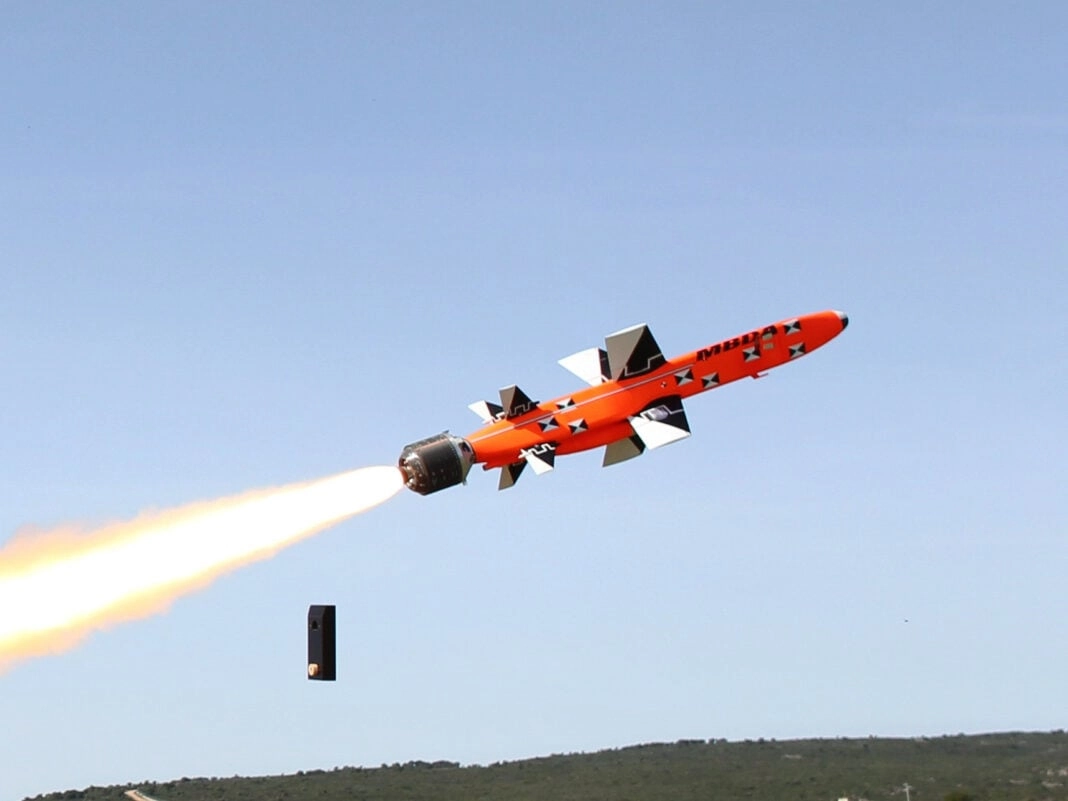
Defense Feeds – Italy has finalized a key milestone in modernizing its naval strike capabilities, signing a production contract with European missile manufacturer MBDA for the TESEO MK2/E Missiles, a next-generation long-range anti-ship missile.
The agreement will see the advanced weapon enter production after years of development, solidifying its role as a centerpiece of the Italian Navy’s future surface fleet.
The contract was signed with Italy’s National Directorate of Naval Armaments, marking the official transition from development to mass production.
The TESEO MK2/E, sometimes referred to as the “EVO” missile, will be integrated into the Navy’s newest surface combatants, including the FREMM EVO-class frigates, the multi-mission PPA (Pattugliatori Polivalenti d’Altura) combat ships, and the upcoming DDX destroyers currently in development.
It will complement the existing TESEO MK2/A variant already deployed aboard FREMM and Horizon-class vessels, ensuring a layered strike capability across the fleet.
The decision reflects Italy’s broader strategy to strengthen its maritime firepower amid growing naval competition in the Mediterranean and beyond.
The Italian government had first signed an agreement in 2021 to fund the missile’s development, integration, and qualification phase. According to MBDA, the successful move into production confirms that the missile design has matured, meeting all of the Navy’s stringent operational requirements.
This achievement marks a major step forward in delivering enhanced strike capabilities for Italian warships well into the next decade.
Unlike its predecessors, the TESEO MK2/E is not limited to conventional anti-ship warfare.
The missile has been re-engineered from the ground up to address emerging military challenges at sea and ashore.
Equipped with an advanced Active Electronically Scanned Array (AESA) seeker, the missile can detect, track, and engage multiple maritime targets even in environments where enemy electronic countermeasures are present.
A secure satellite data link enables mid-course control and mission retasking, giving commanders greater tactical flexibility during operations.
This dual-domain capability extends the missile’s utility well beyond ship-to-ship engagements.
Thanks to its long range and precision targeting systems, the TESEO MK2/E can strike fortified coastal positions and land-based infrastructure deep inland.
This makes it a valuable tool not only for maritime dominance but also for joint operations requiring long-range land attack capability in contested environments.
Advanced mission planning tools built into the system enhance operational flexibility, allowing Italian naval forces to conduct both sea control missions and deep strike operations.
This level of versatility places the TESEO MK2/E in a similar category to other Western long-range strike systems and significantly broadens the strategic options available to Rome in high-intensity conflict scenarios.
The Italian Navy views this missile as central to its modernization roadmap as it inducts new generations of frigates and destroyers.
The TESEO MK2/E’s flexibility provides stronger deterrence while extending the operational reach of Italy’s naval forces across the Mediterranean, the North Atlantic, and potentially beyond.
Lorenzo Mariani, MBDA’s Executive Group Director of Sales and Business Development and head of MBDA Italy, emphasized the missile’s importance during the contract announcement.
He praised the close collaboration between the company and the Italian Navy, noting that the project had moved smoothly from concept to production in full alignment with the Navy’s requirements.
Mariani also celebrated the export prospects for the missile, positioning it as an attractive offering in MBDA’s global portfolio:
“This step confirms the maturity of the system, which not only enhances Italian naval capabilities but also offers our international partners a proven, highly capable strike solution for modern maritime operations.”
For MBDA, the TESEO MK2/E is both a technological leap and a continuation of legacy. The weapon is part of the TESEO family, internationally recognized under the OTOMAT designation.
The original OTOMAT series has served as a backbone of Italy’s naval strike capability since the 1970s and has been exported to several countries worldwide.
The new-generation missile strengthens this lineage, delivering extended range, precision strike capability, and improved survivability against electronic warfare threats.
The introduction of this modern anti-ship and land-attack missile reaffirms Italy’s commitment to maintaining a competitive edge in naval warfare technology at a time when European states are investing heavily in maritime defense.
With NATO allies focusing on strengthening sea control and long-range strike capacity, the TESEO MK2/E ensures Rome will remain a key contributor to regional security.
Looking ahead, production and deployment of the missile will run in step with the construction of Italy’s next-generation naval units.
Once fully operational, the TESEO MK2/E is expected to equip the Navy with cutting-edge strike options capable of shaping the outcome of complex maritime and littoral conflicts.