Follow Us:
Follow Us:


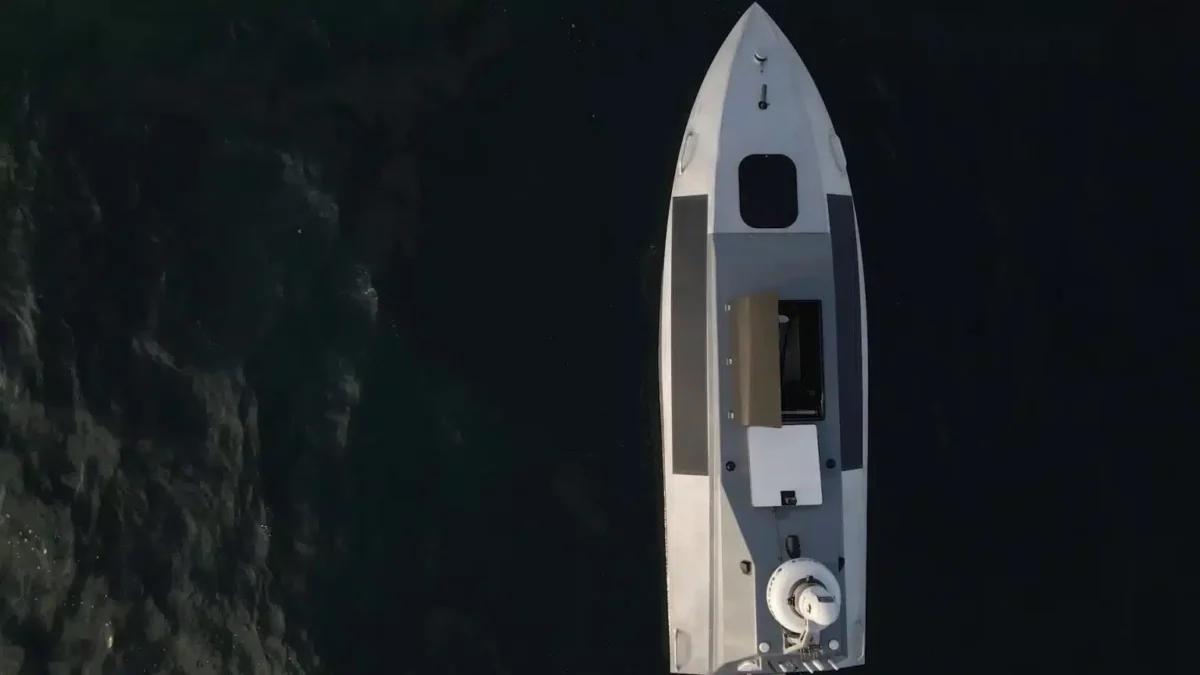
Defense Feeds – Seasats Unveils Quickfish USV during a recent U.S. Navy demonstration off the coast of California, marking a key milestone for the U.S.-based autonomous vessel specialist.
The company showcased its latest innovation, the Quickfish High-Speed, Long-Endurance Unmanned Surface Vehicle (USV), in a multi-day naval exercise that highlighted its advanced performance and adaptability in real-world operations.
Designed for rapid interception and sustained maritime surveillance, the Quickfish USV impressed observers with speeds surpassing 35 knots while maintaining reliability under demanding conditions.
It featured intuitive autonomous control and modular payload options, making it suitable for diverse missions including coastal defense, reconnaissance, intelligence gathering, and logistics operations.
Seasats Unveils Quickfish USV as part of its continuous push to enhance autonomous naval systems, building on its proven record in defense robotics.
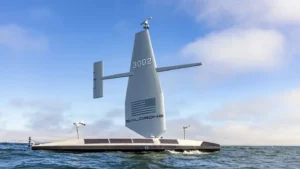
Seasats earned wide notice after the Lightfish USV completed a 7,500-mile autonomous crossing of the Pacific Ocean without any human input, highlighting the company’s engineering credibility.
This success helped secure the firm an $89 million SBIR Phase III IDIQ contract with the U.S. Navy’s Naval Information Warfare Center (NIWC) Atlantic and the U.S. Marine Corps (USMC), further cementing Seasats’ role in advancing unmanned maritime operations.
Unlike traditional interceptor USVs, the Quickfish introduces rare capabilities that directly address current maritime challenges.
Notably, its multi-week endurance allows for continuous operation over extended missions without returning to port.
Another standout feature is a concealed aerial vehicle launch bay, enabling hybrid surface-air operations for reconnaissance or rapid intelligence delivery.
Engineers utilized a unique hull manufacturing method that significantly reduces the need for specialized tools, making production simpler, scalable, and more cost-effective.
This manufacturing efficiency is a key factor for partners interested in local production and fleet expansion.
Mike Flanigan, CEO of Seasats, emphasized that Quickfish evolved naturally from operational feedback.
“Our customers value how Lightfish provides long-duration sensing, but they need an intercept-capable craft to react quickly to threats. The Quickfish bridges that gap,” Flanigan explained.
“Interceptor USV operators often report reliability and endurance issues, which are exactly the strengths we built our reputation on”.
The debut of the Quickfish has already sparked global interest. A major U.S. defense prime contractor reportedly acquired one of the first units to accelerate its own maritime autonomy programs.
In addition to domestic collaborations, Seasats has secured local production and regional distribution pacts with multiple Indo-Pacific nations, including Australia, the Philippines, and Japan.
Seasats’ scalable hull design gives allied nations the flexibility to produce vessels domestically, an advantage that aligns with the growing emphasis on sovereign defense manufacturing.
This approach enables partners to boost their maritime domain awareness and coastal security independently, supporting regional stability amid rising naval tensions in the Pacific.
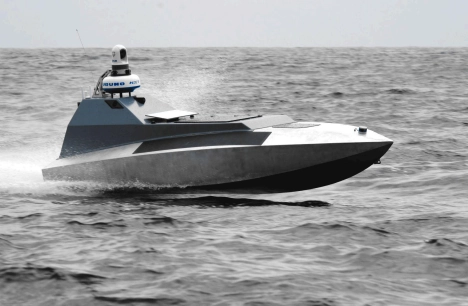
The Quickfish not only builds upon Seasats’ established technological base but also reflects a broader shift toward integrated unmanned systems in modern navies.
With its balance of speed, endurance, and modular design, it complements existing manned fleets by extending operational reach and reducing risk to personnel.
Quickfish and comparable platforms are seen by specialists as essential to next-generation maritime defense, enabling collaborative unmanned systems to patrol, sense, and intercept threats ahead of traditional fleets.
As autonomy and endurance technologies mature, vessels like the Quickfish will likely find roles in both military and commercial maritime sectors, including oceanography, border security, and shipping lane monitoring.
In an era when naval forces face expanding strategic demands, Seasats’ Quickfish demonstrates how American innovation in unmanned surface warfare can deliver faster, smarter, and more sustainable solutions to maritime defense challenges.