Follow Us:
Follow Us:


Defense Feeds – New USCG Icebreaker USCGC Storis (WAGB-21) has been formally welcomed into active service by the United States Coast Guard, marking the first acquisition of a new polar icebreaker in more than two decades.
Commissioned on August 10 at the Coast Guard’s base in Juneau, Alaska, this new USCG icebreaker expands America’s strategic presence in the Arctic and Antarctic regions, reinforcing national security and ensuring continued access to these increasingly vital maritime domains.
This milestone commissioning comes as part of the USCG’s broader initiative to modernize and grow its polar fleet, a move deemed crucial amid rising global competition for influence in the Arctic.
The Storis is classified as a medium icebreaker, equipped to independently navigate and clear ice-covered waters where most vessels would struggle or require an escort.
This capability is essential for maintaining year-round operations in polar and sub-Arctic environments, which are becoming more accessible due to shifting climate conditions and rising geopolitical interest.
Originally constructed as the icebreaking anchor-handling tug supply vessel Aiviq, the ship was purpose-built to support offshore oil exploration and drilling in the challenging conditions of Alaska’s Chukchi Sea.
The Coast Guard has since repurposed and converted the vessel to serve national defense and security roles, providing a critical tool to uphold U.S. sovereignty in contested polar waters.
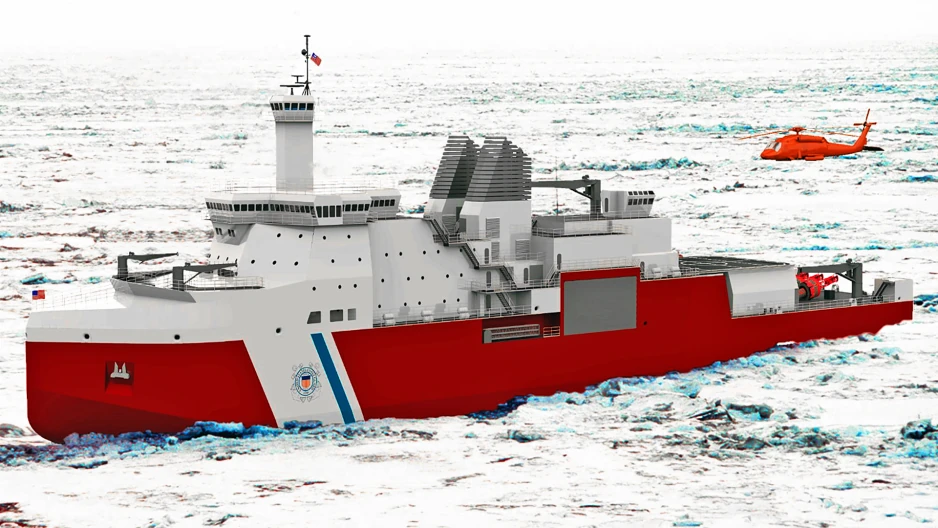
The arrival of the Storis bolsters America’s ability to perform a range of missions in the harsh polar and sub-Arctic environments.
These include securing key maritime routes, conducting search and rescue operations, and enforcing U.S. laws within the exclusive economic zone (EEZ).
Positioned in Juneau, the icebreaker is strategically placed to quickly access both Arctic and North Pacific waters without extended transit times from the continental United States, which enhances response times and operational flexibility.
As global powers like Russia and China enhance their Arctic capabilities — with Russia expanding its fleet of powerful nuclear icebreakers and China declaring itself a “near-Arctic state” — the U.S. must respond with a robust polar presence.
The Storis’ commissioning sends a clear signal of America’s intent to maintain a continuous, year-round presence in these strategic waters, asserting its interests amid intensifying international competition.
The USCGC Storis name carries deep historical significance within the Coast Guard. The original Storis had a distinguished career spanning more than 60 years, including operational service in the Arctic during the Cold War before its retirement in 2007.
By naming the new icebreaker after this storied predecessor, the Coast Guard honors its long-standing commitment to polar missions while forging ahead with updated capabilities for current and future challenges.
For Alaskan interests, this vessel provides more than just symbolic strength—it represents a tangible improvement in regional maritime security and emergency response capabilities.
Being stationed in Juneau means that the Storis can promptly address emergencies and enforce maritime law close to home, which is critical in a region increasingly affected by climate change and international activity.
In sum, the USCGC Storis stands as a centerpiece in the effort to revitalize and expand U.S. polar icebreaking forces.
Its blend of proven design adapted for Coast Guard needs situates it as a critical asset in the Arctic’s evolving strategic landscape, helping to secure vital sea lanes, protect national interests, and provide a front-line presence in cold and contested waters.
Through this commissioning, the United States reiterates its commitment to maintaining operational readiness and leadership in the polar regions, ensuring that it can meet both current demands and future challenges in these geopolitically important zones.
The Storis is not merely a ship—it is a strategic instrument that enhances America’s ability to operate with authority where ice meets ocean, safeguarding sovereignty and supporting security in the high north and beyond.