Follow Us:
Follow Us:


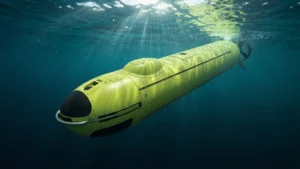
Defense Feeds – Ghost Shark underwater drone technology marks a significant leap in Australia’s naval modernization, as the Royal Australian Navy commits A$1.7 billion (US$1.12 billion) to acquiring and developing a fleet of these extra-large autonomous submarines in partnership with Anduril Australia.
This Ghost Shark underwater drone program bypassed traditional defense procurement, enabling direct collaboration between the Navy and Anduril, which resulted in rapid prototyping and testing that delivered operational models within just three years.
Built on a foundation of shared risk and innovation, the Ghost Shark underwater drone initiative allowed Navy engineers to work closely with Anduril’s experts specializing in autonomous underwater vehicles (AUVs).
Anduril’s strategic acquisition of Dive Technologies provided critical design expertise years ahead of formal contracts, accelerating software and hardware development.
Within two years of acquiring Dive Technologies, Anduril developed an advanced autonomous prototype that evolved into the fully operational Ghost Shark underwater drone fleet now poised to serve Australia’s defense needs.
The decision to pursue Ghost Shark is shaped by persistent security concerns, particularly China’s increasing naval activity in Australian waters.
Defense planners see autonomous platforms like Ghost Shark as transformative—providing persistent patrols, surveillance, and strike capability along Australia’s vast coastline.
The naval program leverages artificial intelligence, modular payloads, and an all-electric drive for extended stealth missions without surfacing.
The autonomous submarines relieve pressure on Australia’s older crewed Collins-class boats, handling dangerous undersea missions that include communications and radar intelligence, mine-laying, and covert surveillance.
Unlike traditional submarines, Ghost Shark’s smaller, more agile design allows it to operate undetected in areas considered risky for larger crewed vessels, with enhanced endurance thanks to its unique flooded hull design and advanced AI control system.
Ghost Shark’s flexibility is central to its value: mission modules can be swapped out for intelligence-gathering, domain awareness, or kinetic strike roles, supporting Australia’s broader defense vision.
While specific technical numbers remain classified, the vessels’ length is less than 12 meters and weight below 100 tonnes, offering a stealthy, long-range presence that complements AUKUS-aligned surface combatants and nuclear-powered submarines.
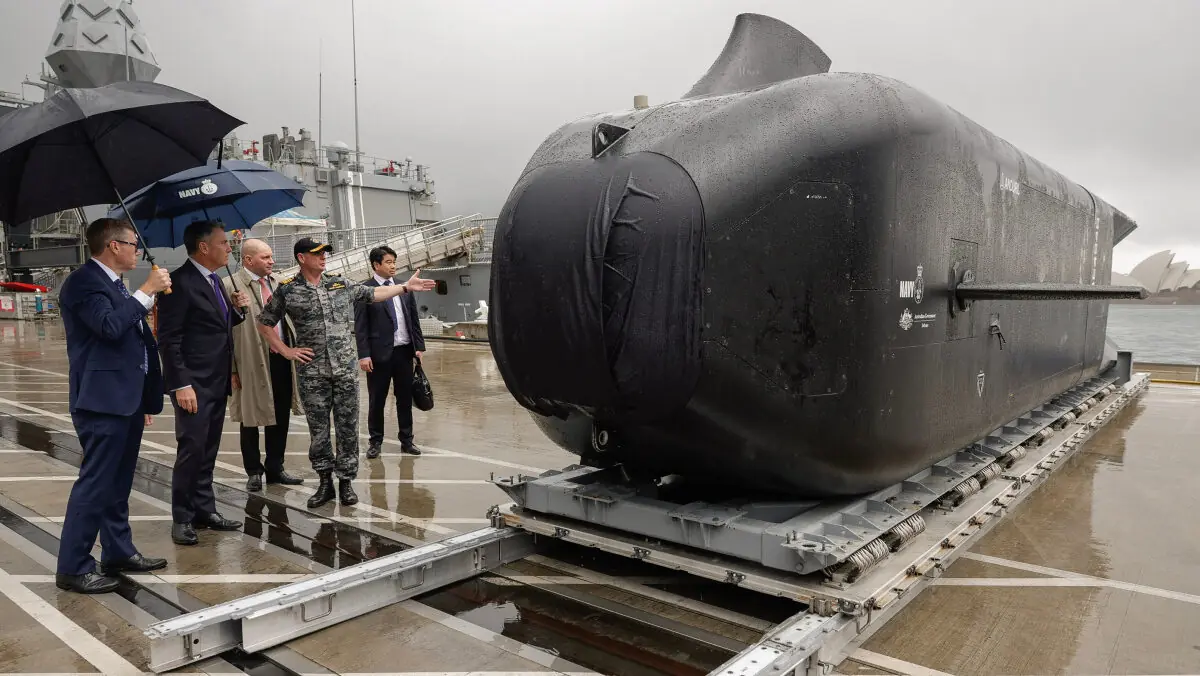
The Ghost Shark contract immediately benefits Australian industry, with production at Anduril’s state-of-the-art robotic facility in New South Wales.
More than 40 Australian firms are involved, supporting over 120 existing jobs and creating more than 150 new high-skill positions; the supply chain impact is projected to add up to 600 associated jobs over five years.
Anduril’s A$60 million investment in manufacturing infrastructure further cements sovereign capability, ensuring Australia not only operates but also develops and builds cutting-edge autonomous seapower platforms.
Officials see export potential for Ghost Shark to allied navies, including the United States, as the program gives partners access to a scalable, rapidly deployable, and cost-effective underwater warfare solution.
With first deliveries scheduled for early 2026, Ghost Shark sets a benchmark for how creative collaboration, decisive leadership, and upfront risk-taking can transform traditional defense acquisition.
The Royal Australian Navy and Anduril have demonstrated that rapid innovation—informed by clear operational needs and tight feedback between developers and operators—can deliver autonomous capability without overhauling entire legacy systems.
Australia’s bold investment signals not just a leap in military technology, but also a template for agile, partnership-based defense procurement that other nations may soon follow.