Follow Us:
Follow Us:


Defense Feeds – The deployment of Canada’s CH-148 Cyclone helicopter aboard the Halifax-class frigate HMCS St. John’s has markedly enhanced NATO’s anti-submarine warfare (ASW) capabilities in the Mediterranean.
As part of Standing NATO Maritime Group 2 (SNMG2), the Cyclone is far more than just an onboard air asset; it symbolizes Canada’s vital role in a collective maritime security operation aimed at preserving stability across contested waters.
The helicopter performs a spectrum of missions ranging from submarine detection and maritime surveillance to search and rescue, extending the tactical reach of NATO fleets.
Its presence offers commanders a flexible tool to respond to evolving threats, particularly with the uptick in Russian submarine activity reported in the region.
Originally designed and built by Sikorsky, the Cyclone program experienced delays and technical challenges before entering full operational service in 2018.
Replacing the aging CH-124 Sea King, which served since the 1960s, the Cyclone represents a significant technological leap for Canadian naval aviation.
Its size, with a length of 17.22 meters (14.78 meters when folded), rotor span of 17.48 meters, and maximum weight near 13,000 kg, is tailored for deployment on frigates such as HMCS St. John’s.
Capable of cruising at 287 km/h with a mission range of 740 km, the helicopter can execute extended operations beyond the horizon of its host ship in challenging maritime environments, including the North Atlantic and Mediterranean.
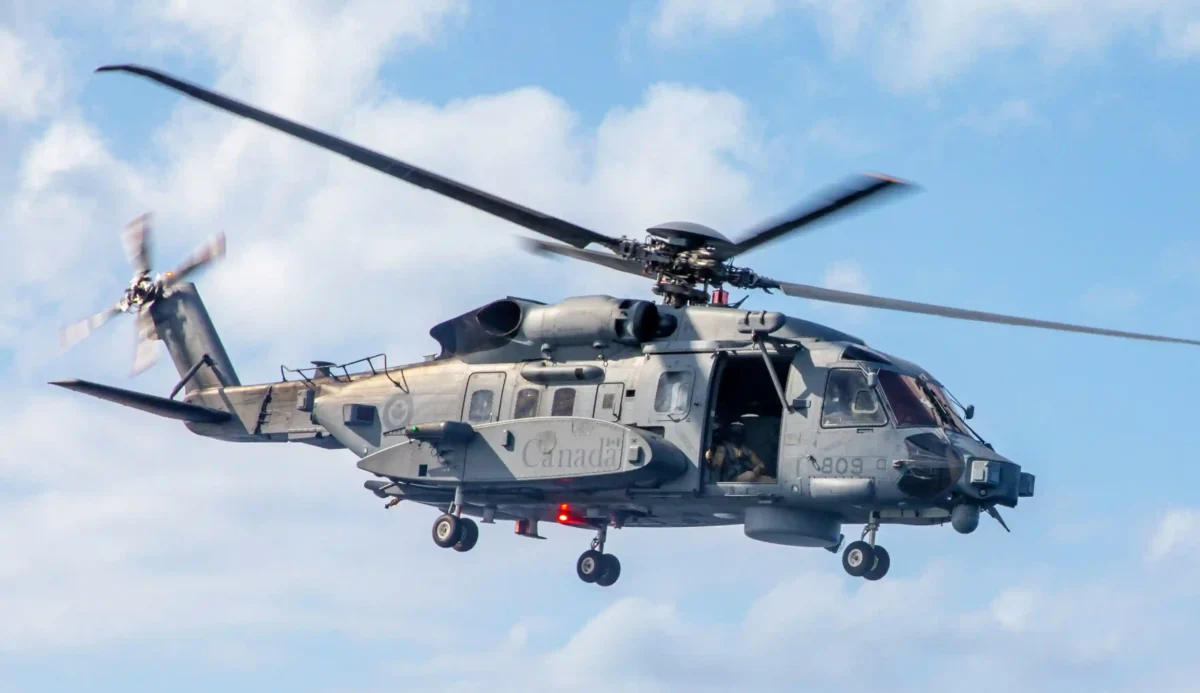
The CH-148 Cyclone’s true strength lies in its advanced mission systems, designed specifically for undersea threat detection and engagement.
The helicopter is equipped with a dipping sonar and cutting-edge sonobuoys that improve submarine tracking accuracy. It also carries lightweight torpedoes to neutralize detected underwater threats.
Integrated electro-optical sensors, radars, and electronic countermeasures further enhance its surveillance capabilities against surface and subsurface targets.
Acting both as a scout and a strike platform, the Cyclone effectively extends the anti-submarine coverage of its host vessel by hundreds of kilometers.
NATO exercises such as Dynamic Mongoose in 2022 have confirmed the Cyclone’s operational effectiveness.
Coordinated operations with allied submarines and surface ships increased submarine detection rates by approximately 30 percent, a key tactical improvement for countering increasingly stealthy Russian submarines.
With the resurgence of Russian maritime activity, NATO members are heavily investing in ASW assets, making the Cyclone an indispensable asset within SNMG2’s flexible and mobile maritime force structure.
Since its creation at the end of the Cold War, SNMG2 has played a crucial role in addressing regional instability in European and Mediterranean waters.
Beyond counter-terrorism and freedom of navigation, the group now faces multifaceted challenges including state-based threats and illegal trafficking.
Canada’s commitment to providing the CH-148 aboard HMCS St. John’s highlights Ottawa’s determination to actively contribute to collective defense, interoperability, and allied readiness.
The Cyclone’s deployment underscores a broader modernization effort within the Royal Canadian Navy, aligning Canadian naval aviation capabilities with NATO standards.
This modernization not only extends the operational life and relevance of Canada’s Halifax-class frigates but also sends a strong political signal of solidarity and commitment to NATO’s mission.
Canada’s crews regularly train alongside European counterparts, ensuring seamless cooperation during crises.
Beyond anti-submarine warfare, the Cyclone enhances maritime domain awareness through its advanced sensors and communication systems.
It contributes to surface surveillance, monitoring sea lanes, and tracking vessels involved in illicit trafficking or piracy.
The helicopter’s search and rescue capabilities also support humanitarian missions, making it a versatile tool for peacetime and crisis response alike.
The CH-148’s ability to rapidly respond to emerging maritime threats reinforces NATO’s security posture in critical sea routes.
Its role in joint operations and multinational exercises strengthens the alliance’s collective readiness and showcases Canada’s commitment to maintaining secure and stable international waters.
In sum, the CH-148 Cyclone is pivotal to Canada’s naval air power and NATO’s ASW strategy in the Mediterranean.
Its advanced technical profile, validated mission performance during multinational drills, and integration into SNMG2 cement its role as a key maritime asset.
The “Blackhorse” helicopter is more than an addition to the Canadian fleet; it is a symbol of Canada’s readiness to share the burden of collective security in a volatile geopolitical landscape.