Follow Us:
Follow Us:

Defense Feeds – Western defense firms expand in Ukraine, gaining real-time combat insights and boosting rapid arms production amid Russia’s ongoing war.
Western Defense Firms Expand in Ukraine as the war enters its third year, no longer just supplying weapons but embedding themselves within the country.
From drones to infantry vehicles, these firms are opening offices, launching production lines, and collaborating closely with Ukrainian partners in a war zone that has become a live-fire testing ground for 21st-century warfare.
This growing partnership goes beyond accelerating military support.
For NATO countries and their defense industries, Ukraine now offers something rarely accessible during peacetime: real-world insights from an active, high-intensity conflict. These lessons are proving critical in shaping the future of modern warfare for the West.
A growing number of defense manufacturers from NATO countries are establishing operations inside Ukraine — and not just for symbolic support.
German drone manufacturer Quantum Systems recently announced it would double production capacity in Ukraine. France-Germany joint defense group KNDS is opening a subsidiary.
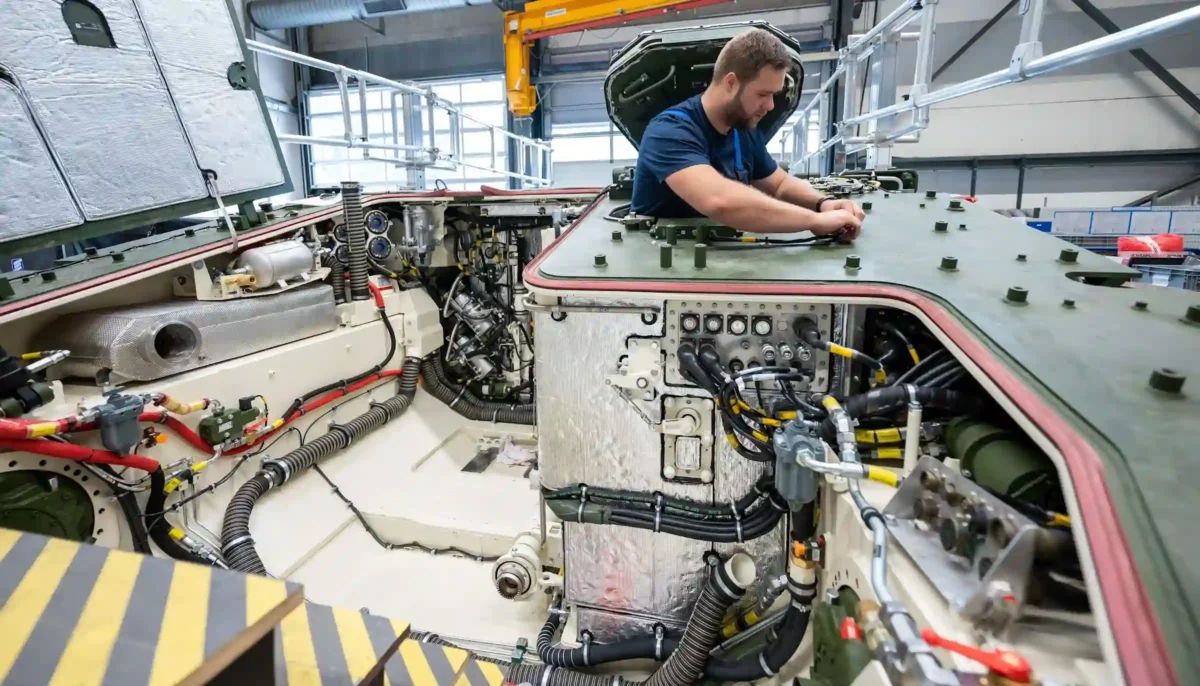
BAE Systems, the UK’s largest arms company, now operates on Ukrainian soil, and Norway’s Nammo has partnered with a local firm.
Even Rheinmetall, the German weapons giant, plans to build several factories, including one for ammunition and another for the Lynx infantry fighting vehicle.
While some companies don’t yet have physical facilities in Ukraine, they are still deeply involved.
Estonian firm Milrem Robotics, which makes battlefield robots like the THeMIS, is closely collaborating with Ukrainian engineers and soldiers to adapt their systems in real time.
CEO Kuldar Väärsi says his company is gathering crucial lessons about what actually works — and what doesn’t — on a battlefield where innovation and speed can mean survival.
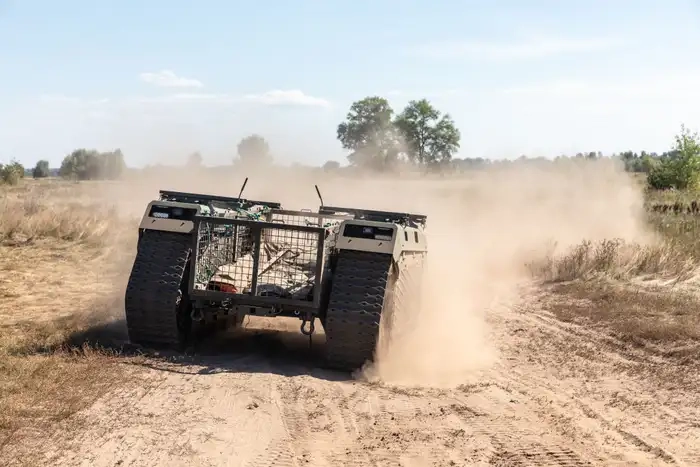
This collaboration allows Western companies to refine and adapt their products faster than they ever could in peacetime laboratories. For Ukraine, the benefit is obvious: faster access to customized tech that fits their frontline needs.
As Ihor Fedirko, head of Ukraine’s Council of Defense Industry, puts it, “This is the type of experience you can only gain here — in real war conditions.”
Ukraine’s defense industry has become one of the most innovative in the world, not out of luxury, but necessity.
With a war that constantly shifts and escalates, Ukrainian firms have learned to design, test, fix, and deploy new weapon systems in weeks, not years. This includes fast-tracked development of drones, electronic warfare systems, and improvised armored vehicles.
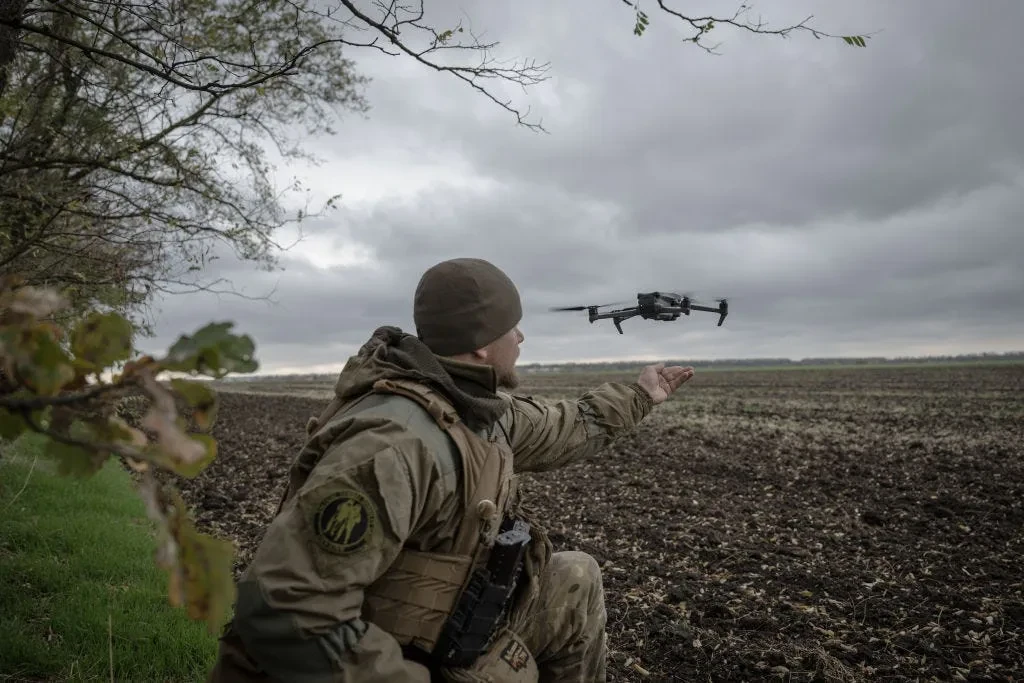
Fedirko emphasized that one of Ukraine’s strengths is the ability to scale up production quickly and efficiently.
“We have a very short R&D cycle,” he said, adding that Ukrainian firms test systems rapidly, identify flaws early, and make adjustments in real time. These are precisely the skills many NATO countries are now looking to adopt.
Denmark is one such example. Its defense minister, Troels Lund Poulsen, acknowledged in early 2025 that Denmark must learn from Ukraine’s methods. In particular, he cited speed of production as a critical takeaway.
He pointed to the “Danish model,” a procurement strategy where weapons are bought directly from Ukrainian manufacturers rather than through traditional NATO contracts.
This not only gets arms to Ukraine faster but also reduces the strain on Europe’s already-overloaded weapons factories.
Danish Prime Minister Mette Frederiksen echoed this urgency, saying that while NATO isn’t officially at war, it also “can’t pretend it’s peacetime anymore.” According to her, Ukraine’s ability to outpace European countries in arms production is a wake-up call.
The war in Ukraine has become a proving ground for what modern, large-scale conflict really looks like — and the West is paying attention.
NATO Secretary General Jens Stoltenberg recently warned that Russia is producing more ammunition in three months than NATO countries can in a year.
Ammunition shortages have already proven decisive in multiple battles, highlighting the need for mass, speed, and flexibility, not just high-tech systems.
Western military planners are now realizing that the focus on fewer, expensive, highly advanced weapons systems — often costing billions — may be unsustainable in a drawn-out war.
Instead, lessons from Ukraine are pushing defense leaders to think in terms of volume, adaptability, and the ability to produce and replace equipment quickly.
Platforms like Ukraine’s Brave1, a government-backed defense innovation hub, are making it easier for foreign companies to test prototypes in real combat.
Even small drone startups are getting a shot at battlefield validation — a critical edge in the global arms market. As UK Armed Forces Minister Luke Pollard put it: “If you’re a drone company and you’re not in Ukraine, you might as well give up.”
In short, Ukraine has become not just the front line in a geopolitical battle, but also a live lab for the future of warfare. NATO’s decision to move closer to that frontline — physically and strategically — marks a significant shift.
Defense companies aren’t just watching this war; they’re learning from it, building in it, and preparing for the next one.Western nations, she argued, must rebuild their defense industries to meet both current and future demands.
Some countries have already begun shifting priorities. NATO members are revisiting old tactics like trench warfare while integrating cheap, attritable systems into modern operations.
Defense planners are now focusing more on drones, mass-produced munitions, and hybrid strategies that balance quality with affordability.