Follow Us:
Follow Us:


Defense Feeds – U.S. Defense Firm Creates HQ-22 high-fidelity replica to enhance military training realism. This leading American defense contractor has unveiled a detailed surface-to-air missile (SAM) system decoy modeled on China’s HQ-22.
This development is part of a broader program to produce advanced threat simulators that replicate foreign air defense technologies, preparing U.S. forces for the challenges of modern aerial warfare.
The replica HQ-22 system is being produced by Torch Technologies’ Integration and Prototyping Center (TIPC), located in Huntsville, Alabama.
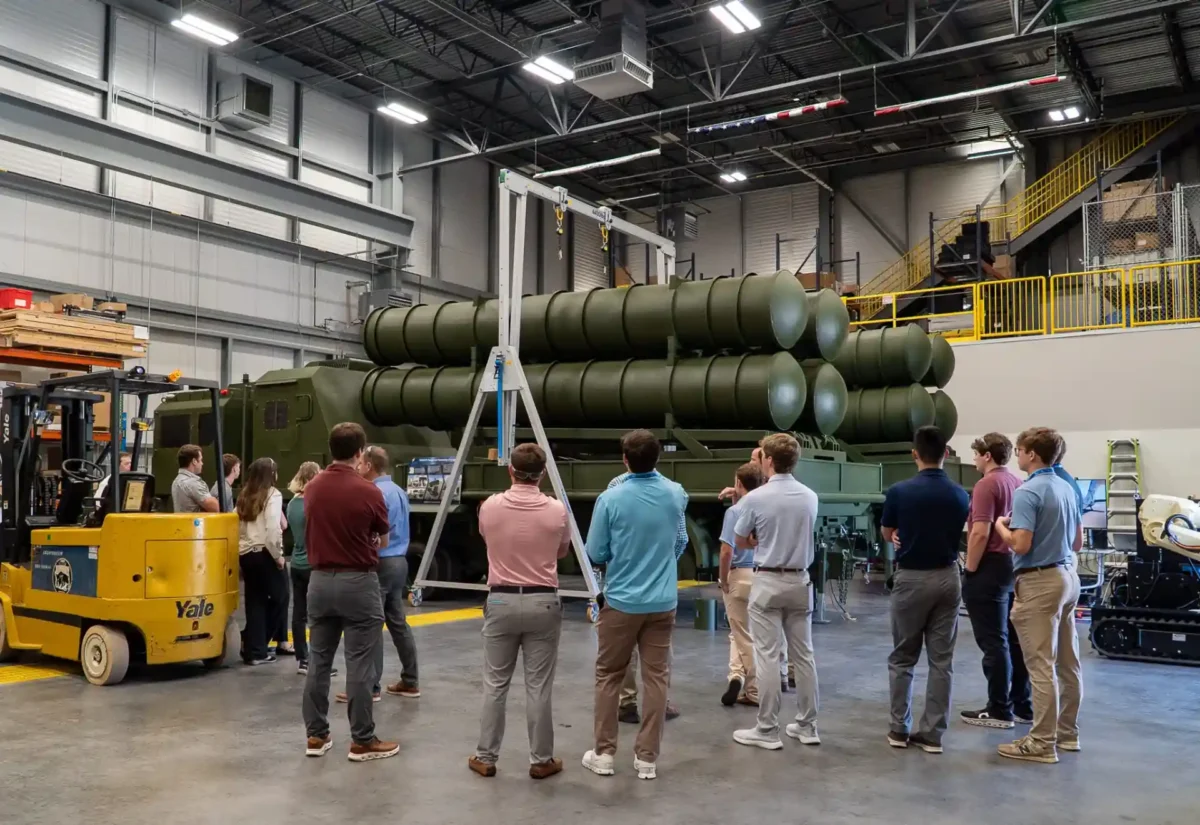
TIPC specializes in designing and fabricating surrogate targets that emulate the physical build, radar signatures, and operational behavior of adversary air defense systems.
According to Torch Technologies, these replicas are intended to improve the training and testing environment by providing U.S. service members with realistic targets that mirror actual threats they could face in combat.
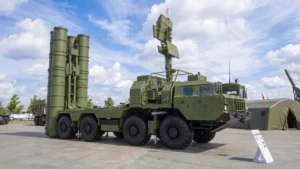
The HQ-22 surface-to-air missile is a Chinese medium- to long-range air defense system known for its multi-layered radar capabilities and missile engagement zones, characteristics that pose a formidable challenge on the battlefield.
By precisely mimicking the HQ-22’s radar and thermal signatures, the decoy system allows U.S. pilots, electronic warfare teams, and mission planners to practice detection, targeting, and countermeasures under authentic conditions without exposing or deploying live foreign hardware.
Realistic threat simulation is crucial because it sharpens the skills of aircrews to identify and neutralize enemy radar and missile systems in high-risk operational theaters.
This methodology enables more effective training against advanced air defenses, which traditional simulation or live exercises without actual enemy equipment cannot fully replicate.
This HQ-22 decoy follows a previous surrogate of the Chinese HQ-16 SAM system introduced by the U.S. Air Force in July.
That mock target was publicly showcased at the Experimental Aircraft Association’s AirVenture event in Wisconsin, demonstrating the U.S. military’s commitment to incorporating diverse, near-peer threat replicas into their training regimen.
Both the HQ-16 and HQ-22 decoys are part of a growing collection of surrogate systems used at specialized training ranges and integrated large-scale exercises.
These replicas help not only U.S. forces but also allied and partner nations gain experience in conducting suppression or destruction of enemy air defenses (SEAD/DEAD) missions collaboratively.
The ability to train jointly in realistic environments is increasingly vital for preparing coalition forces to operate effectively in contested airspaces dominated by sophisticated surface-to-air threats.
TIPC employs detailed engineering and fabrication techniques to ensure these decoy systems match the dimensions and configurations of the operational Chinese hardware.
While non-functional as weapons, their radar and thermal signatures are engineered to mimic the real system’s electromagnetic and infrared outputs. This provides training environments with heightened authenticity that challenge sensors and weapon systems in ways simulators cannot duplicate.
The HQ-22 system, also known by its NATO reporting name CH-SA-20, is an important component of China’s air defense arsenal.
It is reportedly the third most advanced long-range SAM after China’s S-300 and S-400 systems, with a missile range of approximately 170 kilometers.
The HQ-22 can engage multiple targets simultaneously—including aircraft, cruise missiles, helicopters, and drones—making it a significant threat in contested airspaces.
China uses the HQ-22 system extensively across various regions to bolster its air defense capabilities, including deployment in strategically sensitive areas like near Taiwan and along disputed border zones.
Its design emphasizes electronic countermeasures and versatility, which complicate adversaries’ efforts to counter it with traditional tactics.
For the U.S. military, replicating the HQ-22 is a strategic move to ensure pilots and support crews are ready for encounters with such advanced enemy systems.
Training with accurate representations facilitates lessons in electronic warfare, threat evasion, radar jamming, and missile defense tactics.
These capabilities are critical as the U.S. shifts focus from Middle Eastern conflicts toward potential near-peer conflicts involving China, Russia, and other emerging threats.