Follow Us:
Follow Us:


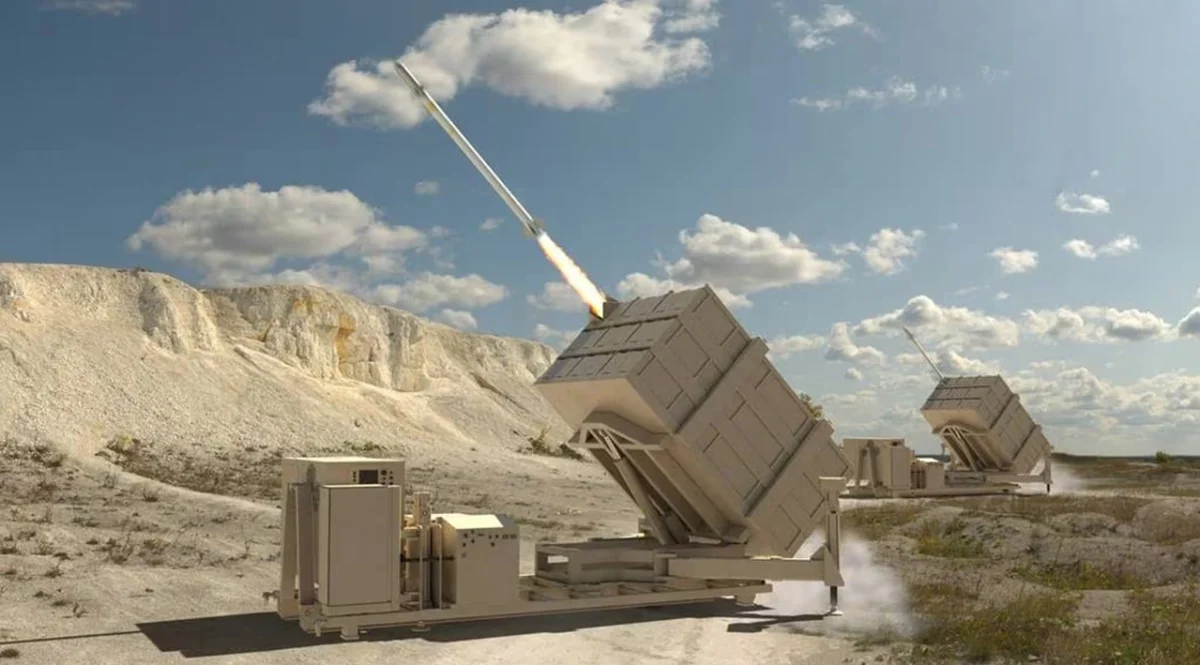
Defense Feeds – US Army Strengthens IFPC as it selects Lockheed Martin to design and produce a new generation of interceptor missiles for the Integrated Fires Protection Capability, also known as the Enduring Shield air defense system.
This latest initiative demonstrates Washington’s determination to enhance its layered air and missile defense network against evolving threats, including advanced cruise missiles and drones that challenge modern battlefield security.
The Enduring Shield system currently uses the AIM-9X Sidewinder missile for short-range defense.
While effective within its 10-mile (16-kilometer) engagement envelope, military leaders have been calling for an interceptor that can counter faster and lower-flying supersonic threats.
The newly approved IFPC 2nd Interceptor program aims to meet this demand with a missile capable of providing AIM-120D AMRAAM-level performance in a smaller form factor.
The US Army envisions a missile that integrates seamlessly with its existing IFPC Increment 2 launchers, each carrying up to 18 interceptors.
Lockheed Martin, one of the world’s leading defense contractors, will lead the effort drawing from decades of innovation in missile design, command and control, and integrated defense technology.
Company executive Randy Crites emphasized that this partnership reflects the Army’s trust in Lockheed Martin’s ability to deliver efficient and adaptable systems that can combat the full spectrum of aerial threats.
According to preliminary plans, the program’s detailed design and testing phase is expected to take place between 2029 and 2030, followed by low-rate production.
The long timeline allows for extensive engineering cycles, real-world simulations, and performance trials to ensure the system meets stringent US Army standards.
The IFPC serves a critical role between short-range tactical defense systems and strategic tiers like the Patriot and THAAD (Terminal High Altitude Area Defense).
This mid-tier layer acts as a flexible safeguard against diverse aerial targets, including rockets, artillery, mortars, cruise missiles, and unmanned aerial systems.
Earlier IFPC Increment 1 configurations were primarily designed for countering rockets and mortar fire.
Increment 2 expands its mission by adding protection from modern cruise missiles and drone swarms, which are increasingly common in today’s combat zones.
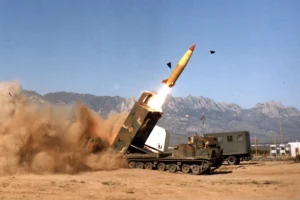
Each IFPC platoon includes four Enduring Shield launchers developed by Dynetics, networked with AN/MPQ-64 Sentinel radars and the Integrated Battle Command System (IBCS).
This architecture allows the Enduring Shield to share and coordinate targeting data with Patriot missile batteries and potentially with the newer Lower Tier Air and Missile Defense Sensor (LTAMDS).
The connected systems operate as part of a distributed defensive web, giving command units a full-spectrum picture of the battlespace and enabling rapid, automated threat evaluation and response.
The next-generation interceptor will expand the Army’s ability to defend key installations, command centers, and forward bases against air-breathing threats.
Its modular launcher network and radar integration are designed for high mobility, allowing operators to deploy the system to semi-fixed or temporary military positions depending on mission requirements.
Analysts see the IFPC 2nd Interceptor effort as part of a broader modernization strategy that aligns with the US Department of Defense’s focus on network-centric warfare.
Integrating the Enduring Shield with multiple defense platforms ensures overlapping protection zones, redundancy, and increased resilience against saturation attacks.
This program also strengthens the defense industry’s long-term collaboration with the US Army.
Lockheed Martin’s leadership in missile innovation, combined with Dynetics’ launcher technology and the IBCS framework, represents a model for future joint-service and allied defense projects.
The system’s adaptability could also interest allied militaries seeking to modernize their regional air defense networks through foreign military sales.
As global threats diversify with faster cruise missiles and more intelligent drones, the new interceptor program symbolizes the next step in ensuring the United States maintains its technological edge.
Once operational, this missile is expected to enhance defensive readiness and demonstrate America’s continuing commitment to protecting its assets, forces, and interests from an increasingly complex aerial threat environment.