Follow Us:
Follow Us:


Defense Feeds – Ukrainian Bohdana-B gunners from the 40th Artillery Brigade have revealed new insights into the country’s domestically manufactured 155mm Ukrainian Bohdana-B towed howitzer, stressing its growing role on the frontlines.
Produced by the Kramatorsk Heavy Duty Machine Tool Building Plant, part of the National Association of Ukrainian Defense Industries (NAUDI), the Ukrainian Bohdana-B system exemplifies Ukraine’s push toward full NATO-standard artillery integration.
According to information released by ArmyInform, the Ukrainian Bohdana-B has a weight of roughly 9.5 tons and an effective firing range of 28–30 kilometers depending on ammunition type.
Ukrainian crews noted that the Ukrainian Bohdana-B handles cluster, fragmentation, and shrapnel shells effectively during combat operations.
Its construction prioritizes user-friendly operation and quick setup, ideal for positional battles where agility and accuracy are crucial.
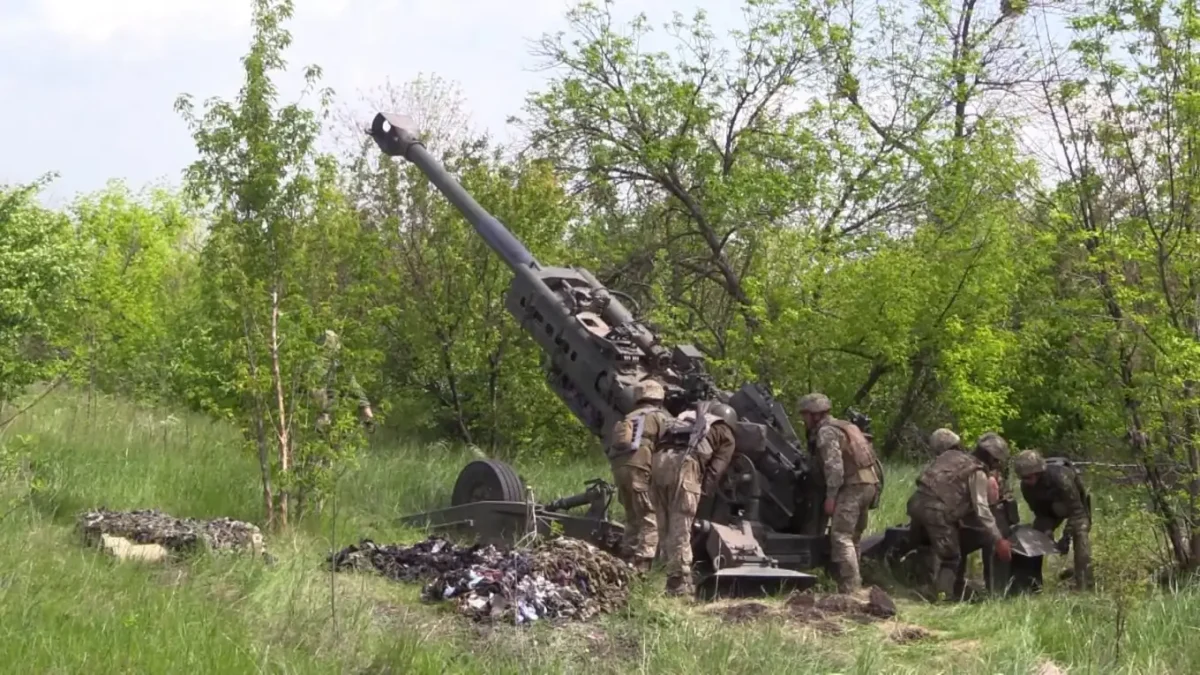
In their evaluation, Ukrainian artillerymen drew comparisons between the Bohdana-B and the American-made M777 howitzer, noting minimal functional differences.
Both systems operate on the 155mm NATO standard caliber, allowing shared ammunition use among Ukrainian and allied artillery units.
Defense experts underline that this compatibility offers a strategic advantage. By transitioning from the older Soviet 152mm caliber to the NATO-standard 155mm, Ukrainian forces are achieving greater interoperability with Western-supplied systems.
It also simplifies logistics for ammunition resupply, a crucial factor in sustained operations along extended frontlines.
While the self-propelled Bohdana variant has a longer reach, occasionally exceeding 40 km under specific conditions, differences between the two primarily emerge from ammunition types rather than gun design.
This disparity is typical among towed artillery compared to their motorized counterparts.
The ongoing war has reinforced Ukraine’s determination to strengthen its domestic defense industry.
The Kramatorsk-based facility has reportedly reached an output of up to 40 Bohdana howitzers per month, a figure that reflects the nation’s rising industrial resilience despite wartime constraints.
The Bohdana-B variant, mounted on a chassis derived from the Soviet Giatsint-B carriage, blends proven mechanical durability with modern fire control upgrades.
Ukrainian producers continuously refine the design, incorporating field feedback directly from frontline crews.
These upgrades aim to enhance reliability, reduce setup time, and improve rate of fire under combat conditions.
Plans are also underway to introduce a shorter 39-caliber barrel modification, optimizing the gun for particular tactical scenarios and simplifying maintenance in rugged terrain.
This variant could eventually complement or even replace several aging artillery platforms such as the M777, M109, and 2S3 Akatsiya within Ukrainian formations once tests confirm its effectiveness.
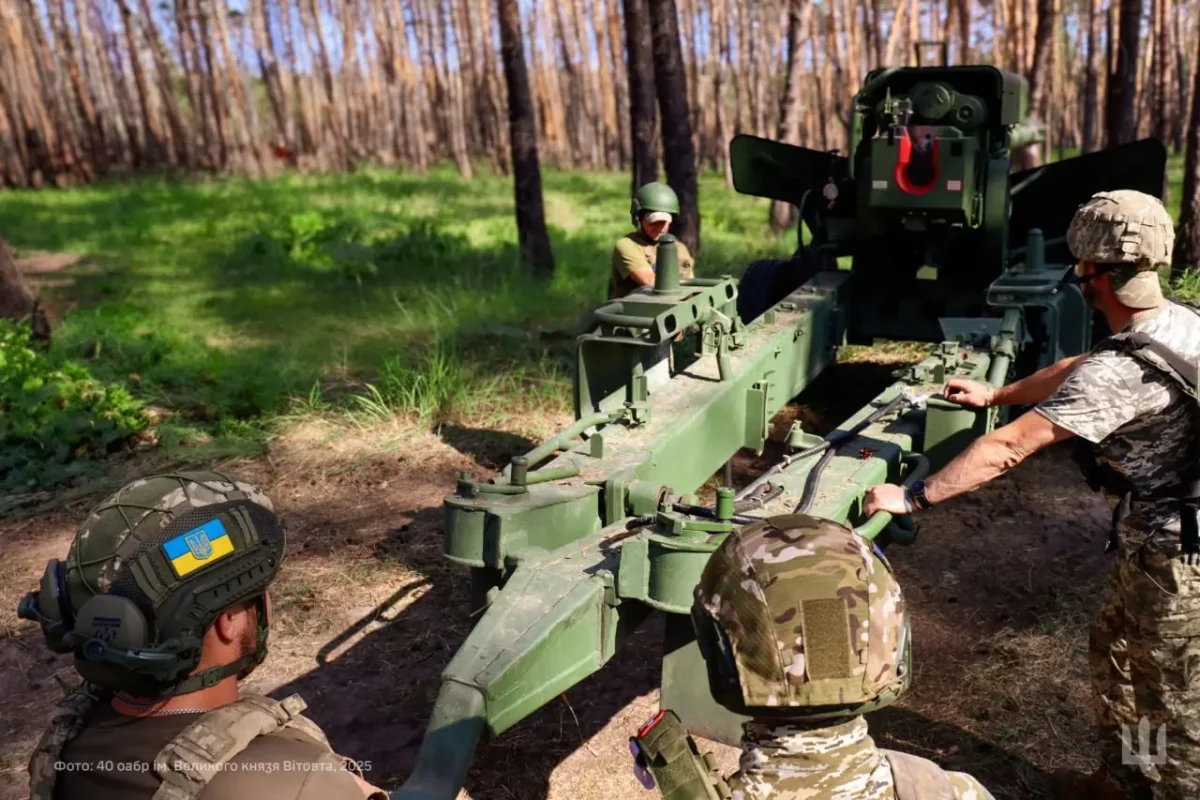
The 40th Artillery Brigade, one of the units operating both the towed and self-propelled Bohdana variants, has actively targeted enemy positions including Russian infantry, mortars, and artillery batteries.
Reports suggest frequent engagements against systems like the Msta-B and Giatsint-B, demonstrating that Ukrainian-produced artillery is not only holding its ground but also matching the effectiveness of foreign-made guns.
Soldiers emphasize that even with precision technology, crew training and coordination remain the most decisive factors in artillery performance.
Unlike some foreign systems restricted by export conditions, Bohdana-B units face no operational limitations, giving Ukrainian forces complete control over deployment.
Each successful strike serves as evidence of how homegrown Ukrainian artillery continues to bridge the technological gap with Western platforms while boosting self-sufficiency.
As the conflict endures, the Bohdana program showcases the country’s capacity to design, manufacture, and develop advanced artillery systems suited to real combat demands, showcasing Ukraine’s resilient industry and solidifying its strategic autonomy.