Follow Us:
Follow Us:


Defense Feeds – Ukraine Boosts Novator Armored Vehicle production as its defense industry rapidly intensifies output to meet frontline demands amid Russia’s full-scale invasion.
Since 2022, Ukrainian manufacturers have worked to expand domestic armored vehicle capacity, with Ukrainian Armor emerging as one of the key companies driving this surge.
On September 10, company director Vladislav Belbas confirmed that more than 1,000 Novator armored vehicles have already been supplied to Ukraine’s Defense Forces since the start of the war.
He emphasized that the Novator family has continued to evolve and diversify to meet the needs of troops engaged in modern combat.
“From the first days of the invasion, our company worked day and night to supply the army. Over these years, new models of the Novator family have been created and adapted for various missions,” Belbas stated.
The announcement underlines how Ukraine boosts Novator armored vehicle output not only to maintain steady deliveries but also to expand capacity under wartime conditions.
Despite continued Russian missile strikes on energy grids and the persistent threat of intelligence gathering against defense plants, Ukrainian factories have managed to sustain and even increase the flow of combat vehicles to the frontlines.
The Novator armored vehicle plays an essential role in modern Ukrainian military operations. Designed as a multi-purpose 4×4 platform, it performs troop transport duties while also being adaptable for broader battlefield tasks.
Its modular design means the same chassis can be configured for fast assault, command and control, medical evacuation, or explosive ordnance disposal missions. In his announcement, Belbas outlined several new additions to the fleet.
These include the upgraded Novator-2 with additional armor protection, the Novator-2S medical evacuation variant equipped for frontline casualty extraction, the Novator KShM command-and-staff vehicle, and specialized versions for bomb disposal.
Perhaps the most notable development is the Novator-2 Krechet, a heavily reinforced model designed to withstand the intense threats posed by mines and artillery shrapnel.
The deployment of these variants illustrates how rapidly Ukraine’s defense engineers have learned from battlefield experience.
Each upgrade reflects responses to evolving Russian tactics—whether it is protecting against drones, countering minefields, or ensuring communication resilience for units under electronic warfare pressure.
Soldiers in frontline brigades now rely heavily on armored mobility for survival, and the widespread use of Novator vehicles shows how essential such platforms have become.
Military analysts view the Novator as filling a niche similar to the MRAP vehicles used by Western forces in Iraq and Afghanistan.
Its height, V-shaped hull, and layered armor make it effective against anti-tank mines and small arms fire.
More importantly, its domestic production gives Kyiv a reliable supply chain independent from foreign shipments, which often require lengthy approval processes or political negotiations.
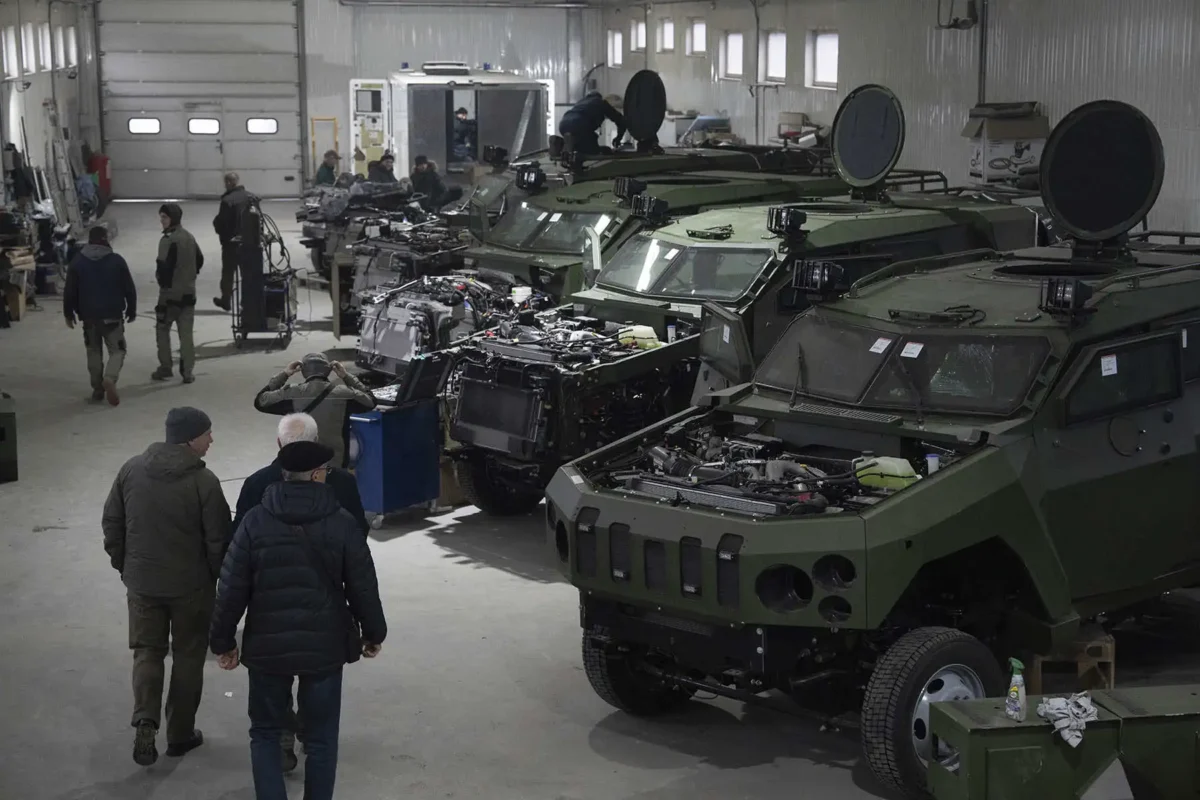
While Ukrainian Armor has publicly revealed figures for Novator deliveries, many other domestic manufacturers have opted to stay silent about their own output. According to defense industry insiders, this discretion is deliberate.
Public announcements, they warn, could provide useful intelligence to Moscow, making weapon factories potential targets for missile and drone strikes.
Russian forces continue to prioritize surveillance of Ukraine’s defense-industrial base, including through satellite imagery, cyberattacks, and informant networks.
Despite such risks, Ukraine’s defense industry has quietly achieved substantial results. Since 2022, domestic producers collectively delivered over 3,500 armored vehicles of the 4×4 class to the Armed Forces.
These vehicles are now performing roles ranging from direct infantry support in counteroffensive operations to combat medical evacuation under artillery fire.
This surge in supply demonstrates Kyiv’s ability to mobilize its own industrial potential under wartime constraints.
It also reflects stronger cooperation between the military and private defense firms, which often develop new models based on combat feedback from units at the front.
Unlike in peacetime defense procurement, production cycles have become accelerated, with revised variants of vehicles fielded in mere months rather than years.
For Western observers, Ukraine’s capacity to expand its manufacturing base while facing a constant threat from Russian air and missile attacks underscores the resilience and adaptability of its defense sector.
In a war where artillery, drones, and armored mobility dictate battlefield outcomes, Kyiv’s ability to produce thousands of vehicles domestically may prove decisive in sustaining long-term resistance.
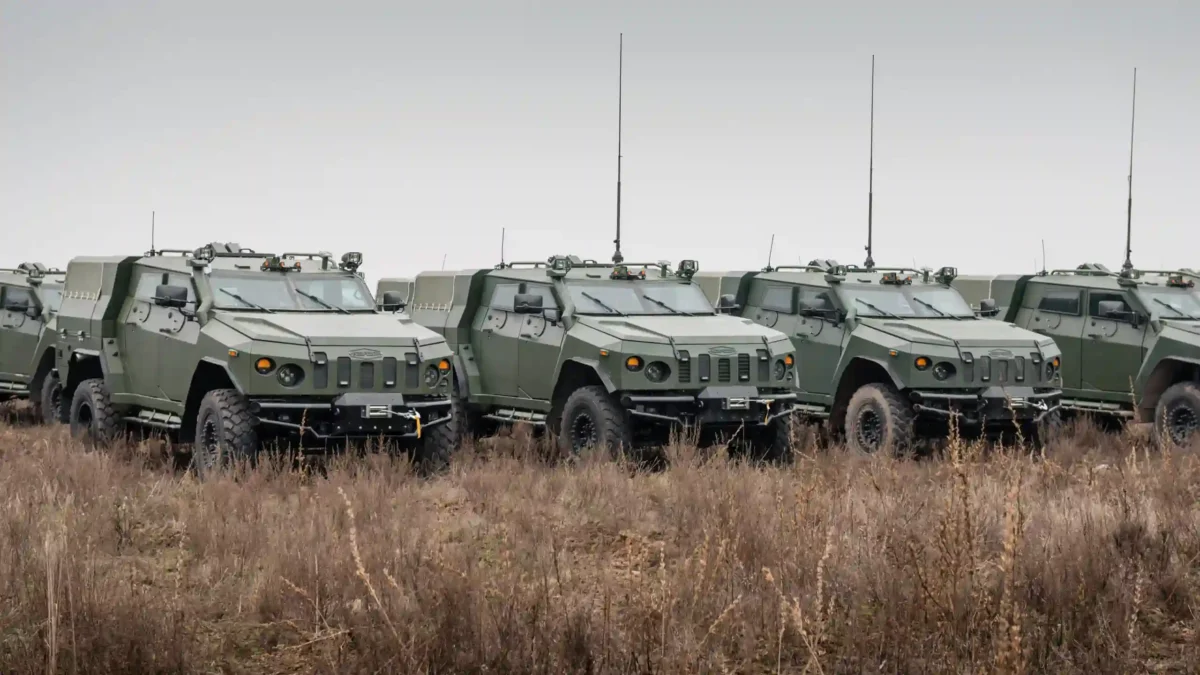
Armored vehicle production is more than a logistical achievement—it carries strategic significance.
By relying less on imported ground platforms, Ukraine reduces its vulnerability to supply shortages and dependency on shifting international political will.
Allies continue to provide crucial support, but maintaining a robust domestic output strengthens Kyiv’s long-term independence.
Equally, the expansion of the Novator line signals to both Ukrainian forces and Russian observers that Kyiv is not only enduring the war but building sustainable capacity.
The continuing appearance of new variants, specifically tailored to meet battlefield adaptations, highlights a cycle of innovation driven directly by combat experience.
Among the war’s many lessons, one is particularly clear: industrial resilience matters as much as troop training or battlefield tactics.
Ukraine’s armored vehicle sector now embodies this resilience, ensuring that soldiers deployed along a thousand kilometers of frontline have reliable transportation and protection.
As the conflict enters its third year with no end in sight, Ukraine’s defense manufacturers will likely face further challenges.
But the delivery of more than 1,000 Novators already stands as testament to wartime innovation and determination—a reminder that in modern war, production lies can be just as decisive as front-line breakthroughs.