Follow Us:
Follow Us:


Defense Feeds – Turkey reveals Steel Dome shield, officially introducing its long-awaited integrated air defense system, marking a historic leap forward for the nation’s defense industry, according to President Recep Tayyip Erdogan.
In Ankara, the unveiling ceremony at Aselsan emphasized Turkey’s intent to design and manufacture cutting-edge air defense platforms domestically, aiming to compete with international technology while reducing foreign reliance.
Erdogan emphasized that this project symbolizes Turkey’s commitment to safeguarding its skies amid regional security challenges.
“This is not just a defense system; it is a powerful demonstration of Turkey’s growing defense capabilities and a pledge to defend our nation against emerging threats,” Erdogan told military officials and industry experts at the event.
“With the Steel Dome shield, we are entering a new era in air defense designed to boost confidence among allies and deter potential adversaries.”
The Steel Dome project was first launched in August 2024 as part of Turkey’s broader roadmap to develop indigenous air defense solutions.
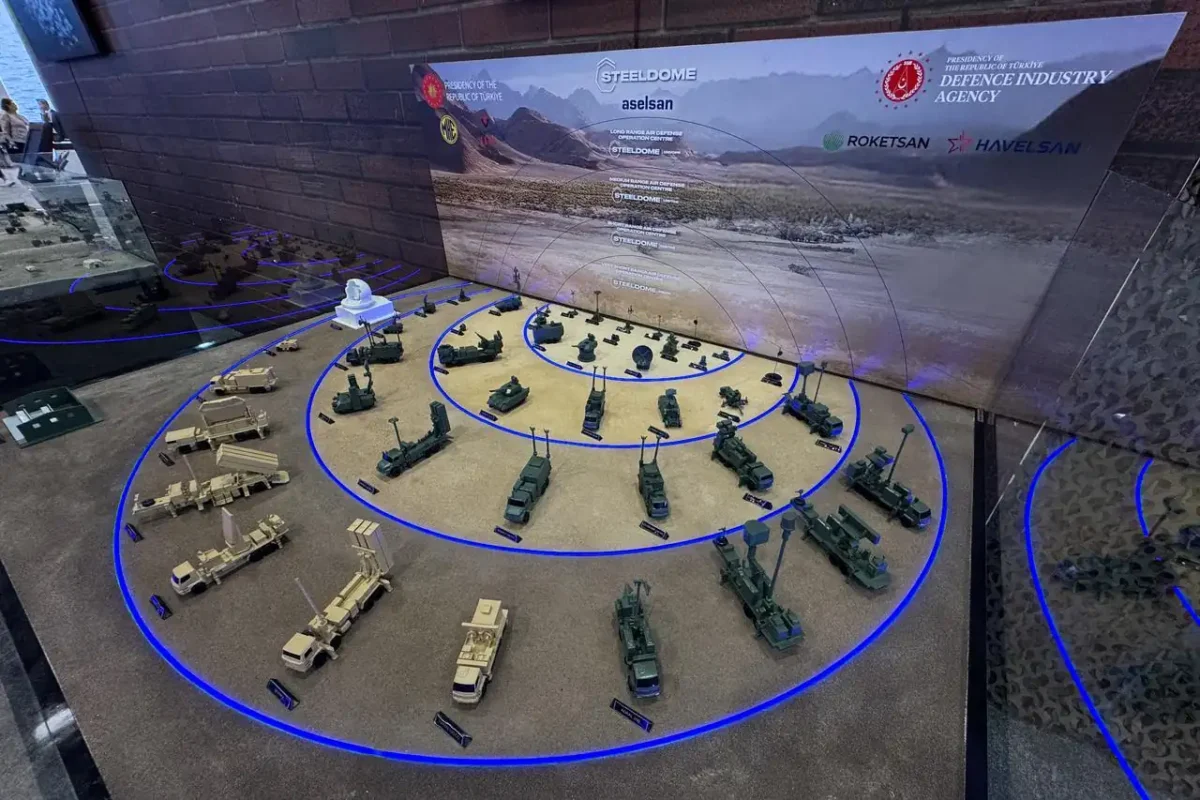
Unlike standalone units, the system combines both land-based launchers and sea-based platforms, fusing an advanced radar network with layered missile interceptors.
This comprehensive defense architecture aims to protect against an array of air threats including fighter jets, helicopters, ballistic projectiles, cruise missiles, and UAVs.
Officials revealed that the newly deployed batch of 47 vehicles represents an investment of around $460 million.
These systems are expected to form the backbone of the integrated defense network once fully operational, although Ankara has not provided a precise timeline for completion.
“In today’s security environment, no state can rely solely on external partners for critical defense needs,” Erdogan stressed, adding that countries unable to produce their own radar and missile systems are left vulnerable in times of crisis.
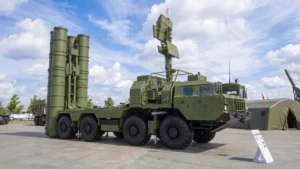
The comments signal Turkey’s continued efforts to break free from relying heavily on Western or Russian defense imports, a shift that gained momentum after acquiring the S-400 missile batteries from Moscow in 2019.
That deal soured Ankara’s partnership with Washington and resulted in Turkey’s removal from the F-35 stealth fighter program, a setback that left its air force modernization strategy in flux.
In response, Turkey doubled down on local defense production, with the Steel Dome emerging as the flagship project to fill the gap created by curtailed Western cooperation.
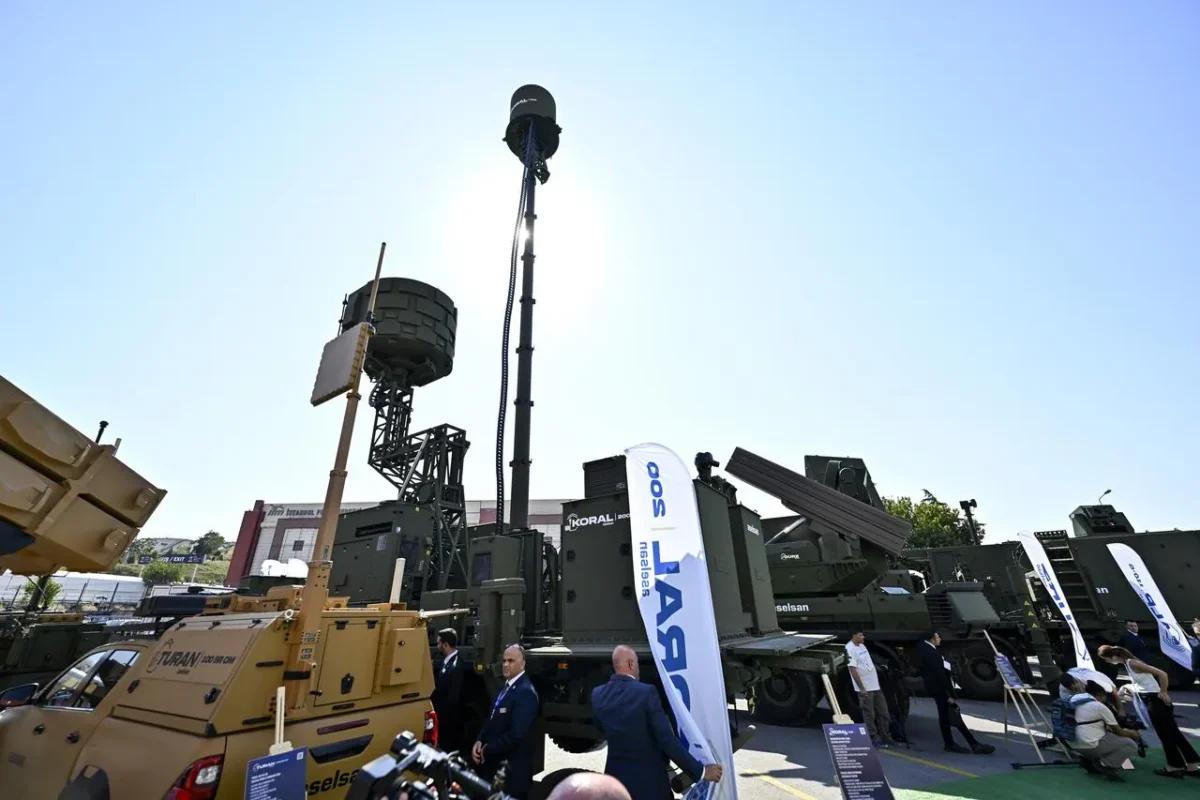
The Steel Dome represents Turkey’s adaptation to modern combat conditions where unmanned aerial vehicles (UAVs), ballistic missiles and long-range standoff weapons dominate the battlefield.
Defense officials explained the system’s multi-layered design would allow it to respond to simultaneous threats by integrating radar, command-and-control centers and interceptors.
Turkey’s experience with drone warfare, particularly through its Bayraktar TB2 and Akıncı UAVs, is expected to play a key role in shaping the capabilities of the Steel Dome defense system.
Officials have hinted at integrating counter-drone technology into the network to neutralize unmanned threats that have become decisive in conflicts from Ukraine to the Middle East.
Military analysts note that Turkey’s geographic position — bordered by unstable regions in Syria, Iraq and the Caucasus — makes comprehensive air defense a national security imperative.
The system is also designed to protect critical infrastructure, urban centers, energy sites and military assets from potential airstrikes.
Defense industry insiders say the project demonstrates Ankara’s growing confidence in its domestic arms sector.
Companies such as Aselsan, Roketsan and Havelsan have played central roles in radar design, software integration and missile development.
By exporting these systems in the future, Turkey hopes to expand its footprint in the global arms market, especially among countries in Africa, Asia and the Middle East looking for cost-effective alternatives to U.S., Russian or Chinese-made platforms.
The deployment of Turkey’s Steel Dome could significantly alter regional military balances.
Ankara faces ongoing tensions in the Eastern Mediterranean with Greece, disputes with neighboring Syria and Iraq, and occasional strains with NATO allies over security policy.
A locally built defense shield enhances Turkey’s ability to act with greater autonomy in these disputes.
Experts believe the project is not merely tactical but also strategic, aimed at elevating Turkey’s status as a defense technology power.
“An operational Steel Dome will allow Turkey to better defend itself, reduce external vulnerabilities, and at the same time showcase a homegrown capability that could attract international buyers,” said Mehmet Kaya, a retired Turkish air force colonel and defense analyst.
Western policymakers may monitor this development closely, fearing that Ankara’s growing independence could complicate NATO defense planning.
However, Turkish officials argue that enhanced domestic capacity strengthens collective security rather than undermines it.
For now, Erdogan has positioned the Steel Dome as a symbol of national pride, addressing both domestic and international audiences.
His message is clear: Turkey intends to stand among the limited number of nations that design, produce and deploy their own integrated missile defense systems.