Follow Us:
Follow Us:

Defense Feeds – Sweden Upgrades Archer Howitzers as the country concludes its long-running artillery modernization effort, marking a major step in its drive to enhance national defense capabilities.
The final batch of upgraded Archer 6×6 units was officially handed over by BAE Systems Bofors to the Swedish Defence Materiel Administration (FMV), completing a nationwide program focused on improving range, precision, and battlefield mobility across the army’s artillery forces.
According to FMV officials, all 24 Archer 6×6 systems have now been brought up to the new Version C configuration under the Sweden Upgrades Archer Howitzers program.
The updated variant features a modern command support network, refined fire control software, and multiple enhancements to vehicle performance and crew protection.
The completed deliveries have restored full operational capability to at least two artillery battalions, ensuring they meet NATO-standard interoperability.
Jonas Lotsne, head of FMV’s Army Materiel Division, said the Sweden Upgrades Archer Howitzers program represents a critical milestone in Sweden’s efforts to strengthen operational readiness.
He added that the modernization initiative extends the system’s service life while significantly enhancing the army’s long-range precision fire capabilities.
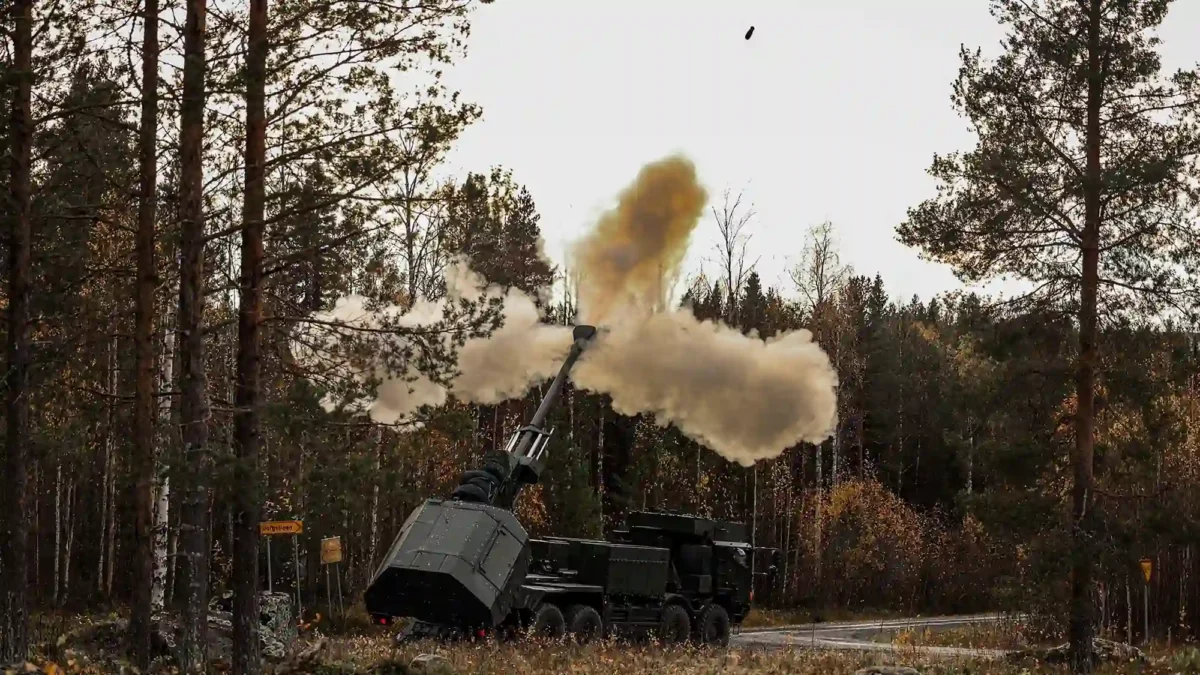
The upgraded Archer artillery system, built on a high-mobility 6×6 chassis, remains one of Northern Europe’s most advanced self-propelled howitzers.
The Version C configuration features a redesigned cabin layout for better crew ergonomics and safety, a faster automatic loading mechanism, and an advanced navigation suite allowing rapid deployment in diverse terrain conditions.
Complementing this upgrade, Sweden has also begun demonstrating the new Archer 8×8 variant, which was test-fired for the first time in Boden earlier this year.
This larger configuration integrates the Archer’s 155 mm gun module onto a Rheinmetall MAN 8×8 military chassis, increasing payload capacity and allowing for higher ammunition transport.
The 8×8 system is expected to serve as a foundation for potential future exports and NATO-standardized artillery equipment.

Sweden’s completion of the Archer artillery modernization comes as part of a broader national effort to accelerate military readiness following its accession to NATO.
Stockholm has significantly expanded its defense investments, aiming to make its armed forces more interoperable with allied formations across Europe.
In the air domain, the Swedish Air Force recently received the latest iteration of its JAS 39 Gripen fighter jets, featuring new active electronically scanned array (AESA) radars, upgraded electronic warfare systems, and expanded data interoperability features.
These upgrades are designed to ensure air dominance and better communication within NATO’s integrated defense network.
On the ground, Sweden’s defense industry continues to ramp up production of the CV90 infantry fighting vehicle in collaboration with BAE Systems Hägglunds.
The platform has become a core asset not only for Swedish mechanized forces but also for partner countries including Slovakia and the Czech Republic, enhancing armored cooperation among European militaries.
The finalized Archer upgrade marks more than just a hardware refresh, reflecting Sweden’s broader shift toward a networked, agile, and NATO-integrated defense force.
The Swedish Armed Forces are progressively developing multi-domain coordination among land, air, and sea assets, focusing on networked warfare and autonomous systems integration.
Parallel to the land forces’ progress, the Swedish Navy has advanced testing of its next-generation A26 Blekinge-class submarines.
Designed with stealth hull technology, extended underwater endurance, and modular payload sections, the A26 aims to secure Sweden’s maritime defense in the contested Baltic region.
By completing the Archer upgrade program, Sweden has sent a clear message of its commitment to deterrence and collective security in Northern Europe.
The enhanced artillery formations, paired with upgraded air and naval assets, firmly position the country as a reliable and capable NATO contributor, ready to respond rapidly to emerging regional challenges.