Follow Us:
Follow Us:

Defense Feeds – Sweden Deploys Lvkv 9040 Air-Defense Guns to Latvia in 2026, reinforcing NATO’s layered air defenses and marking a return to expeditionary gun-based air-defense operations not seen since the 1960s.
This move responds to the rising threat of low-cost drones and slow, low-flying airborne dangers that challenge both fixed missile systems and older defensive doctrines in the Baltic region.
As Sweden Deploys Lvkv 9040 Air-Defense Guns, NATO adapts to more complex aerial threats, with Swedish military leaders emphasizing that short-range, gun-based defenses are essential for frontline protection in the shifting European security landscape, especially as unmanned aircraft and loitering munitions proliferate.
By reinforcing the point-defense layer on NATO’s Baltic flank, Sweden Deploys Lvkv 9040 Air-Defense Guns to help ensure essential bases and supply nodes are guarded against saturation attacks.
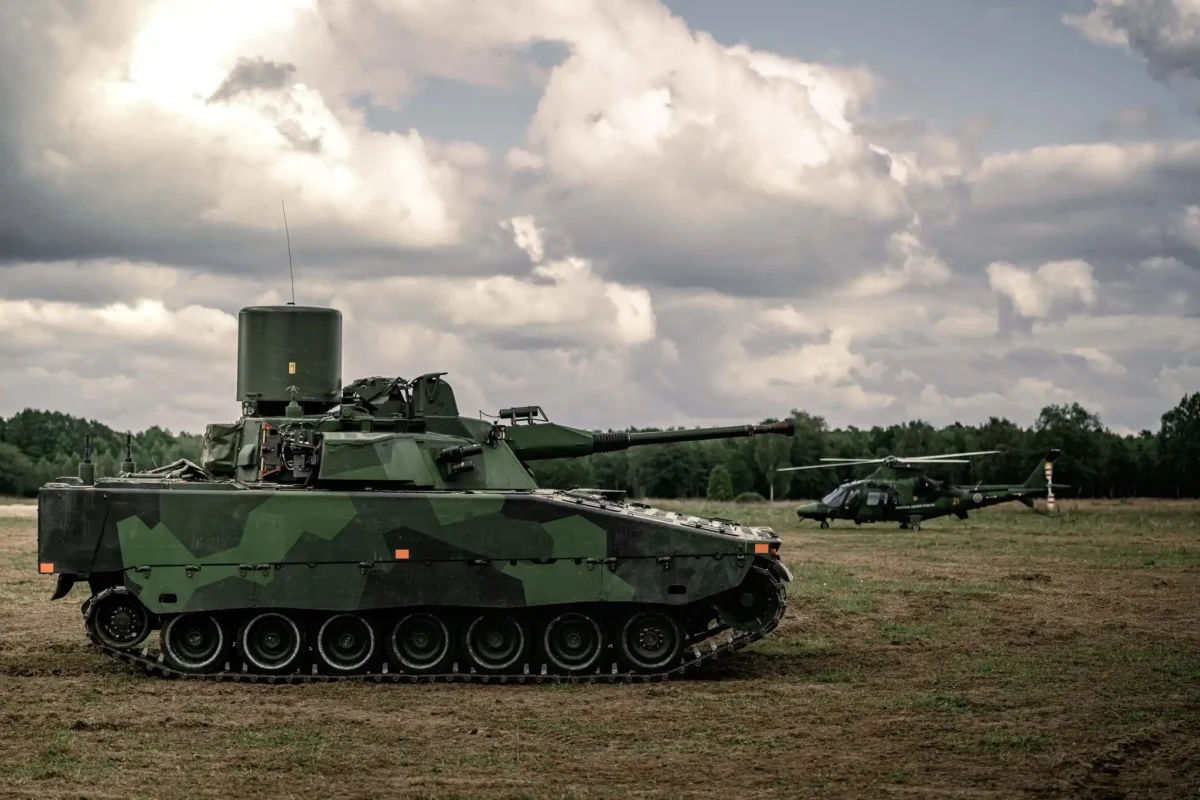
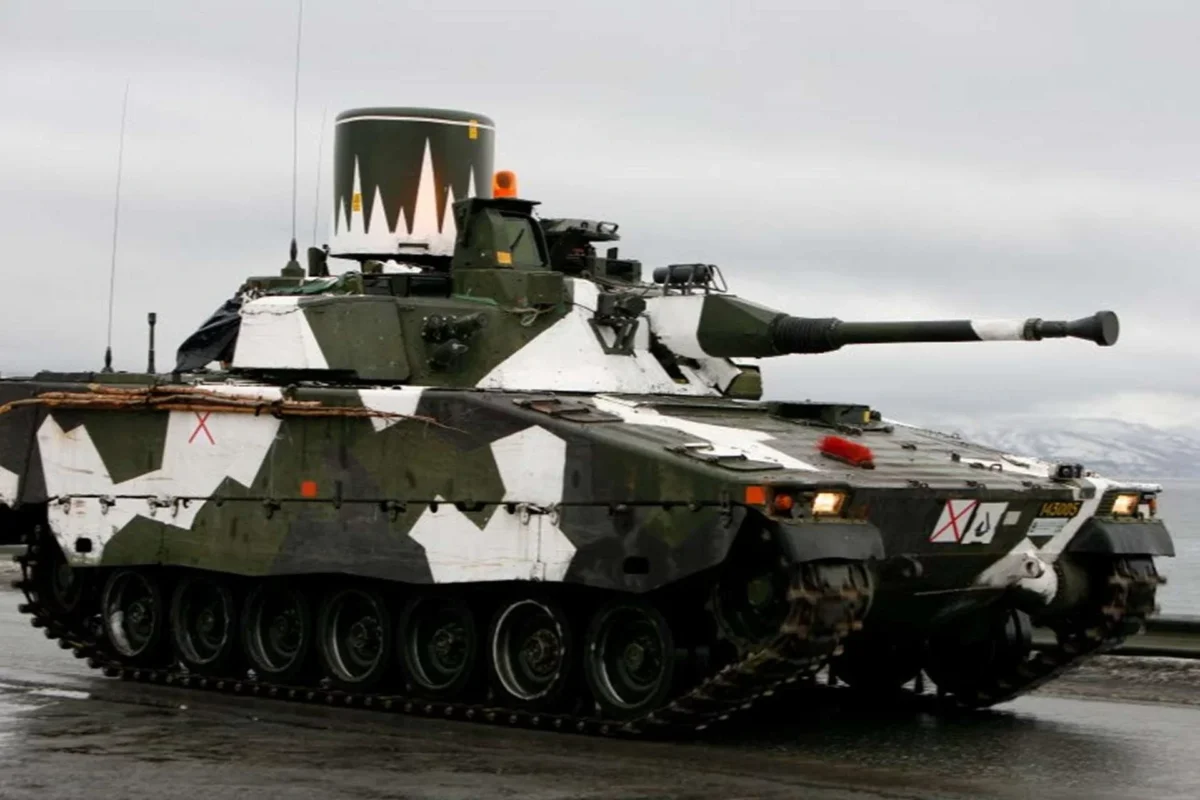
For this mission, Sweden will use its Luftvärnskanonvagn 9040, a gun-based air-defense system derived from the proven CV90 armored platform.
The Lvkv 9040 integrates a 40 mm Bofors L/70 cannon capable of firing next-generation programmable air-burst ammunition, ideally suited for intercepting drones, cruise missiles, and helicopters at short standoff ranges.
Its fire-control suite includes the PS-95 search and engagement radar in a prominent cylindrical mount, giving the system autonomous tracking and quick-reaction capabilities.
Unlike older systems, the Lvkv 9040 is optimized for quick halts and point-defense operations, rather than firing while moving.
This focus suits its role in defending fixed installations and maneuver brigades, fitting seamlessly into both established NATO positions and rapidly deployed forward units in Latvia.
Sweden’s approach stands out among NATO allies. Its 40 mm programmable rounds offer a versatile and effective counter to both aerial and slow-flying ground threats, providing a unique balance between missile interceptors and traditional gun systems.
Compared to Germany’s Gepard platform, equipped with twin 35 mm cannons and AHEAD air-burst shells, the Lvkv 9040 trades sheer volume of fire for a larger shell and improved effectiveness, packaged on a lighter CV90 chassis.
The Gepard has proven its worth against drone threats like the Shahed UAVs in Ukraine but highlights the logistical challenges of continuous ammunition supply.
Emerging systems such as Rheinmetall’s Skyranger 30, soon fielded on Boxer vehicles, focus on automation and networked sensors, using 30 mm programmable shells.
In contrast, Sweden’s ready availability of the Lvkv 9040 and existing inventory mean immediate impact for NATO missions.
While the Skyranger moves defenses toward more compact, advanced gun platforms, the Swedish system fills a critical protection gap now, especially in the Baltic region.
Russia’s 2S38 “Derivatsiya-PVO,” with its longer-range 57 mm gun, offers greater reach but remains less battle-proven and more demanding from a logistics perspective.
The 40 mm Swedish solution prioritizes cost-effective, precise air-burst power at engagement distances frequently encountered in hostile Baltic scenarios, fitting cleanly into NATO’s concept of layered defenses and complementing missile or MANPADS assets deployed with allied forces.
The deployment signals Sweden’s full integration into NATO’s defensive architecture along the eastern flank and a renewed commitment to high-intensity deterrence roles.
This operation is both practical and symbolic, reinforcing Sweden’s resolve to support combined allied operations and maintain a persistent, reliable layer of air defense for critical infrastructure and logistics hubs.
Strategically, adding gun-based air defense like the Lvkv 9040 strengthens NATO’s protection against drones, loitering munitions, and low-altitude cruise missiles, threats that can bypass or saturate high-end missile systems.
Swedish air-defense crews will work alongside other NATO assets, including German Gepards and upcoming Skyrangers, and can be cued by joint radar or unmanned detection networks for coordinated response.
Ultimately, the presence of Swedish Lvkv 9040s in Latvia will force potential adversaries to re-evaluate reconnaissance and strike tactics, increasing the cost and complexity of hostile operations.
Sweden’s move proves that programmable gun-based air-defense systems are crucial to credible NATO deterrence and daily force protection, especially as the drone threat continues to define battlefield realities across Europe.