Follow Us:
Follow Us:


Defense Feeds – Russia presents Ignis laser on Kurier UGV as a breakthrough in battlefield technology.
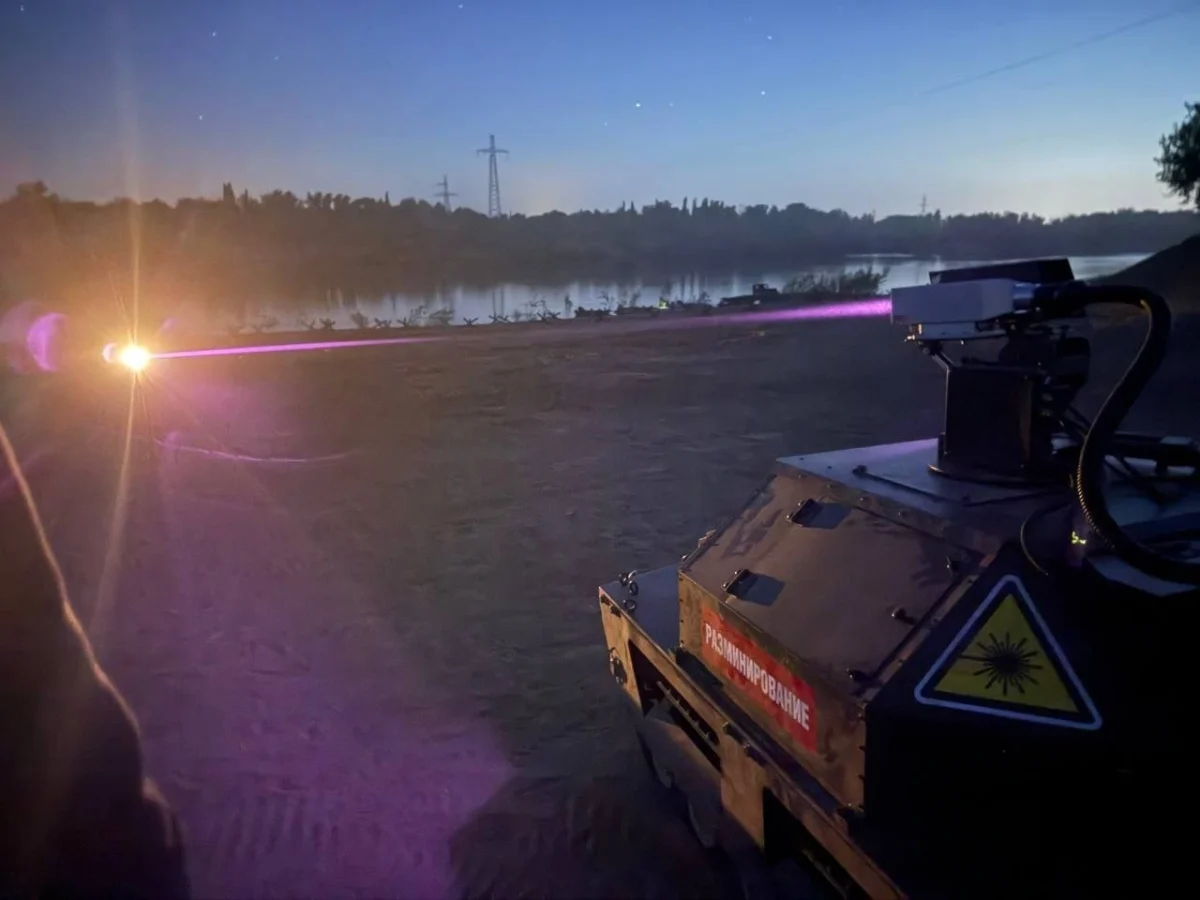
Russia has revealed its new combat laser weapon system named Ignis, integrated onto a robotic unmanned ground vehicle called Kurier, marking a significant step in battlefield laser technology.
This cutting-edge system was showcased during recent military drills and is being promoted by pro-Kremlin Telegram channels as a breakthrough in remote mine neutralization and tactical engineering support.
The Ignis laser on the Kurier platform demonstrates how a compact, mobile directed-energy system can support engineering units and unmanned formations with precise, short-range firepower.
In these demonstrations, the Ignis laser reportedly neutralizes threats at ranges up to 200 meters, enabling safer operations for sappers and support crews.
Observers note that Russia presents Ignis laser as part of a broader push toward autonomous, laser-enabled military capabilities.
The Kurier UGV with Ignis provides a glimpse into how directed-energy weapons may augment future mine clearance, obstacle removal, and battlefield engineering tasks, while reducing exposure for personnel in contested zones.
The Ignis laser system is specifically designed for neutralizing threats such as anti-tank mines at a distance, providing a safer alternative to conventional mine-clearing methods.
Footage circulated in Russian social media depicts the Ignis laser targeting TM-62 anti-tank mines planted on a riverbank. Instead of triggering detonations, the intense laser beam caused the mines to disintegrate safely without explosions.
This demonstrates the system’s precision and capability to eliminate hazardous obstacles remotely, which can greatly reduce risk to personnel and vehicles operating in contested zones.
According to Russian military sources, Ignis operates effectively within a working range of up to 200 meters, enabling engineering units to clear explosive hazards while staying out of harm’s way.
The Kurier unmanned robotic ground vehicle hosts the compact, mobile system, a versatile platform designed to support a broad set of battlefield roles.
This integration underscores Russia’s focus on deploying autonomous and remote-controlled systems that enhance the survivability and effectiveness of its forces.
The introduction of the Ignis represents part of a larger trend in directed-energy weapon development within the Russian military.
Previous projects such as Peresvet, a more strategic laser defense system, have focused on counter-drone and air-defense capabilities using high-energy lasers.
Ignis, by contrast, is a tactical, short-range laser system aimed at providing immediate battlefield utility, especially for engineering teams, sappers, and unmanned task forces engaged in mine clearance and obstacle removal.
Directed-energy weapons like Ignis offer several advantages including precise targeting, silent operation, and minimal collateral damage compared to traditional explosive devices.
The use of such laser systems can enhance the pace of combat engineering operations, allowing forces to quickly and efficiently eliminate minefields or other hazards without risking human lives or heavy machinery in vulnerable forward areas.
The deployment of Ignis on the Kurier UGV is significant as it reflects the increasing role of robotics and advanced weaponry in modern combat scenarios.
Unmanned ground vehicles equipped with laser weaponry could become essential tools in future conflicts, especially in environments heavily contaminated by mines or improvised explosive devices (IEDs).
By automating risky engineering tasks, these systems improve operational safety and effectiveness, permitting the rapid advancement of ground forces.
Moreover, Russia’s focus on compact and mobile laser platforms may influence global military trends as other countries observe the effectiveness of such technologies in live exercises.
The Ignis system potentially sets a precedent for integrating directed-energy weapons with autonomous vehicles, pushing the boundaries of battlefield automation and force protection.
Russia aims to modernize its armed forces and sustain battlefield superiority by leveraging next-generation technologies like artificial intelligence, robotics, and high-energy lasers.
The Ignis laser, while currently specialized for mine clearing, could be evolved or adapted for other tactical roles, including counter-drone measures or support in urban warfare.
In summary, the unveiling of the Ignis laser weapon on the Kurier robotic platform highlights a notable evolution in Russian military capabilities.
This laser system introduces a safer, more precise method for explosive hazard neutralization, reflecting advances in directed-energy weapon technologies aimed at tactical battlefield applications.
Its operational use during exercises signals Russia’s commitment to integrating autonomous systems and laser-based weapons for enhanced combat engineering and force protection, potentially influencing future defense trends globally.