Follow Us:
Follow Us:


Defense Feeds – Oshkosh Reveals X-MAV in Washington, D.C., marking another major leap in the United States’ effort to transform its long‑range strike capabilities.
The new mobile Tomahawk cruise missile launcher, showcased at the AUSA 2025 Defense Expo, could eventually strengthen Ukraine’s deep‑strike potential.
The X‑MAV (Extreme Multi‑Mission Autonomous Vehicle) represents the U.S. Army’s latest modernization milestone, blending autonomous control with high‑mobility firepower.
Its unveiling comes amid increasing collaboration between Washington and Kyiv over potential Tomahawk missile transfers aimed at supporting Ukraine’s battlefield operations against entrenched Russian defenses.
Officials told Army Recognition that the rollout coincides with “detailed and active” technical coordination between U.S. and Ukrainian experts exploring how to integrate the missile into Kyiv’s expanding strike network.
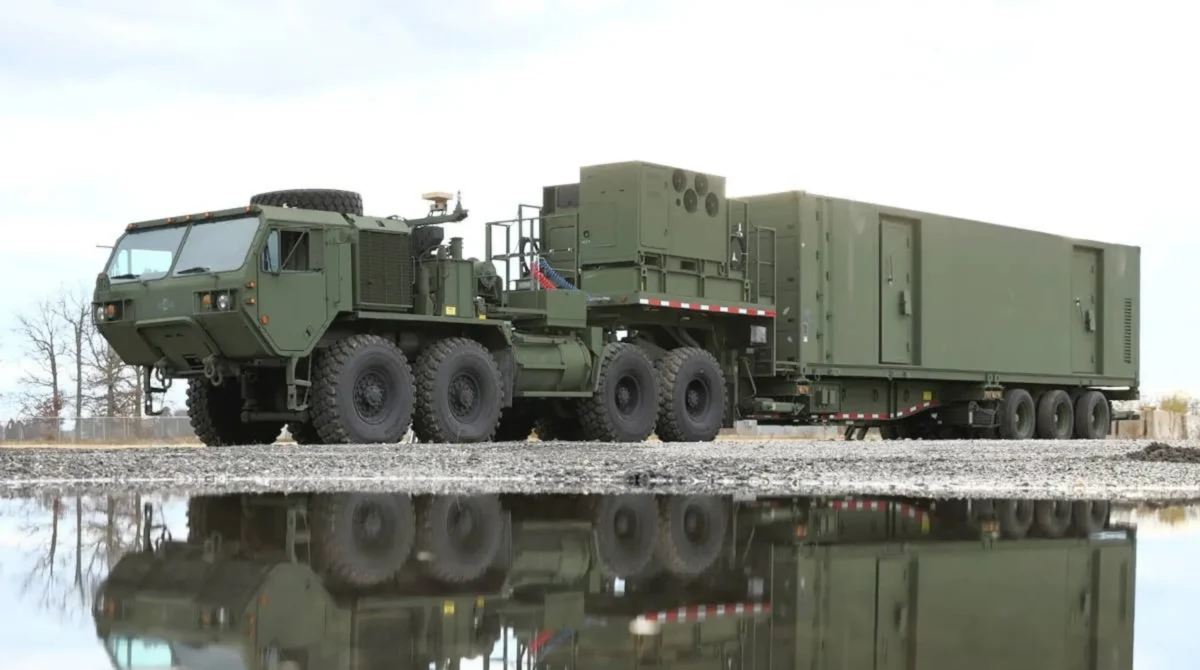
Unlike the Typhon, which relies on a trailer setup already in use across the Indo‑Pacific, the X‑MAV is a fully integrated vehicle optimized for rough terrain and quick strike‑and‑relocate tactics.
It retains a four-missile capacity but adds substantial survivability enhancements, including low-signature mobility, autonomous pathfinding, and improved concealment across forested or urban terrain.
Defense analysts describe this as a “doctrinal shift” toward more agile and dispersed missile fire units, reducing vulnerability to counterstrikes and enhancing operational tempo in contested regions.
The X‑MAV operates as part of the Family of Multi-Mission Autonomous Vehicles (FMAV), which also includes the M-MAV, tailored for GMLRS and Precision Strike Missile (PrSM) operations, and the L-MAV, designed to launch Switchblade 600 drones or counter-unmanned aerial systems (C‑UAS) like the BlueHalo Titan.
All three variants can function autonomously or as part of a networked fire-support system, allowing crews to coordinate long-range precision attacks with minimal exposure.
Ukrainian officials confirmed on October 10 that these talks have progressed into deeper technical coordination, involving missile configurations, targeting systems, and potential launcher compatibility.
If the transfer is approved, the X‑MAV could become part of a broader NATO-supported initiative to strengthen Ukraine’s long-range strike capabilities.
President Volodymyr Zelenskyy emphasized that any Tomahawk deployment would remain confined to legitimate military targets, underscoring Kyiv’s intent to prevent escalation with Moscow.
Defense experts suggest that bringing a mobile Tomahawk launcher such as the X‑MAV into service would allow Ukrainian units to shift positions rapidly after launches, reducing the risk of detection and counterattack.
This agility could allow Ukraine to engage air defenses, command centers, and supply depots deep behind enemy lines.
Modern Tomahawk models, including Blocks IV and V, reach distances beyond 1,600 km while supporting terrain‑tracking guidance, in‑flight mission updates, and two‑way communication links.
The latest versions, Block Va and Vb, include anti-ship seekers and specialized warheads capable of neutralizing fortified positions.
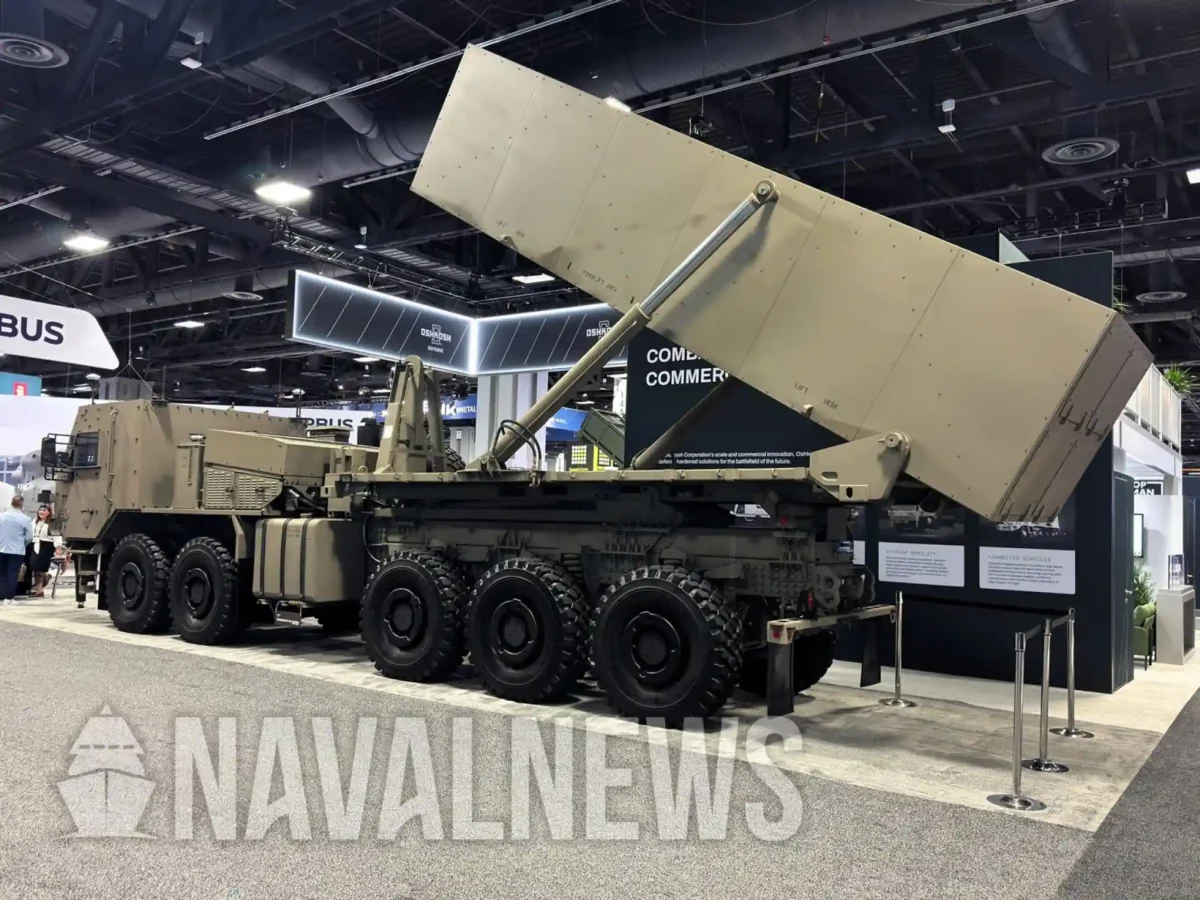
The X‑MAV forms part of the U.S. Army’s Common Autonomous Multi‑Domain Launcher, Heavy (CAML‑H) initiative.
This concept envisions a next-generation ground launcher with self-contained control architecture, onboard power, and payload flexibility for adapting to future long-range missile systems.
Oshkosh Defense, the program’s prime developer, equipped the vehicle with autonomous driving software and low-signature systems to support operations in high-threat environments.
Military sources describe the X‑MAV as a “modular strike hub” capable of networked engagement with airborne, ground, and maritime sensors.
This rollout reflects the U.S. focus on building agile and resilient strike capabilities, a development that has drawn the attention of European militaries and Kyiv’s strategic community.
U.S. Vice President JD Vance, commenting earlier this week, stated that Russia must “wake up and accept reality,” charging that Moscow has absorbed heavy losses for minimal territorial gains.
He added that President Donald Trump’s position on the war underscores a growing urgency to contain the conflict while strengthening Ukraine’s self-defense capability through advanced U.S. technology like the Tomahawk cruise missile and its new mobile launch architecture.