Follow Us:
Follow Us:

Defense Feeds – North Korea Unveils Hwasong-20 ICBM as a major escalation in Pyongyang’s nuclear ambitions.
The North Korea Unveils Hwasong-20 ICBM message frames the new weapon as Pyongyang’s most formidable nuclear asset to date, showcased during the October 10 parade marking the Workers’ Party of Korea’s 80th anniversary and highlighted by state media as capable of targeting the U.S. mainland.
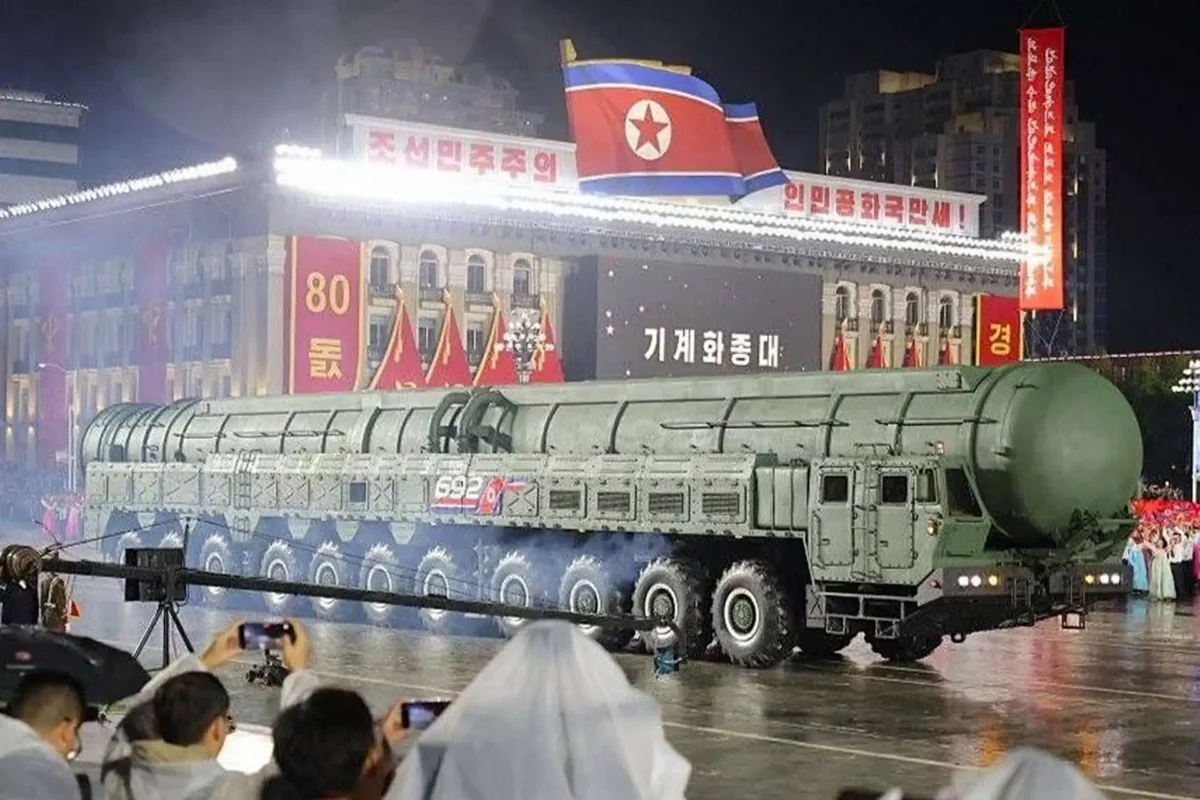
During the parade in Pyongyang, Kim Jong Un personally oversaw the presentation of the Hwasong-20, underscoring its political and military message.
The event, attended by senior foreign guests including Dmitry Medvedev, deputy chief of Russia’s Security Council, carried an unmistakable signal to the world about North Korea’s strengthened ties with Moscow and its growing technological confidence.
According to state reports, the Hwasong-20 is equipped with a new-generation solid-fuel motor constructed with carbon-fiber materials, producing around 1,971 kilonewtons of thrust.
This improvement enables quicker launch setup, higher combat readiness, and reduced logistical demands, giving it a significant edge over older liquid-fueled ICBMs.
The missile’s public reveal follows months of test reports on high-thrust solid engines, indicating that Pyongyang is pushing rapidly toward a reliable long-range strike capability.
Military analysts note that the parade’s elaborate display and the presence of Russian dignitaries were calculated to project an image of deterrence, defiance, and technological maturity.
This show of force also comes amid accelerating tensions in Northeast Asia, where concerns about North Korea’s solid-fuel missile readiness are increasingly shaping regional defense postures.
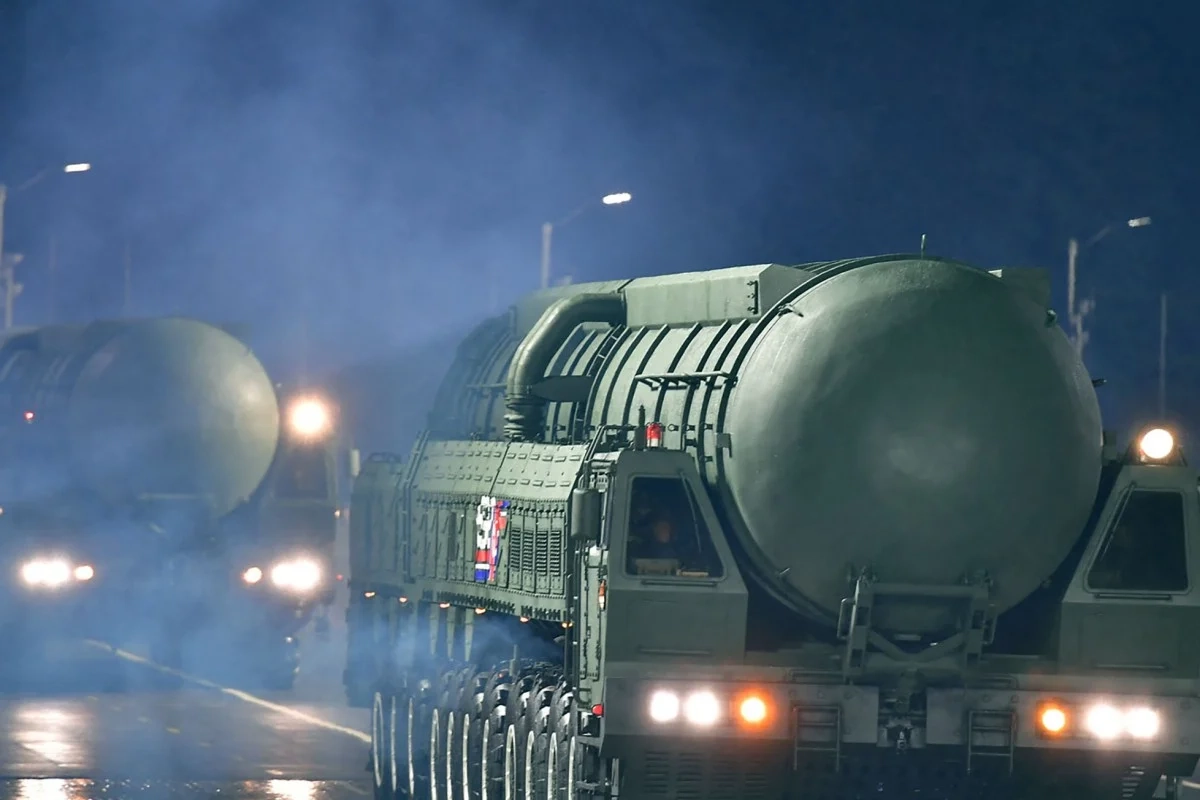
The Hwasong-20 resembles the Hwasong-19 in overall shape, yet its bigger, more squared nose suggests greater payload capability, potentially enabling multiple reentry vehicles or a MIRV configuration.
The missile is mounted on an 11-axle canisterized transporter-erector-launcher (TEL), reportedly engineered with a central lifting mechanism similar to Russian systems.
This design reduces mechanical strain during launch preparation and improves stability, reflecting clear progress in North Korea’s mobile launcher technology.
The new ICBM likely combines lessons from both the Hwasong-17, which used liquid fuel and was known for its massive payload, and the Hwasong-19, which represented North Korea’s first successful solid-fuel intercontinental test.
The Hwasong-20 seeks to combine these advancements, delivering swift launch readiness, enhanced mobility, and the possibility of deploying multiple warheads from one platform.
North Korean state media claims the missile can reach distances up to 15,000 kilometers, theoretically placing the entire U.S. mainland within range, though there is no confirmed long-range flight data validating that claim.
Despite its bold specifications, defense experts caution that critical challenges remain untested, particularly the missile’s reentry survivability, flight accuracy, and thermal shield endurance under intercontinental velocities.
A future full-scale test could prove decisive in determining whether Pyongyang’s technological assertions hold up under real launch conditions.
Domestically, the Hwasong-20 reinforces North Korea’s commitment to maintaining a credible nuclear deterrent against perceived threats from Washington and its allies.
Its solid-fuel propulsion and canister launch system make it tougher to detect and intercept before liftoff, considerably reducing allied early-warning time.
This compresses response timelines for the United States, South Korea, and Japan, potentially complicating their missile defense operations.
For Pyongyang, the advantages are clear: faster launch readiness, improved mobility, and enhanced survivability.
The missile’s design also opens the door for future deployment with decoys or penetration aids, which could overwhelm U.S. missile defenses.
North Korea’s regional missile portfolio, including the Hwasong-12 intermediate-range and the KN-23/KN-24 short-range systems, continues to emphasize tactical and theater-level deterrence aimed at Seoul and Tokyo.
By unveiling the Hwasong-20 at a high-profile national event with Russian representation, Kim Jong Un not only demonstrated advancing ICBM capability but also hinted at deepening strategic cooperation with Moscow amid increasing sanctions.
For neighboring powers, the new system signifies the next stage in North Korea’s long-term strategy: a layered nuclear force designed for credible deterrence and coercive diplomacy, capable of delivering rapid, unpredictable strikes far beyond its borders.