Follow Us:
Follow Us:


Defense Feeds – LTAMDS radar enhances US defense as the U.S. Army has officially awarded Raytheon Technologies (RTX) a $1.7 billion contract for the production of the Lower Tier Air and Missile Defense Sensor (LTAMDS).
This deal marks a significant shift from development to full-scale manufacturing and deployment of one of the most advanced missile defense radar systems designed to strengthen U.S. and allied air defense capabilities.
Poland also emerges as the first international customer, reinforcing its missile defense network amid growing geopolitical tensions in Eastern Europe.
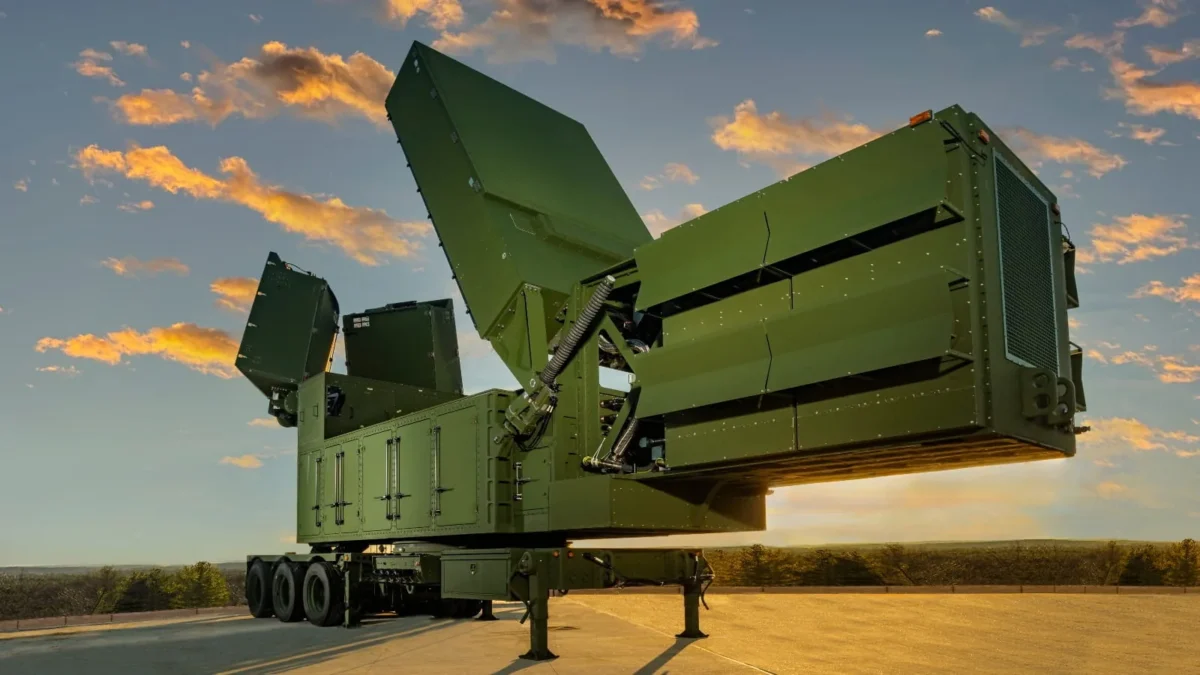
The LTAMDS radar system represents a groundbreaking development in air and missile defense sensors.
Powered by an Active Electronically Scanned Array (AESA) and equipped with gallium nitride (GaN) transmit-receive modules developed by Raytheon, LTAMDS is designed to eliminate gaps in radar coverage and offer full 360-degree detection capabilities.
Unlike traditional Patriot radar systems that are limited to forward-facing sectors, LTAMDS continuously scans the entire airspace around it, increasing detection ranges and providing earlier warning against a wider array of aerial threats.
The system is capable of simultaneously tracking various targets such as manned aircraft, drones, cruise missiles, ballistic missiles, and hypersonic projectiles.
It operates on multiple frequency bands, integrating C-band for its primary radar functions and X-band and S-band frequencies for missile communications.
This multi-band approach allows LTAMDS to collect highly precise and comprehensive data, including target location, velocity, and classification in real time.
Such detailed and rapid information improves the accuracy and effectiveness of interceptor missiles like the Patriot PAC-3 MSE, which relies on fine-tuned targeting to successfully destroy incoming threats.
By removing critical blind spots and enhancing detection ranges, LTAMDS significantly enhances survivability against saturation attacks, where multiple targets approach simultaneously, and against fast-moving, maneuvering threats such as hypersonic weapons.
This capability is vital as adversaries develop increasingly complex missile technologies designed to evade traditional detection systems.
The true strength of LTAMDS lies not just in its detection power but in its ability to feed data into the Integrated Battle Command System (IBCS), the Army’s advanced networked command-and-control framework.
IBCS combines inputs from multiple sensors, analyzes them, and provides commanders with optimized firing solutions to engage threats effectively, regardless of which sensor obtains the initial target data.
This distributed architecture enables integrated, layered defense that coordinates radars, interceptor missiles, and other effectors to function as a cohesive system.
A major demonstration of LTAMDS’ operational readiness took place on August 15, 2025, at the White Sands Missile Range in New Mexico.
During this test, the radar detected and classified an “air breathing” target simulating an aerial threat.
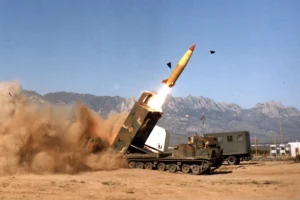
It transmitted real-time targeting data to IBCS, which then calculated an engagement solution resulting in a successful interception by a Patriot PAC-3 MSE missile.
This event was notable for being the first use of LTAMDS’ secondary array for interception and the first to employ initial-production IBCS hardware in a live test.
The test confirmed LTAMDS’ capability to provide fully integrated 360-degree coverage aligned with the Army’s operational needs.
This integration ensures the radar’s data are part of a larger, networked defense ecosystem—delivering timely, actionable intelligence for layered defense against increasingly sophisticated missile threats.
The $1.7 billion contract includes the delivery of nine LTAMDS radars for both the U.S. Army and Poland. Poland’s acquisition highlights the strategic importance of LTAMDS within the context of NATO’s collective defense framework.
Positioned on NATO’s eastern flank, Poland faces growing security challenges due to regional tensions in Eastern Europe, prompting it to strengthen its air defense capabilities in partnership with the United States.
Poland’s investment in LTAMDS complements its ongoing modernization program, Wisła, which aims to build a robust medium-range missile defense shield.
This program has seen Poland acquiring a range of U.S. military systems over recent years, including M1A2 Abrams tanks, HIMARS rocket launchers, and F-35 fighter jets, all aligned for enhanced NATO interoperability.
The LTAMDS radar forms a critical node in this layered defense approach, reinforcing Poland’s ability to detect and respond to emerging missile threats.
Beyond Poland, several other nations have reportedly expressed interest in LTAMDS, reflecting growing global concerns about missile proliferation and the rise of hypersonic weapons.
These weapons are particularly challenging due to their high speed, maneuverability, and ability to evade traditional radar detection.
LTAMDS’ advanced tracking and multi-band communications make it well-suited to counter such threats, positioning it as a key element of future missile defense architectures worldwide.
For the U.S. Army, the deployment of LTAMDS signals a major modernization step, replacing Patriot radars that have been in service for decades with a system tailored for modern threats.
The accelerated production timeline announced with the September 2025 contract responds to operational urgency amid evolving global security challenges.
Raytheon and RTX aim to ramp up production rapidly, supplying U.S. forces and allied nations with radar systems that can operate in highly contested environments while providing unmatched detection fidelity and networked defense integration.
In conclusion, the Raytheon LTAMDS radar program represents a significant advancement in missile defense technology.
By delivering comprehensive threat detection, seamless integration with existing command systems, and support for allied defense modernization efforts, LTAMDS sets a new standard for protecting airspace from complex and emerging missile threats.
This contract and planned deployments reinforce the United States’ and its allies’ commitment to maintaining cutting-edge, interoperable defense systems capable of meeting the challenges of modern warfare.