Follow Us:
Follow Us:


Defense Feeds – The Legioner 4×4 Armored Vehicle has been rolled out by Russia to enhance mobility and protection for frontline units.
Developed by Russkiye Boyevyye Mashiny (RBM), a domestic producer of military platforms, the vehicle is promoted as a modern solution bridging the gap between standard military trucks and fully armored personnel carriers.
The Legioner is a 4×4 wheeled light armored vehicle created to address operational needs observed in recent conflicts, particularly in Ukraine.
Russian ground forces rely heavily on a mix of unarmored civilian-style vehicles and heavier armored personnel carriers such as the BTR-82A.
This reliance has created a vulnerability gap, forcing troops to choose between high mobility with little protection or heavier armored systems that limit flexibility on difficult terrain.
RBM’s new Legioner aims to balance these extremes. The vehicle offers improved mobility, modest armor protection, and the ability to carry personnel or cargo without the drawbacks of bulkier platforms.
Its developers emphasize that the Legioner is not intended to replace the BTR-82A or similar APCs but to serve as a multipurpose support platform capable of filling logistical, combat support, and patrol roles.
For many analysts, the introduction of the Legioner highlights Russia’s recognition of the risks its forces face when operating unarmored or lightly protected vehicles in conflict zones.
By launching a purpose-built light armored option, Moscow hopes to provide more survivability for troops engaged in reconnaissance, convoy escort, or supply operations.
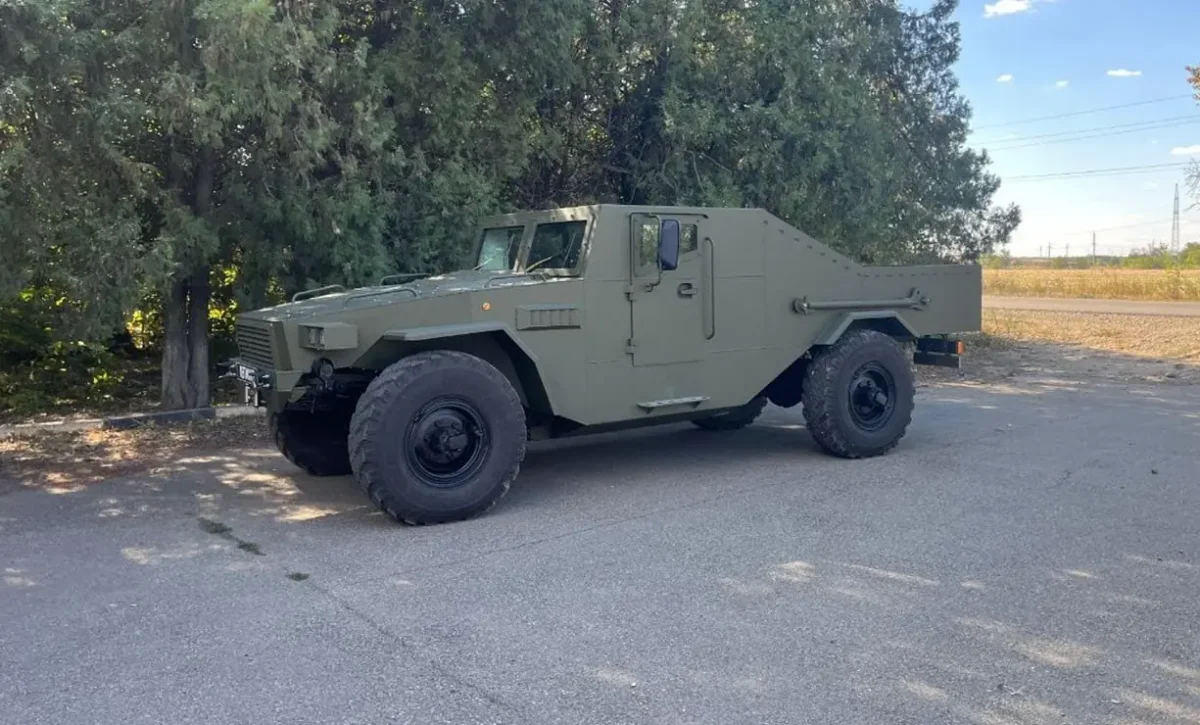
Observers note that the Legioner’s profile bears resemblance to Cold War–era Soviet designs such as the BTR-40 and BTR-152, vehicles once exported widely across Warsaw Pact states and allied militaries.
These vehicles offered troop transport and support capabilities but were eventually phased out due to their outdated protection and mobility standards.
The Legioner revives these core ideas but incorporates modern upgrades to meet 21st-century requirements.
Although technical specifications remain limited, the platform is reported to feature modular armor, off-road suspension, and protection against small-arms fire and shrapnel from indirect attacks.
The design philosophy also emphasizes modularity, allowing the Legioner to be adapted for different missions such as communications support, command-and-control, light logistics transport, or casualty evacuation.
Military sources suggest that the Legioner can carry a small squad of troops or a mix of personnel and payload, supporting Russia’s increasing need for flexible battlefield vehicles.
Unlike civilian pickup trucks often pressed into service, the Legioner is purpose-built to survive in contested zones where ambushes, artillery fragments, and drone strikes are constant threats.
The timing of the Legioner’s development aligns with Russia’s ongoing campaign in Ukraine, where attritional battles and widespread drone surveillance have made vulnerable vehicles a liability.
Analysts highlight that one of the most persistent challenges for Russian logistics has been losses of unprotected supply trucks to artillery and drone strikes.
The Legioner’s basic armor protection is intended to mitigate these risks without slowing operational tempo as a heavy APC might.
Beyond Ukraine, the Legioner is expected to become valuable in counterinsurgency roles, peacekeeping operations, and border patrol tasks.
Its lightweight frame and wheel-based mobility make it easier to operate in diverse environments compared to tracked armored carriers.
Additionally, its introduction points toward a broader Russian trend of creating specialized vehicles for niche roles within the military structure.
While heavy IFVs and APCs remain central to combat operations, there has been increasing recognition of the need for layered vehicle classes—ranging from unarmored logistics trucks, lightly armored utility vehicles like the Legioner, and fully protected infantry carriers.
The Legioner could also represent Russia’s attempt to stay competitive in the global armored vehicle export market.
Smaller, affordable armored platforms are in high demand across developing nations and militaries seeking to augment existing fleets without investing in costly mainline APCs.
If the Legioner reaches serial production, it could compete with similar platforms already produced by Turkey, China, and other defense exporters.
At present, it is unclear how soon the Legioner will be deployed widely across Russian units or whether it will see immediate deployment in Ukraine.
Defense industry observers suggest the prototype phase is largely complete and limited production may already be underway for field testing.
Moscow has historically accelerated vehicle introductions when battlefield conditions demand urgent deployment, making the Legioner’s role in active operations a strong possibility in the near term.
For Russia’s armed forces, the Legioner offers a potentially important shift in battlefield logistics and protection.
Its success will depend not only on technical performance but also on how effectively the military integrates this new class of vehicle into doctrine and supply chains—areas that have long challenged Russian operations.