Follow Us:
Follow Us:


Defense Feeds – Germany Unveils DefendAir Missile as part of a new defense partnership with MBDA to strengthen Europe’s air defense capabilities.
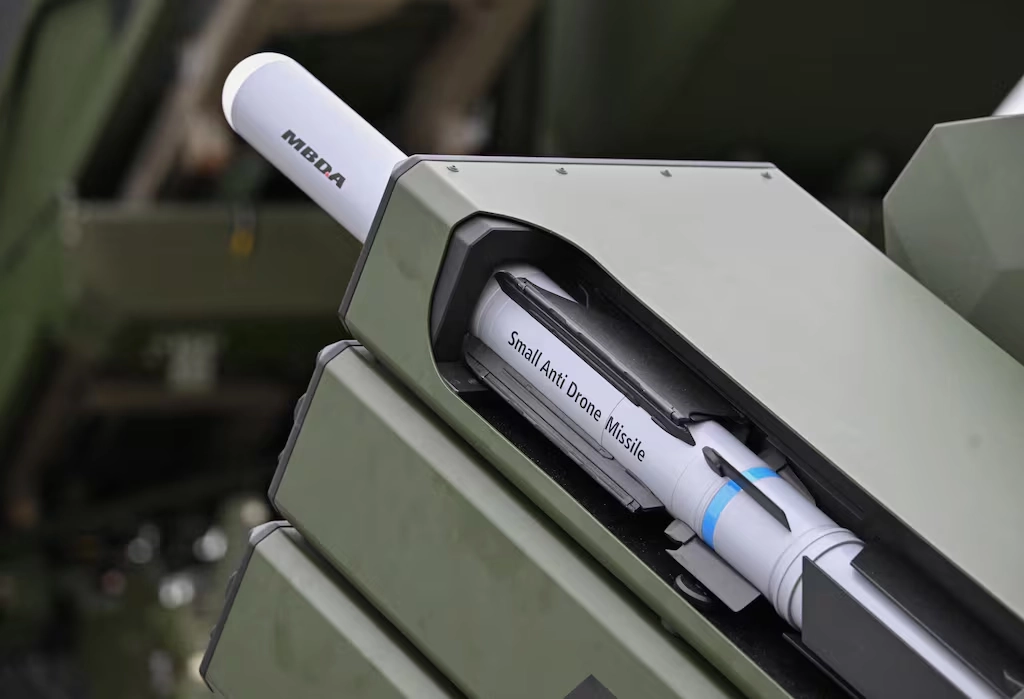
The German government has formalized a major agreement with MBDA to develop and produce this next-generation anti-drone missile system.
Signed on November 10, 2025, between MBDA and Germany’s Federal Office of Bundeswehr Equipment, Information Technology and In-Service Support (BAAINBw), the deal highlights Berlin’s commitment to boosting its short-range air defense network.
The DefendAir missile is being developed under Germany’s Short- and Very Short-Range Air Defense (NNbS) initiative and will be integrated into the Skyranger 30 mobile air defense vehicle.
Designed to tackle the growing threat of unmanned aerial vehicles (UAVs) and drone swarms, the DefendAir system represents a vital component of Germany’s modern drone defense program.
MBDA states that DefendAir will provide a much-needed solution to tackle small, agile drones and coordinated swarm attacks—targets that conventional air defense systems often find difficult to intercept effectively.
Built using technology derived from the company’s proven Enforcer missile program, DefendAir bridges the gap between traditional short-range interceptors and specialized counter-drone weapons.
Thomas Gottschild, Executive Group Director Strategy at MBDA and Managing Director of MBDA Deutschland GmbH, emphasized that the missile represents a leap in capability for both the Bundeswehr and NATO’s collective defense posture.
He described DefendAir as a “game-changing system” that equips Germany with state-of-the-art drone protection while boosting Europe’s shared security.
By leveraging existing technology and production infrastructure, MBDA aims to shorten the development timeline and ensure operational deployment as quickly as possible.
According to the firm, early development work began prior to the contract signing to guarantee timely field availability.
Germany’s new missile project also plays a vital role in the European Sky Shield Initiative (ESSI), an effort to enhance Europe’s integrated air and missile defense framework across multiple nations.
Gottschild noted that several European partners have already expressed interest in the DefendAir system, viewing it as a potential addition to joint defense architectures.
The DefendAir missile is tailored to meet Germany’s specific short-range air defense requirements while remaining compatible with MBDA’s global family of air defense products.
It complements existing systems such as Sky Warden, the Mistral missile family, and the CAMM series, expanding MBDA’s capacity to deliver scalable solutions for various national and alliance-level defense needs.
MBDA is investing heavily in expanding its European production network to meet soaring demand for missile systems.
Between 2023 and 2025, the company doubled its output capacity, and it plans to invest another €2.4 billion (approximately $2.8 billion) between 2025 and 2029 to sustain higher production volumes and modernize manufacturing facilities.
The DefendAir’s compact frame and modular design allow it to be mounted on multiple air defense platforms, offering users flexibility for dynamic battlefield environments.
Its advanced guidance technology ensures high precision in intercepting low, fast-moving UAVs, giving Germany a reliable shield against the growing drone menace.
With drone warfare increasingly shaping the modern battlefield in Ukraine, the Middle East, and beyond, Germany’s push for the DefendAir missile underlines its determination to stay ahead in countering evolving aerial threats.
The program signals not just a technological milestone for MBDA, but also a strategic commitment by Berlin to reinforce its role in European and NATO defense networks.