Follow Us:
Follow Us:


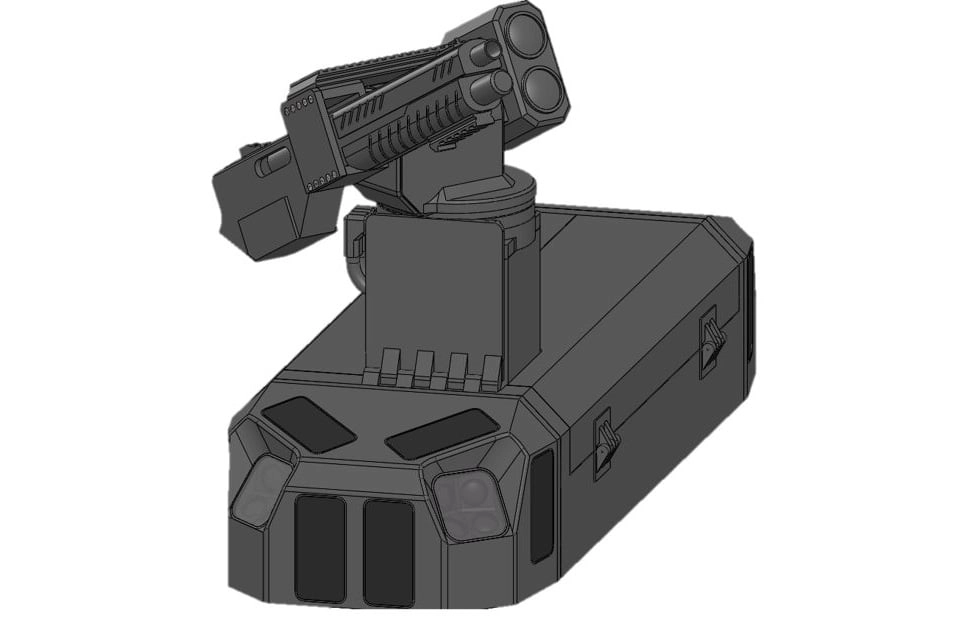
Defense Feeds – Germany reveals ARGOS APS, a next-generation counter-drone system developed by defense startup RISEPORT EUROPE, following the successful completion of its final sensor module design review.
The compact, mobile platform is designed to protect soldiers in high-threat zones, combining concealment, survivability, and rapid response in one system.
The company describes ARGOS APS as a last-line defense tool for frontline units, built to neutralize small enemy drones that threaten infantry or mobile formations.
Unlike typical radar-based air defense systems, the ARGOS APS employs entirely passive sensing technology.
It merges acoustic and optical tracking through an AI-enhanced fusion process, enabling precise drone detection without revealing its position through radar emissions.
RISEPORT engineers explain that omitting radar functions was a deliberate move to maintain stealth and protect operators from enemy counter-detection measures.

According to RISEPORT EUROPE, the ARGOS APS is crafted to serve as a final defensive layer for infantry forces and mobile units exposed to small, hostile UAVs.
With the proliferation of low-cost commercial drones used on the battlefield, soldiers face continuous threats from airborne reconnaissance and loitering munitions.
The ARGOS platform aims to counter this by combining covert detection with a kinetic interceptor module capable of engaging drones that lack radio frequency signatures.
By prioritizing a low electronic footprint and rapid response capability, the ARGOS APS contributes to a growing shift in Europe’s defense innovation landscape.
It reflects a broader transition toward distributed, passive, low-cost systems that can be deployed widely instead of reserved for strategic assets alone.
RISEPORT also highlighted that the system’s design process involves direct input from active-duty personnel, ensuring that combat practicality drives technical decisions. The development team describes the project as being created “by soldiers, for soldiers.”
RISEPORT EUROPE has positioned affordability at the core of the ARGOS APS program. The firm revealed that production costs are being carefully managed to keep unit prices below 100,000 euros (approximately $115,000).
By setting this target, the company aims to make widespread deployment across frontline units both feasible and financially sustainable.
RISEPORT executives contend that their strategy addresses the growing economic disparity in drone warfare, where low-cost attack drones frequently compel defenders to deploy interceptors and air defense assets worth several hundred thousand dollars for each engagement.
The company’s vision, therefore, is to deliver scalable protection that allows NATO and allied forces to defend themselves without exhausting budgets or supply chains.
The modest cost and ease of integration make the ARGOS APS particularly suitable for modular use, allowing it to pair with existing German Bundeswehr mobile air defense vehicles and potentially with allied systems across NATO exercises.
RISEPORT’s development mirrors a broader doctrinal trend among NATO members seeking compact, AI-enabled defense solutions that reduce emissions, shorten response times, and protect troops in dispersed combat formations.
Modern warfare in Ukraine and the Middle East has constantly demonstrated how affordable drones can overwhelm traditional radar-based surveillance and intercept systems, forcing defense industries to innovate for scalability.
The ARGOS APS reinforces this shift toward decentralized air defense networks where each unit can operate semi-independently without revealing its position to electronic warfare sensors.
By integrating passive sensors, AI-based detection, and kinetic response, systems like ARGOS could redefine how small units defend against tactical drones in future conflicts.
As European nations accelerate investments in counter-UAV technology, platforms emphasizing stealth, cost-efficiency, and AI integration are expected to dominate procurement discussions in the years ahead.
For RISEPORT EUROPE, the ARGOS APS represents both a technological milestone and a statement that affordability and survivability are no longer mutually exclusive on the modern battlefield.