Follow Us:
Follow Us:


Defense Feeds – Europe unveils Hermione UGV in a significant leap for battlefield robotics as Polish company P.H.U. Lechmar and France’s H2X-Defense jointly introduce this innovative unmanned ground vehicle powered by hydrogen fuel cells.
This wheeled robotic platform is designed to carry drones in combat zones and can be refueled with hydrogen in just three minutes, offering a breakthrough in operational endurance and speed.
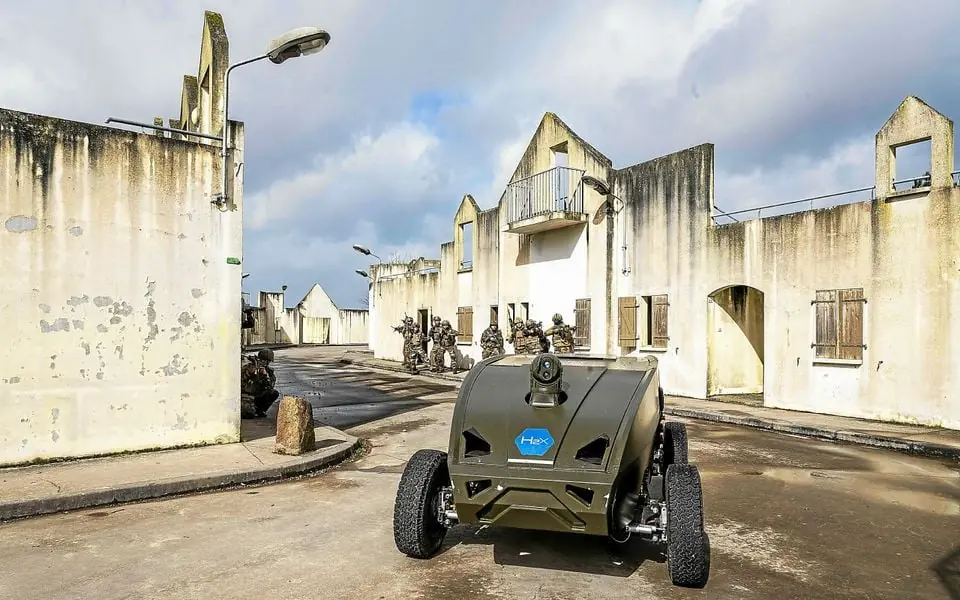
Hermione stands out in the emerging landscape of military robotics by relying on hydrogen fuel cells, which provide a clean, efficient, and rapid energy solution.
Unlike the conventional battery-powered UGVs which often require lengthy downtime for recharging, Hermione’s fuel system can replenish its hydrogen in just three minutes.
This rapid refilling significantly improves mission readiness, enabling continuous operations with minimal interruption. The vehicle stores hydrogen in specially designed high-pressure cylinders.
These tanks comply strictly with European safety certifications, ensuring reliability even under the extreme conditions of battlefield engagements. The hydrogen fuel cells work alongside 25-kilowatt batteries to supply additional electric power when needed.
This hybrid power system enhances energy management and extends operational range, allowing Hermione to perform demanding tasks while conserving fuel.
The vehicle’s propulsion relies on electric hub motors, each rated at 8 kilowatts. These motors deliver torque directly to each wheel, enabling precise control and efficient power distribution across all four wheels.
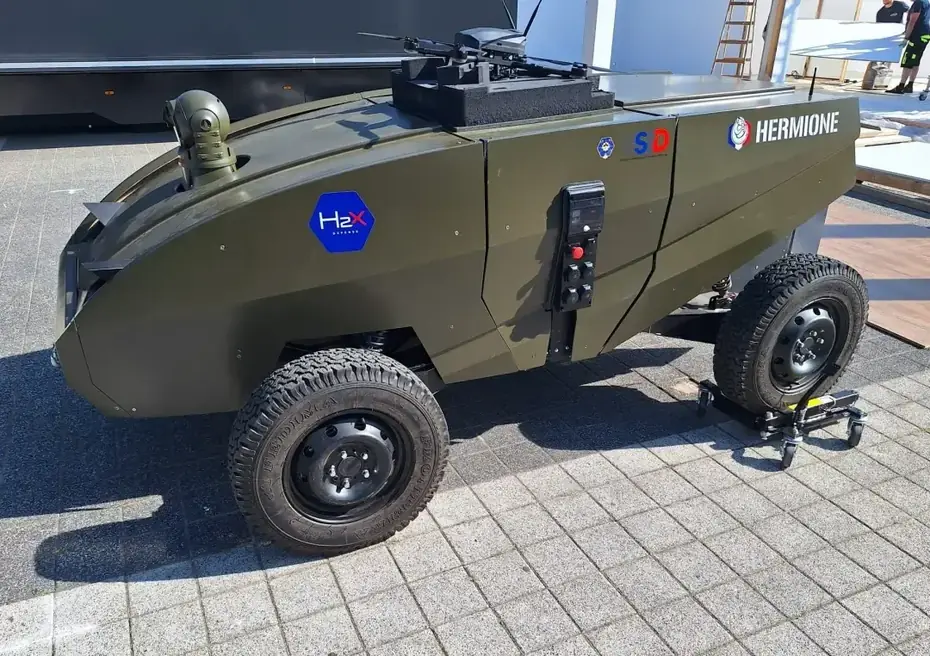
Hermione is not just a typical unmanned ground vehicle; it is engineered to be a highly versatile asset on the modern battlefield.
Its primary role includes carrying and deploying drones, which are vital for reconnaissance, target acquisition, and situational awareness in hostile environments.
The integration of drone deployment capability allows ground forces to gather real-time intelligence and extend their operational reach without exposing personnel to danger.
The design focuses on reliability, mobility, and fuel efficiency. Unlike tracked vehicles, Hermione’s wheeled configuration offers greater speed and maneuverability on various terrains, including urban landscapes and open fields.
The electric hub motors enhance agility and enable silent movement, which is crucial for stealth operations.
Its hydrogen-fueled system also offers significant environmental and tactical advantages. Hydrogen-powered UGVs produce zero emissions at the point of use, reducing the vehicle’s thermal and acoustic signature.
This feature allows soldiers to conduct covert operations with less risk of detection by enemy forces.
The collaboration between P.H.U. Lechmar and H2X-Defense highlights Europe’s commitment to advancing sustainable and high-tech military solutions.
Hermione is poised to set a new standard for intelligent battlefield support vehicles. Its swift refueling capability addresses a critical limitation of current UGV platforms – long downtime due to slow battery recharging – thus maximizing mission flexibility and effectiveness.
In addition to reconnaissance and drone deployment, Hermione’s design could be adapted for multiple roles including logistics, electronic warfare, and frontline support.
Its modular structure and advanced powertrain make upgrades and customization feasible, which is essential to meet the evolving demands of future warfare.
This development also positions European defense industries competitively in the global market for unmanned military systems.
The use of hydrogen fuel cells aligns with broader defense goals to reduce reliance on fossil fuels while enhancing operational capabilities.